


A prop stylist for a photoshoot takes your brief and turns it into a set you can actually photograph. They source, arrange and look after every object in frame, so the finished images look intentional rather than accidental. You need one when a shoot involves more than a plain backdrop: product ranges, lifestyle scenes, brand campaigns, or anything with more than a couple of items to place.
We have hosted a good many styled shoots at our studio near Leeds Dock, and we have seen the difference a stylist makes to the pace of the day and the polish of the results. This guide covers what the job involves, what goes in a stylist’s kit, when you genuinely need one, how the costs work and how to brief them well.
In this guide
- What does a prop stylist for a photoshoot actually do?
- Eight tools every prop stylist carries
- Do you actually need to hire a prop stylist?
- How props are sourced and where prop houses fit in
- How prop stylists charge and how to budget
- How to brief a prop stylist and plan the shoot day
- Common problems on set and how stylists solve them
- Working with the photographer, art director and the wider team
- Styling trends across different types of shoot
- Our view: styling is storytelling, not decoration
- How Dock Street Studio can help with styled shoots
- Sources
- Frequently Asked Questions
What does a prop stylist for a photoshoot actually do?
The job starts well before anyone picks up a camera. A stylist reads the creative brief and works out which objects, textures and backgrounds will carry the story, then spends the prep days building moodboards, sourcing pieces and talking to whoever is building the set. The National Careers Service profile for photographic stylists describes the role as choosing props, backgrounds and sometimes wardrobe, while keeping up relationships with suppliers who can deliver at short notice.
On the day, the work becomes reactive. Placement gets fine-tuned under the studio lights, small fixes happen constantly, and the stylist stays close to the photographer to check what reads through the lens against what looks right to the eye. The ScreenSkills production buyer profile makes clear this is not a purely creative role either: scheduling, hire logistics and budget tracking sit alongside the aesthetic decisions.
In practice the responsibilities break down like this:
- Turning the brief into a concrete list of props, materials and colours
- Building moodboards and sourcing items ahead of the shoot day
- Coordinating placement with set builders, art directors and the photographer
- Making on-set adjustments as lighting and composition demand
- Managing returns, condition checks and paperwork once the shoot wraps
That last point matters more than most people expect. Hired props have to go back in the condition they arrived, on time, with receipts and inventory in order. That is exactly the sort of admin a stylist is used to absorbing so you do not have to.
Eight tools every prop stylist carries
Ask any working stylist what is in their bag and you will hear a version of the same list. None of it is glamorous, but it is what holds a set together when the client is watching the clock.
- Blu Tack or white tack for fixing lightweight props without leaving marks
- Fishing line for suspending objects invisibly against a plain background
- A-clamps and bulldog clips for gripping fabric, backdrops and awkward angles
- Sticky hooks for temporary vertical hangs on walls or flats
- Gaffer and double-sided tape for anything that needs to stay put and come off cleanly
- A steel ruler and tape measure for symmetry checks and repeatable spacing
- Microfibre cloths, cotton buds and a lens-safe cleaner for last-second surface fixes
- Spare cloths and a lint roller for fabric and product surfaces that pick up dust fast
Beyond the tools themselves, organisation is what separates a smooth shoot from a chaotic one. Labelled boxes per scene, a running inventory sheet and spare consumables save real time when something runs out mid-setup. On location the kit has to be self-contained because there is no studio cupboard to raid. In a studio some of it can live semi-permanently in a bag, but it still wants checking before every job.
A tip we pass on to anyone styling their own shoot: keep a small “emergency five” pouch — tack, fishing line, one clamp, tape and a cloth — on you at all times rather than buried in the main box. Nine times out of ten, the fix you need on the spot is in that pouch. If you are shooting products yourself, our guide to the small prop kit that works for product photography goes into the specifics.

Do you actually need to hire a prop stylist?
Not every shoot needs one. A single headshot or a straightforward portrait rarely benefits from a dedicated stylist. The calculation changes quickly once a set gets busy, though.
Situations where a stylist earns their fee:
- Brand campaigns where visual consistency across many images matters
- Lifestyle product shoots with several items, surfaces and textures in frame
- Any set with more than five or six props, or anything that needs building
The value shows up in three ways. Speed on set, because someone is dedicated to fixing problems while the photographer keeps shooting. A consistent visual language across a whole campaign rather than image-by-image guesswork. And, as Annie Atkins describes in her Creative Boom interview, stronger commercial impact, because props are chosen to tell a story rather than fill space.
If a full hire feels like too much for the job, there are lighter options: a remote consultation, prep-only sourcing support, or a studio that can help you plan the set as part of the booking. It is also worth deciding early whether the shoot belongs in a studio at all — our post on when a studio beats a location shoot walks through that trade-off.
How props are sourced and where prop houses fit in
Most professional stylists do not buy new for every job. They hire. Prop houses keep catalogues, often searchable online as lookbooks, so a stylist can confirm an aesthetic match before committing to a booking or a trip to view stock in person.
Practical questions to ask before you book:
- What is the lead time for delivery or collection, and does it fit your shoot date?
- Is there a deposit, and what does the insurance cover if something is damaged on set?
- Can you check the item’s actual condition, not just the lookbook photo, before the shoot?
Two UK prop houses worth knowing by name. Granger Hertzog runs a large showroom of props and furniture, useful when you want to see pieces in person rather than trust a photograph. House Of Props has built a broad creative inventory over three decades, and its lookbook is often the fastest way to shortlist options remotely before a hire decision. Both are a fair drive from Leeds, so build transport into the plan.
How prop stylists charge and how to budget
Fee structures vary, but most stylists work to some combination of a prep-day rate, a shoot-day rate and pass-through costs for anything they hire or buy on your behalf. Some offer hourly consultancy for lighter jobs rather than a full day rate.
When you compare quotes, ask for a breakdown that separates:
- Hire fees for each prop or set of props
- Items bought outright versus rented
- Delivery, collection and courier costs
- Admin time and receipts for expenses
- A contingency line for last-minute substitutions
Getting that itemised up front avoids surprises later, and it gives you a fair basis for weighing one stylist’s quote against another’s.
How to brief a prop stylist and plan the shoot day
A strong brief does most of the heavy lifting before anyone picks up a prop. It should cover the intended use (social, print, website), the deliverables you need, any brand guidelines that constrain colour or style, and a handful of mood references that show the tone rather than describe it.
From there, structure the shoot around a few practical steps:
- Turn the brief into a shot list, image by image, with props assigned to each
- Book a prep day separately from the shoot day wherever budget allows
- Confirm prop hire and deliveries against the shoot date, with buffer time built in
- Run a short remote check-in or share a checklist before the day itself
- Keep a live shot list on set so nothing gets missed under time pressure
Booking prep time separately from shoot time is the single biggest lever for reducing friction. It moves sourcing, moodboarding and set-building decisions out of the hours when the camera is supposed to be rolling. Our commercial shoot planning guide covers the same principle: a clear brief up front tends to shorten turnaround at the back end, because nobody is guessing on the day.
One more thing. Share your shot list with the stylist at least a week before the shoot, not the night before. It gives them time to flag availability problems while there is still room to substitute.
Common problems on set and how stylists solve them
Something goes wrong on almost every shoot. The difference is how fast someone catches it. A hired prop arrives in slightly worse condition than the lookbook suggested, a colour that looked fine on a laptop clashes under studio lighting, or a set that read well on a moodboard falls apart once real objects sit at real scale.
Experienced stylists build in slack for exactly this. A backup prop or two, chosen at sourcing stage precisely because it can stand in if the first choice fails, saves a shoot from stalling while someone scrambles for a replacement. Lighting clashes get solved with quick surface fixes — a wipe with a lens-safe cleaner, a repositioned clamp — rather than a full reset.
Time pressure is the other constant. A shot list that looked achievable in eight hours can slip once the first three set-ups run long, so stylists tend to triage early: which shots are essential, which are nice-to-have, and which props can be swapped for something already in the kit rather than something still on a courier van. Returns add a second layer, since hired items often need to go back in a fixed condition and window, which means a stylist is quietly tracking the de-rig clock even while the shoot is still running.
None of this is dramatic. It is steady problem-solving under time constraints, which is precisely why the organisational side of the job matters as much as the creative eye.
Working with the photographer, art director and the wider team
A prop stylist rarely works alone. On a commercial set they are usually one part of a small team that includes the photographer, sometimes an art director, and occasionally a client watching for brand compliance in real time.
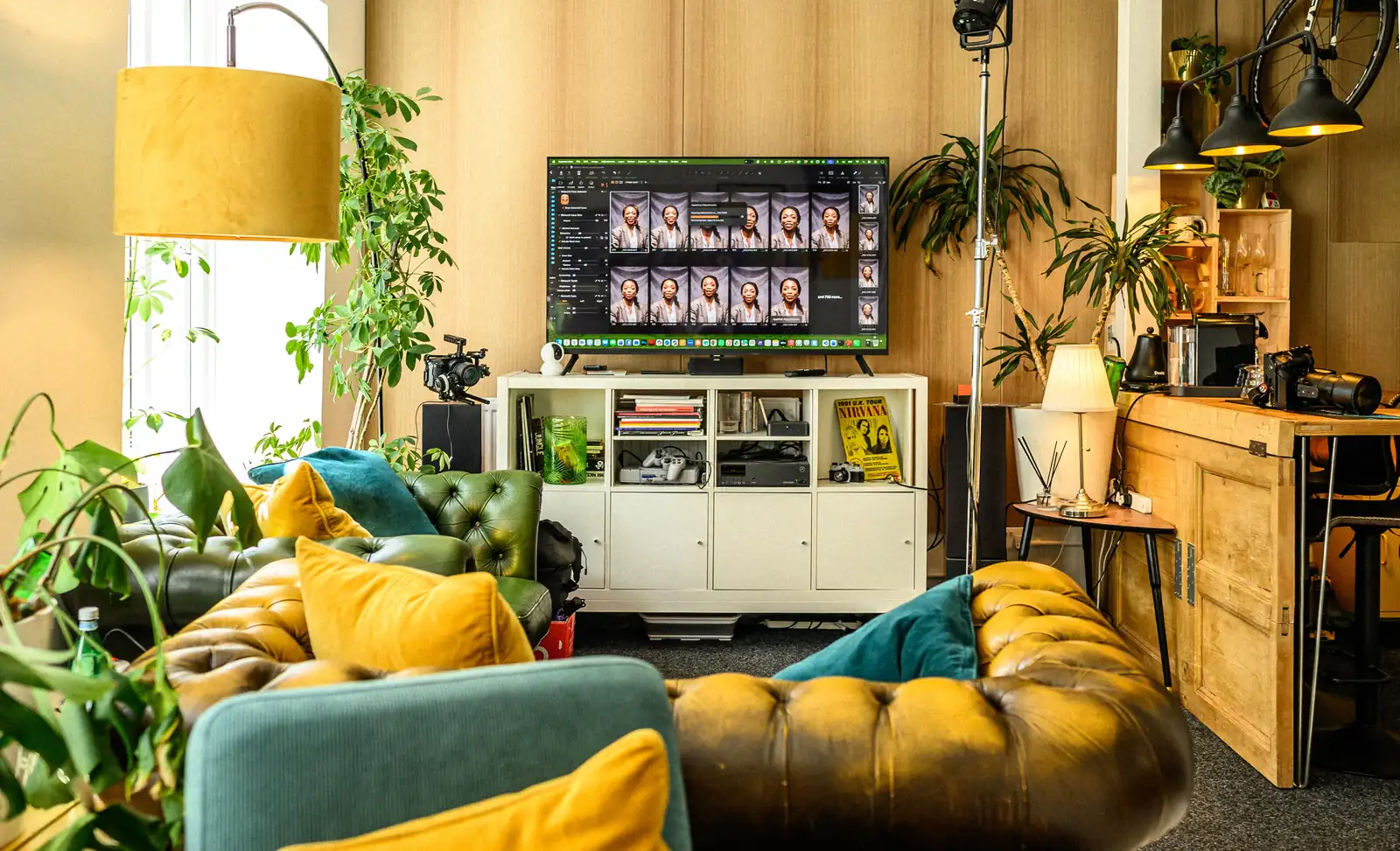
The relationship with the photographer is the most immediate one. Props that look balanced to the eye can read differently through a lens at a given focal length, so the stylist adjusts constantly based on what is showing on the monitor rather than what looks right standing next to the set. We shoot tethered into Capture One, so that back-and-forth — “move it two inches left”, “that reflection is catching the light” — happens on a big screen, dozens of times across a day.
Art directors, where they are involved, hold the bigger-picture brand vision while the stylist executes the physical detail that fulfils it. A clear split of who decides what avoids the classic bottleneck where every placement waits on a decision nobody has been assigned to make.
On smaller shoots, particularly where the studio helps with planning as part of the booking, some of that art-direction role gets absorbed into the brief conversation rather than staffed separately on the day. That is one reason a well-defined brief, covering usage, deliverables and brand rules, reduces the number of open decisions once everyone is in the room. Our guide to editorial photography for brand campaigns shows how mood and narrative choices made at brief stage carry through into the finished imagery.
Styling trends across different types of shoot
Prop styling is not a single aesthetic. It shifts depending on what the imagery needs to do commercially. Product lifestyle shoots have leaned towards muted, tactile palettes over the past couple of years: natural materials, soft daylight-style lighting, and props chosen to suggest a real home rather than an obvious studio backdrop.
Brand campaign work often goes the other way when the goal is standing out in a crowded feed. Bolder colour blocking, deliberately graphic prop choices, and sets built around one strong visual idea rather than dozens of small details. Editorial and fashion-adjacent shoots tend to sit between the two, using props sparingly but symbolically, with a single object doing narrative work rather than a busy tablescape.
Interior and property photography has its own conventions worth knowing if you are commissioning that kind of shoot. Styling there focuses on scale, warmth and lived-in detail, choices explored in Hospitality Lens’s guide to luxury property photo styles, where props suggest how a space is lived in rather than filling empty corners.
Across all of these, the constant is that trend-led choices only work when they still serve the brief. A stylist who is up to date on palettes but ignores what the client needs the image to do is solving the wrong problem, however good it looks on a moodboard.
Our view: styling is storytelling, not decoration
Most briefs treat props as finishing touches. The stronger work treats them as the story itself, chosen to carry mood and context rather than fill a frame. Get that thinking in early and the images tend to do more commercial work with less retouching afterwards. It is one of the few shortcuts in this business that actually holds up.
How Dock Street Studio can help with styled shoots
If you are planning a shoot that needs proper prop styling, the studio matters as much as the stylist you bring in. Our approach centres on careful pre-shoot planning, so the brief, shot list and prop requirements are settled before anyone sets foot in the space. That is exactly the groundwork a good stylist needs to work efficiently rather than improvise on the day.
For product ranges and lifestyle sets, our product photography covers styled shoots with the full studio kit included, and our commercial photographer in Leeds days start at £450 for a half day or £750 for a full day, with editing and retouching included. For brand content and social work, the same space doubles as our content studio. You can see the wider range of work we take on at Dock Street Studio.
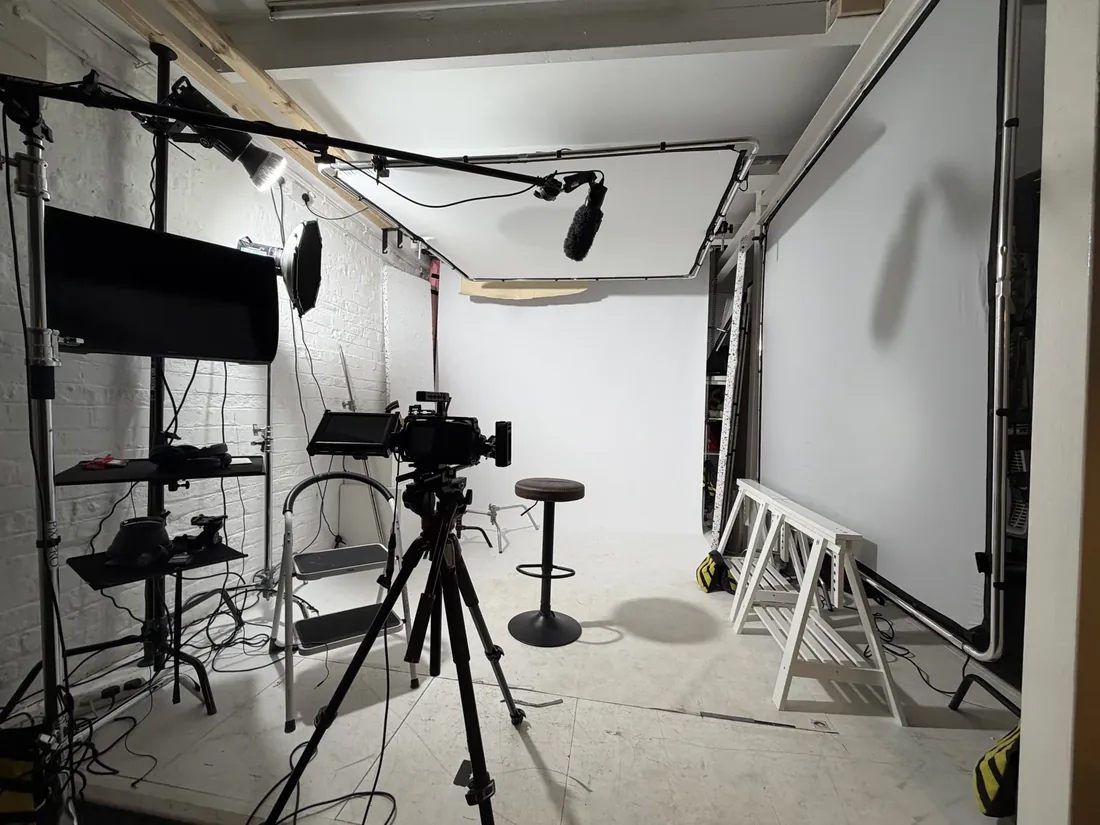
If you would rather bring your own stylist and crew, studio hire runs from £125 for two hours, £175 for a half day and £300 for a full eight-hour day, with lighting, a 2.7m Colorama backdrop system and grip included. A photographer can be added for £350–£550 depending on experience. Retouched images typically land within 48 hours either way, and there is onsite parking with a loading bay for getting props in and out.
Sources
For role definitions, see the ScreenSkills production buyer profile and the National Careers Service stylist profile. For hiring props, browse Granger Hertzog and House Of Props. For everything we offer under one roof, see our services page.
- Production buyer (props buyer) in film and TV drama — ScreenSkills
- Photographic stylist — National Careers Service
- Granger Hertzog
- House Of Props
- Creative Boom — Annie Atkins interview
Frequently Asked Questions
What does a prop stylist do on a photoshoot?
A prop stylist sources, arranges and manages every object in frame, turning a written brief into a physical set. They also prepare the set, liaise with hire companies and handle returns once the shoot wraps.
How much does it cost to hire a prop stylist?
Most stylists charge a prep-day rate, a shoot-day rate and pass-through costs for anything hired or bought on your behalf, so the total depends on the scope of the job. Ask for an itemised quote covering hire, delivery and a contingency line before you compare.
Do I need a prop stylist for a simple headshot?
No. A headshot has little to arrange beyond you and the backdrop. Our headshot sessions in Leeds start at £95 and need no styling at all.
Where can I hire props for a photoshoot in the UK?
Prop houses such as Granger Hertzog and House Of Props keep searchable lookbooks and hire catalogues built for photography and film. Confirm lead times, deposits and insurance cover before you book.
What is in a professional prop stylist’s kit?
Blu Tack, fishing line, A-clamps and bulldog clips, tape, a steel ruler and cleaning supplies such as microfibre cloths and a lens-safe cleaner. Labelled boxes and an inventory sheet matter just as much as the tools.
Where is Dock Street Studio and how do I book a styled shoot?
We are at Unit 9, 30–38 Dock Street, Leeds LS10 1JF, near Leeds Dock and a short walk from the train station, with onsite parking. Book online, email hello@dockstreetstudioleeds.co.uk or call 0113 4400102.
Planning a styled shoot in Leeds?
Tell us what you are shooting and we will help you work out whether you need a stylist, a prep day, or just a well-organised morning in the studio. Book online, email hello@dockstreetstudioleeds.co.uk or call 0113 4400102.
Written by Mark Wheelwright
Commercial photographer & studio owner, Leeds | ISO Photographic Ltd
Dock Street Studio, Unit 9, 30–38 Dock Street, Leeds LS10 1JF
18+ years’ experience | 900+ projects | 300+ five-star reviews | 1M+ shutter count
dockstreetstudioleeds.co.uk
Recommended
Shot, written and built by the Dock Street team
Every guide on this blog comes from the team at Dock Street Studio — Mark behind the camera with 18+ years' experience, Nicole on styling and lighting, Beya on video and bookings and Austin keeping the site fast and findable. If you'd rather have us do it than read about it, book a session or explore our photography services in Leeds.