


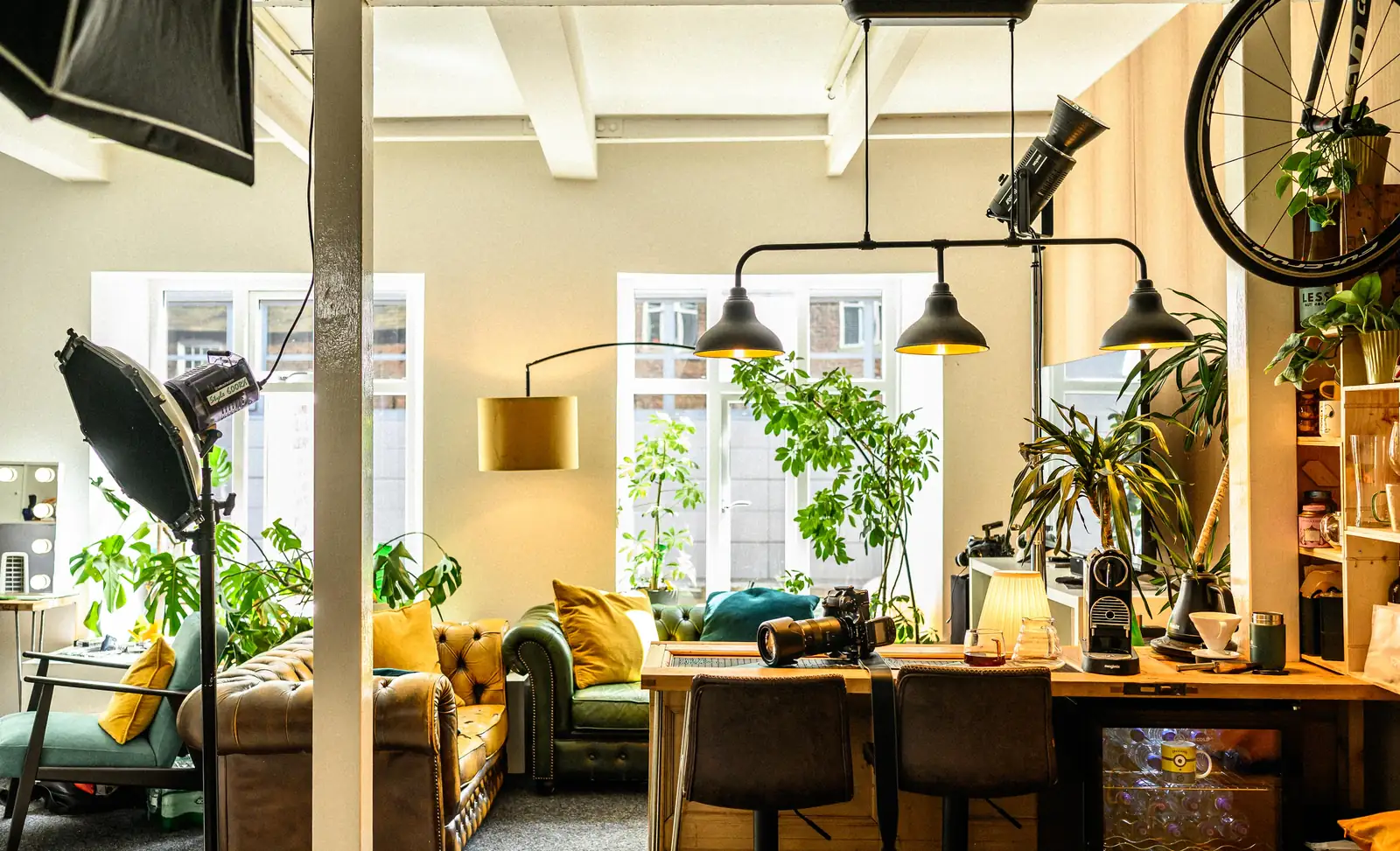
Good studio pictures almost never come down to who owns the most expensive camera. They come from picking the right tools, in the right order, for the job in front of you. This photo studio equipment guide is written for the people who hire us or hire the room: business owners, actors, marketing teams and makers who want to know what is actually behind a clean professional image, and what is worth planning for before the day.
At Dock Street Studio the kit exists to make the work easier, more repeatable and more comfortable for whoever is standing in front of the lens. Photographing an actor, a new product range or a team of eight from a Leeds office are three different jobs, but the principle holds for all of them. Equipment should serve the brief. The moment it starts driving the brief, something has gone wrong.
Start with the brief, not the kit list
Before we choose a light or pull down a background, we work out what the pictures need to do. A clean ecommerce cutout and a relaxed team portrait are not neighbours. A glossy bottle, a silver ring and a two-metre sideboard all handle light in completely different ways.
People are the same. A dramatic editorial portrait can carry deep shadow. A professional headshot usually wants an open, flattering look that still has shape in it, so the face reads as a real person rather than a cardboard cutout.
A fully equipped studio matters. A clear brief matters more. The kit buys us options. Eighteen years of doing this is what tells us which option will hold up on your website, in a casting director’s inbox, or blown up on a trade stand.
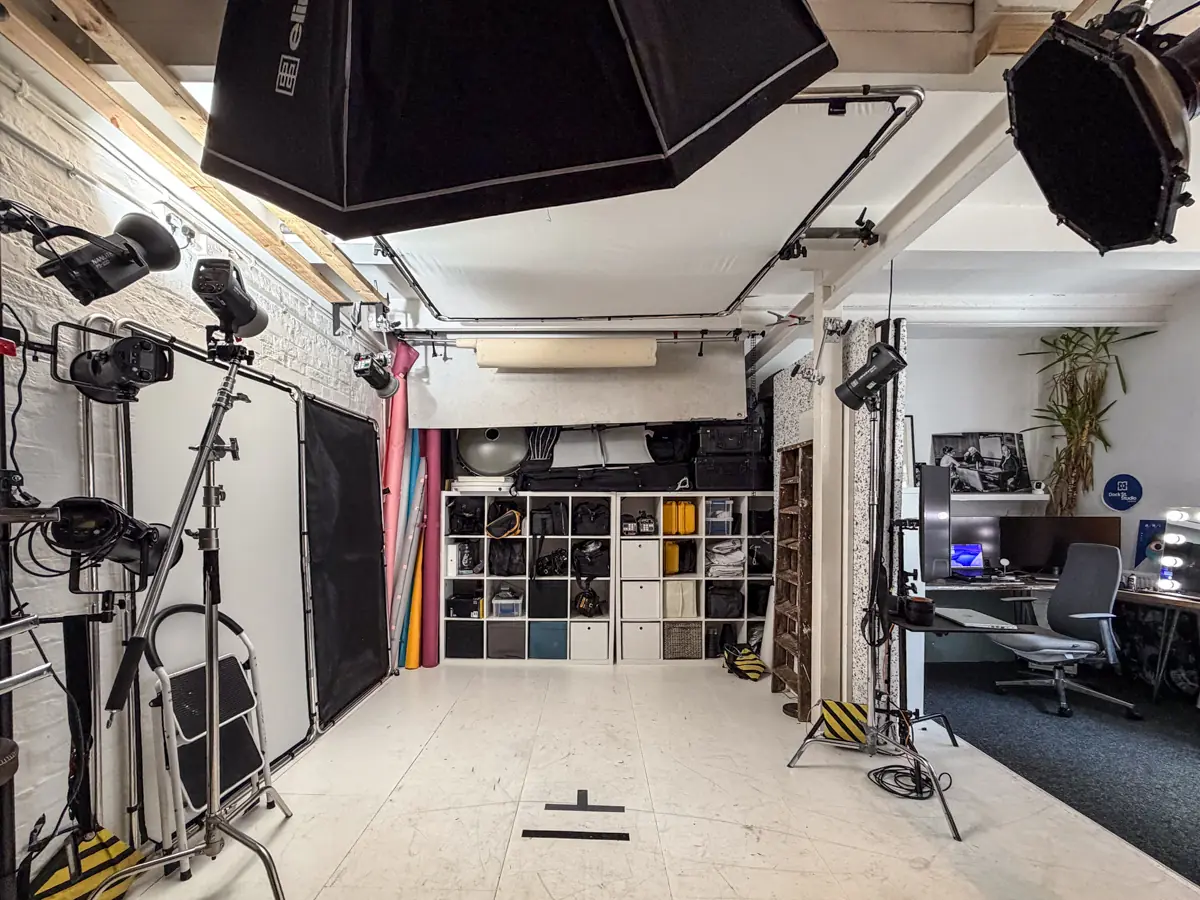
Camera bodies and lenses
A professional body gives us dependable colour, clean files and enough resolution to go from a LinkedIn thumbnail to a printed exhibition panel without anyone worrying. For most clients, though, the lens does more visible work than the body ever will.
For headshots and business portraits we use a focal length that keeps faces looking like faces, and that lets us stand a sensible distance away. Nobody enjoys a lens pushed up under their chin, least of all somebody who is already a bit nervous about the whole thing. Standing back also gives us room to direct you properly and to make the small posture adjustments that do most of the heavy lifting.
For products, the lens follows the object. A longer lens keeps proportions honest and the shape clean. A close-focusing lens is what you want for stitching, grain, labels and fine finishes. We do not put one lens on and leave it there because it is convenient. Choosing properly prevents distortion and cuts down the retouching afterwards, which is time you would otherwise pay for.
Lighting is the part that shapes the picture
Lighting is the backbone of studio work. The camera only records what is in front of it. The lights decide where the eye goes, how a material feels, and whether a person looks fresh and approachable or a bit hard done by.
Flash is usually the practical choice in a studio. It gives us the power to work at low sensitivity, which keeps detail and colour clean, and it freezes small movement. That matters more than people expect. Breathing, blinking, a fidgeting child, steam off a coffee, a product being tipped into place.
Continuous light has its place, particularly when stills and video are coming out of the same session. Everyone can see the direction and softness of the light straight away, which speeds up decisions. The trade-off is power. For a big set or a very reflective product, continuous light can leave you short.

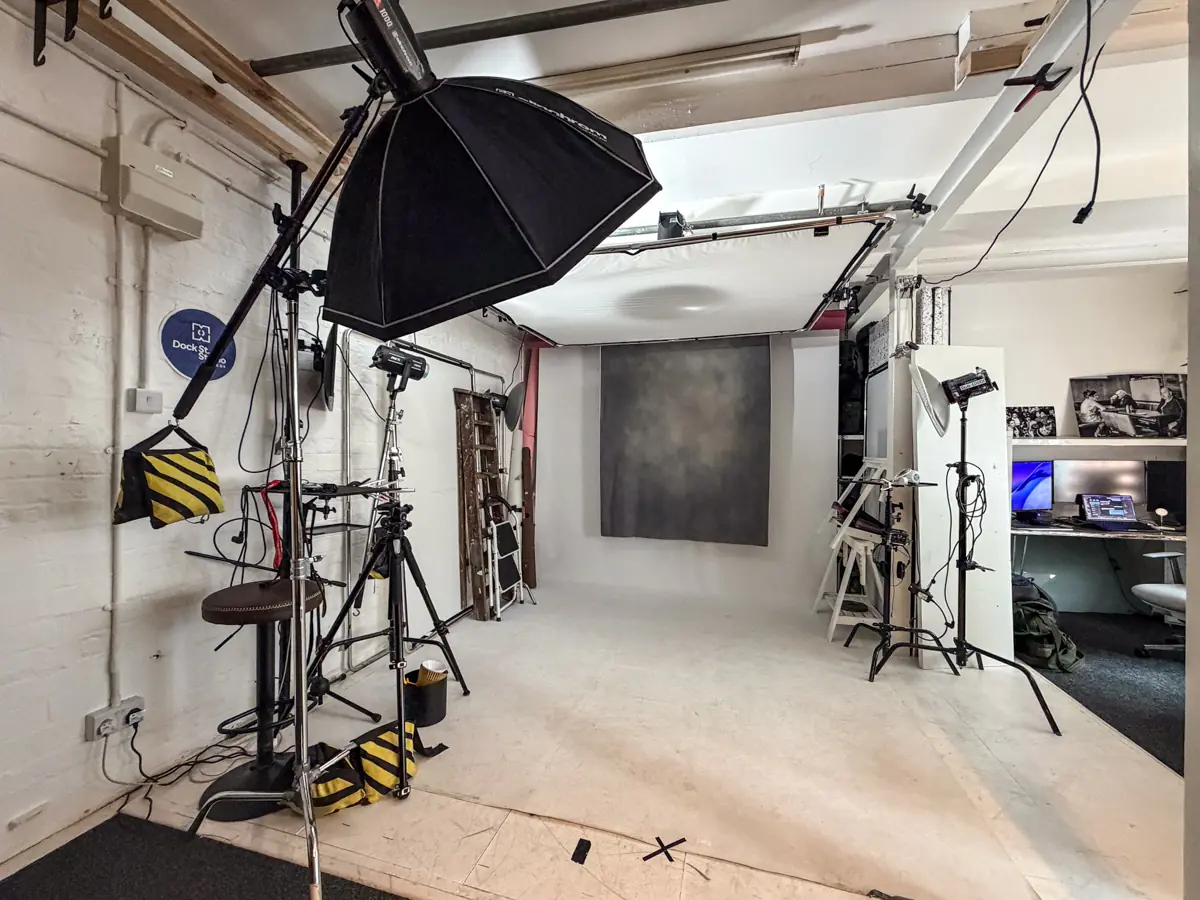
Softboxes, umbrellas and everything that goes in front of a light
A bare studio head is rarely flattering. Modifiers control the size, direction and softness of the light, and that is most of the craft. A large softbox gives broad, gentle light that suits portraits, food, fashion and a lot of product work. A smaller one gives harder edges and more defined shadow, which is what you want when a picture needs some punch.
Umbrellas go up fast and throw light around generously. Reflectors push light back into the shadows without adding another powered head. Grids, flags and black panels stop light going where it is not wanted, and that restraint is often the difference between a flat image and one with depth in it.
Reflective products need more patience than kit
Shiny things change the maths. A watch, a glass bottle or a polished metal fitting does not only show its own shape. It shows the whole room reflected back at you, including the photographer. On those jobs we spend far more time moving diffusion and black card than moving the product. That is normal, it is slow, and it is exactly where a proper studio setup earns its keep. Our notes on how we approach product photography go into the sequence we work through.
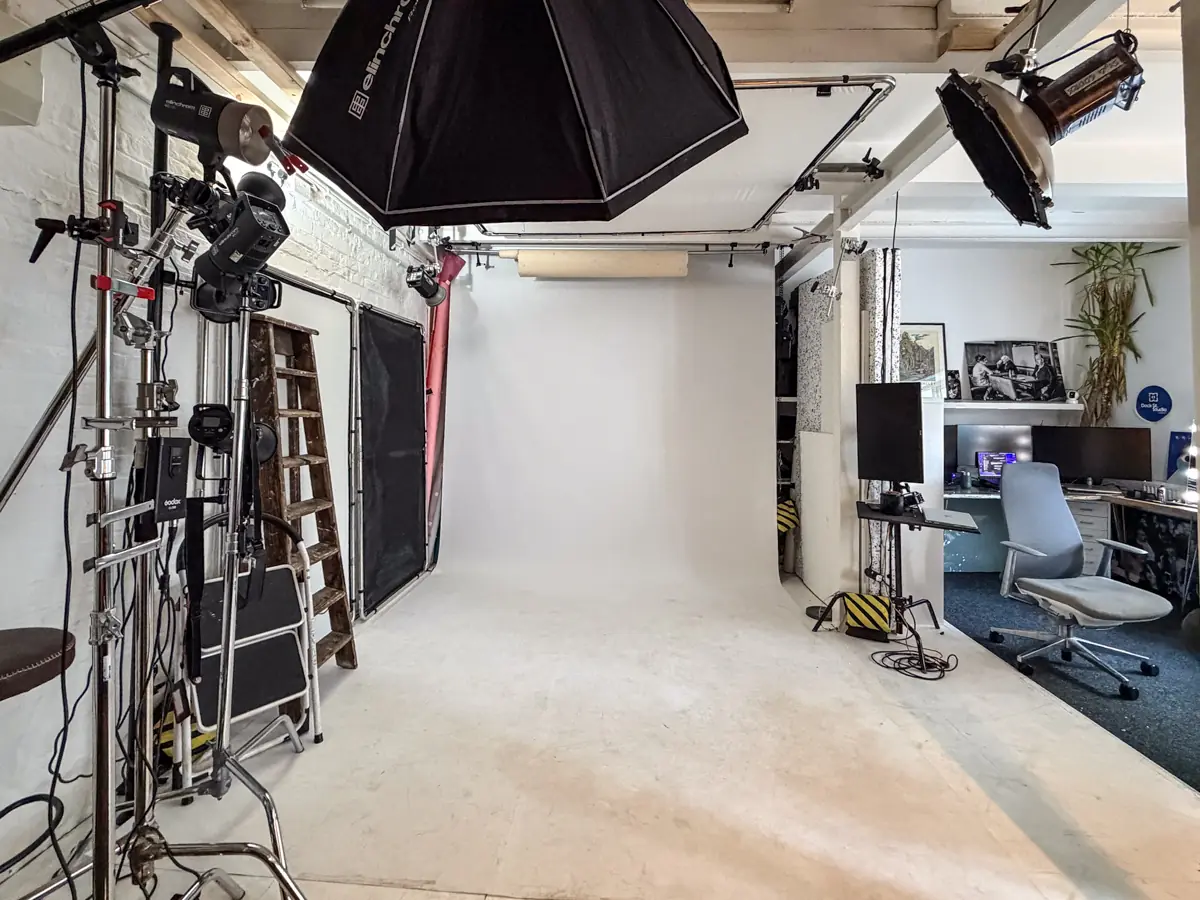
Backgrounds and surfaces
A background should hold the subject up, not compete with it. Paper rolls remain the reliable answer for headshots, portraits and clean product work. There is a wide range of colours, and lit properly they give a smooth, uninterrupted finish with nothing for the eye to snag on.
White is the default request for ecommerce and corporate work, and it is not always the right one. A pale grey often feels softer and behaves better with light clothing or white packaging. Black can look genuinely premium, but it needs careful lighting or a dark suit simply vanishes into it.
Where a brand wants more atmosphere, we can use coloured paper, painted flats, textured boards or a small styled set. The thing to protect is consistency. If you need twenty product images for a shop, the background and lighting have to stay identical from the first item to the twentieth, or the grid on your website looks untidy no matter how good each individual frame is.
The unglamorous photo studio equipment that keeps a day moving
Some of the most useful kit in the building is deeply boring. Solid light stands, boom arms, sandbags, clamps, tethering cables and tables that do not wobble. They let us put a light exactly where it needs to be, hold a reflector without a volunteer, or suspend something in mid-air without improvising out of gaffer tape and hope.
A tripod matters whenever consistency does. For catalogue work it keeps framing and focus identical across a range. For composites or stop-motion it is not optional. Handheld is quicker and looser for a lively portrait session, so we switch depending on what the frame is for.
We shoot tethered into Capture One, which means the frames land on a big screen as we take them. You can check styling, crop, colour and product detail while the set is still standing, rather than finding a problem a week later once everything is packed away. It keeps the decisions next to the moment, and it usually saves an hour. There is more on why we work tethered if you want the detail.
Then there is the rest: spare batteries, cards, cleaning cloths, gaffer tape, extension leads and a backup routine that runs without anyone thinking about it. A shoot is not professional because the gear looks impressive. It is professional because there is a plan for the moment something needs to change quickly.

What to ask before you hire a studio
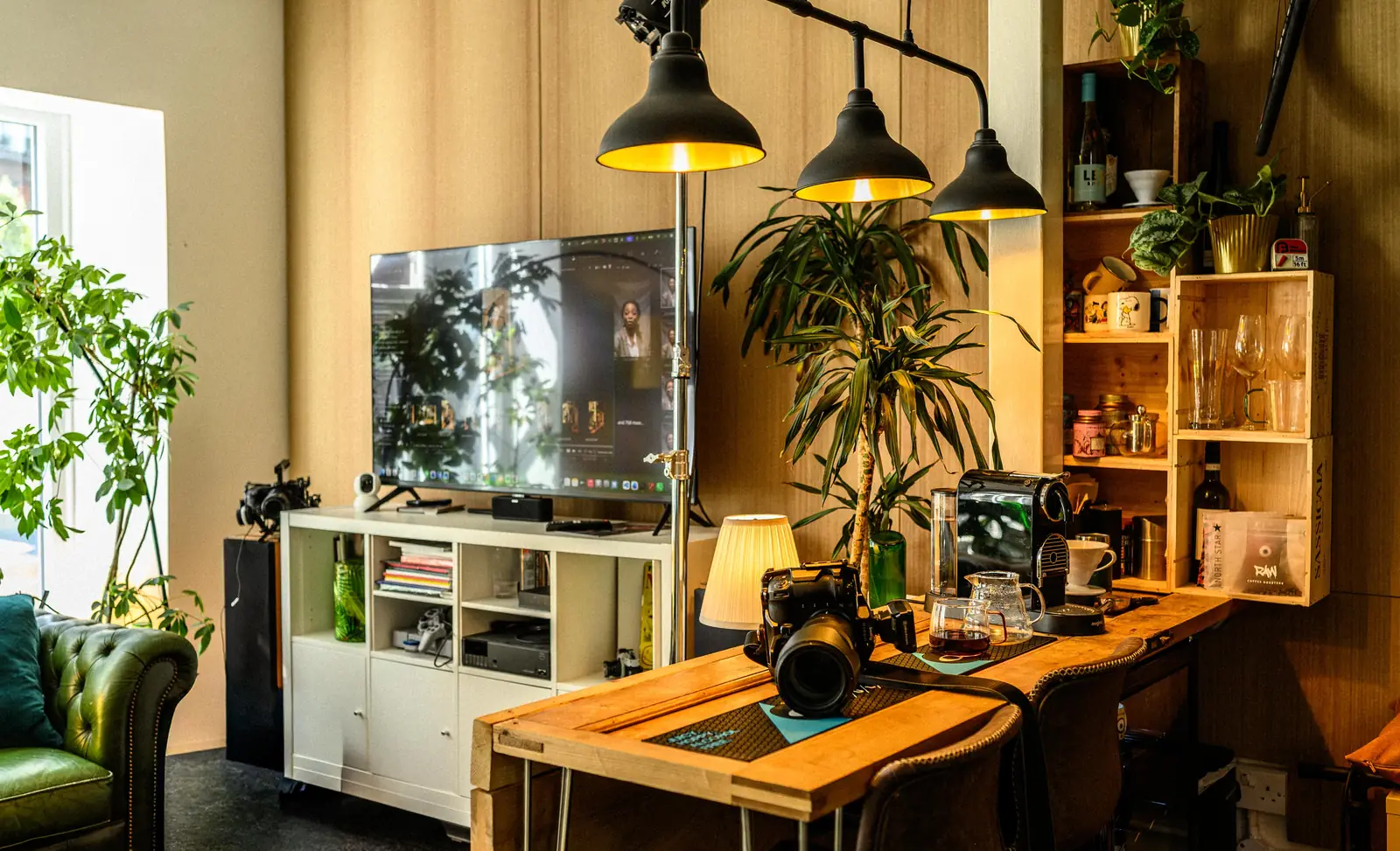
If you are hiring a room in Leeds to run your own shoot, do not assume that fully equipped means the same thing in every listing. It does not. Ask what is included and what you are expected to bring or hire in.
Ask about the lights and modifiers, the background options, the ceiling height, the power, the changing facilities, and whether the space can actually take the size of product or group you have in mind. If video is part of it, ask about sound, blackout and continuous lighting. Daylight can be lovely, and ours is, but it moves through the day. It is not a substitute for controlled light when twenty frames need to match.
Ask whether anyone is around to help, too. A photographer with their own plan may want the room and nothing else. A small business owner running their first campaign day usually finds an experienced pair of hands makes the whole thing far less daunting. Our studio hire checklist is a short list you can send to any space before you commit, and it works for other studios as well as ours. If you would rather see what is here first, the studio hire page lists the kit that comes with the room.
If this is your first proper shoot
You do not need to learn camera specifications before booking. Bring a clear idea of your audience, a few images you like, and the products, outfits or props you want in front of the lens. Tell us where the pictures are going. A website banner needs different framing from an Instagram post, a press image or a printed brochure.
For people work, comfort belongs on the equipment list as much as the lights do. A warm room, somewhere private to change, a mirror, music, and enough time between looks that nobody feels rushed. Good headshots do not come from telling someone to look natural while a room watches. They come from calm direction, decent light and a setup that gives a person space to settle, be present and look recognisably themselves.
The kit gives us control. It should never make the day feel like a technical exercise. Bring the brief, ask the awkward questions, and leave a little room for a decision made on the spot. That is usually where the most useful pictures come from.
Frequently Asked Questions
Do I need to bring any equipment to a studio shoot?
Not if we are photographing for you. Bring the products, outfits or props and leave the technical side to us. If you are hiring the room for your own shoot, check the kit list first so you know what to add.
Is flash better than continuous lighting?
It depends on the job. Flash gives more power and cleaner files, so it suits most stills work. Continuous light is easier when you are shooting video and stills in the same session.
What background should I choose?
Grey suits most headshots and team portraits. White works for ecommerce, though it needs care with pale products. Black looks premium but needs careful lighting. We will talk it through before you book.
Why does tethered shooting matter to me as a client?
You see the frames on a large screen while the set is still up, so styling, crops and colour can be corrected in the moment rather than argued about afterwards.
How much does a headshot session cost?
Headshots start at £95 for our LinkedIn Express session, with Quick-Fire Spotlight at £150 and the In-Depth Portrait at £200. All of them use the same lighting and the same tethered setup.
Where is the studio and how do I book?
Dock Street Studio is at Unit 9, 30–38 Dock Street, Leeds LS10 1JF, in central Leeds near Leeds Dock and a short walk from Leeds train station, with parking onsite. Book online, email hello@dockstreetstudioleeds.co.uk, or call 0113 4400102.
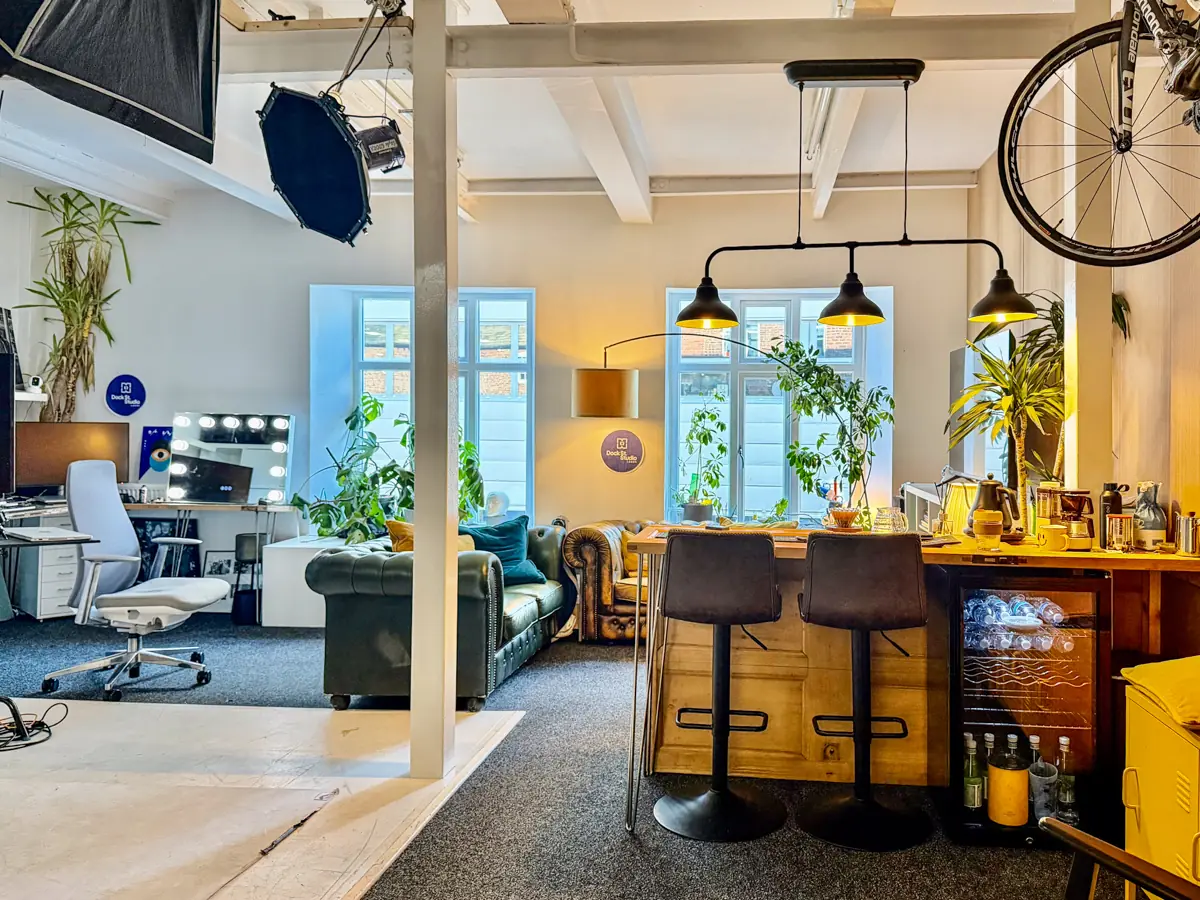
Come and see the studio in Leeds
Tell us what you need photographing and we will tell you which of this kit actually applies to your job, and which of it you can safely ignore. Book online, email hello@dockstreetstudioleeds.co.uk, or call 0113 4400102.
Written by Mark Wheelwright
Commercial photographer & studio owner, Leeds | ISO Photographic Ltd
Dock Street Studio, Unit 9, 30–38 Dock Street, Leeds LS10 1JF
18 years in business | 900+ projects | 300+ five-star reviews | 1M+ shutter count
dockstreetstudioleeds.co.uk
Shot, written and built by the Dock Street team
Every guide on this blog comes from the team at Dock Street Studio — Mark behind the camera with 18+ years' experience, Nicole on styling and lighting, Beya on video and bookings and Austin keeping the site fast and findable. If you'd rather have us do it than read about it, book a session or explore our photography services in Leeds.