


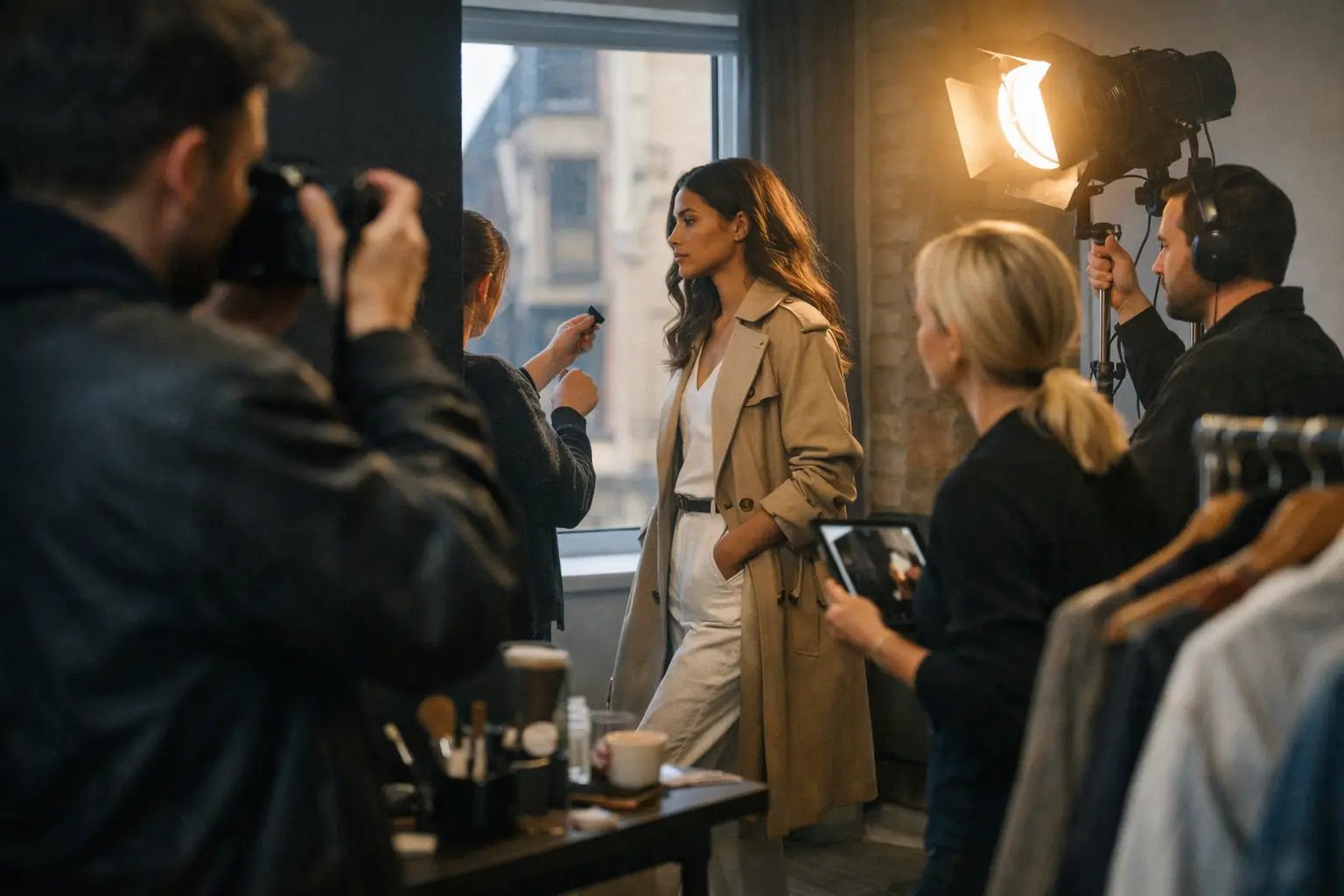
A product packshot can show what you sell. Editorial photography for brand campaigns shows why it matters, who it's for and what it feels like to use. That difference is often what makes somebody stop scrolling, read the copy or remember your business when they're ready to buy.
At Dock Street Studio in central Leeds, we see the strongest brand imagery come from a clear idea rather than a large production budget. A good campaign might centre on the craft behind a Yorkshire food producer, the pace of a Leeds fitness brand, or the calm expertise of a professional service team. The photographs need to feel believable, while still being properly considered.
What editorial photography does for a brand campaign
Editorial photography borrows from magazine storytelling. Rather than placing every product against a plain backdrop, it puts people, places, details and action together to create a fuller picture. It has a point of view.
For a clothing brand, that may mean showing garments worn on real streets, at work or on a weekend away, rather than only on a cut-out model. For a skincare company, it could mean close details of texture, a morning routine and the person using the product. For a business-to-business company, it may be a series of natural-looking portraits and working scenes that make the team feel accessible and credible.
The aim is not to make everything look accidental. There's usually a fair bit of planning behind a relaxed image. We think about the light, the location, the cast, the colour palette and the crop before the first frame is taken. But the final photographs should give people something they can recognise, not just admire from a distance.
That makes editorial work especially useful when your brand needs more than one good hero image. A well-planned shoot can supply material for your website, social channels, press releases, email campaigns, brochures and paid advertising. The images belong together, but they shouldn't all say exactly the same thing. If you're producing this kind of rolling brand material regularly, our content studio is set up for exactly that rhythm.
Start with the job the images need to do
Before discussing backdrops or cameras, we ask a straightforward question: what needs to change after people see these photos? Perhaps you want to introduce a new range, make a growing team feel more human, support a seasonal campaign or give your website a more confident look.
The answer affects every decision. If the campaign is built to sell online, we need enough clear product detail alongside the lifestyle scenes — the kind of controlled, accurate work we do day in, day out as product photographers in Leeds. If it's designed to win trust from prospective clients, people and process may matter more than polished props. If the images are for press use, we need strong, flexible pictures that still make sense on their own.
It also helps to be honest about where the work will appear. A wide website banner, a vertical Instagram post and a square advert all need different framing. We plan for those crops during the shoot instead of trying to rescue every format afterwards. It's one of the small practical details that saves marketing teams a lot of frustration.
Build a brief that leaves room for real life
A useful brief doesn't need to be a forty-page document. We need to know your audience, the key message, where the photographs will be used, any must-have shots and the mood you want to create. References help too, provided they explain what you like about an image rather than becoming a frame-for-frame shopping list.
Tell us what must be avoided as well. Some brands want polished and minimal. Others need energy, mess, movement and a bit of character. A family-run Yorkshire business may not want to look like a faceless national chain; a premium product might need a quieter, more controlled setting. Neither approach is automatically right — it depends on the audience and the promise you're making.
We also encourage clients to nominate one person to make decisions on the day. Feedback is valuable, but five people trying to art-direct a single frame slows a shoot down quickly. Agreeing the brief beforehand gives everyone a sensible reference point.
Choosing people, places and props
The people in the photographs matter as much as the product. Employees bring genuine knowledge and warmth, particularly where the campaign is about service, making or behind-the-scenes work. They may need a little direction, though — most people aren't used to being photographed, and that's completely normal.
We keep the atmosphere calm and give clear guidance, the same approach that runs through our headshot sessions. Small adjustments to posture, where someone looks or what they do with their hands make a big difference. Nobody needs to arrive knowing how to pose. It's the thing clients mention most in our reviews — Dock Street holds a 5-star Google rating across more than 70 reviews, and "relaxed", "patient" and "at ease" come up again and again. You can read them on our Google Business profile or our reviews page.
Models can be the better choice when you need a particular look, a wide age range or a fast-moving production. In some campaigns a mixture works well: real staff for credibility and models for the more styled lifestyle scenes. What matters is that the casting reflects the people you genuinely want to reach, not whatever is fashionable that month.
Location carries a message too. Our studio — 450 sq ft on the first floor of a listed building at 30–38 Dock Street, near Leeds Bridge and less than ten minutes' walk from Leeds City Station — gives you controlled lighting, clean sets, privacy and one of the best-equipped kit rooms in the city. It's a practical base for building several distinct looks in one day: the 2.7m Colorama backdrop system carries a full range of colours, and the whitewashed brick and loft-style furnishing give an editorial texture without a location move. For products, we can build sets with texture, colour and carefully chosen props without relying on the weather.
On location, you gain context and a sense of place. A café, workshop, office, home or outdoor setting can make a story feel immediate. The trade-off is less control — light changes, spaces are busy, access can be limited. We plan around that with a proper recce where needed, a realistic schedule and lighting that supports the natural feel rather than fighting it. Many campaigns end up combining both: studio days for the controlled material, location days for context.
Props should earn their place. A beautiful table, a notebook or a bunch of flowers can add life, but only if they support the scene. Too many props turn a campaign into a styling exercise and pull attention away from what you actually sell.
Lighting is where the campaign finds its tone
Lighting is often the difference between an image that feels like a quick phone snap and one that looks properly made. That doesn't mean every photograph has to be heavily lit — sometimes soft daylight is exactly right, and the studio has optional natural light for that reason. The skill lies in shaping and controlling it, then keeping the result consistent across the whole campaign.
At Dock Street we work with Elinchrom and Godox strobes, continuous heads for video and natural-feel work, and more than fifteen modifiers from 40cm to 135cm — which means the light can be matched to the brand rather than the other way round. A wellness brand may suit gentle, open light and muted shadows. A tech product might need crisp highlights and a cleaner, more graphic feel. Food demands careful direction of light to show texture without looking dry or flat.
Consistency matters because campaign images are rarely seen one at a time. They sit next to each other in a carousel, across a website or in a printed brochure. If the colour, contrast and mood jump around, the brand feels less settled. We establish a visual direction early and review images as we work — shooting tethered to the studio's 5K iMac so you can see the campaign taking shape frame by frame, not after the fact.
Make room for the useful shots
Hero images get attention, but the supporting photographs often do the hardest work. A detail of hands at work, a product in use, an environmental portrait, a wider scene with space for copy and a simple close-up all give your marketing team more options later.
We normally shoot beyond the obvious layout. If an image may need text added, we deliberately leave clean negative space. If a product comes in several colours, we consider how that variation will be shown. If a campaign needs to run for months, we look for enough visual variety that the content doesn't feel repeated after two weeks.
This is where a shot list is useful — to guide the day, not make it rigid. The best moments often happen between the planned frames: a genuine laugh, a small action, a useful detail noticed while changing a set. Having the essentials covered gives us the freedom to spot them.
Editing should protect the idea
Post-production is part of the job, not an afterthought. We select the strongest images, correct colour and exposure, and retouch where it improves the final result — tidying a distracting mark on a wall, refining product presentation, or making a set of images sit together more closely.
What we avoid is editing the life out of the work. Skin should still look like skin. Materials should keep their texture. A team should look like themselves on a good day, not like a different company altogether. Over-retouching undermines the very trust that editorial photography is meant to build.
Before the shoot, agree who will select the final images and how many are needed. It keeps the process moving and stops a folder of near-identical frames becoming a decision nobody wants to make.
Editorial photography for brand campaigns needs a long view
The best campaigns aren't built around a single post. They give a business a recognisable visual language it can use again and again — a particular quality of light, a confident use of colour, honest portraits, or a way of showing products in everyday life. You can see how that visual language plays out across different clients in our gallery.
You don't need a huge crew or a glossy London location to achieve it. You need a clear brief, sensible preparation and photographs that understand the business behind them. When the people in the frame, the setting and the lighting all support the same idea, customers get a truthful sense of who they're dealing with — a far better starting point than simply trying to look expensive.
If you're planning a brand campaign, book studio time online or get in touch and we'll help shape the brief before a single light is switched on. And if you'd like to understand how the space itself works for a multi-look campaign day, our guide to photography studio hire with lighting covers the practical side.
Shot, written and built by the Dock Street team
Every guide on this blog comes from the team at Dock Street Studio — Mark behind the camera with 18+ years' experience, Nicole on styling and lighting, Beya on video and bookings and Austin keeping the site fast and findable. If you'd rather have us do it than read about it, book a session or explore our photography services in Leeds.