


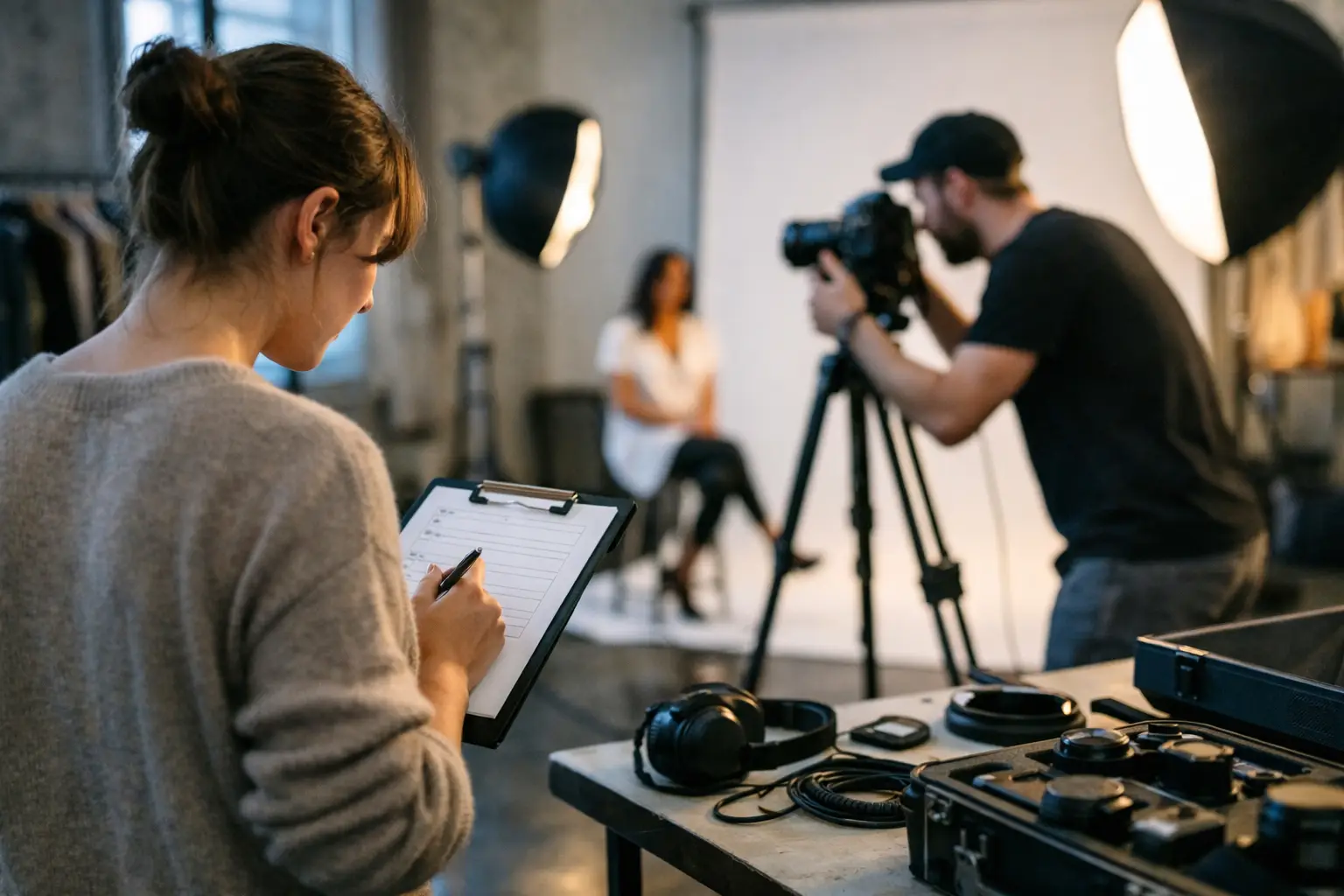
A good studio can make a straightforward job feel properly under control. A poor fit can leave you moving furniture, chasing extension leads and losing half the morning before the first useful frame. This studio hire checklist is based on the questions we would want answered before a commercial shoot, headshot session or content day.
The space matters, of course. But so do the practical details around it: who is coming, what needs photographing, how long set-up really takes, and whether there is somebody on hand if the plan needs adjusting. Get those right and the shoot feels calmer from the moment everyone walks through the door.
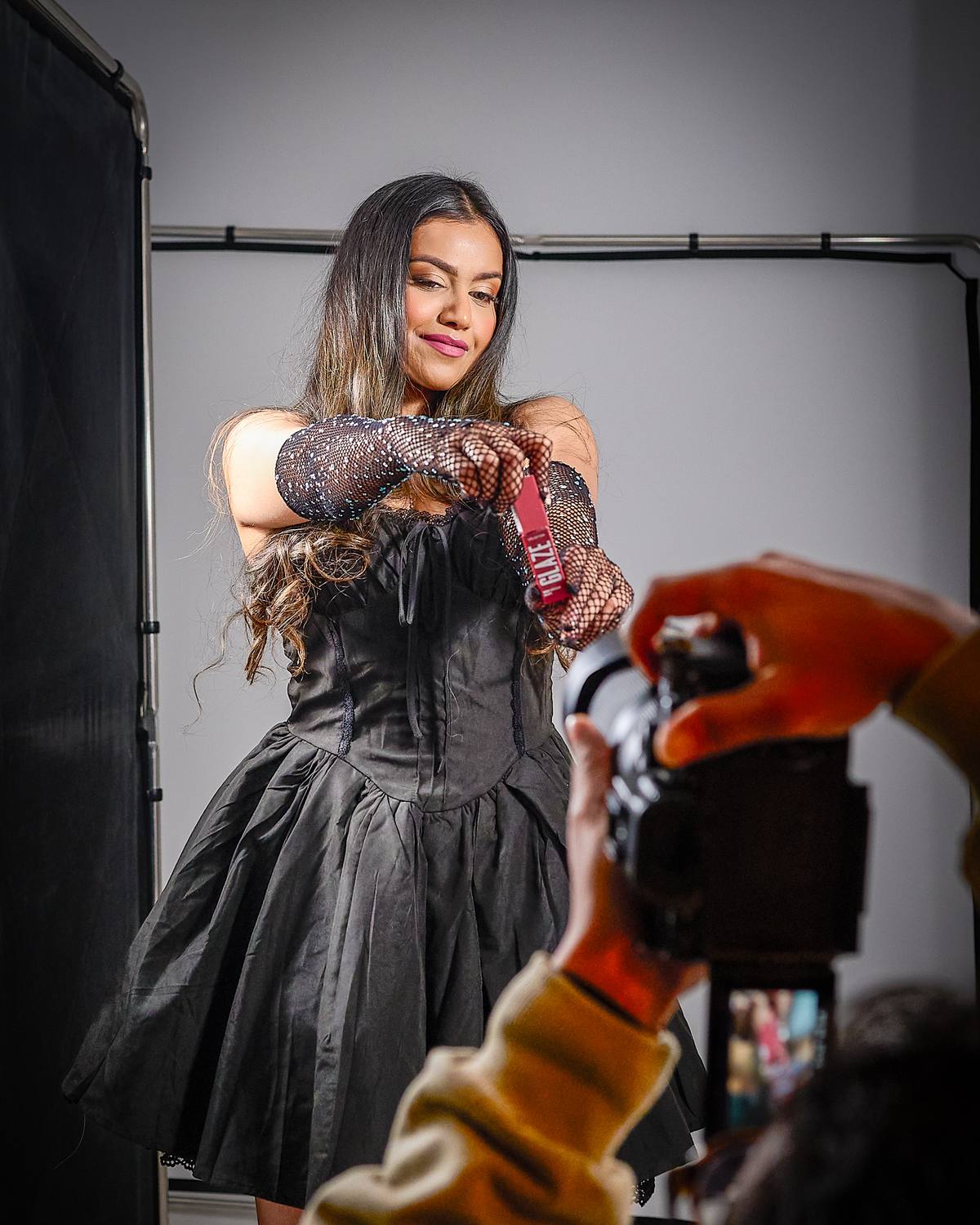
Start with the job, not the room
Before looking at studio photos or comparing hourly rates, write down what the shoot needs to achieve. A founder’s headshots, a clothing campaign, a product launch and a filmed interview may all need a studio, but they have very different demands.
For a product shoot, think about the number of items, their size, the backgrounds required and whether you need consistent images for an ecommerce site. For a team headshot day, privacy, a waiting area and a repeatable lighting set-up tend to matter more. If you are filming, sound, ceiling height and space for the crew become part of the brief.
It also helps to be clear about who is doing what. Some clients need a well-equipped space where their own photographer or content team can work. Others need the studio and an experienced photographer to plan the lighting, direct people and deliver finished imagery. Neither approach is better. It depends on your team, your confidence and the stakes of the job.
The essentials to confirm
A studio listing can tell you a lot, but it will not always tell you what affects the working day. Confirm these points before booking:
● Usable space and ceiling height. Ask for dimensions, not just a description such as “spacious”. Include room for lights, stands, a stylist, a client table and movement around the set.
● Daylight and blackout. Bright natural light is useful for some portraits and content, but it can be a nuisance where you need consistent flash or video lighting. Check whether windows can be controlled.
● Included equipment. Find out exactly what comes with the hire: lights, softboxes, triggers, stands, backdrops, reflectors, grip equipment, tables and seating. “Equipment available” may mean it is charged separately.
● Access and loading. Check lift access, parking, stairs, door widths and the route from vehicle to studio. This is especially relevant for bulky products, rails of clothing or video kit.
● Facilities. A clean loo, changing area, mirror, steamer, kitchen area and decent heating can make a real difference to a full-day shoot.
● Support on the day. Ask whether a studio manager or photographer is available if you need help with equipment, a lighting issue or an unexpected change to the plan.
In central Leeds, for example, loading and parking need thinking through before the day rather than five minutes after a courier arrives. If you are bringing samples, props or a full production team, build that into the call sheet.

Look properly at the kit list
For many clients, kit is where the apparent bargain stops being a bargain. Hiring a bare room and then adding lights, modifiers, stands and backgrounds from elsewhere can quickly become more expensive and more complicated than booking a studio with the right equipment already on site.
Ask for the make-up of the lighting kit rather than simply the number of lights. A portrait might need one or two lights and a reflector. A catalogue shoot can need several lights, larger modifiers and enough stands to keep the set safe. For video, check for continuous lights rather than assuming flash heads will do the job.
Also ask about backgrounds. Which paper colours are available? Is a white, black or grey backdrop included? Has a roll already been marked or scuffed by previous work? Fresh background paper may be charged by the metre, which is perfectly reasonable, but it should be clear before you book.
If you are not used to studio lighting, a large kit list can be more intimidating than helpful. It is often more useful to have a photographer or studio team set up a simple, flattering arrangement that suits the brief. That is particularly true for headshots. Most people do not need more lights. They need good direction and a relaxed few minutes in front of the camera.
Allow time for more than the shoot itself
The booking time is not the same as camera time. A two-hour studio hire can disappear quickly if it includes unloading, setting up, steaming clothes, doing make-up, photographing ten products and packing everything away.
We normally suggest allowing a sensible margin at both ends. Set-up is where lighting gets tested, backgrounds are checked and the team gets familiar with the room. Pack-down is when you return furniture, clear rubbish and make sure nothing has been left behind. Rushing either end is how small problems become expensive ones.
For a business content day, work backwards from the final shot. If you need staff portraits, product details, workspace images and a few social clips, give each section a time allocation. Add a short break and assume somebody will arrive late or need a wardrobe change. It is not pessimistic. It is how a shoot stays useful.
Think about people as well as pictures
The best studio hire experience is not only about technical capability. It should help people do their best work. Your team may be used to meetings, not being photographed. An actor may arrive nervous about a new set of headshots. A product owner might be handing over samples they have spent months developing.
Brief everyone beforehand. Tell them where to go, when to arrive, what to bring and what the images are for. For portraits, suggest a small choice of outfits rather than a suitcase full of options. Avoid fussy patterns where possible, unless they are part of the brand. For products, bring clean samples and spares. Labels peel, packaging creases, and food does not always look as fresh at 3pm as it did at 9am.
If hair and make-up are involved, make sure there is a suitable area, a good mirror and enough time before photography starts. If clients are attending, arrange somewhere comfortable for them to sit without crowding the set. These details are not glamorous, but they change the mood in the room.
Check safety, insurance and studio rules
Any professional studio should have clear expectations around safe working. Lights get hot, stands can be knocked and trailing cables are a trip hazard. A tidy set is quicker to work on and safer for everyone.
Ask about public liability cover, fire exits, maximum capacity and any restrictions on smoke, animals, paint, confetti, food or large set builds. If you are bringing your own equipment, check whether you need evidence of portable appliance testing or insurance. For a straightforward portrait session this may be simple. For a bigger production, it needs sorting before the crew arrives.
It is also worth confirming the cancellation and overtime policy. Creative jobs sometimes run long, especially when there are multiple decision-makers or products that need extra preparation. Knowing the cost of an extra hour prevents an awkward conversation later.
Make the brief usable on the day
A useful brief is not a glossy document full of vague references. It tells the team what must be achieved. Include the purpose of the images, where they will appear, key products or people, required formats, brand colours, reference images and any non-negotiable shots.
For ecommerce, mention whether the images need a pure white background, specific crops or consistent angles. For PR photography, explain the publication, deadline and the people who need to be included. For headshots, say whether the priority is casting range, a corporate profile or a more editorial feel.
Bring the brief in a format people can use quickly. A shot list on a phone or a printed sheet is often enough. Leave room for good ideas on the day, but make sure the essential images are captured first. The clever extra shot is only useful once the hero image is safely in the bag.
Choose support that matches your confidence
There is no prize for struggling through a studio set-up alone. If you have a capable production team and know the equipment, a self-hire may be exactly what you need. If you are a small business owner who needs polished product images but has never worked with flash, photographer-led production will usually save time and give you more dependable results.
At Dock Street Studio in Leeds, we see both approaches work well. The difference is being honest at the booking stage about the outcome you need and the support you want. A quick conversation can identify whether you need extra kit, a longer slot, help with lighting, or simply a calm space where your team can get on with the job.
The right studio should give you fewer things to worry about, not more. Turn up with a clear brief, enough time and the practical details agreed, and you can put your attention where it belongs: making images that are genuinely useful once the shoot is over.
Frequently Asked Questions
What should I check before booking a photography studio?
Confirm usable floor space and ceiling height in actual dimensions, whether daylight can be blacked out, exactly what equipment is included in the rate, access and loading arrangements, facilities such as changing space and a steamer, and whether anyone is on hand to help during the shoot.
How long should I book the studio for?
Longer than the camera time. Allow for unloading, set-up, wardrobe or make-up, the shoot itself, and pack-down. A two-hour booking disappears fast once all of that is included, so build in a margin at both ends.
Do I need to bring my own lighting?
Not if the studio includes it. Ask for the make-up of the kit rather than just the number of lights, and check whether continuous lighting is available if you are shooting video. Hiring a bare room and sourcing kit separately often costs more than booking a properly equipped studio.
Can I hire the studio without a photographer?
Yes. Dry hire suits teams who are comfortable with lighting and want the space to work in. If the images need to carry a launch or a campaign and nobody on your team works with flash regularly, photographer-led production usually gives more dependable results.
What about insurance and safety?
Ask about public liability cover, capacity limits, fire exits and any restrictions on smoke, animals, paint or food. If you are bringing your own equipment, check whether evidence of testing or insurance is required before the day.
Where is the studio and how do I book?
Dock Street Studio is at Unit 9, 30–38 Dock Street, Leeds LS10 1JF, in central Leeds near Leeds Dock and a short walk from Leeds train station. Book online, email hello@dockstreetstudioleeds.co.uk, or call 0113 4400102.
Book studio hire in Leeds
Tell us what the shoot needs to achieve and roughly when, and we will work out whether you need dry hire, extra kit or a photographer on hand. Book online, email hello@dockstreetstudioleeds.co.uk, or call 0113 4400102.
About the author
Mark Wheelwright
Commercial photographer & studio owner | ISO Photographic Ltd, Leeds
Dock Street Studio, Unit 9, 30–38 Dock Street, Leeds LS10 1JF
Mark is a commercial photographer with 18+ years’ experience working with brands, businesses and individuals across Leeds and West Yorkshire. He has completed more than 900 projects covering headshots, commercial and product photography, events and video, and runs Dock Street Studio in central Leeds. Clients include Clear Channel, Habitat, Kirkstall Brewery and Paystrax.
900+ projects | 300+ five-star reviews | 1M+ shutter count
Shot, written and built by the Dock Street team
Every guide on this blog comes from the team at Dock Street Studio — Mark behind the camera with 18+ years' experience, Nicole on styling and lighting, Beya on video and bookings and Austin keeping the site fast and findable. If you'd rather have us do it than read about it, book a session or explore our photography services in Leeds.