


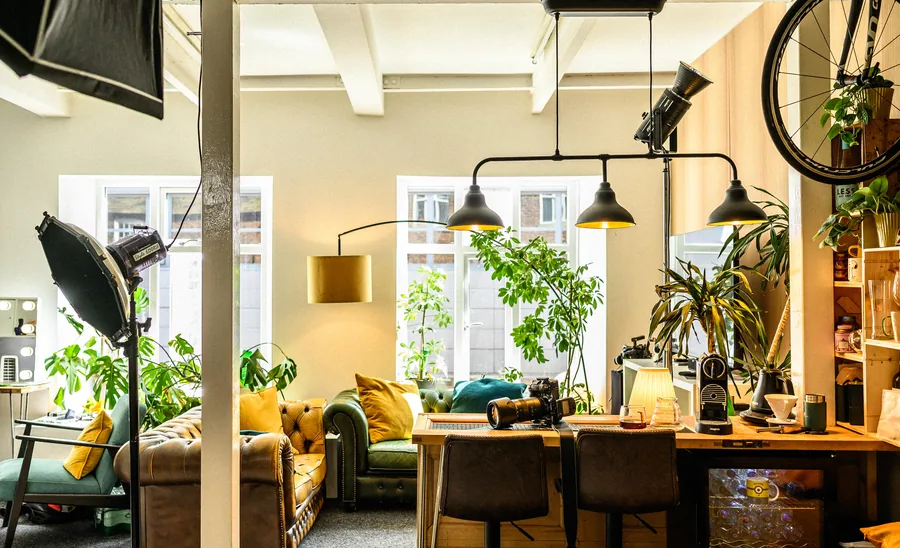
A Leeds bakery at half six in the morning, trays going in and nobody through the door yet, is worth more than any backdrop we own. A factory floor with green fluorescent tubes, a forklift reversing through your best frame and a shift that cannot stop for photographs is a different proposition. Both of those are location shoots.
So when a client asks whether we should shoot on location or studio, we don't have a house answer. It comes down to one question: is the place part of what you're selling? If it is, take the camera to it and budget properly for the awkwardness. If it isn't, the studio will give you more usable frames per hour, more or less every time.
When the place has to be in the frame
Some businesses can't be photographed honestly anywhere else. An engineering firm in Hunslet needs its own workshop in shot, because the scale of the machinery is the point. A farm shop needs its counter. An architect photographed inside a finished project gives a client a reason to believe the work is theirs.
Location also wins whenever the pictures have to prove something. Recruitment campaigns, press features, case studies, anything showing a service actually happening: a plain background quietly removes the evidence. People doing rather than posing carries a weight a clean set won't replicate, and we'd rather say that plainly than talk you into the room we happen to own.
There's a practical side too. Your people, stock, machinery and displays are already where they need to be. Moving a full retail display, a fitted kitchen or a piece of plant across to LS10 costs a good deal more than sending a photographer across the city.
What a location day actually involves
The part clients underestimate is setup. A good location photograph isn't an accidental one. We're looking at where the light falls, what's sitting in the background, whether staff can still get past us, and which hour of the day the space is at its quietest. That takes time before a single frame is worth keeping.
Then there's everything a mood board never mentions. Deliveries arriving, customers walking through shot, a meeting room somebody else suddenly needs, security passes, a lift that's out, nowhere to park a car full of lighting. All manageable, all needing room in the schedule.
And the weather, which in Yorkshire can go from decent window light to flat grey rain in the time it takes to make a coffee. A shot that worked beautifully at ten can look like a different building by noon.
Mixed lighting is the one that catches people out
Most working interiors have three or four light sources fighting each other. Daylight through one wall, warm ceiling spots, a strip of something greenish over the back counter, a screen glowing on somebody's face. Skin tone is where it shows first.
We can balance it with our own lights, but that means stands, cables and repeated adjustments, and a restaurant mid-service is not the place for any of that. Sometimes the right call is to work light and fast and accept images that feel real rather than polished.
Which is why a location day rarely lands as cheaply as it looks on paper. The space is free. The travel, the access window, the extra lighting, the assistant and the contingency for one bad hour are not.
Where studio control earns its keep
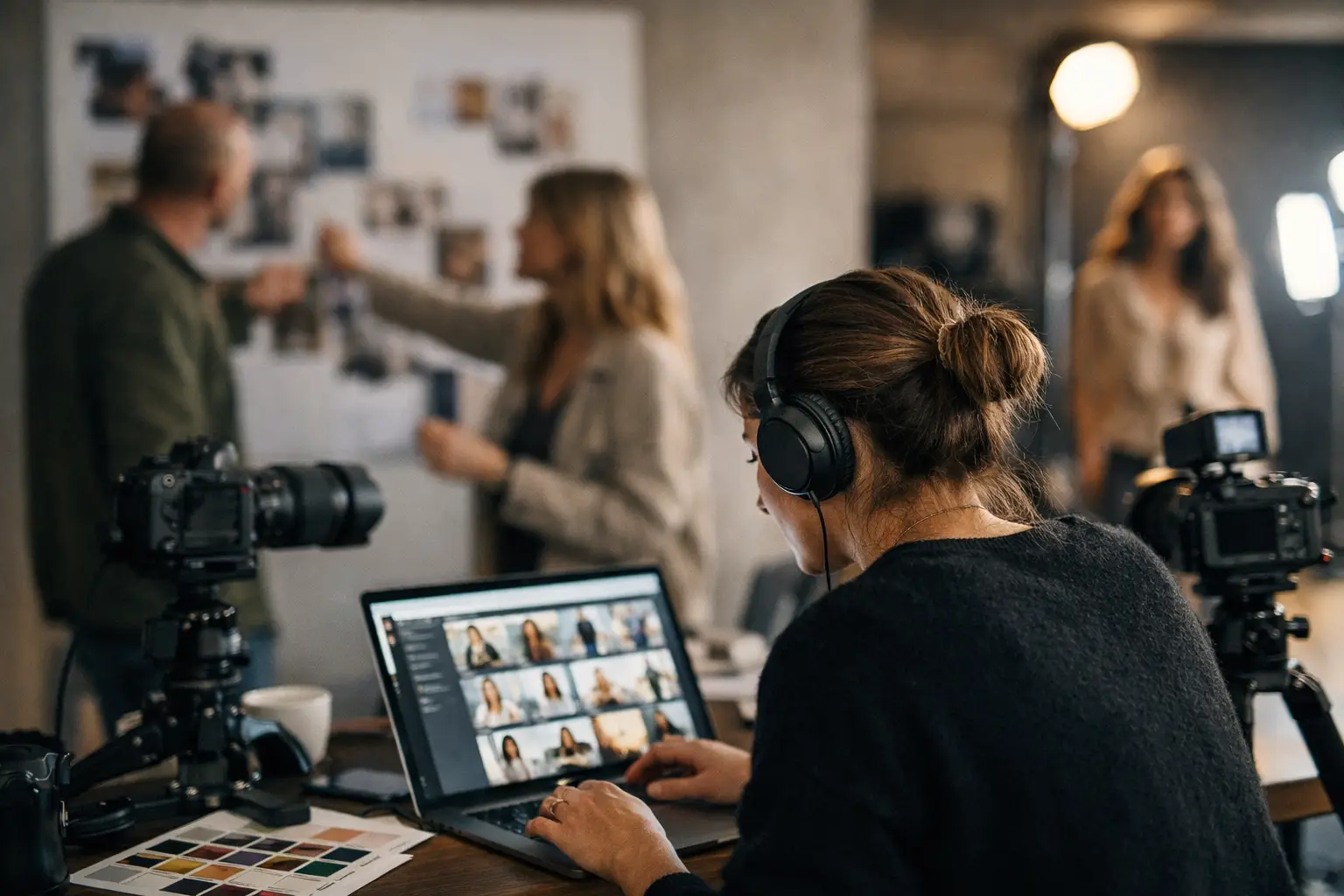
Control matters most when things have to match. A product range needs to look like a range. Campaign assets shot in March need to sit beside ones shot in May without anyone noticing the join. Forty frames across a long day need the same colour at five o'clock as they had at nine.
That's the studio's real argument, and it's a narrow one: repeatability. Same light, same background, same distances, no weather, no stray coffee cup to clear out of the corner every few frames. For product and e-commerce work it tends to settle the question on its own, because inconsistent colour across a catalogue is obvious on a website in a way it never is on the day. We shoot tethered into Capture One, so you can see what we've got on a proper screen while there's still time to change it.
Control isn't the same as bland, either. Coloured backdrops, props, surfaces and texture will give you warmth or an editorial feel without a window in sight. But use the studio deliberately. If your brand is built around your workshop in Holbeck or your stall on Kirkgate Market, stripping the setting out removes the thing your customers recognise you by.
Location or studio: how we usually decide
Ask what somebody needs to understand in the three seconds they'll give the image. If the answer is "these are real people doing real work, at this scale, in this place", go on location. If it's "this is the product, clearly, and here are eleven more like it", come to us.
The sensible answer is often both, and that's what most brand and campaign shoots end up being. A studio half-day for the range and the clean assets, then a couple of hours on site for the process and lifestyle frames. Our commercial shoot planning guide covers how to sequence a day like that without losing the light.
A short recce settles most of the rest, even a phone video walkthrough. We want to see the windows, the backgrounds, the access, and who needs to approve what. If it's portraits you're weighing up rather than commercial work, we've written about studio headshots versus outdoors separately.
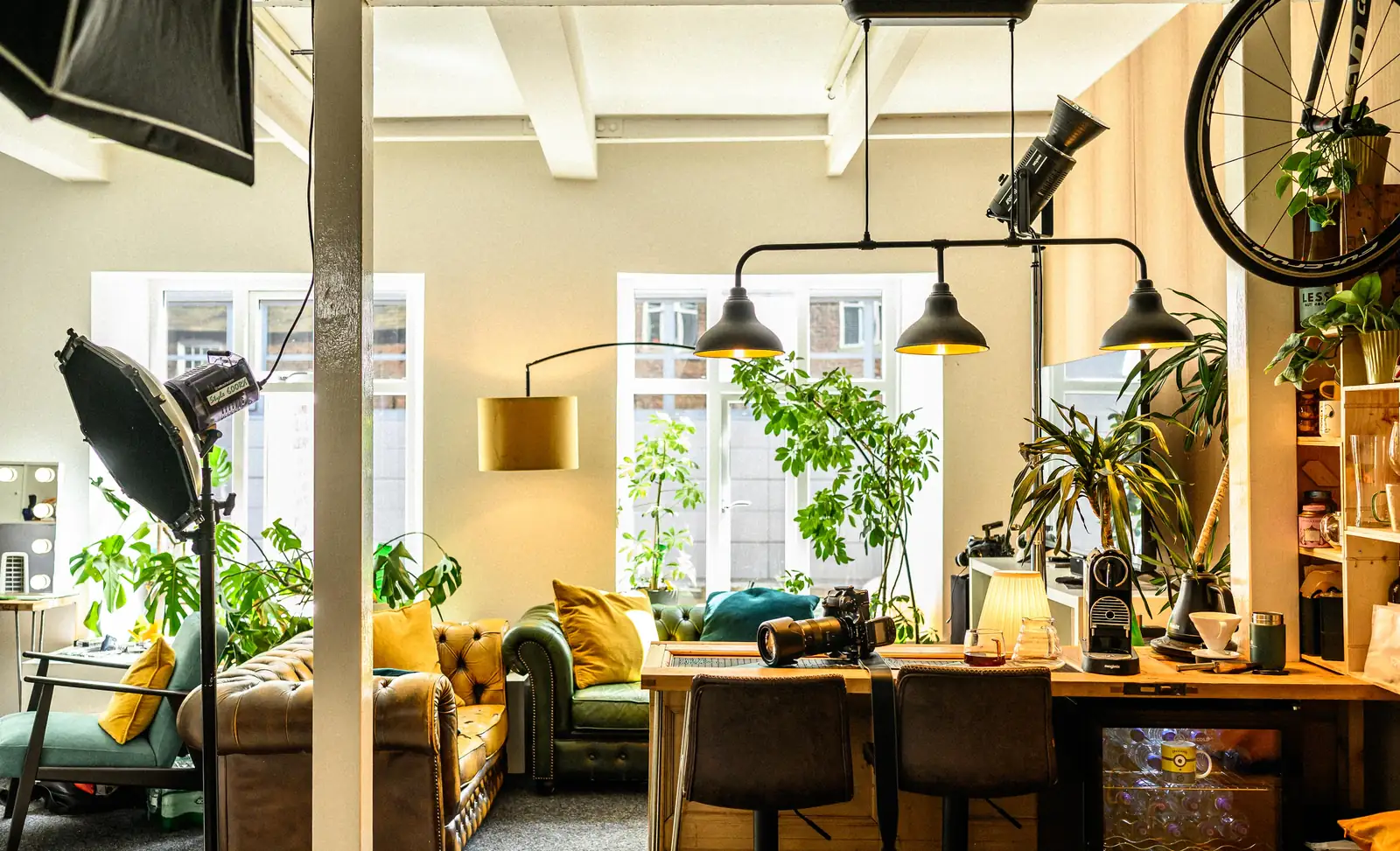
If you would rather run the studio day yourselves, photography studio hire in Leeds starts at £125 for two hours with lighting, backdrops and green screen included. For product work the studio side of the decision is covered in more detail in product image types explained.
Frequently Asked Questions
Is a location shoot cheaper than working in the studio?
Not usually, once travel, access time, extra lighting and a contingency for a slow hour are in the numbers. The space itself costs nothing; the day around it does. It earns that back when the location genuinely belongs in the pictures.
Can you photograph us while we're still open?
Often yes, and sometimes that's the whole point, because real customers make better pictures than staged ones. Tell us your quietest hour and we'll build the schedule around it, working lighter where we'd otherwise be in the way.
What happens if the weather turns on a location day?
We shoot the outdoor frames first and keep indoor setups in reserve. Yorkshire light moves quickly, so a shot list with a wet-weather order built into it saves far more days than an optimistic forecast does.
Can we do studio and location in the same day?
Yes, and it's a common way to work. The usual pattern is the controlled, repeatable material first, then a shorter block on site while there's still decent light to work with.
Where is the studio, and how do we book?
Dock Street Studio is at Unit 9, 30–38 Dock Street, Leeds LS10 1JF, near Leeds Dock and a short walk from the train station, with parking onsite. We work on location around Leeds and Yorkshire too. Book online, email hello@dockstreetstudioleeds.co.uk, or call 0113 4400102.
Plan your commercial shoot in Leeds
Tell us where the images are going and what the place adds to them, and we'll say honestly which half of the job belongs on location. Book online, email hello@dockstreetstudioleeds.co.uk, or call 0113 4400102.
Written by Mark Wheelwright
Commercial photographer & studio owner, Leeds | ISO Photographic Ltd
Dock Street Studio, Unit 9, 30–38 Dock Street, Leeds LS10 1JF
18+ years' experience | 900+ projects | 300+ five-star reviews | 1M+ shutter count
dockstreetstudioleeds.co.uk
Shot, written and built by the Dock Street team
Every guide on this blog comes from the team at Dock Street Studio — Mark behind the camera with 18+ years' experience, Nicole on styling and lighting, Beya on video and bookings and Austin keeping the site fast and findable. If you'd rather have us do it than read about it, book a session or explore our photography services in Leeds.