


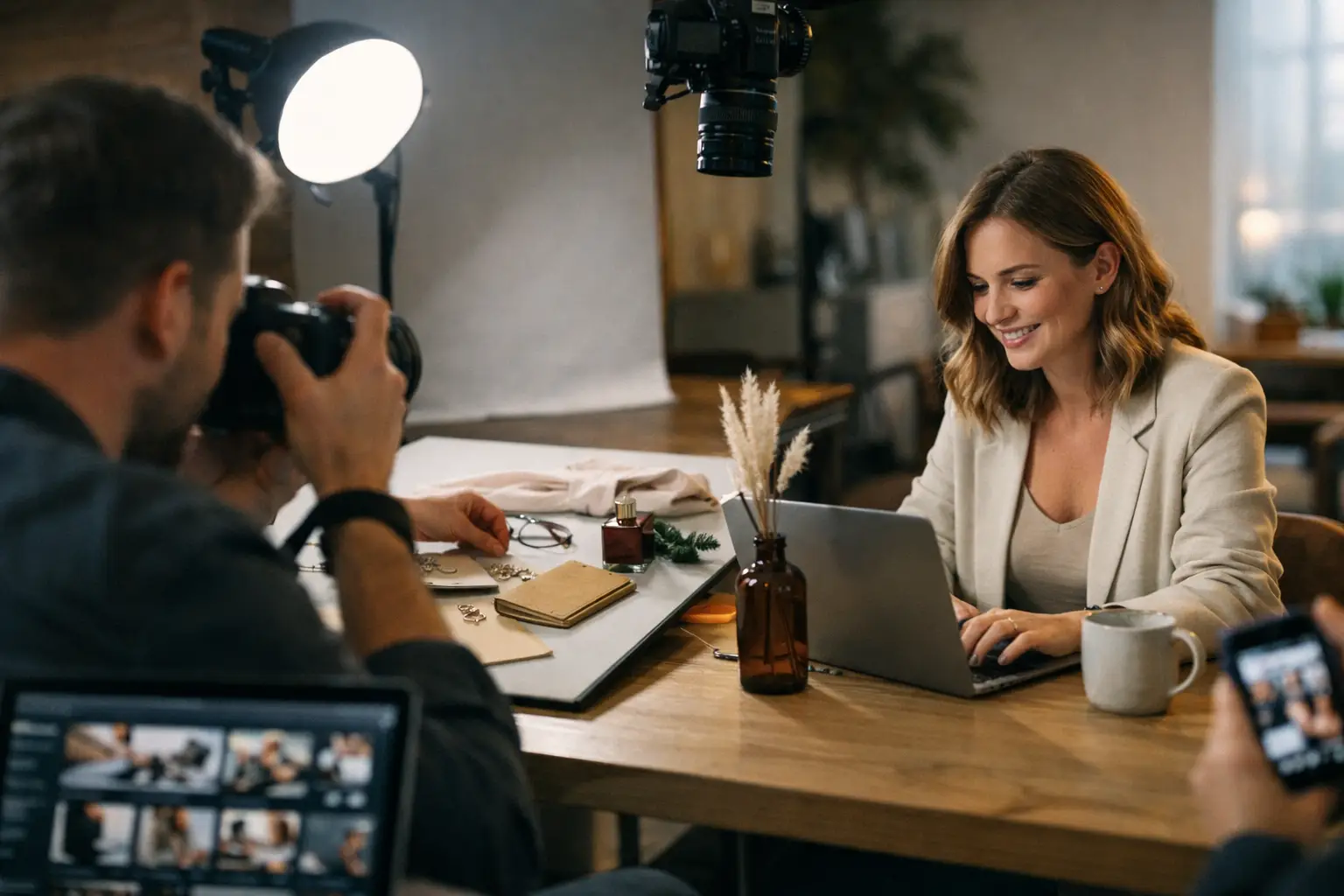
Most press shoots are not really booked around a photographer's diary. They are booked around a date somebody else has already set: the morning the release goes out, or the hour an embargo lifts. Everything else fits in behind it.
So the first question worth asking is not about lighting or location. It is what has to be true by the time the story lands, and who needs to have seen the picture before an editor does. Planning a press shoot around an announcement is mostly a scheduling job with a camera at the end of it.
The general mechanics of briefs, shot lists and schedules are covered in our commercial shoot planning guide. This post is about the announcement sitting on top of them.
A press shoot starts at the date the story goes out
Take the publication or embargo date and work backwards. Before an editor sees a picture, your own team has to choose one, whoever is signing it off has to look at it, and the caption details have to be attached to the release. That chain decides when we shoot.
Working backwards also gives you the earliest sensible date. There is usually a point where the facts stop moving: the contract is signed, the person has accepted, the lease is done. Photographing before that risks a picture of something that then changes, so the shoot wants to land in the gap between settled and public.
That gap is often narrower than people expect. If the only realistic window is the afternoon your chief executive is in Leeds between two trains, tell us early. We would rather build a simple shoot around a real half hour than a lovely one around a slot that never happens. How the files come back afterwards is a separate question, and we have covered what actually governs press photo turnaround already.
Who has to be in the picture, and who only wants to be
Every announcement has one person the story is genuinely about. Around them a group assembles: the person who did the deal, their manager, someone from the partner organisation, a couple of people who happened to be in the building.
Separate the two before the day. Write a short list of who must appear for the picture to make sense, then a second list of everyone who would simply like to be in a photograph. Shoot the first list properly and give the second list its own frame, rather than folding eighteen people into the image that has to carry the story.
Let whoever is appearing know a few days beforehand. Most people are not comfortable being photographed and would far rather have warning than be collected from a meeting and pointed at a camera. Nobody needs to arrive knowing how to stand; that part is our job, and it takes less time than people fear.
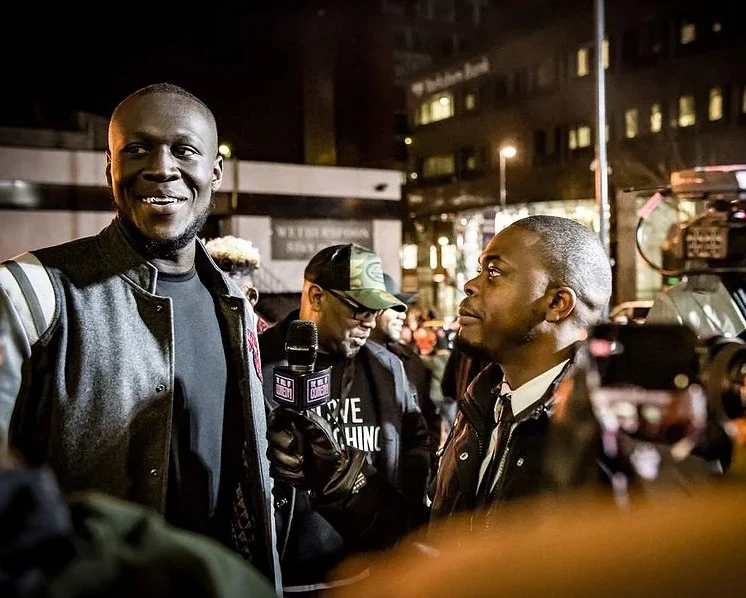
Sort the sign-offs before the day, not after it
Announcements usually involve somebody outside your organisation. A funder, a joint venture partner, a university, a client whose premises you are standing in. Any of them can have a view on a photograph, and they rarely have it quickly.
Work out in advance who outside your own team needs to see the images, and ask them what their process is. Sometimes it is a courtesy email. Sometimes there is a full press office with a queue. Either way, finding out on the morning of the release is the expensive version.
Sign-off also covers what is allowed in the frame at all. An unreleased product, a building that is not finished, a screen with live customer data on it, a member of staff who has not yet been told about the change: all much easier to rule in or out before we are set up in front of them.
Then agree how images travel while the news is still private. A proof forwarded into a group chat of forty people is a leak with a timestamp on it. We shoot tethered into Capture One, so the people choosing can see frames on a screen as we go and make the call in the room.
Shoot for the outlets you are actually pitching
Write down the publications you intend to send this to before the shoot rather than after it. A trade title in your sector, the local press and your own LinkedIn all want slightly different pictures, and a session planned for one of them will not automatically serve the rest.
Trade press tends to like a person in their real working environment, because it tells a reader something about the business. Regional news often prefers a picture with a bit of life in it. Your own channels usually want a clean, flexible portrait that crops square, crops wide, and leaves room for a headline over the top.
That does not mean shooting four versions of everything. It means knowing which one leads. If you are pitching one trade magazine you have a genuine relationship with, plan around that picture and let the others follow. Which frame you then send is its own job, and our post on the best images for press releases covers it properly.
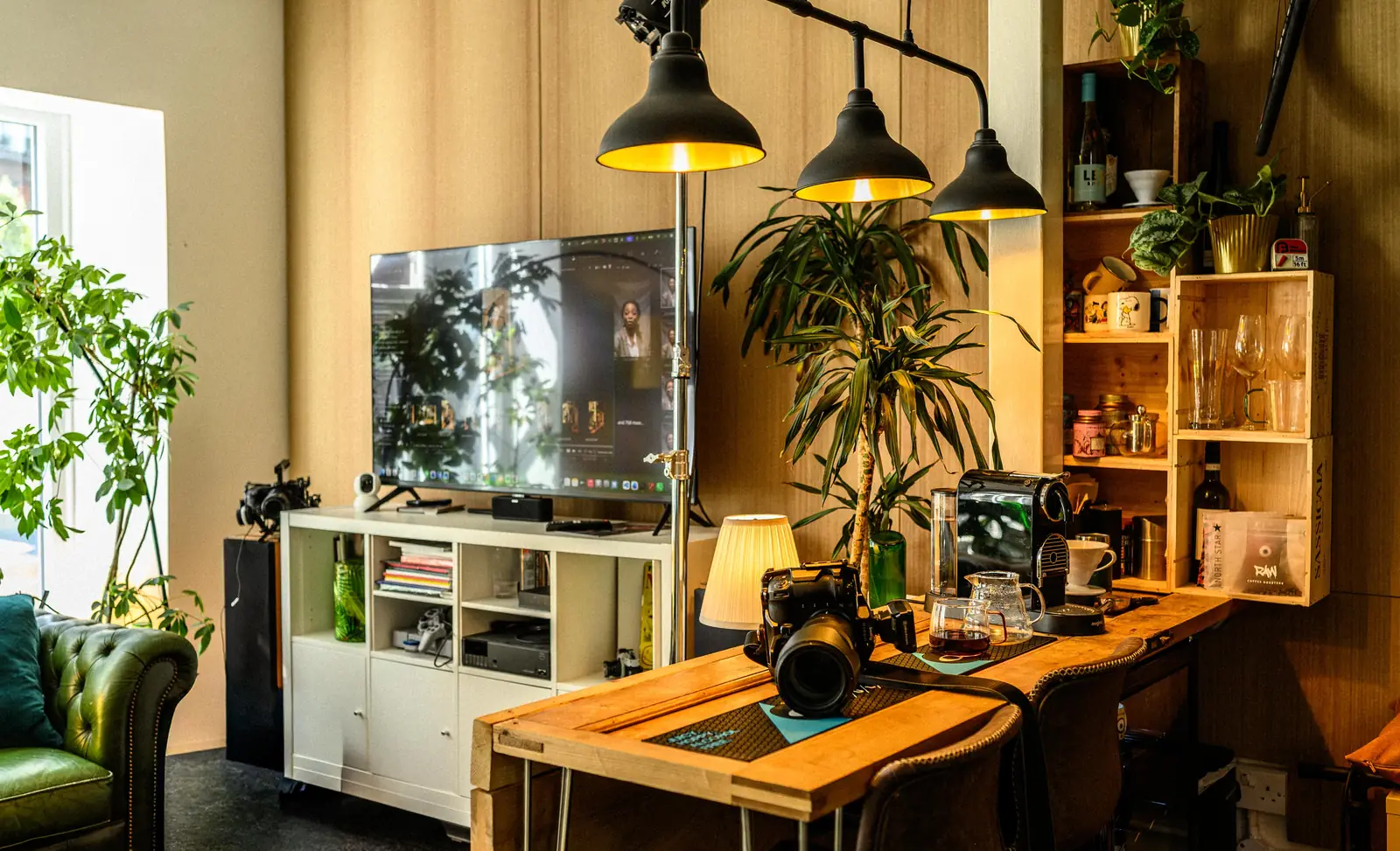
What to do when the announcement moves
Announcements move. A deal takes another fortnight, a regulator asks a question, the person being announced decides to tell their current employer first. If the shoot has already happened, the only question that matters is what still works on the new date.
Most of it usually does. A clean portrait made in a controlled space does not date, and people working and talking survives a delay perfectly well. What does not survive is anything with the date visibly attached: a signed cheque, a dated banner, or a window full of Yorkshire drizzle when the story now runs in June.
So if there is any chance of a slip, keep the dated items to one or two deliberate frames and shoot everything else clean. It costs nothing on the day and it saves paying for the whole thing twice.
If the date moves before we shoot, tell us as soon as you know. Press dates slide all the time and we can usually move with them. It is the ones that slide quietly that cause the trouble.
None of this is about staging a moment that did not happen. It is about giving real news a picture that arrives with the right people in it and nobody chasing approval the night before. We do this as part of our wider commercial photography work.
If the announcement is being made at a launch, conference or trade stand, our event photography in Leeds covers the whole day and the press frames come out of the same visit. There is a separate guide to photographing a trade show stand if that is where the story is being told.
Frequently Asked Questions
How far ahead should we book a press shoot?
As soon as the announcement date is in your diary, even if the details are still moving. It is far easier to hold a slot and refine the brief later than to find one once the release is written.
Can you photograph us before the news is public?
Yes, and that is how most announcement work happens. We are used to shoots where the story is not out yet, and nothing from the session appears on our own channels without your say-so.
What happens if the announcement is delayed?
The pictures usually still work, provided you have avoided visible dates, dated signage and anything obviously seasonal. Let us know as soon as the date moves and we will rework the plan with you.
Where are you based, and how do we book?
Dock Street Studio is at Unit 9, 30–38 Dock Street, Leeds LS10 1JF, in central Leeds near Leeds Dock and a short walk from the train station, with parking onsite. Book online, email or ring us and we will talk the announcement through first.
Plan your announcement shoot in Leeds
If you have a date in the diary and a story to go with it, send us the release plan and we will work backwards from it with you. Book online, email hello@dockstreetstudioleeds.co.uk, or call 0113 4400102.
Written by Mark Wheelwright
Commercial photographer & studio owner, Leeds | ISO Photographic Ltd
Dock Street Studio, Unit 9, 30–38 Dock Street, Leeds LS10 1JF
18+ years' experience | 900+ projects | 300+ five-star reviews | 1M+ shutter count
dockstreetstudioleeds.co.uk
Shot, written and built by the Dock Street team
Every guide on this blog comes from the team at Dock Street Studio — Mark behind the camera with 18+ years' experience, Nicole on styling and lighting, Beya on video and bookings and Austin keeping the site fast and findable. If you'd rather have us do it than read about it, book a session or explore our photography services in Leeds.