


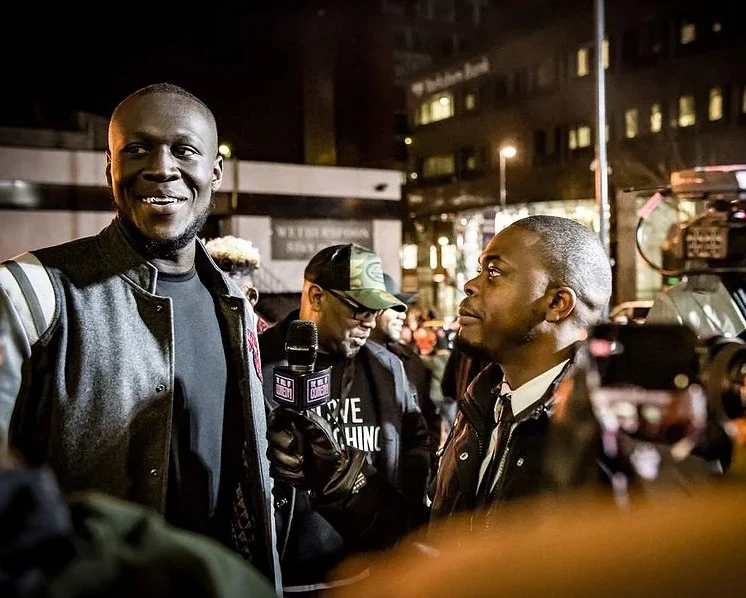
A press photograph has a very short shelf life. The story runs on the day it is announced, and by the following morning a picture desk has no reason to look at your images at all. Deliver late and you have paid for photographs that will only ever live on your own website.
So the question we get asked most on press jobs isn't about lighting or location. It's "how quickly can we have them?" The honest answer is that press photo turnaround is mostly decided before the shutter goes, by three things agreed up front: what has to be delivered first, who is allowed to approve it, and what the real deadline is. Sort those out and the editing stops being the bottleneck.
Why the day after the story breaks is too late
Journalists work to the release, not to your shoot. If your announcement lands at nine in the morning, the picture desk is making choices before lunch. Send your images that evening and the piece has usually already run, with a stock photo, an old LinkedIn crop, or nothing at all. That's the whole argument for speed: the photograph has to exist at the moment somebody is deciding whether to use one.
Not every press job is a sprint, mind. A trade monthly or a feature scheduled for a fortnight's time gives everyone room to breathe, and a fuller edit is the better use of that time. Speed costs you choice, so only buy it where it earns its keep.
What actually happens between the shutter and the files landing
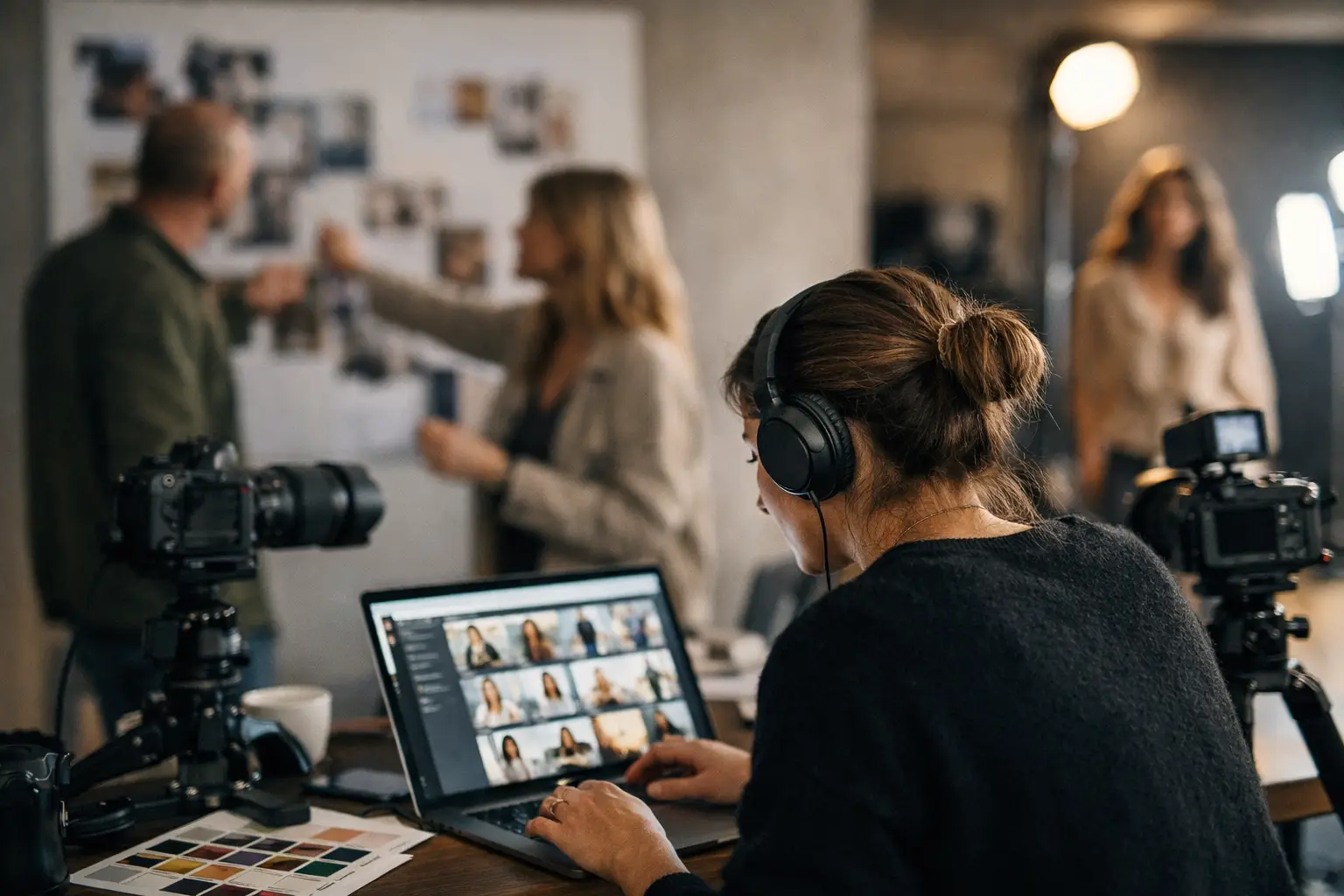
Turnaround isn't the time it takes to copy a memory card. The photographs have to be chosen, checked, colour-corrected, cropped and exported in a form the recipient can use, with names attached to the right faces.
The slow part is almost never the editing. It's the choosing, and then the waiting for somebody to agree with the choosing. A hundred frames from a launch are a pleasant problem on a quiet Friday and a serious one when the deadline is two hours away.
That's a good part of why we shoot tethered wherever the job allows. With frames appearing on a proper screen as we go, a shortlist can be agreed in the room while the subject is still standing there, rather than by email the next morning when reshooting anything is no longer an option.
Retouching is the other place people expect delay, and shouldn't want it. Press images need to look polished and still believable, so we clear the distractions, sort the colour, crop for impact, then stop. Heavy retouching takes longer and makes a picture less usable, not more.

What to decide before the shoot so the edit isn't the bottleneck
A priority list of one to five images
Tell us the handful of shots that absolutely have to go out first. Name the people who must be in them, the moment that matters most, and the shape you need. A landscape frame for a news website banner does a different job to an upright one for a magazine page.
If the person being photographed is a new appointment who has never had a proper portrait taken, don't let that worry you. Nobody needs to arrive knowing how to pose. That's our job, and it goes quicker than people expect once somebody settles.
One person who can say yes
This is the biggest single lever on speed and it has nothing to do with photography. If four people have to see every frame before anything is released, same-day quietly becomes next week, and no amount of fast editing rescues it. Nominate one person who can approve a selection on the day, reachable by phone.
The real deadline, not a hopeful one
"As soon as possible" isn't a deadline. Tell us the actual time the images need to be with the publication or the PR team, and we can say honestly whether it's achievable and what the day has to look like to get there. That is a much better conversation at the booking stage than at half four with the light going.
How "same day" and "next morning" actually work
Both come up constantly, and they are different jobs.
Same-day usually means a small, defined set. The priority list, chosen from a shortlist made while we were still on site, edited together and sent as one delivery. You get the few images that matter while they can still be used. The trade is volume: the rest of the shoot follows later, on an agreed schedule.
Next-morning tends to suit event coverage, where there is far more material. Arrivals, speakers, the presentation, reactions, sponsors. Cutting that down to a set which represents the evening properly takes longer than editing six portraits, and rushing it tends to show.
What we won't do is print a promise on a web page. The cut-off that works depends on the day, the volume, where we're travelling from and who else has to see the files first. Ask when you enquire and you'll get a straight answer for your job rather than a number written for everybody's. If you need frames filed while the event is still running, say so in that first conversation, because it changes how the whole day is built.
The things that really slow a press delivery down
Almost none of them are photographic.
Vague briefs. "Some photos for PR" is a starting point, not a brief. Without the announcement, the people and the likely publication, nothing can be prioritised, so everything is treated as equally important and none of it arrives early.
Missing names. Job titles, correct spellings, who is who in the group shot. Easy to collect while everyone is still in the room, painful to chase the next day. Our guide to the best images for press releases covers what a picture desk wants alongside the files.
Scope quietly growing. Halfway through, marketing decides it would also like a full library for social. Fair enough, but that's a second job hanging off the first, and better scheduled as one.
What a realistic press photo turnaround looks like
For most commercial and press work, the shape that works is two deliveries rather than one. A small priority set, fast enough to go out with the story, then the fuller edited gallery afterwards for your own channels and next year's annual report.
Ask for both when you book, in that order, and get the timings written down. Then give the photographer the story, the people and the deadline early enough that the day can be built around getting pictures out, not just taking them.
Frequently Asked Questions
How quickly can we get press photos back?
It depends on the job, the volume and how many people need to approve the selection, so we agree it with you at the booking stage rather than quoting a standard time. Tell us the publication deadline and we'll tell you straight whether it works.
Can you send images while an event is still going on?
Mention it at the enquiry, because it changes how the day is planned and what else can realistically be covered. It isn't something to spring on a photographer halfway through a launch.
Does a studio portrait speed things up?
Often, yes. Photographing a key person in a controlled setting before the announcement goes live means the picture exists on the day the story breaks, which removes the deadline from the equation entirely.
Where is the studio and how do we book?
Dock Street Studio is at Unit 9, 30–38 Dock Street, Leeds LS10 1JF, near Leeds Dock and a short walk from the train station, with parking onsite. Book online, email hello@dockstreetstudioleeds.co.uk, or call 0113 4400102.
Talk to us about your press deadline
Tell us when the story goes out and who signs the pictures off, and we'll tell you honestly what's achievable. Book online, email hello@dockstreetstudioleeds.co.uk, or call 0113 4400102.
Written by Mark Wheelwright
Commercial photographer & studio owner, Leeds | ISO Photographic Ltd
Dock Street Studio, Unit 9, 30–38 Dock Street, Leeds LS10 1JF
18+ years' experience | 900+ projects | 300+ five-star reviews | 1M+ shutter count
dockstreetstudioleeds.co.uk
Shot, written and built by the Dock Street team
Every guide on this blog comes from the team at Dock Street Studio — Mark behind the camera with 18+ years' experience, Nicole on styling and lighting, Beya on video and bookings and Austin keeping the site fast and findable. If you'd rather have us do it than read about it, book a session or explore our photography services in Leeds.