


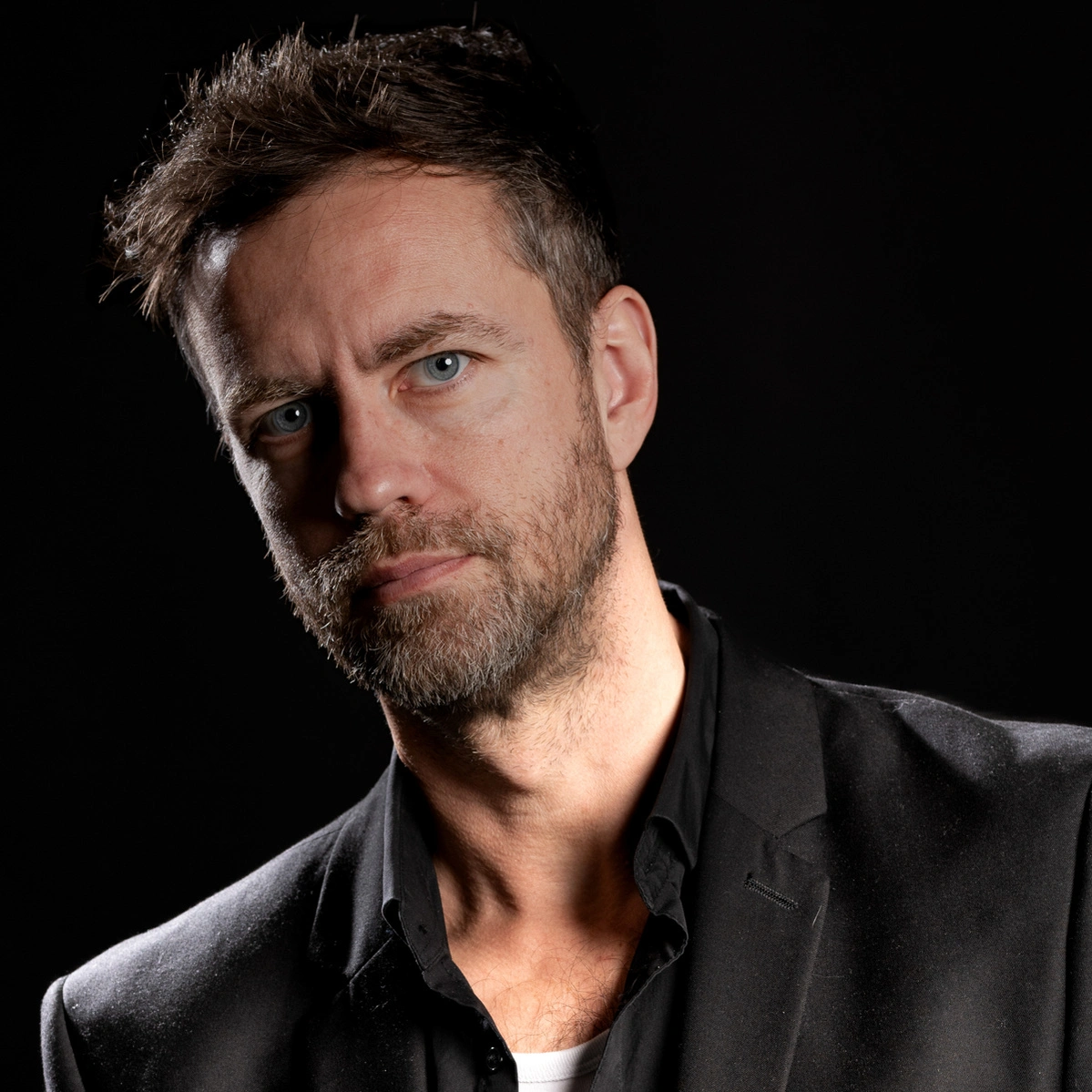
Ask us which headshot poses work best and the honest answer is that it depends on what the picture has to do. There is a safe default, though, and it is a good one: shoulders turned a little away from the lens, a small lean forward, and your eyes on the camera. It suits most faces, gives a flat frame some depth, and reads as both professional and approachable.
From there it is a matter of range. A squarer, tighter pose adds authority. A candid moment caught mid-conversation adds warmth. Most of the headshot poses we shoot in a session are variations on those three, and the rest of this post explains how to get each of them right, and what to fix when one is not working.
The five fundamentals every headshot pose uses
Whatever the pose, the same five small adjustments do most of the work. Get them right and the rest tends to fall into place, which is broadly the case Scale Headshots make in their guide to professional posing, and it matches what we see on the studio floor.
Body angle
Turn your shoulders 30 to 45 degrees away from the camera rather than facing it square on. It narrows the silhouette and stops the picture looking like something for a passport.
Chin
Bring it forward and slightly down — a small, slightly odd movement, a bit like a tortoise. It sharpens the jawline and gets rid of the shadow under the chin that a straight-on pose creates. Practise it in a mirror before you come in. It feels unnatural at first, and it is the quickest fix for a double chin in a photograph that we know of.
Shoulders
Drop them. Most people carry tension there without noticing, and the camera notices for them. “Breathe out and let your shoulders go” is one of the most useful things we say all day.
Lean
Shift a couple of inches towards the lens. It is a tiny move and it adds energy, so the pose stops looking stiff or distant.
Eye line
The camera sits at eye level or a touch above, and we check for catchlights — the small reflections in the eyes that make a face look alive rather than flat. That part is our job, not yours, but it is worth knowing why we keep fiddling with the light.
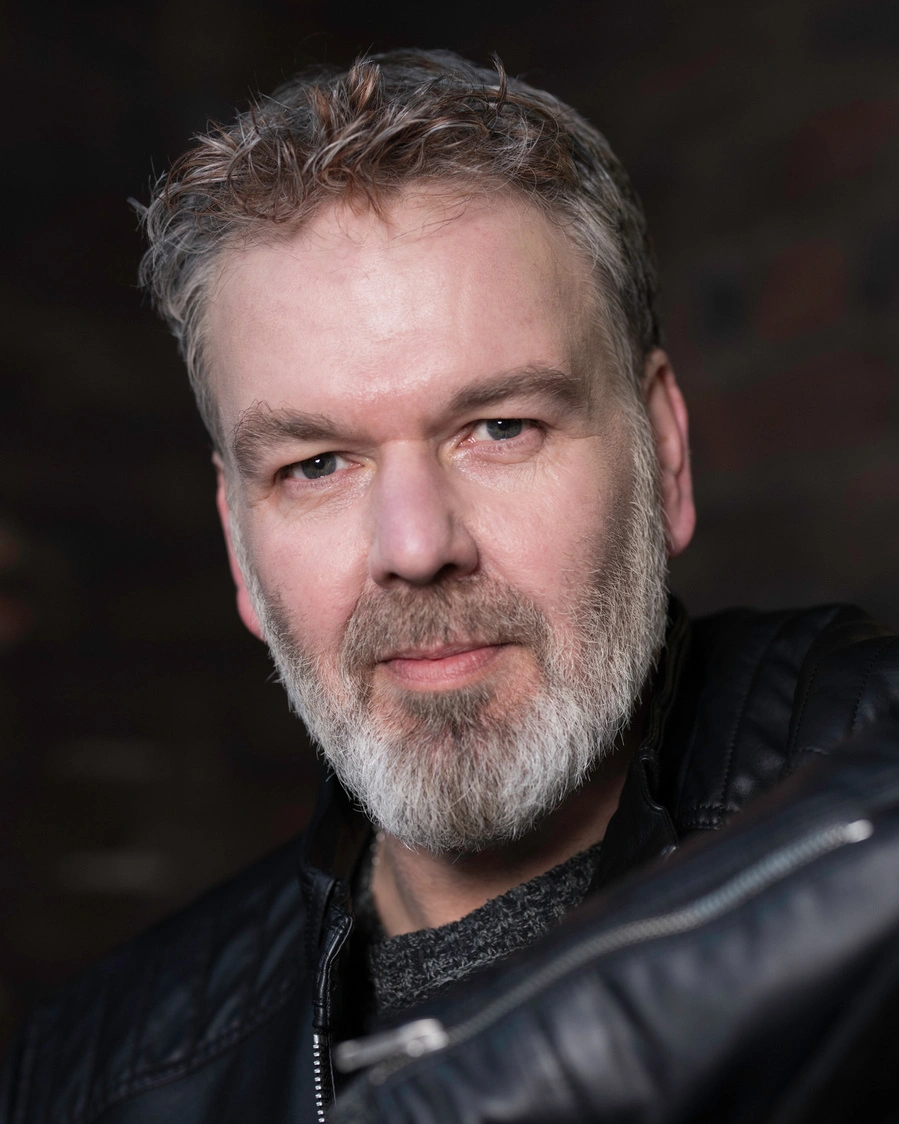
Headshot pose ideas and when to use each
Once the fundamentals are second nature, the pose becomes a question of what the image is for. Different jobs call for different energy, and we will usually walk you through two or three of these in one sitting.
Classic head-on with a lean
Shoulders square, chin dropped, small lean forward. Best for corporate bios and staff directories where consistency across the team matters more than personality.
Three-quarter angle with the head turned back
The universal default. Shoulders turned, head rotated back towards the lens, direct gaze. It works for LinkedIn, casting profiles and almost everything in between.
The power pose
A smaller body angle, chin slightly raised, a controlled closed-mouth expression. Suited to leadership pages and executive profiles, and anywhere the brief wants authority over friendliness.
Candid variations
A real laugh prompted mid-conversation, a glance away from the lens, a light hand to the face. These read as natural, and they are increasingly what founders and team pages ask for when they want personality over polish.
Environmental and editorial poses
Using the space around you — a doorway, a bit of kit, a textured wall — to add context and say something about what you do. The brick wall at Dock Street earns its keep here.
Actors usually need at least two of these in one session, because casting directors expect range: one warmer, one sharper. Plan the wardrobe and expression changes beforehand rather than improvising on the day. Our guide to preparing for actor headshots covers this in more detail, and our actor headshot sessions are built around getting both looks in one booking.
How expression and eye contact change what your headshot says
A natural smile beats a performed one every time, and viewers can tell the difference even when they could not say why. We get there by prompting a real reaction rather than asking for “cheese”: a daft question, a bit of chat between frames, occasionally a joke that is not very good.
For a more composed, confident look there is the “squinch”: a gentle tightening of the lower eyelids without the cheeks joining in. It reads as focused rather than startled. Looking straight down the lens builds trust; looking slightly off camera gives a candid, storytelling feel instead.
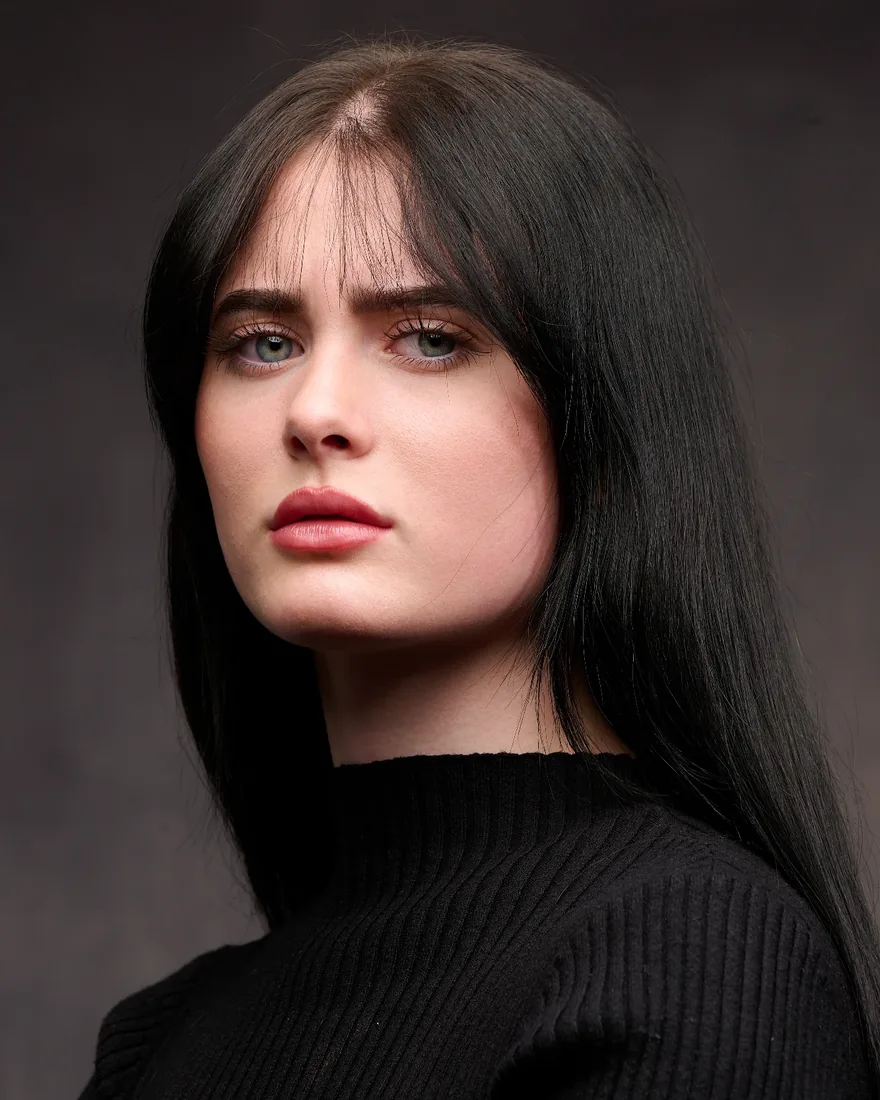
This is not only a matter of taste. Research by Sutherland and colleagues found that changeable cues such as expression and viewpoint shift a viewer’s judgement of trustworthiness far more than fixed facial structure does. A happy expression measurably lifts how trustworthy and likeable a face appears. In plain terms, the expression you choose matters more than the face you were born with, which most of our more nervous sitters find reassuring.
What to do with your hands
The default is simple: keep them out of frame unless they are adding something specific. A hand that wanders in without a purpose pulls the eye away from the face, and the face is the whole point.
When hands do earn a place, a light rest on the chin or jaw can add a thoughtful note if it is used sparingly. Adjusting glasses or touching a collar works when it happens naturally rather than being held for the camera. In seated poses, hands resting on the lap or an armrest keep the lines of the shot clean.
Avoid arms crossed at chest height, floating fingers and clenched fists. All three read as defensive or tense, which undoes the approachable tone most headshots are after.
Common mistakes that ruin a good pose, and the quick fixes
Most weak headshots fail for the same handful of technical reasons rather than because the pose was wrong. Fstoppers’ list of the mistakes that kill a headshot points to lighting and eye focus as the two biggest culprits, and we would not argue.
Flat or overhead lighting
On-camera flash and harsh overhead light put shadows under the eyes and flatten the features. Soft, directional light from the side with a little fill fixes it in seconds. It is the main reason we shoot headshots under studio light rather than trusting whatever the Leeds sky is doing that morning.
Wrong camera height or distance
Shooting from too low or too close distorts proportions. Camera at eye level, a short telephoto lens, or simply step back.
Dead eyes
Missing catchlights make even a good pose look lifeless. The main light needs to reflect visibly in the eyes, and focus stays locked on the nearer eye.
Busy backgrounds and tight crops
Both pull attention from the face. A clean, uncluttered background and a slightly looser crop almost always look more professional, a point Ally Whitlock’s headshot guidance makes more than once.
Over-retouching
Smoothing every pore and line looks artificial. We fix the blemish that will be gone next week and leave skin looking like skin, because a believable picture is the one that gets you the meeting.
How we direct headshot poses in a session at Dock Street Studio
Every headshot booking at Dock Street Studio starts with a short conversation to pin down the brief: what the images are for, which poses matter most, and what a good result looks like by the end. It takes the guesswork out of the day and keeps the session pointed in one direction. Our session guide for the Leeds studio walks through the whole thing.
The first ten minutes are for loosening up, not for the shots that matter. We talk, we try a few poses, we let the stiffness wear off before the camera starts earning its keep. Because we shoot tethered into Capture One, you can see the frames on a proper screen as we go, which is the fastest way to understand why the chin thing works. From there the direction is short and specific: drop your shoulders, chin forward and down, give me a real laugh.
Wardrobe shapes how a pose reads on camera too, particularly colour and fit. Our own advice on what to wear for headshots is the place to start, and there is some further outfit guidance for professional photos if you want a second view. Retouched images are delivered within 48 hours, so you are not waiting long to see the results.
If you are ready to put these poses into practice, our headshot photography packages start at £95 for a LinkedIn Express session, with the In-Depth Portrait at £200 for a fuller range of poses and expressions in one booking. Brands and agencies needing more than a single headshot can look at our commercial photography services as well.
Frequently Asked Questions
What are the five posing fundamentals for a headshot?
Body angle of 30 to 45 degrees, chin forward and down, relaxed shoulders, a small lean towards the lens, and the camera at eye level with visible catchlights. Together they fix most posing problems whichever pose you choose.
What are the most common headshot mistakes?
Flat or overhead lighting, missing catchlights, busy backgrounds, crops that are too tight, and over-retouching. Each has a quick fix: soft side lighting, the right camera height, a clean background, and a light touch in post that keeps skin texture natural.
Should I smile in a headshot?
For most professional and LinkedIn headshots, yes, as long as it is a real one. Research on first impressions shows a happy expression measurably increases perceived trustworthiness. Leadership and editorial shots sometimes call for a more controlled, closed-mouth expression instead, and we will usually shoot both.
What looks best in a headshot?
A three-quarter body angle, a small forward lean, relaxed shoulders and direct eye contact with visible catchlights flatters the widest range of faces. It adds depth, slims the frame a touch, and reads as both approachable and professional.
Do I need to arrive knowing how to pose?
No. We direct every frame, and the first few minutes of a session are for settling in rather than for the shots that count. Practising the chin move in a mirror helps, but it is not homework.
Where is the studio, and how do I book a headshot session?
Dock Street Studio is at Unit 9, 30–38 Dock Street, Leeds LS10 1JF, near Leeds Dock and a short walk from Leeds station, with parking onsite. Book online, email hello@dockstreetstudioleeds.co.uk, or call 0113 4400102.
Related reading
- Headshots at Dock Street Studios
- Face literacy: what your headshot is really communicating
- What actually changed in my new actor headshots
- Behind the scenes of a headshot session at Channel 4
Sources
- Professional headshot tips & FAQs — Ally Whitlock
- Facial first impressions: changeable and invariant facial properties — Sutherland et al.
- 10 mistakes that kill a headshot — Fstoppers
- Best professional headshot poses: 5 fundamentals + variations — Scale Headshots
Book your headshot session in Leeds
Come in with the intended uses and a couple of examples you like, and we will work out the poses over a brew before the camera comes out. Book online, email hello@dockstreetstudioleeds.co.uk, or call 0113 4400102.
Written by Mark Wheelwright
Commercial photographer & studio owner, Leeds | ISO Photographic Ltd
Dock Street Studio, Unit 9, 30–38 Dock Street, Leeds LS10 1JF
18+ years’ experience | 900+ projects | 300+ five-star reviews | 1M+ shutter count
dockstreetstudioleeds.co.uk
Shot, written and built by the Dock Street team
Every guide on this blog comes from the team at Dock Street Studio — Mark behind the camera with 18+ years' experience, Nicole on styling and lighting, Beya on video and bookings and Austin keeping the site fast and findable. If you'd rather have us do it than read about it, book a session or explore our photography services in Leeds.