


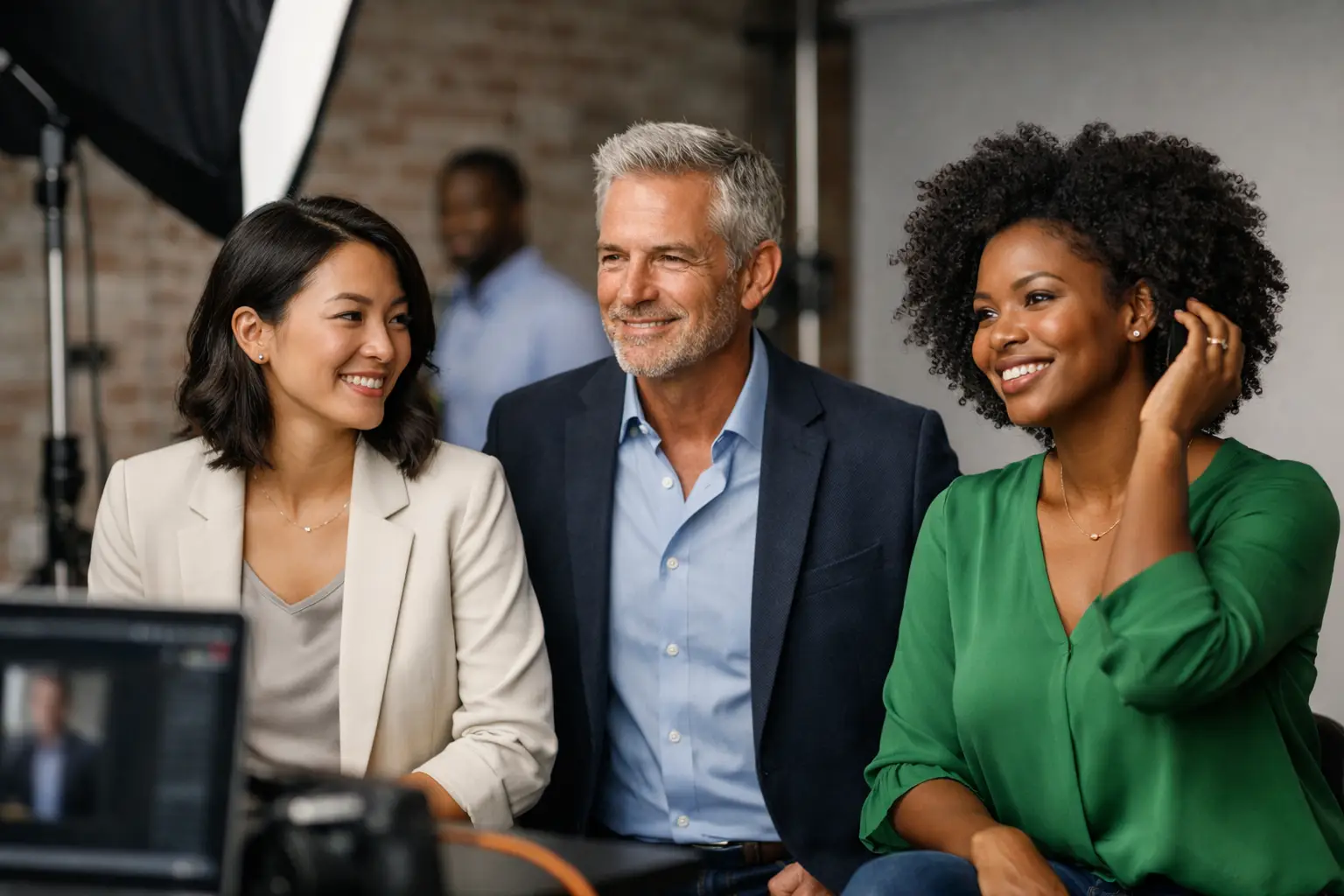
You can have the best lighting in the world, but if your outfit feels wrong the camera will show it. That is why one of the most common questions we get before a shoot is what to wear for headshots. The short answer is this: wear something that looks like you on a very good day, fits properly, and does not pull attention away from your face.
That sounds simple, but there are a few details worth getting right. Headshots are tight crops. Small clothing choices make a bigger difference than people expect. A neckline, a colour, a crease in a shirt, even the weight of a jumper can change the feel of the final image.
What to wear for headshots depends on the job
Not every headshot is doing the same work. An actor's casting headshot has a different job from a company director's LinkedIn profile or a creative freelancer's website portrait. Before you choose clothes, think about where the image is going and who needs to trust it.
If you are an actor, casting directors need to see you clearly. Your clothes should support the type of roles you could realistically play, but they should not turn into costume. If you come dressed as a detective, a chef or a barrister, it usually looks forced. Better to suggest a type lightly through fit, tone and styling.
If you are a business owner or part of a senior team, your outfit should reflect how you want clients to read you. Smart does not always mean fully formal. For some sectors, a blazer works well. For others, an open-neck shirt, knitwear or a clean, simple top feels more approachable and current.
For creatives, consultants and freelancers, there is often a bit more room to show personality. Even then, clarity matters. The aim is still to make you look credible, easy to trust and comfortable in your own skin.
Start with fit before colour or style
People often focus on colour first, but fit matters more. If something is too tight, too loose or sits awkwardly on the shoulders, it will show straight away. Headshots crop in close, but poor fit still affects posture, neckline and the overall shape of the frame.
Bring clothes that feel comfortable when you sit, stand and move. If you are constantly pulling at sleeves or adjusting a collar, that tension ends up in your expression as well. A simple top or shirt that fits cleanly is usually far better than something fashionable that never quite sits right.
Well-fitted clothes also age better. Trends come and go, but a jacket or knit that fits properly tends to look more polished and less distracting five years down the line.
Best colours for headshots
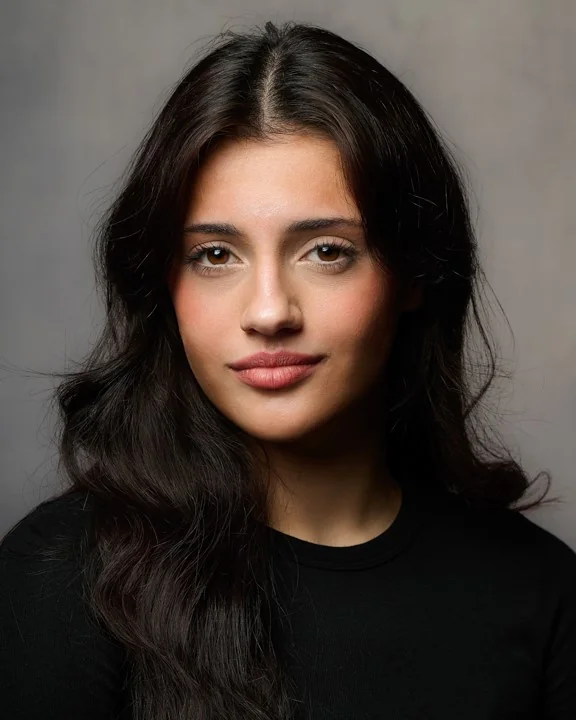
Most people suit solid, mid-tone colours. Navy, charcoal, olive, burgundy, rust, forest green, cream and muted blue tend to photograph well. They give enough shape and depth without stealing attention from your face.
Pure black can work, but it depends on skin tone, hair colour and the background. On some people it looks sharp and clean. On others it feels heavy and drains the frame. Pure white has a similar issue. It can look fresh, but it also reflects a lot of light and can become the brightest thing in the image.
Jewellery-tone colours often work nicely, especially if you want a bit more presence without going loud. Soft neutrals can also be strong when the styling is clean. The main thing is that the colour supports your skin tone rather than fighting it.
If you are unsure, bring options. We would rather help you choose between three good tops on the day than watch you try to make one unsuitable outfit work.
Patterns, logos and textures
This is where many headshots go slightly off course. Busy patterns, large logos and obvious branding pull the eye away from your face. Fine stripes and small checks can also cause odd visual effects on camera, especially under studio lighting.
Plain is usually safest. That does not mean boring. Texture photographs beautifully when it is subtle. Think knitwear, brushed cotton, linen blends, denim shirts, soft tailoring. These materials add depth without becoming the whole story.
Logos are best avoided unless the headshot is specifically for a branded internal use and the logo genuinely needs to be there. In most cases they date the image and make it feel less versatile.
Necklines and layers matter more than people think
Because headshots are framed from the chest or shoulders up, the neckline is doing a lot of work. Crew necks feel simple and modern. V-necks can be flattering, but very deep ones can feel distracting. Collared shirts tend to look polished, especially if the collar sits well and is properly pressed.
Layers can help shape the frame. A jacket over a simple top, or a knit over a shirt, can add structure and give us a few different looks quickly. The trade-off is bulk. Very heavy layers can make the upper body look wider and reduce neck definition, so it depends on the person and the style of portrait.
For business headshots, a blazer is still useful, but it is not essential for everyone. Sometimes a clean knit or an open-collar shirt looks more current and approachable. We usually advise bringing one more formal option and one more relaxed one.
What women and men should keep in mind
The basics are the same for everyone: fit, flattering colour, simple styling, and no distractions. A few practical details do come up often, though.
For women, strapless tops and very thin straps can be tricky in headshots because the crop can make it look as if you are wearing very little. That may be fine for some personal branding work, but it rarely works for corporate or casting use. Tops with a clear neckline and a bit of structure tend to photograph better.
For men, shirts that gap at the buttons or collars that collapse can make an image feel untidy quite quickly. If you are wearing a suit jacket, make sure the shoulders fit properly. Oversized jackets are common and always show.
For everyone, check under studio lighting if possible. Some fabrics go shiny. Some bra straps, vests or undershirts show through more than expected. It is better to catch that before the camera does.
Hair, make-up and grooming should still look like you
The best headshots feel believable. That applies to grooming as much as clothing. A fresh haircut is fine, but not if it still looks brand new and unfamiliar. If you usually have stubble, keep it. If you normally wear make-up, wear it in a way that feels like your version of polished.
For business portraits, matte skin usually photographs better than very dewy finishes because it avoids excess shine under lights. For actors and creatives, the same rule still helps, but the styling can be a little more relaxed depending on the brief.
Glasses are fine if you wear them every day, but clean them properly and, if you can, bring the pair you wear most confidently. We can work around reflections, but heavily tinted lenses or transition lenses can be awkward in studio conditions.
What to bring to a headshot session
Even if you think you know what to wear for headshots, bring choices. Two or three tops, or a couple of layers, gives us room to adjust once we see everything under the lights. Clothes can look different on a hanger, in a mirror and on camera.
Bring outfits on hangers if possible, not folded in a bag. Creases show. Also bring a lint roller, simple grooming bits, and any small accessories you actually wear in real life. Keep jewellery fairly minimal unless it is part of your recognisable personal style.
If the shoot is for several uses - website, press, LinkedIn, casting profile - say so in advance. We can help you choose clothes that give you range without turning the session into a full wardrobe change marathon.
Common mistakes we see
The biggest mistake is dressing for a version of yourself that does not exist in real life. If you never wear a tie, your headshot probably should not feature one unless your job truly requires it. If you work in a creative field and turn up in a suit that feels borrowed, the discomfort will show before we even click the shutter.
The second mistake is overcomplicating it. Too many accessories, too much pattern, too many layers, too much trend. Headshots work best when there is one clear subject and that subject is you.
The third is leaving the decision until the morning of the shoot. Give yourself time to try things on properly. Stand in daylight. Sit down in them. Move around. If something annoys you after five minutes at home, it will definitely annoy you under studio lights.
If you are still unsure, send over a few options before the session. We do this all the time. A quick bit of guidance beforehand can save a lot of second-guessing on the day.
The best outfit for a headshot is rarely the loudest or the smartest thing you own. It is the one that lets your face, expression and personality do the work, while still looking polished enough to earn trust the moment someone sees it.
Frequently Asked Questions
What colours photograph best for headshots?
Solid mid-tones: navy, charcoal, olive, burgundy, rust, forest green, cream and muted blue. Avoid fine stripes, small checks, large logos and anything busier than your face.
How many looks can I do in a session?
LinkedIn Express (£95, 20 minutes) is one look and 3 images. Quick-Fire Spotlight (£150, 40 minutes) covers 2–3 looks and 5 images. In-Depth Portrait (£200, 60 minutes) gives you five looks and 10 images.
Should actors dress for a type?
Suggest it lightly through fit, tone and styling. Costume looks forced. Casting directors need to see you, not a character.
Can I send outfit options before the shoot?
Yes, and we encourage it. A few phone photos the week before saves second-guessing on the day.
Where is the studio and how do I book?
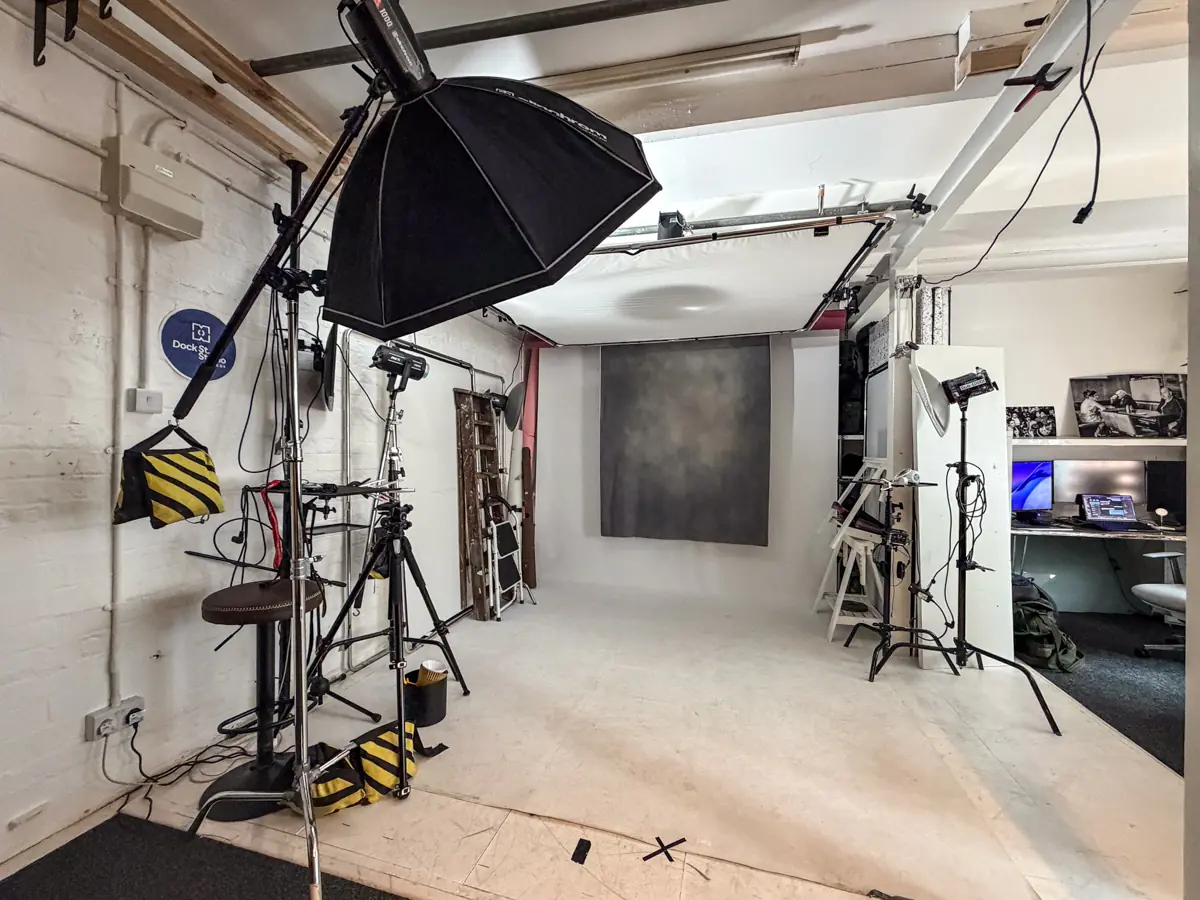
Dock Street Studio, Unit 9, 30–38 Dock Street, Leeds LS10 1JF, a short walk from Leeds train station, with lift access and parking on site. Book online, email or call and we will talk the brief through first.
Book your headshot session in Leeds
Bring two or three options on hangers and we will pick the right one under the lights. Book online, email hello@dockstreetstudioleeds.co.uk, or call 0113 4400102.
Written by Mark Wheelwright
Commercial photographer & studio owner, Leeds | ISO Photographic Ltd
Dock Street Studio, Unit 9, 30–38 Dock Street, Leeds LS10 1JF
18+ years' experience | 900+ projects | 300+ five-star reviews | 1M+ shutter count
dockstreetstudioleeds.co.uk
Shot, written and built by the Dock Street team
Every guide on this blog comes from the team at Dock Street Studio — Mark behind the camera with 18+ years' experience, Nicole on styling and lighting, Beya on video and bookings and Austin keeping the site fast and findable. If you'd rather have us do it than read about it, book a session or explore our photography services in Leeds.