


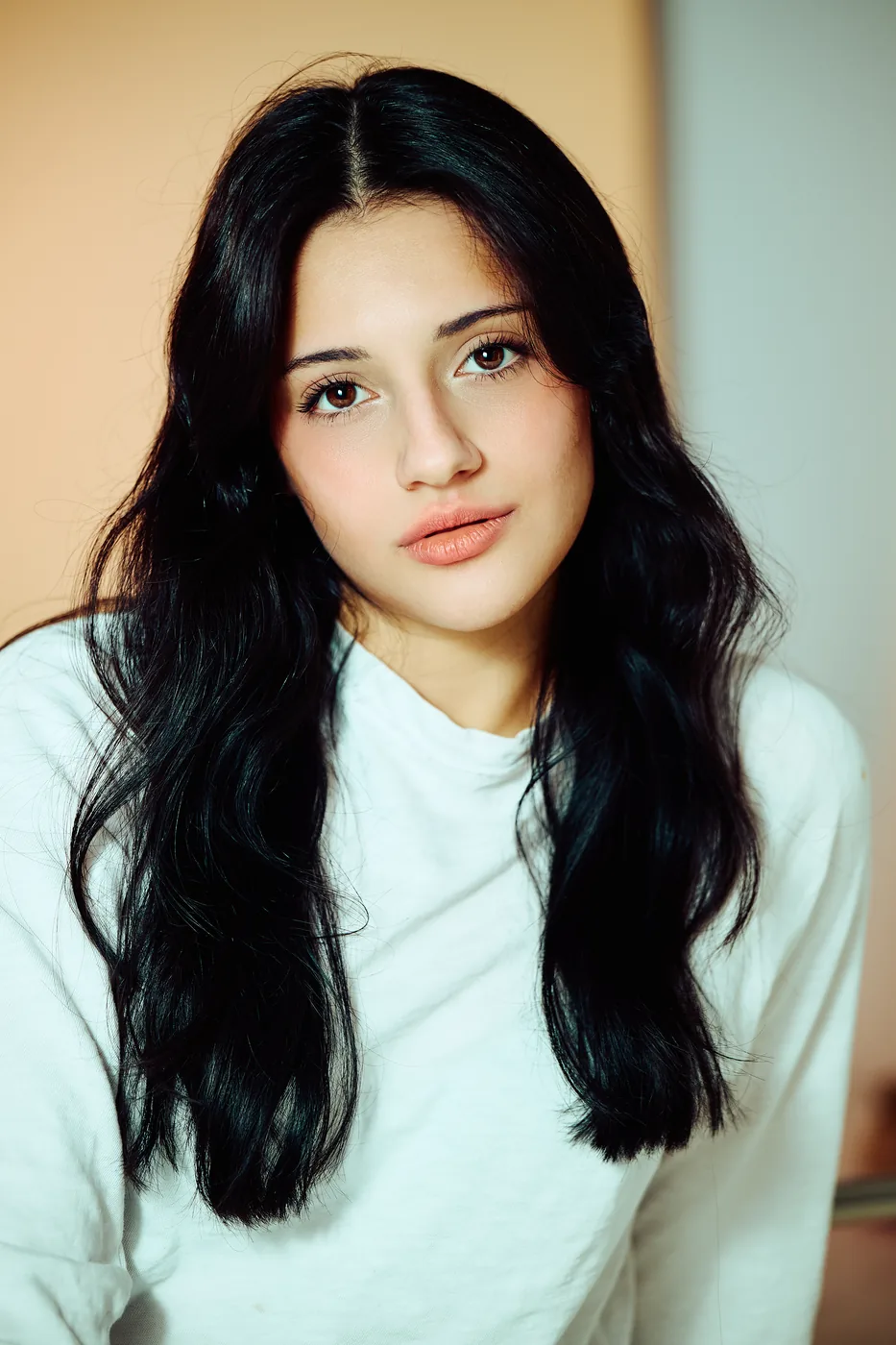
I've sat in on a lot of headshot sessions now, and one of the first things that surprised me is how faces get judged in a studio. Not the way you'd think. Nobody's measuring you against some ideal of attractiveness or polish. Your face is being read.
Mark — the photographer I work alongside at Dock Street Studio in Leeds — pays attention to things most of us never think about. How a face arrives in the frame. Whether the eyes engage before the mouth does. Whether an expression looks chosen or just happened to land. Whether the face seems to be doing something on purpose.
He calls it face literacy: understanding what a face is actually communicating once it's reduced to a single still image. And the more time I spend around it, the more I think it's the thing that separates a headshot that works from one that quietly doesn't.
Why a single image has to do so much
A headshot strips everything else away. There's no voice. No movement. No second chance to clarify what you meant. The face has to carry all of it alone — and in that setting, tiny signals end up carrying a surprising amount of weight.
Most people who sit down in front of the camera focus on their features. They ask about angles, about lighting, about which side works better. Fair enough — I did exactly the same before I understood any of this. But Mark is watching something different. He's watching tension. He's watching effort. He's watching how hard the face is working to manage itself.
The problem with an over-managed face
Here's the pattern I've noticed watching it happen again and again. When a face is over-managed, it closes in on itself. The eyes tighten. The mouth holds a position a beat too long. It isn't stiffness exactly — it's more like distance. The image feels careful. And a careful face reads as controlled, which makes it harder to trust.
The faces that read well are almost always quieter. The eyes are engaged without staring. The jaw isn't braced. The face just looks like it belongs to the body it's attached to.
And honestly, posture usually decides this before expression gets a look in. When the shoulders are tight or the weight is pitched forward, the face follows. When the body finds its balance, the face settles too. It's subtle. But it shows up in the picture every time.
"The face has to do all the work on its own. In that setting, small signals carry a lot of weight."
What this means the moment the image leaves the studio
This all matters far more than people realise once the photo is out in the world doing its job.
On LinkedIn, your headshot is often the very first point of contact. Before anyone reads your headline or your job title, they've already registered your face and made a quick, half-conscious call — approachable, credible, or hard to read. A face that looks tense or overly composed plants a little hesitation. A face that looks present and at ease tends to earn the click.
In acting, the margin is even thinner — and this is the part I feel most personally, because it's my world. Casting doesn't have time to decode an image. They're not looking for a performance in a headshot. They're looking for access. A face that feels available suggests range. A face that feels guarded suggests limits. That's the whole read, and it happens in about a second.
Why "neutral" almost never means what people think
Clients often ask for a neutral headshot. What they usually mean is something safe. What they don't realise is that neutrality without engagement rarely reads as neutral at all — it reads as closed, or unsure.
The headshots that actually work tend to sit somewhere between expression and stillness. Not smiling, not serious. Just attentive. The face looks like it would respond if you spoke to it. That's the register you're aiming for, and it's harder to fake than it sounds — which is exactly why it can't be forced. (If you want the practical side of getting there, the studio's guide on preparing for a headshot session is worth a read.)
Why longer sessions quietly produce better images
People often ask why a longer headshot session ends up giving better results. I used to assume it was just having more shots to choose from. It isn't, really. It's that a longer session gives the photographer time to wait — for the moment the face stops adjusting itself. The moment it stops checking how it's coming across.
That moment never looks dramatic. The face barely changes. It just becomes readable. And those are the images people end up actually using — not because they look impressive, but because they make sense in the places they're meant to live.
That's the thing I keep coming back to. A good headshot doesn't explain who you are. It just makes the introduction a little easier.
That's face literacy.
Frequently Asked Questions
What makes a headshot read well?
A face that looks present and at ease, rather than tense or over-controlled. The eyes engaged without staring, the jaw relaxed, the expression attentive rather than held. Faces that are managing themselves too hard tend to read as distant and harder to trust — the quieter, settled ones read as open.
Why does my headshot matter so much on LinkedIn?
On LinkedIn your headshot is usually the first thing someone registers — before your headline or job title. In that first second, people decide whether you look approachable, credible or hard to read. A face that looks present and at ease tends to invite the click; a tense or overly composed one creates hesitation.
What expression works best for a headshot?
Something between expression and stillness — not a broad smile, not a serious stare. Just attentive, as though the face would respond if spoken to. A "neutral" expression without any engagement often reads as closed or unsure rather than neutral.
Why do longer headshot sessions produce better photos?
Not because of more options, but because there's time to wait for the moment the face stops adjusting itself and simply becomes readable. That moment isn't dramatic — the face barely changes — but it's usually where the strongest images come from.
Where can I get professional headshots in Leeds?
Dock Street Studio in central Leeds photographs headshots for actors, creatives and business professionals. Sessions are relaxed and unhurried, shot tethered so you can review images as you go, with time built in to find the frames that genuinely read as you.
A note from Dock Street Studio
Everything Nicole describes here is at the heart of how Mark approaches a headshot session: watching for the moment the face settles, rather than rushing to capture a pose. It's why sessions are unhurried and why the results tend to feel like the person rather than a performance of them — whether you're shooting for Spotlight, LinkedIn, or your first set of professional images.
Book a headshot session at Dock Street Studio, Leeds: book online, or visit dockstreetstudioleeds.co.uk.
About the author
Nicole Sheyni
Actor • Copywriter • Lighting assistant, Dock Street Studio Leeds
Nicole is a working actor and copywriter based in Leeds. She is part of the Dock Street Studio team, contributing guest articles on acting craft, the industry, and the role of strong visual presentation in an actor's career. Her writing draws on lived experience in auditions, training, and professional practice.

Shot, written and built by the Dock Street team
Every guide on this blog comes from the team at Dock Street Studio — Mark behind the camera with 18+ years' experience, Nicole on styling and lighting, Beya on video and bookings and Austin keeping the site fast and findable. If you'd rather have us do it than read about it, book a session or explore our photography services in Leeds.