


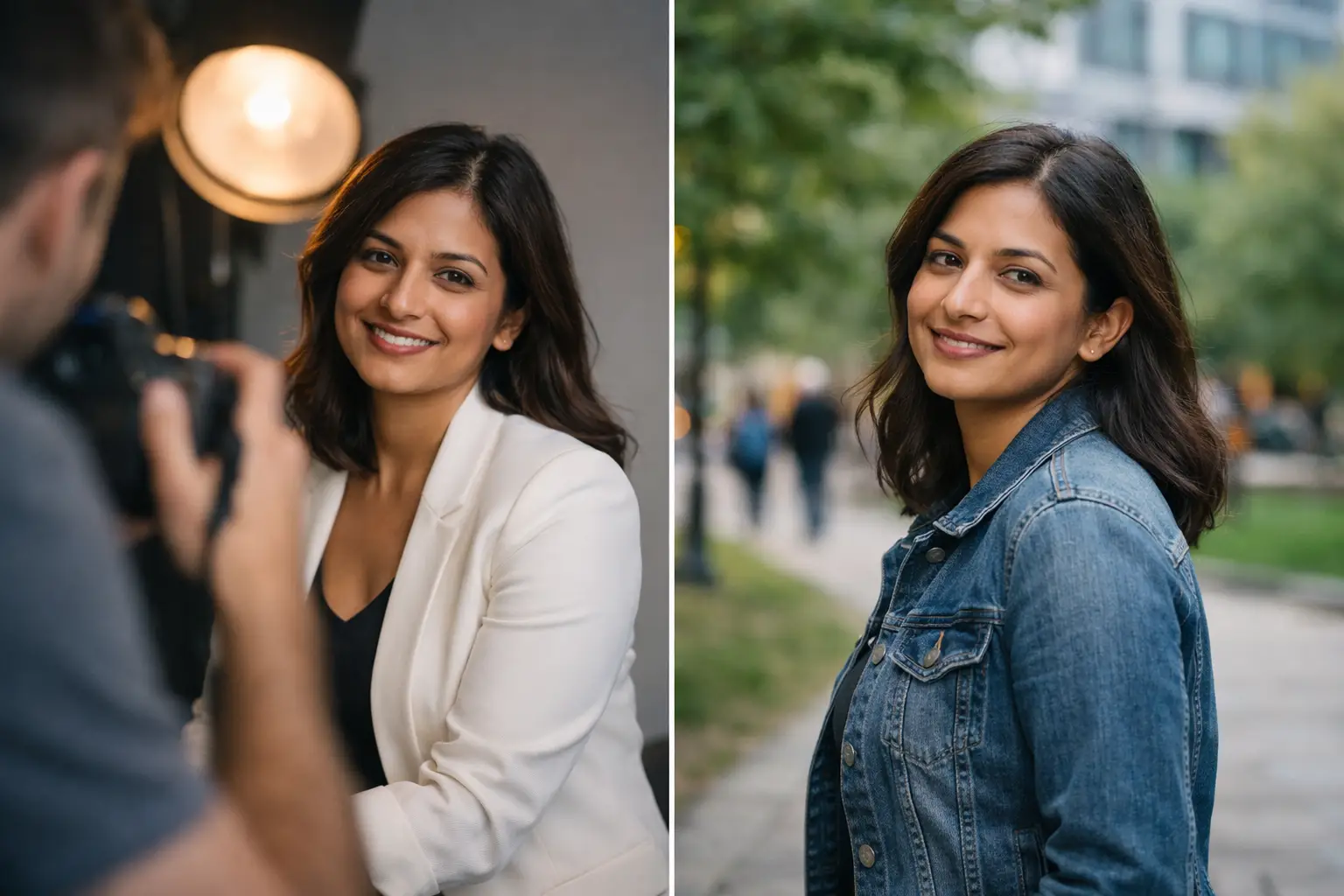
A strong headshot isn't just a flattering picture. It needs to look like you on a good, well-rested day, while giving the right person a clear sense of who they're about to meet. So when clients ask us about studio headshots or outdoor portraits, the answer is rarely a flat yes or no. The best setting depends on what the image needs to do.
For an actor, that may mean a clean, casting-friendly portrait where expression takes priority. For a consultant, it might be an approachable image that works on LinkedIn, a website and a press release. For a creative business owner, it could mean showing a little more of the world they work in. Both options can look excellent. They simply tell different stories.
Start with the job the headshot has to do
Before thinking about backgrounds, outfits or whether you prefer brick walls to plain backdrops, consider where the headshots will appear. A casting profile, company website, speaker bio and editorial feature all make slightly different demands.
Studio work is often the sensible choice when consistency matters. If a company needs portraits of ten people over several weeks, we can match the background, lighting and framing from one session to the next. That keeps the finished team page looking professional even when people come in on different days. It's also useful for actors who need a straightforward image that lets their face carry the shot.
Outdoor portraits tend to suit people whose work is closely linked to place, character or movement. An architect may look at home near a project site. A chef could be photographed outside their restaurant. A musician, maker or independent retailer might want Leeds streets, textured walls or a more open setting to bring some personality into the frame.
Neither approach is automatically more creative. A clean studio headshot can have plenty of character when the lighting, expression and styling are right. Equally, an outdoor image can become distracting if the setting competes with the person in it.
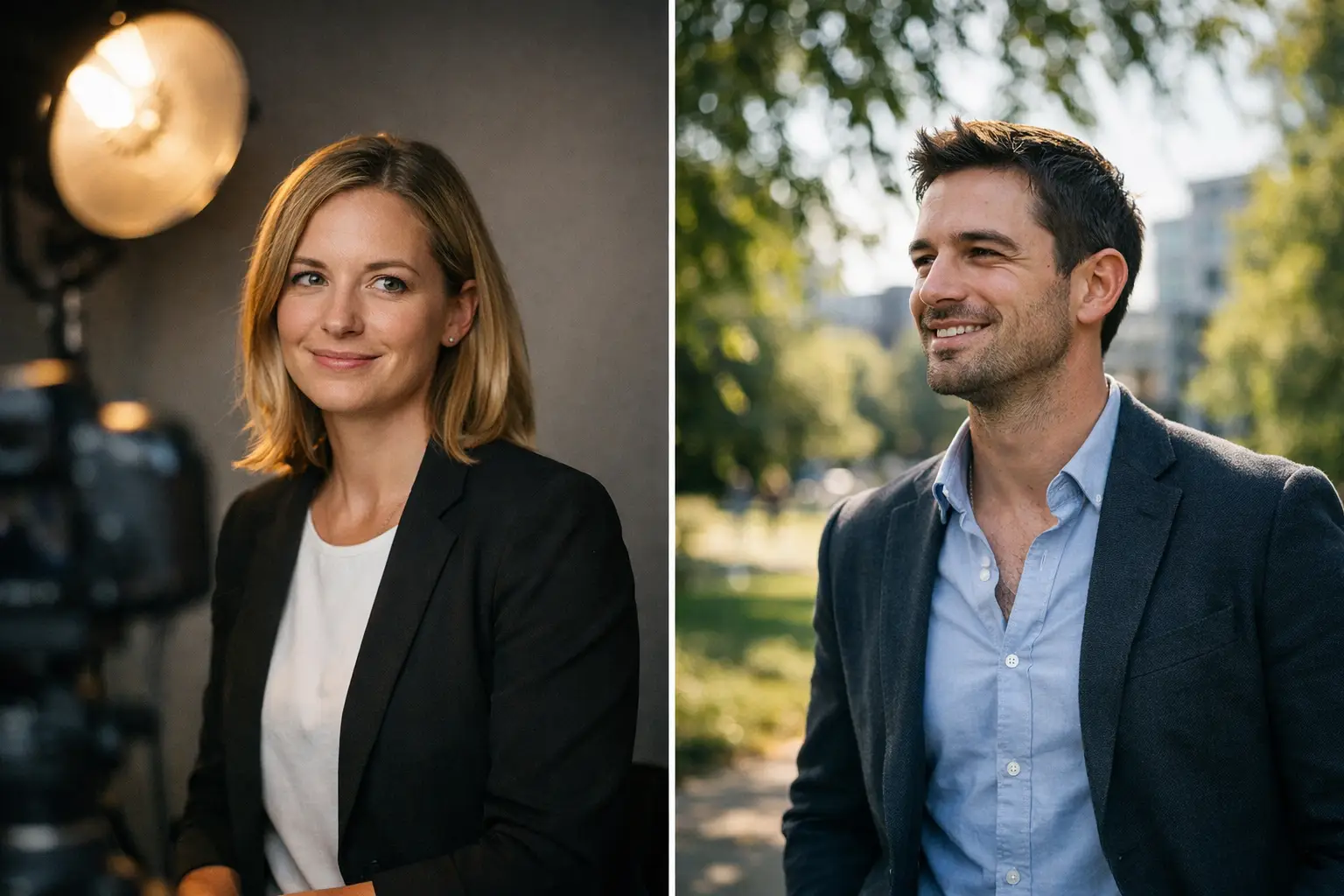
What a studio headshot gives you
The main advantage of our photo studio in Leeds is control. We control the light, the background, the temperature and the pace of the session. That may not sound glamorous, but it makes a real difference when you need reliable results.
Good lighting shapes the face gently, keeps skin tones natural and gives the eyes some life. In the studio we can make small adjustments as we work: soften a shadow, change the direction of light, alter the background tone, shift your position by a few inches. Those small changes are often what turn a decent portrait into one you're happy to use for the next couple of years.
There's also no weather to negotiate. Yorkshire light can be lovely, but it can move from bright sun to heavy cloud and rain in the time it takes to make a coffee. For a tight schedule, a studio shoot removes that uncertainty. You arrive, settle in, have a chat about the brief, and get on with it.
For people who feel nervous about being photographed, the privacy of a studio helps. There's no crowd walking past, no one watching from a cafe window, and no gust of wind undoing your hair halfway through. We can take our time, give clear direction, and work through a few natural expressions without making a fuss.
A studio background also has a useful shelf life. Neutral grey, white, black or a carefully chosen colour won't date quickly. If you're updating your LinkedIn profile, corporate bio or casting portfolio, that flexibility is worth having.
Studio doesn't have to mean stiff
Some clients hear the word studio and picture a formal pose, a fixed smile and folded arms. That's not how we work. We'll guide you on posture and where to look, but the aim is always a believable expression, not a stock-photo version of confidence.
We can keep the composition simple while varying the feel. A closer crop can be direct and engaging. A slightly wider frame can feel more relaxed. Changes to light and wardrobe give you a choice of images for different uses without losing a coherent look.

When outdoor headshots work better
Outdoor headshots have an immediacy that a plain background can't always provide. The setting can make an image feel more editorial, more personal and less formal. That's often a good fit for founders, artists, freelancers and people whose public-facing role benefits from warmth.
Natural light can be flattering, particularly on an overcast day when the cloud acts like a large softbox. We look for uncluttered locations with good depth behind the subject, rather than choosing somewhere simply because it's recognisably urban. A backdrop should add atmosphere, not ask for attention.
The best outdoor locations have a reason to be there. A business owner photographed near their workspace makes a website feel more human. A designer in a part of the city that reflects their practice creates a useful editorial portrait. For a press feature, that extra context may help the picture carry more of the story on its own.
There are practical drawbacks. Weather is the obvious one, but not the only one. Busy streets create interruptions. Strong daylight produces hard shadows and squinting. Seasonal greenery can tie an image to a particular month. Permissions, parking and access can also eat into session time.
Outdoor work asks for a little more flexibility. We plan around the forecast, choose locations with sheltered alternatives where possible, and avoid the harshest part of a bright day. If the brief can't move and you need a guaranteed result, the studio is usually the lower-risk option.
Think about the background at thumbnail size
Most people will first see your headshot as a small image on a phone screen, a casting site or a social profile. At that size, a busy street scene turns into visual noise. Your face still has to be clear, well lit and easy to read.
That's why we keep outdoor backgrounds soft and uncomplicated. A bit of texture, colour or depth is enough. You don't need every detail of the city behind you for the portrait to feel rooted in a place.
The decision often comes down to brand and comfort
Your personal preference matters. If you hate the idea of standing outside with a camera on you, that discomfort will show. The same goes for a studio. Some people relax as soon as they're in a controlled, quiet space; others loosen up more easily walking between locations and talking as they go.
We'll always factor that into the plan. A good headshot session isn't about forcing you into somebody else's idea of confident. It's about creating the conditions where you can look settled, present and recognisably yourself.
For businesses, think about the broader visual identity too. If your website uses clean product photography and simple design, studio portraits may sit more naturally alongside it. If your brand is built around local work, craft, hospitality or a strong sense of place, environmental portraits add useful texture.
There's no rule saying you must choose one forever. Many clients get a core set of studio headshots for formal uses, then add a few outdoor images for social posts, editorial pieces or their About page. That gives you range without making the visual identity feel muddled.
A practical way to plan your shoot
Start by gathering the places you'll use the images: your website, LinkedIn, press, casting profiles, proposal documents, social channels. Then consider how long you need the photos to serve you. A timeless, neutral studio image usually travels further across different platforms. An outdoor image can be more distinctive, but may suit certain uses better than others.
Bring two or three outfit options rather than one. Solid colours usually work well, and it's worth avoiding tiny patterns that distract on screen. For outdoor work, think about the weather as well as the look - a coat or extra layer is useful between shots, even in a British summer. (Our guide on what to wear for headshots goes into more detail.)
Most importantly, don't feel you need to arrive knowing how to pose. That's our job. We'll help with positioning, expression and choosing the strongest frames as we go. The goal isn't to make you look like a different person — it's to make it easier for people to see the capable, approachable person they'll meet in real life.
If you're torn between a studio setting and outdoors, bring us the intended uses and a couple of examples you like. We can talk it through properly over a brew, work out what will earn its keep, and choose a setting that gives your face — and your work — the right amount of room.
Frequently Asked Questions
Are studio or outdoor headshots better?
Neither is automatically better and it depends on where the image will be used. Studio headshots give consistency, controlled lighting and a background that won't date, which suits casting profiles, team pages and corporate use. Outdoor portraits add context and personality, which suits founders, makers and editorial features.
Which is better for actor headshots?
Usually the studio. Casting profiles call for a clean, straightforward image where your face and expression carry the shot, without a background competing for attention.
Do outdoor headshots depend on the weather?
They do. Overcast days are often ideal, as cloud acts like a large softbox, but strong sun creates hard shadows and squinting, and rain can end a session. We plan around the forecast and pick locations with sheltered alternatives but if your deadline can't move, the studio is the lower-risk choice.
Can I have both studio and outdoor headshots?
Yes, and many clients do. A core set of studio headshots covers formal uses, with a few outdoor images added for social posts, editorial features or an About page. That gives range without making your visual identity feel muddled.
Can you photograph a whole team consistently?
Yes. In the studio we can match background, lighting and framing across sessions, so portraits taken weeks apart still sit together on a team page — including new starters photographed later.
Where is the studio and how do I book?
Dock Street Studio is at Unit 9, 30–38 Dock Street, Leeds LS10 1JF, in central Leeds near Leeds Dock and a short walk from Leeds train station. Book online, email hello@dockstreetstudioleeds.co.uk, or call 0113 4400102.
Book your headshot session in Leeds
Whether you need clean studio headshots, environmental portraits around Leeds, or a mix of both, we can plan a session around where the images need to work. Book online, email hello@dockstreetstudioleeds.co.uk, or call 0113 4400102.
Written by Mark Wheelwright
Commercial photographer & studio owner, Leeds | ISO Photographic Ltd
Dock Street Studio, Unit 9, 30–38 Dock Street, Leeds LS10 1JF
18+ years' experience | 900+ projects | 300+ five-star reviews | 1M+ shutter count
dockstreetstudioleeds.co.uk
Shot, written and built by the Dock Street team
Every guide on this blog comes from the team at Dock Street Studio — Mark behind the camera with 18+ years' experience, Nicole on styling and lighting, Beya on video and bookings and Austin keeping the site fast and findable. If you'd rather have us do it than read about it, book a session or explore our photography services in Leeds.