


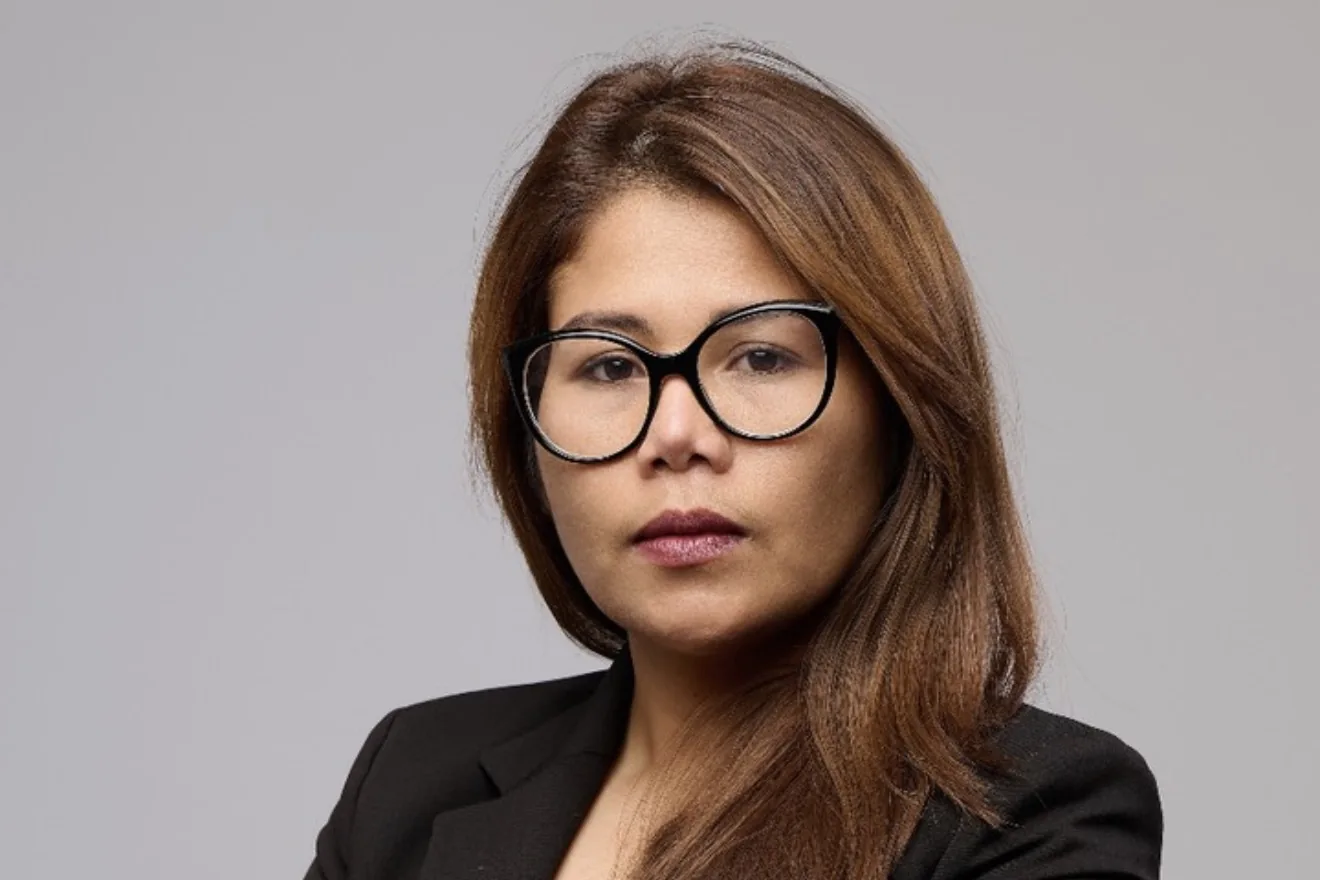
A headshot is a tight, face-focused image built for identification — your LinkedIn profile, a casting call, a company directory. A portrait is a wider, more expressive image that says something about who you are, used for editorial features, brand storytelling or a family keepsake. The right choice depends on purpose, not preference. The sections below walk through how to brief and prepare for each.
TL;DR:
- Choosing the correct format depends on the image’s purpose; headshots suit recognition tasks, while portraits convey personality or context.
- Technical markers such as crop, lens length, lighting, and background distinguish headshots from portraits, influencing how you brief your photographer.
- Proper pre-shoot planning, wardrobe choices, and relaxed expressions are crucial for achieving natural, targeted images and avoiding common mistakes.
- Fast turnaround services like LinkedIn Express are ideal for quick profile needs, while longer sessions suit more detailed editorial or branding portraits.
- Most issues stem from mismatched briefs or poor preparation rather than camera quality, underscoring the importance of clear communication and purpose.
Table of Contents
- Headshot and portrait: two definitions, one shared toolkit
- What to look for: crop, lighting and background clues
- When to book a headshot vs a portrait
- Preparing for your session: clothing, expression and what to bring
- How studios plan a session behind the scenes
- Where headshots and portraits actually came from
- How context changes what each format is for
- The mistakes that undermine a good session
- What clients usually get wrong, and how to fix it fast
- Booking the right session for what you need
- Sources
- FAQ
Headshot and portrait: two definitions, one shared toolkit
Before you book anything, it helps to fix the terms in your head, because photographers use them precisely and clients often don’t.
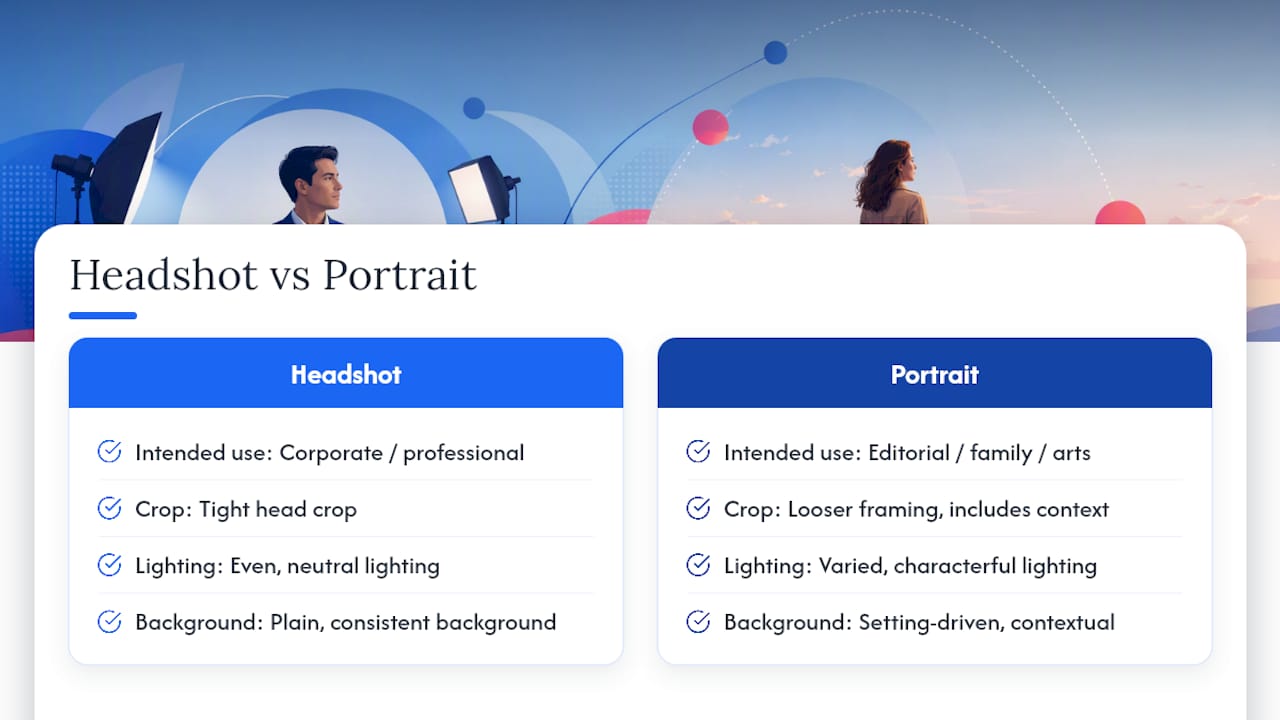
- Headshot: a close crop, usually head and shoulders or tighter, designed to let someone recognise your face instantly. Purpose comes first, whether that’s a LinkedIn profile, a casting submission or a staff directory photo.
- Portrait: a wider composition that can include hands, posture, environment or props. It aims to tell you something about the subject’s personality, mood or context, which is why editorial and family portraits often breathe more than a headshot ever will.
Here’s the overlap that trips people up: a headshot is technically a type of portrait, just a highly constrained one. The distinction still matters for the brief you give a photographer and for how the image gets retouched afterwards. A casting director wants a headshot that reads clearly at thumbnail size with minimal, natural retouching. A magazine commissioning an environmental portrait wants mood, and will tolerate a looser crop and more creative lighting to get it.
What to look for: crop, lighting and background clues
Once you know what you’re looking at, spotting the difference between a headshot and a portrait becomes straightforward. A few technical markers separate the two, and knowing them helps you ask a photographer for exactly what you need.
- Crop and composition: headshots crop tight to the face and shoulders for instant recognition; portraits allow wider framing that includes hands, posture or surroundings.
- Lens and focal length: headshots are typically shot on a longer lens (85mm to 135mm equivalent) to flatten facial proportions and avoid distortion; portraits use a wider range depending on how much environment needs including.
- Lighting: headshots favour soft, even, flattering light that reads as approachable and professional; portraits use hard, high-key or low-key lighting more freely to create mood.
- Background and depth of field: headshots usually sit against a blurred, neutral backdrop that keeps attention on the face; portraits often keep environmental context sharp enough to matter.
- Retouching: headshots get subtle, natural polish, skin evenness and stray hair cleanup; portraits can carry heavier stylistic grading depending on the creative brief.
The gap between these two ends of the spectrum is bigger than most people expect. According to Guardian coverage of portrait photography practice, the strongest results come less from equipment and more from a collaborative process that lets the subject relax and matches the shoot to a clear brief, which applies equally whether you’re after a tight headshot or an environmental portrait.
Getting this wrong is common: a room that handles two LinkedIn portraits beautifully can come apart on a forty-item product run, and the same is true of lighting setups built for headshots when they’re asked to do a portrait’s job.
When to book a headshot vs a portrait
Matching the shoot type to the actual use case saves money and, more often, saves a reshoot.
Headshots make sense for:
- LinkedIn and other professional profile photos.
- Corporate bios and staff directory pages.
- Casting submissions for actors, sometimes split into commercial vs theatrical styles depending on the audition brief.
- Small avatar-sized images where detail gets lost anyway.
Portraits make sense for:
- Brand storytelling that needs context, tone or personality.
- Editorial features where a magazine wants mood over identification.
- Family keepsakes that capture relationships, not just faces.
- Environmental brand imagery showing someone in their workspace or craft.
Run through this quick checklist before booking:
- Who is the audience: a recruiter scanning a profile, or a reader engaging with a feature?
- How large will the image be displayed: a thumbnail, or a full page?
- What tone does the brief call for: neutral professionalism, or personality and context?
- What’s your budget and timeline: a fast turnaround session, or a longer creative shoot?
Preparing for your session: clothing, expression and what to bring
What you wear and how you show up on the day changes the result more than most people assume.
- Clothing for headshots: solid, flattering colours; avoid small patterns, busy prints or logos that pull focus from your face.
- Clothing for portraits: textures, layers and props are fair game, since the wider frame has room for them.
- Expression: a relaxed half-smile reads as warm and approachable for most headshots; a neutral expression can suit a serious editorial portrait or a theatrical casting shot.
- Grooming and timing: sort hair and make-up the morning of the shoot, get a proper night’s sleep beforehand, and book sessions when you’re not rushing from something else.
- What to bring: two outfit options, a couple of reference images showing the look you want, a friend or make-up kit if you need one, and any props the shoot calls for.
Pro Tip: Bring a second outfit even for a “quick” headshot session, since colours and textures often photograph differently than they look in the mirror.
How studios plan a session behind the scenes
Professional studios reduce risk by planning before anyone picks up a camera. Some professional studios work from meticulous pre-shoot planning and a shot list that matches what gets delivered to the client brief, which cuts down on wasted time and reshoots. Studio equipment and controlled lighting also mean fewer surprises than an outdoor or ad hoc setup, and a fixed space means backgrounds and light stay consistent from the first frame to the last.
Success in professional headshot and portrait sessions commonly depends less on the camera and more on a collaborative process that relaxes the subject and clarifies the brief.
Turnaround matters too. Some studios deliver retouched images within 48 hours, which is a useful benchmark when you’re planning around a casting deadline or a launch date.
Where headshots and portraits actually came from
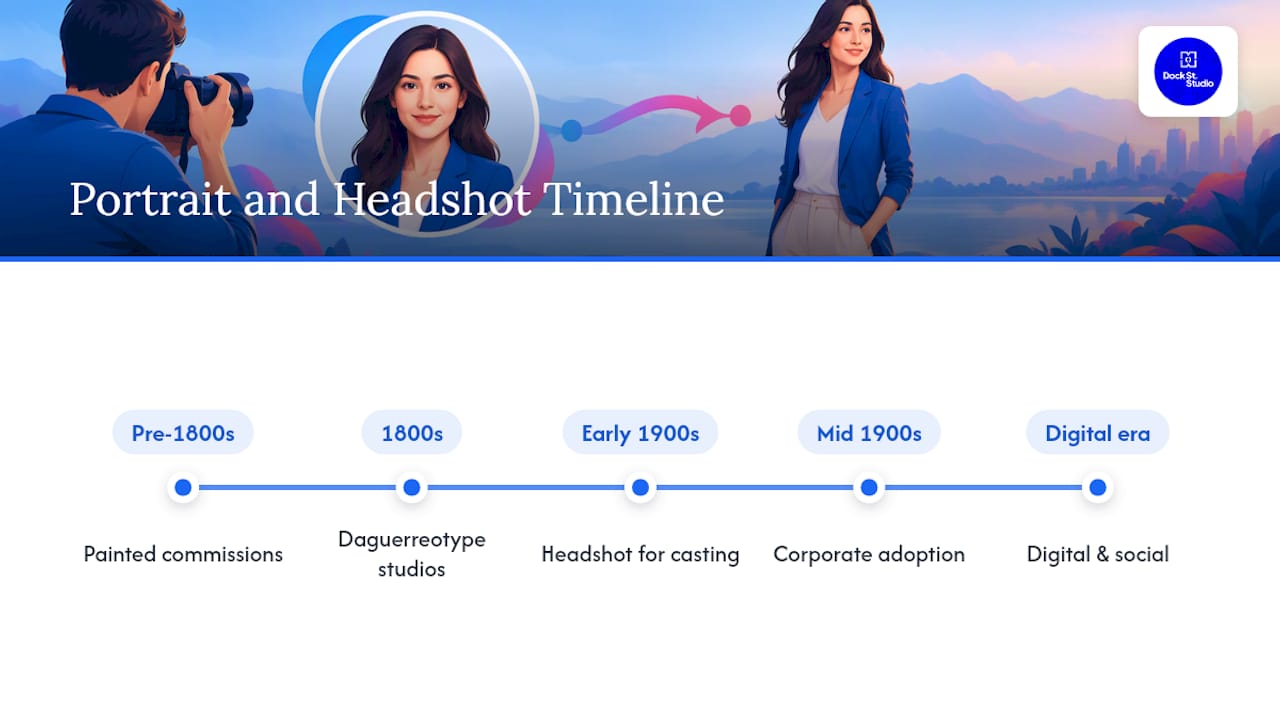
Portraiture is centuries old, running from painted aristocratic commissions through to the early daguerreotype studios of the 1800s, where sitting for a photograph was a formal, slow event requiring a subject to hold still for long exposures. The headshot as a distinct, functional category is much younger. It grew out of the theatre and film industry in the early twentieth century, when actors needed a standard reference image for casting directors to file, compare and recall quickly.
That functional origin still shapes the headshot today: it exists to be scanned fast, compared against others, and forgotten if it doesn’t do its job in a second or two. Portraits kept the older tradition alive, prioritising mood, narrative and context over speed of recognition. The rise of corporate photography in the mid-twentieth century borrowed the headshot’s discipline (clean crop, neutral background, consistent lighting) and applied it to business directories and annual reports, which is the direct ancestor of today’s LinkedIn photo.
Digital photography and social platforms accelerated both formats without changing their core purpose. Headshots got more standardised as platforms like LinkedIn created an implicit house style. Portraits, freed from the cost and formality of film, became more experimental, more candid, and more willing to show a subject mid-laugh or mid-thought rather than posed and static.
How context changes what each format is for
Headshots and portraits carry different weight depending on the industry and setting they’re used in. In corporate and professional contexts, the headshot has become close to a uniform: neutral background, even lighting, a version of the same crop repeated across thousands of LinkedIn profiles because consistency reads as trustworthy. In the performing arts, headshots operate almost as a currency. Casting directors flick through hundreds of them, so a commercial headshot needs to look approachable and warm while a theatrical headshot often needs more intensity or character, reflecting the kind of roles an actor is chasing.
Portraits carry more cultural variation. Editorial portraiture in magazines and newspapers leans into personality and setting, often deliberately breaking the polish that a corporate headshot demands. Family and personal portraits sit in yet another register, valued for capturing relationships and moments rather than professional polish, which is why over-retouching a family portrait can feel like it’s lost the point.
The practical takeaway is that the same face can call for two entirely different treatments depending on where the image will live. A brand founder might need a clean, consistent headshot for the company’s leadership page and a looser, more personal portrait for a magazine profile in the same month, and conflating the two briefs is one of the most frequent planning mistakes clients make.
The mistakes that undermine a good session
Most disappointing results trace back to a handful of avoidable errors rather than bad luck or a weak photographer.
Choosing the wrong format for the use case tops the list: booking a moody, low-key portrait session for a LinkedIn profile, or asking for a tight, neutral headshot when a magazine wants an environmental story. Both mismatches waste money and usually need reshooting.
Over-preparing the pose is another common trap. Rigid, forced smiles or an overly stiff stance tend to look artificial once printed or uploaded, and viewers pick up on that discomfort even if they can’t name why the image feels off. Under-preparing wardrobe causes similar problems: busy patterns, logos or colours that clash with the background pull focus from the face, which defeats the purpose of either format.
Skipping a proper brief with the photographer is perhaps the most avoidable mistake of all. Turning up without discussing use case, deadline or tone leaves the photographer guessing, and guesswork rarely produces the tightly targeted image a headshot or portrait needs to do its job. Finally, treating retouching as an afterthought causes friction later: a headshot that’s over-smoothed looks unnatural for a serious profile, while a portrait that’s under-finished can look unpolished for an editorial placement. Agreeing on retouching expectations before the shoot avoids that argument entirely.
What clients usually get wrong, and how to fix it fast
The most common mistake is picking a style based on what looks good rather than what the image needs to do, then being disappointed when a moody portrait doesn’t work as a LinkedIn photo. Two things reliably fix stiff, unnatural expressions: keep a conversation running through the shoot instead of asking for fixed poses, and ask the subject to shift their weight or turn their head slightly between frames rather than freezing. If you’d rather have someone else manage that process, a coached session with a professional takes the guesswork out of it.
— Mark
Booking the right session for what you need
Matching the service to the brief is most of the job. If you need a fast, clean profile photo, LinkedIn Express is built for exactly that. If your casting or professional needs run wider, Quick-Fire Spotlight and In-Depth Portrait sessions give more time for expression and environmental detail. Content creators after a flexible space can look at studio hire instead.
- Pre-shoot planning clarifies your brief and shot list before you arrive.
- Sessions are scheduled to suit the format, from a quick headshot slot to a longer portrait booking.
- Retouched images are typically delivered within 48 hours.
Book a session through the headshot photographer page and get the format that actually matches your brief.
FAQ
Are headshots considered portrait photography?
Yes, a headshot is a specific type of portrait, just cropped tighter and built for identification rather than storytelling. The distinction matters for the brief and retouching approach rather than the underlying category.
Do you smile in your headshot?
A relaxed, natural smile suits most professional and commercial headshots because it reads as approachable. A neutral expression is more common for theatrical castings or editorial portraits where intensity or character matters more than warmth.
What colours not to wear for a headshot?
Avoid small patterns, busy prints and logos, since they distract from the face and can create odd effects on camera. Stick to solid, flattering tones that suit your skin and the background you’re being shot against.
Can a headshot just be a selfie?
A selfie can work in a pinch for casual use, but it rarely matches the lighting, crop control and consistency a professional headshot needs for LinkedIn, casting or corporate use. Professional lighting and framing typically produce a more reliable result for anything used in a professional context.
Recommended
Shot, written and built by the Dock Street team
Every guide on this blog comes from the team at Dock Street Studio — Mark behind the camera with 18+ years' experience, Nicole on styling and lighting, Beya on video and bookings and Austin keeping the site fast and findable. If you'd rather have us do it than read about it, book a session or explore our photography services in Leeds.