


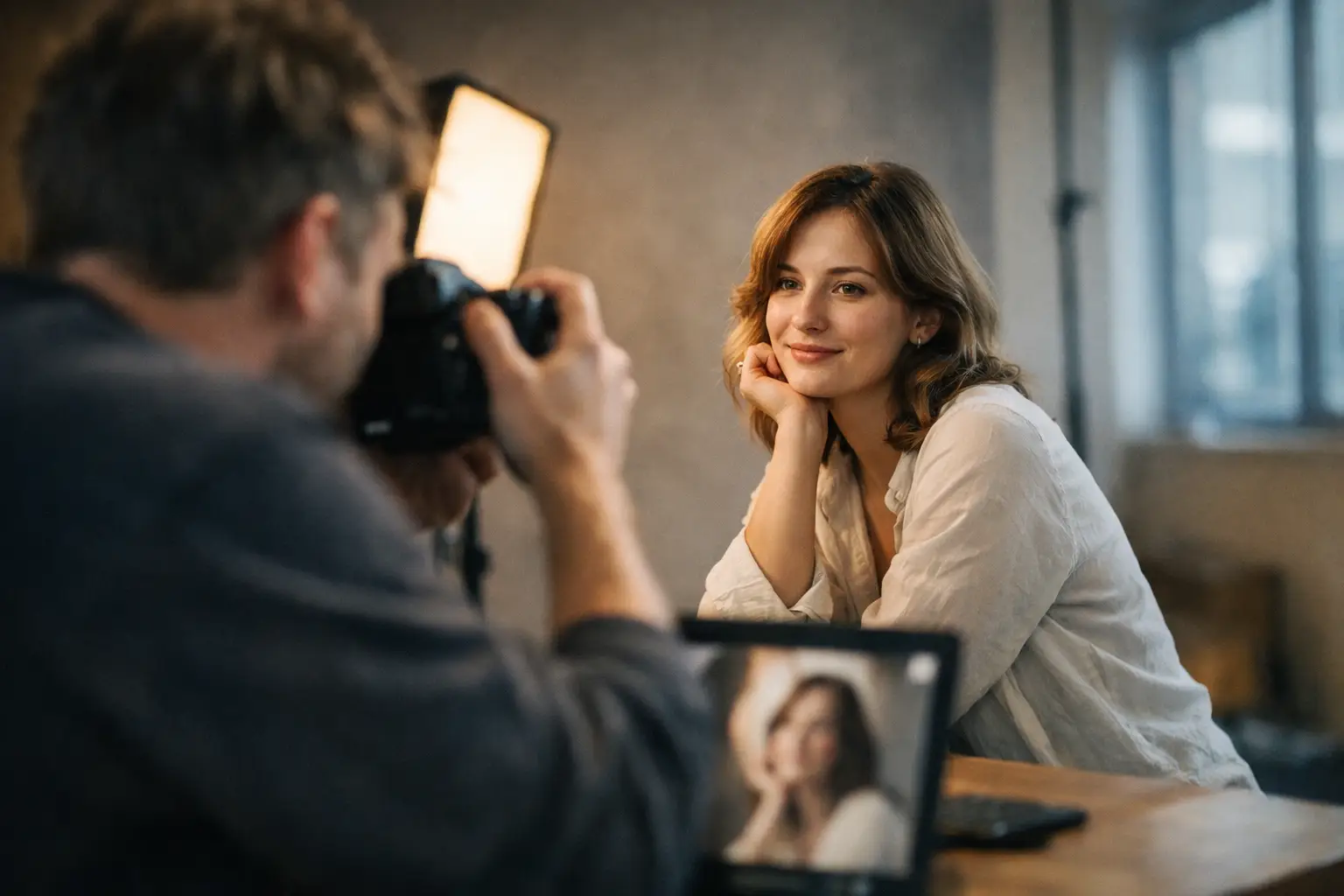
Most people don’t come to us saying they want portraits because they love being in front of a camera. They usually need them for a reason. A casting profile needs updating. A business owner needs images that don’t look like they were taken against an office wall. A team needs press shots that feel credible, not stiff. The job isn’t just to take a nice photo. It’s to make sure the image does a job.
That changes how we think about portraits from the start. The best ones are not only flattering. They feel right for the person, the brief and where the image will actually be seen. A portrait for Spotlight needs something different from a founder profile on LinkedIn, and both are different again from a magazine-style editorial image or a press shot for a campaign launch.
Why portraits are more than a likeness
A lot of weak portraits fail for the same reason. They show what someone looks like, but they don’t say much about who they are or how they need to come across. You can have sharp focus, decent light and a good camera, and still end up with an image that feels flat.
That usually happens when there’s no clear intention behind the shoot. If we don’t know whether the image needs to feel approachable, authoritative, creative, polished or relaxed, we’re guessing. Guesswork shows in the final frame.
Good portraits have direction. That doesn’t mean they need to be over-styled or dramatic. Quite the opposite, in many cases. It means every choice has a purpose - background, lighting, lens choice, crop, wardrobe, expression and posture all need to work together.
For business clients, that often comes down to trust. People make quick judgements from images. If your portrait feels scrappy, dated or awkward, it can affect how your brand is perceived before anyone reads a word on your site. For actors and creatives, the stakes are different but just as real. Casting teams and commissioners need to see you clearly. Not a heavily retouched version, not a generic corporate smile, and not ten layers of styling getting in the way.

What makes portraits work
The short answer is clarity. A good portrait gives the viewer something immediate to read. It tells them where to look and what to feel. That sounds a bit abstract, but in practice it’s very straightforward.
Lighting does a lot of the heavy lifting. Soft, controlled light tends to be forgiving and clean, which is why it works well for headshots and commercial profiles. Harder light can add shape and drama, but it also makes every detail more prominent. That can be useful for editorial portraits or brand imagery with more edge. It depends on the brief.
Expression matters just as much. One of the biggest misconceptions is that portraits are all about being photogenic. They aren’t. Most people who say they’re awkward in photos are reacting to having no direction. If you leave someone standing under lights and simply tell them to relax, it usually gets more uncomfortable by the minute. Good portraits come from proper guidance. Small adjustments to posture, chin position, shoulders and eye line can change an image completely. You don’t need to arrive knowing how to pose. That part is our job.
Then there’s the setting. A studio gives control. That’s useful when consistency matters, especially for business teams, ecommerce brands, actors and anyone needing a clean professional finish. Location portraits can work brilliantly too, but only if the environment adds something rather than distracting from the subject. Nice background blur on its own isn’t a concept.
Different portraits for different jobs
This is where a lot of people get caught out. They book one shoot and expect every image to work everywhere. Sometimes that’s possible. Often it isn’t.
If you’re an actor, your portraits need to look like you on a good day. Clean, current and believable. Casting directors are not looking for heavy styling or overworked edits. They need to recognise you when you walk in the room. We usually advise keeping wardrobe simple and expressions varied within a realistic range. Natural but intentional is the balance. There is more on that in our guide to preparing for actor headshots.
If you run a business, your portraits may need to cover more ground. A homepage banner, About page, press release, LinkedIn profile and speaker bio all have slightly different needs. That doesn’t mean five separate shoots, but it does mean planning for variety. Different crops, orientations and levels of formality can make one session far more useful. For a whole team, we run on-location headshot days across Leeds and West Yorkshire at £450 for a half day covering up to 15 people.
For editorial or PR work, portraits often need a stronger sense of place or personality. The image might be supporting a story rather than simply identifying a person. In those cases, composition and atmosphere matter more. You may want wider framing, more environmental detail or lighting that feels less polished and more characterful. That is commercial photography territory rather than a headshot session.
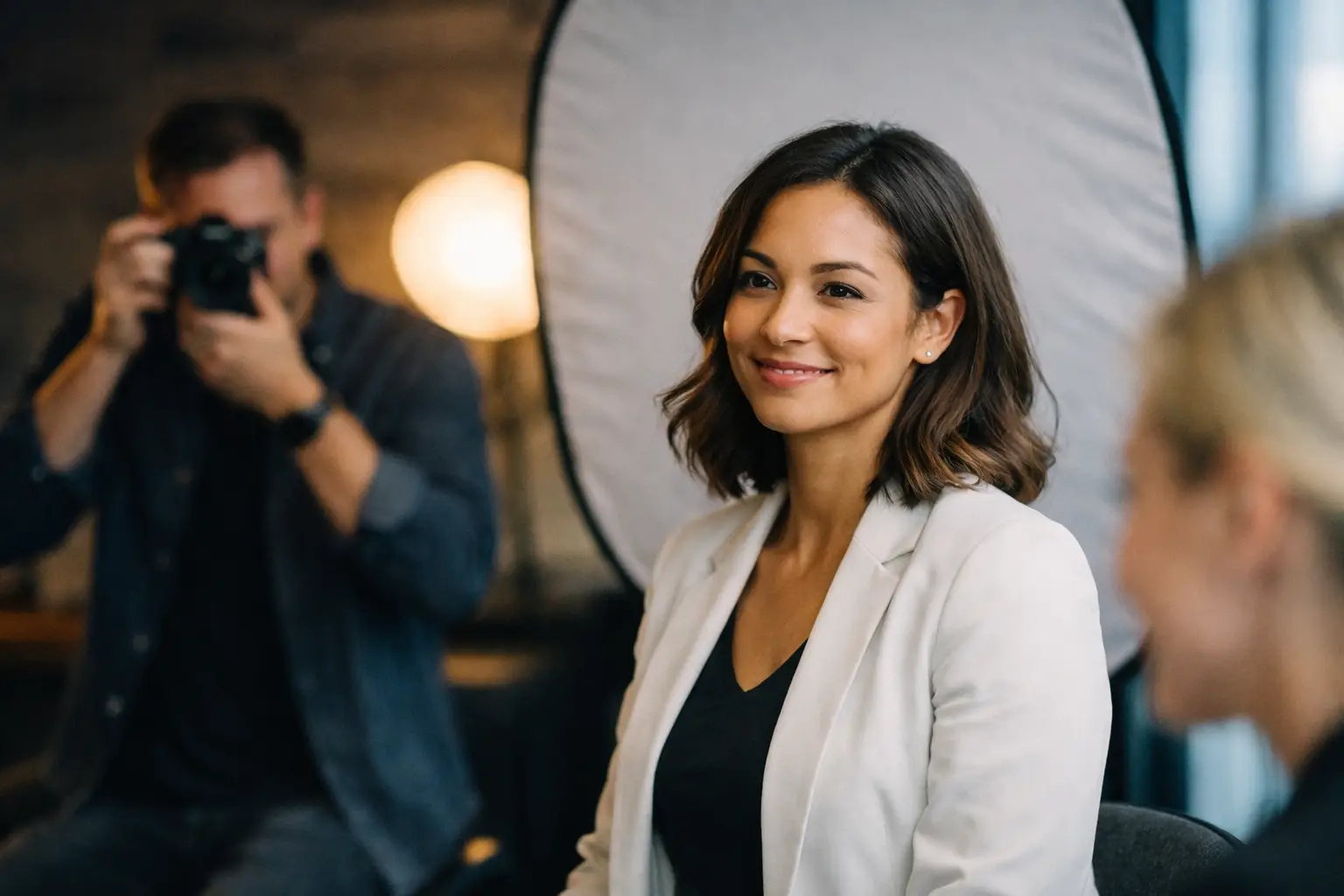
The common mistakes we see
The biggest one is turning up without thinking about where the portraits will be used. That makes decisions harder than they need to be. Clothing, styling and even image shape can all be better if the final use is clear from the start.
Another issue is overcomplicating the look. Busy patterns, trendy outfits that date quickly, too many changes, too much retouching - all of it can take attention away from the person. Simple usually lasts longer.
We also see people worry too much about tiny details and miss the bigger picture. Yes, fit and grooming matter. But confidence, comfort and direction matter more. A well-run shoot with someone who feels at ease will beat a perfect outfit worn by someone who looks tense.
And then there’s the old favourite - using old portraits far beyond their sell-by date. If your current image no longer reflects how you look or how your business presents itself, people notice. Outdated portraits create friction. They can make a website feel neglected or leave clients wondering whether the business is as current as it claims.
How to prepare without overthinking it
Preparation helps, but it doesn’t need to become a military operation. Start with the purpose of the shoot. Ask where the portraits are going, who needs to respond to them and what you want them to communicate. That gives the session some shape.
Clothing should support that aim. For most portraits, we suggest well-fitting pieces in solid colours, avoiding logos unless they’re part of the brand story. Bring options, but not your entire wardrobe. Two or three sensible choices are normally enough to create variety without turning the shoot into a changing-room exercise. Our guide to what to wear for headshots covers the detail.
Sleep and hydration make a difference, but so does timing. If you know you’re sharper in the morning, book then. If afternoons are when you settle into yourself, that may be the better option. These things sound minor, but portraits are built from small decisions.
It also helps to accept that feeling a bit awkward at the start is normal. Very few people step on set completely relaxed. A good photographer expects that and works through it. The first ten minutes are often about finding rhythm, not chasing the final shot immediately.
Why the studio environment matters
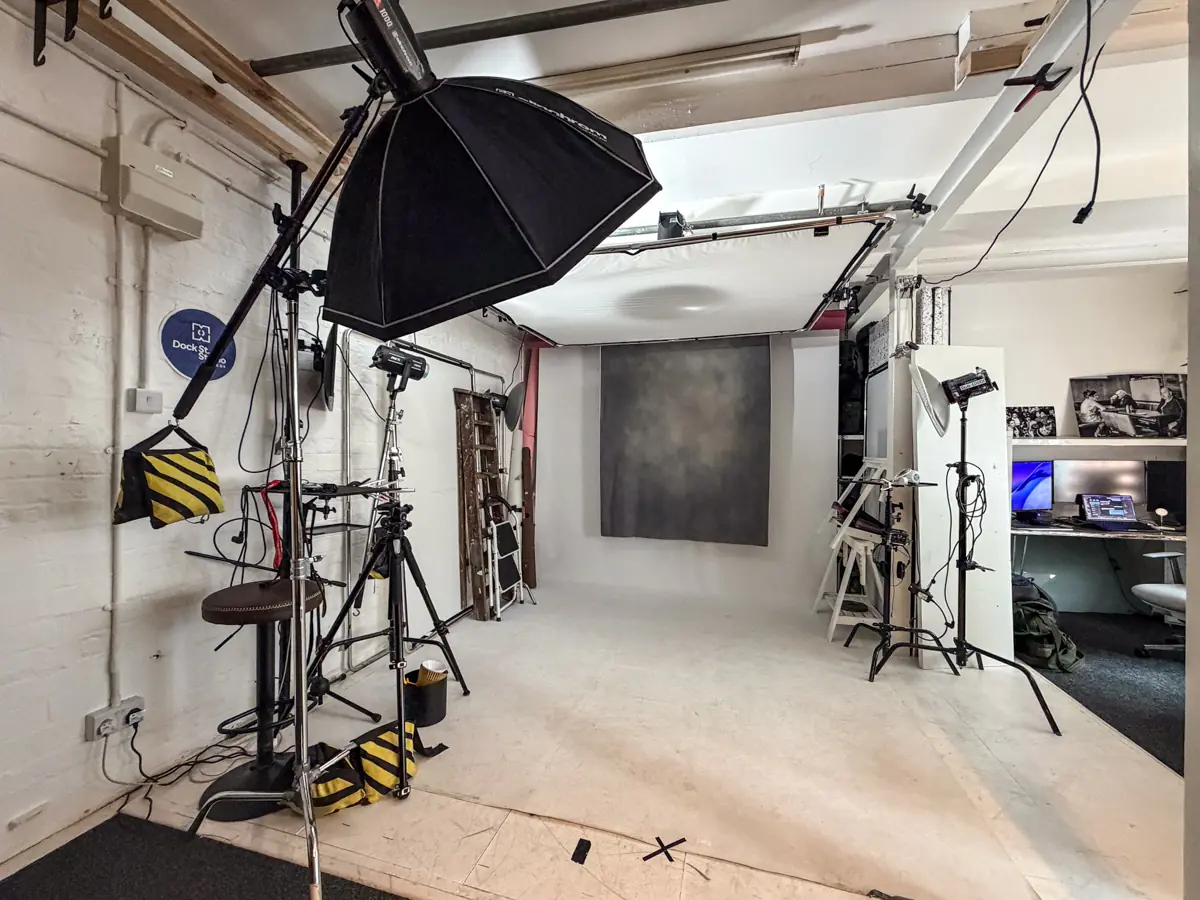
A proper studio isn’t just about having white walls and lights. It’s about control, consistency and space to work without pressure. When we shoot portraits in a dedicated studio setting, we can adjust lighting quickly, refine backgrounds, tether and keep the process focused. That usually means better results and less stress for the person being photographed.
It also gives room for variety. Clean headshots, more editorial setups, seated portraits, full-length frames, team shots - they all become easier when the space is set up for image-making rather than improvised around someone’s meeting room furniture.
That’s one reason clients come to our studio in Leeds. They want portraits that feel considered and professionally lit, but they also want the session to be straightforward. No fuss, no guesswork, and no sense of being rushed through it.
The balance between polish and honesty
This is probably the most important part. The best portraits are polished, but they still feel honest. They should show someone at their best without tipping into something artificial.
That balance is different for different people. A commercial headshot might need a crisp, confident finish. A creative portrait may allow more texture and mood. A founder portrait might need to look smart but still approachable. There isn’t one correct style for everyone, which is why experience matters. You need someone who can read the brief, read the person and adjust accordingly.
Retouching sits in the same category. Good retouching is usually invisible. It tidies distractions and keeps the image refined, but it shouldn’t remove character. Skin still needs texture. Faces still need to look like faces. If someone meets you after seeing your portrait and feels surprised, something has gone wrong.
Portraits work best when they feel useful, current and true to the person in the frame. If you approach them that way, they stop feeling like an awkward admin task and start becoming part of how you present yourself properly.
Frequently Asked Questions
What is the difference between a portrait and a headshot?
A headshot is a tight, consistent frame built for a specific job — casting, LinkedIn, a team page. A portrait is a wider term that can include environment, mood and full-length framing. Most business and actor bookings want the former; editorial and PR work often wants the latter.
How long does a portrait session take?
Headshot sessions run from 20 minutes for a single look (£95) to an hour for five looks (£200), with the Quick-Fire session at £150 covering two or three looks in 40 minutes. Editorial or brand portraits are booked as commercial time, from £450 for a half day.
Do I need to know how to pose?
No. Direction is part of the job. Small adjustments to chin, shoulders and eye line are what make the difference, and we talk you through each one as we go.
Should I book the studio or a location?
The studio when consistency and control matter — teams, casting, anything that needs to match later. A location when the place itself is part of the story. Often both, in that order.
How long until I get the images?
Your gallery is supplied the same day and retouched selects are typically with you within 48 hours.
Where is the studio and how do I book?
Dock Street Studio, Unit 9, 30–38 Dock Street, Leeds LS10 1JF — central Leeds, a short walk from the train station, with parking on site. Book online or call to talk the brief through first.
Book a portrait session in Leeds
Tell us where the images are going and who needs to respond to them, and we will plan the session around that rather than around a generic look. Book online, email hello@dockstreetstudioleeds.co.uk, or call 0113 4400102.
Written by Mark Wheelwright
Commercial photographer & studio owner, Leeds | ISO Photographic Ltd
Dock Street Studio, Unit 9, 30–38 Dock Street, Leeds LS10 1JF
18+ years' experience | 900+ projects | 300+ five-star reviews | 1M+ shutter count
dockstreetstudioleeds.co.uk
Shot, written and built by the Dock Street team
Every guide on this blog comes from the team at Dock Street Studio — Mark behind the camera with 18+ years' experience, Nicole on styling and lighting, Beya on video and bookings and Austin keeping the site fast and findable. If you'd rather have us do it than read about it, book a session or explore our photography services in Leeds.