


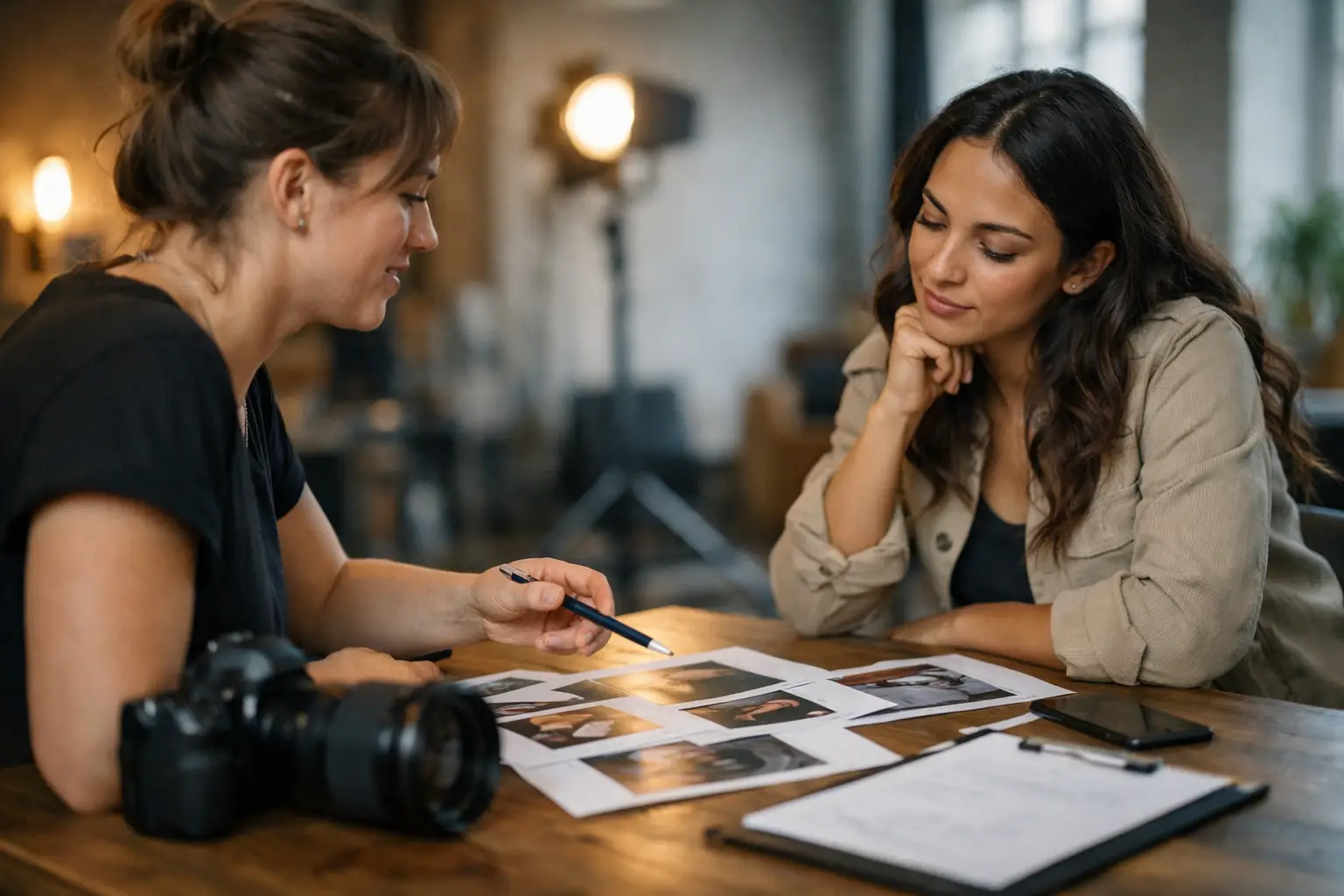
A good editorial photography brief saves time before the shoot, keeps decisions moving on the day, and gives you images that actually support the story you’re trying to tell. It doesn’t need to read like a legal document. It just needs to give the photographer enough context to make sound creative and practical choices.
We see the same issue regularly with business and PR shoots. A client says they need “a few natural pictures,” but the final use hasn’t been agreed, key people are unavailable for half the day, or the location doesn’t work once we arrive. A clear brief prevents that sort of scramble.
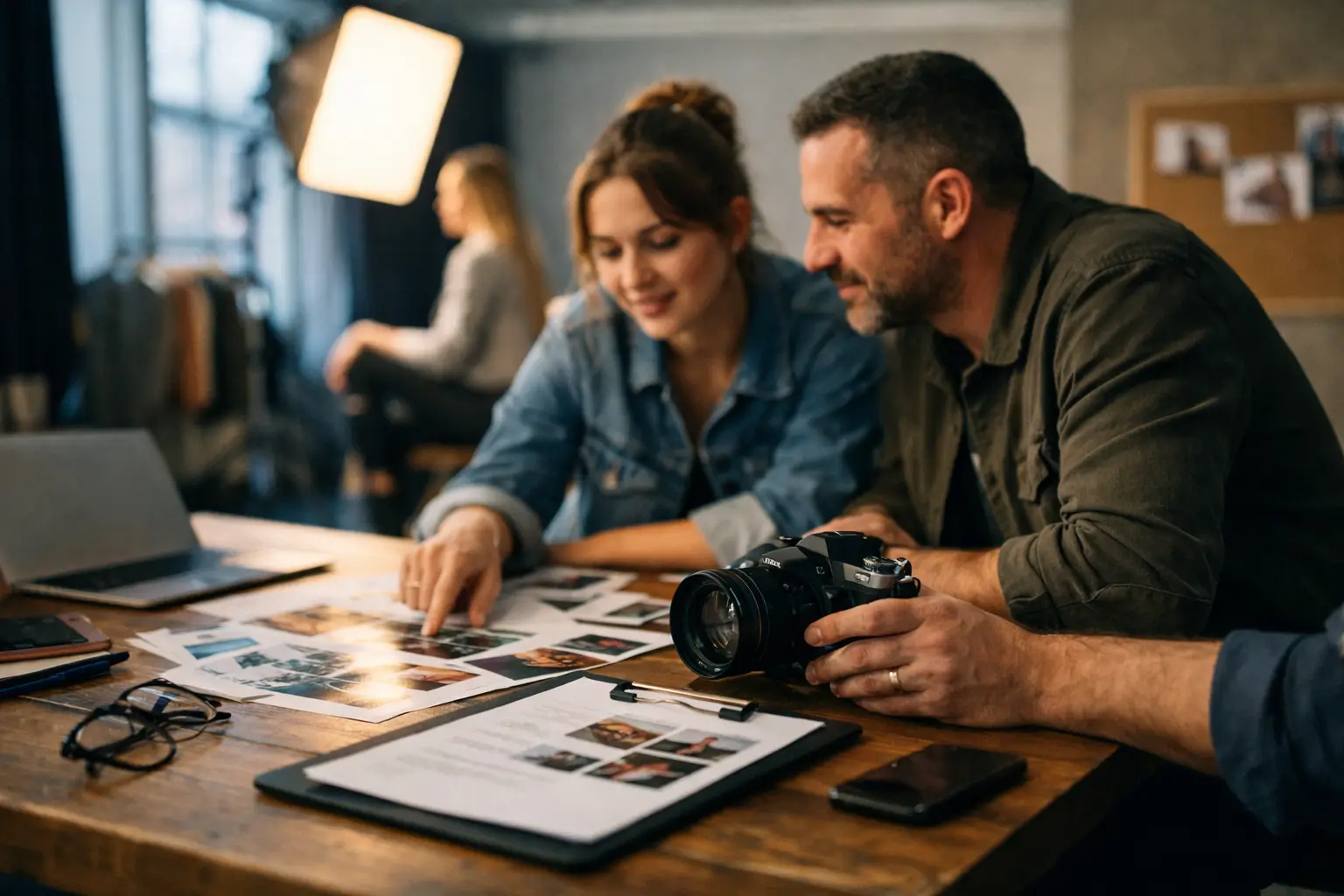
What an editorial photography brief needs to do
Editorial photography is about people, place and context. It may accompany a magazine feature, press release, annual report, employer-brand campaign or story on your own website. Unlike a straightforward product shoot, the image needs to communicate something beyond what’s in the frame.
Your brief should tell us what the story is, who needs to see it, and where the photographs will appear. A portrait of a founder in their workshop can feel warm, capable and local. The same person photographed against a plain wall may be better for a trade publication or a quick press announcement. Neither approach is wrong — the right one depends on the message and the available space, time and budget.
A useful brief also makes room for professional judgement. You’re not expected to specify every lens, light or camera setting; that’s our job as your commercial photographer in Leeds. What helps most is a clear outcome, honest practical information and a few references that show the direction you have in mind.
Editorial photography brief template
Copy the sections below into an email or document. Fill in what you know, then flag anything that’s still undecided. We can work through the gaps with you before the shoot.
1. Project and story
● Project name: what is happening? Write a short description of the story, announcement, campaign or feature, including the reason it matters now.
● The key message: what should a viewer understand or feel after seeing the photographs? For example: growing Yorkshire manufacturer, expert local team, new hospitality opening, community project, or creative business at work.
● The priority image: if you only had one photograph to use, what would it need to show?
This section keeps the shoot focused. “We need photos of the office” is a starting point. “We need confident, approachable images showing our new team working with clients” gives us something we can build around.
2. Audience and use
● Who will see the images? This could be journalists, customers, investors, job candidates, casting teams or existing clients.
● Where will they be used? List every likely channel: print editorial, press release, website, social media, presentation, email campaign, brochure or paid advertising. If you’re weighing up press coverage against a branded shoot, this guide to commercial, press and product photography breaks down the difference and why it affects your brief.
● Image orientation and format: do you need landscape images for a publication spread, portrait crops for social posts, wide website banners, or a mixture? If a publication has supplied dimensions, send them over.
● Usage timing: note embargo dates, launch dates, print deadlines and any period during which the images must not be shared.
This matters because a strong double-page magazine image needs different framing from a LinkedIn post. We often shoot with several crops in mind, but knowing the priorities upfront means the final selection is more useful.
3. People in the photographs
● Who is being photographed? Include names, job titles and a note on why each person is part of the story.
● How comfortable are they on camera? This is worth saying plainly. If someone is nervous, short on time or not used to being photographed, we can allow more direction and keep the setup simple.
● Wardrobe and appearance: share any dress code, branded clothing, safety equipment or colours to avoid. Small details matter — a high-visibility jacket may be essential to the story; a large competitor logo probably isn’t.
● Permissions: confirm that everyone featured has agreed to be photographed, and that you have consent for any children, customers, patients or members of the public who may appear.
For editorial work, people are usually the heart of the pictures. We will guide posture, placement and expression, but the best results still come from allowing real interaction and giving people something practical to do.
4. Location, schedule and access
● Shoot location: provide the full address, parking details and a contact number for the day.
● What does the space look like? Send recent phone pictures if possible. We need to see window light, ceiling height, clutter, key work areas and anything that can’t be moved.
● Timetable: set out arrival time, photography start time, breaks, key moments and the finish. Include when each person is available.
● Access and restrictions: mention loading access, stairs, security, permits, health and safety rules, areas that can’t be photographed, and any confidential material that must stay out of shot.
A busy workspace can make excellent editorial imagery, but it takes a little planning. In Leeds and Manchester, for example, city-centre parking, building access and lift bookings can affect how much kit we bring and how quickly we can move between setups. If your own premises don’t suit the story, our central Dock Street Studio hire space is worth considering as a controlled alternative.
5. Visual direction
● Describe the feel in a few words: natural, energetic, polished, candid, bold, warm, documentary, formal or quiet are all helpful starting points.
● Reference images: include three to six examples, with a note about what you like in each one — it might be the lighting, composition, colour, pace or how relaxed the subjects look. Our roundup of commercial photography examples for brands is a useful starting point if you’re not sure where to look.
● Brand considerations: share your logo, colour palette, current campaign work and any visual rules that matter. We won’t force brand colours into every frame, but it helps to know whether the finished images need to sit alongside existing material.
● Please avoid: be specific about anything you don’t want, such as heavily posed groups, dramatic flash, visible screens, messy backgrounds or generic handshakes.
References are valuable, but they’re a guide rather than a shot-for-shot promise. Your premises, weather, available people and timeframe may be different from the example. We’ll use the intention behind the reference and make something that fits your own story.
6. Shot list and deliverables
Give us a short list of must-have images, then separate those from nice-to-have ideas. This avoids treating every possible shot as equally urgent.
A practical shot list might include a hero portrait of the founder, staff working together, a detail of the product or process, the exterior of the premises and a wider scene that establishes the location. If the shoot covers an event, include the arrival, speakers, audience reaction, branding, key guests and any presentation or award moment; our event photography team handles this kind of brief regularly.
State how many final images you expect, whether you need a quick same-day press selection, and who will choose the final edits. We can advise on realistic quantities. A two-hour shoot can produce a useful set of varied images, but not twenty fully separate setups with different locations and large groups.
The details clients often miss
The strongest briefs usually cover the obvious creative points. The problems tend to come from smaller operational details.
Check who has authority to approve the pictures. If a marketing manager, director and external PR agency all need a say, agree how feedback will be gathered before the gallery goes out. Conflicting mark-ups can slow delivery and make a straightforward selection needlessly difficult.
Think about the space as it will look on camera, not just how it functions day to day. Clear away confidential paperwork, tired posters, half-empty coffee cups and stray cables where safe to do so. Keep the useful texture: tools, materials, work-in-progress and signage can all make an image feel believable.
Finally, be realistic about time. A well-planned hour with the right people present can beat a full day of interruptions. If a particular activity only happens at 10am, or the best natural light reaches your reception in the afternoon, put that in the brief. It lets us build the shoot around what’s genuinely available.
Bring the brief to the pre-shoot conversation
You don’t need to have every answer before getting in touch. A brief is a working document, not an exam. We’d rather see an early draft and ask the useful questions than arrive to a vague plan on the day — get in touch or book a consultation to start the conversation.
The best editorial images often come from the unscripted moment after the planned frame: a genuine conversation, a craftsperson concentrating on their work, a team settling into their routine. Give the shoot a clear purpose, allow enough breathing room, and let the real character of your business do some of the work.
Frequently asked questions
What is an editorial photography brief?
An editorial photography brief is a short document that sets out the story behind a shoot: what’s happening, who needs to see the images, where they’ll be used, and the people, location and visual style involved. It gives the photographer enough context to make good creative decisions, rather than a list of technical instructions.
What should I include in a photography brief?
At minimum, cover the project and story, your audience and where images will appear, who’s being photographed, the location and schedule, your visual direction, and a shot list split into must-haves and nice-to-haves. You don’t need every detail before the shoot; flag what’s still undecided and we’ll work through it together.
How many reference images should I send?
Three to six is usually enough. Note what you like about each one, whether it’s the lighting, composition, colour, pace or how relaxed the subjects look, rather than treating it as a shot-for-shot brief. References guide the intention; your own premises, weather and available people will shape the final result.
Do I need a shot list before an editorial shoot?
A short shot list helps, split into must-have and nice-to-have images. This stops every shot being treated as equally urgent and gives us a realistic sense of what’s achievable in the time available. A two-hour shoot can produce a strong, varied set, but not twenty separate setups.
Who should approve the final images?
Agree this before the shoot, not after. If a marketing manager, director and external PR agency all need a say, decide how feedback will be gathered upfront. Conflicting mark-ups from multiple approvers are one of the most common causes of delay once a gallery goes out.
How far in advance should I send a photography brief?
As early as you can, even in draft form. A brief is a working document, not an exam, and we’d rather see an early version and ask the useful questions than arrive to a vague plan on the day. That said, the earlier we have it, the more we can plan around genuine constraints like access, light and availability.
About the author
Mark Wheelwright
Commercial photographer & studio owner | ISO Photographic Ltd, Leeds
Dock Street Studio, Unit 9, 30–38 Dock Street, Leeds LS10 1JF
Mark has 18+ years’ experience photographing brands and businesses across Leeds and West Yorkshire, with over 900 projects delivered. He runs Dock Street Studio, working with clients including Clear Channel, Habitat, Kirkstall Brewery and Paystrax.
900+ projects | 300+ five-star reviews | 1M+ shutter count
dockstreetstudioleeds.co.uk
Shot, written and built by the Dock Street team
Every guide on this blog comes from the team at Dock Street Studio — Mark behind the camera with 18+ years' experience, Nicole on styling and lighting, Beya on video and bookings and Austin keeping the site fast and findable. If you'd rather have us do it than read about it, book a session or explore our photography services in Leeds.