


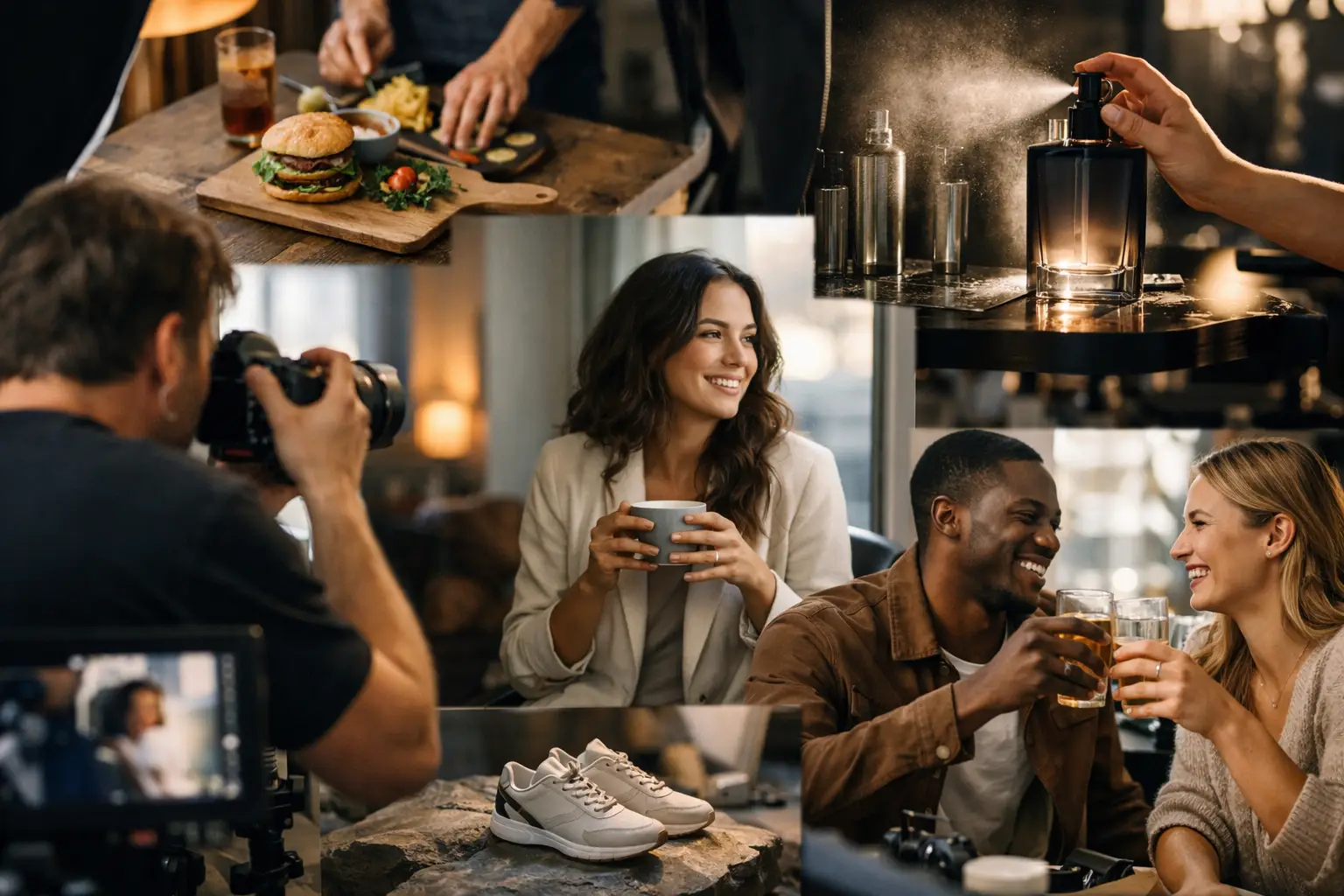
A lot of brand photography fails for one simple reason. The pictures look decent, but they do not actually do a job. They do not sell a product, explain a service, build trust, or make a business look like it knows what it is doing. That is why looking at commercial photography examples for brands is useful - not for inspiration alone, but to understand what each type of image is meant to achieve.
When we plan a shoot, we are not just thinking about nice light and a clean backdrop. We are thinking about where the images will appear, who needs to respond to them, and what the brand is trying to say. A strong set of commercial images usually mixes several styles rather than relying on one. Here are ten examples we regularly see working well for brands, and where each one earns its place.
Product photography that makes the item easy to buy
This is the obvious one, but it is often where brands cut corners. Clean product photography is not only for showing what something looks like. It removes doubt. If a customer can clearly see shape, texture, scale and finish, they are more likely to trust the listing and buy.
For ecommerce, this usually means straightforward images on a plain background with consistent lighting and accurate colour. If you sell skincare, jewellery, clothing accessories or packaged food, these shots are the backbone of your catalogue. They need to be repeatable and tidy. That matters even more if you are adding new lines every month. Shooting a range like this is where tethered shooting earns its keep, because colour gets checked at frame one rather than after eighty products.
There is a trade-off here. Very minimal packshots are practical and efficient, but they can feel a bit lifeless on their own. That is why most brands also need supporting imagery alongside them.
Lifestyle product images that give context
A candle on white tells you what the product is. The same candle styled on a bedside table, lit warmly, tells you how it fits into a person’s life. Lifestyle product photography helps customers imagine ownership, and that shift matters.
This kind of image works well on social media, homepage banners, adverts and email campaigns. It is less about technical product description and more about mood, aspiration and brand feel. The best versions still stay grounded in reality. If the scene is too polished or too contrived, it can feel false.
For smaller brands, this can often be done without huge production. A well-planned set, the right props, and careful lighting can create something that feels premium without wasting budget.
Brand portrait photography that puts a face to the business
People buy from people, especially in service businesses. If you run a consultancy, a salon, a law firm, a restaurant group or a growing independent brand, strong portraits help customers decide whether they trust you.
These are not the same as stiff corporate headshots from years ago. Good brand portraits should feel professional, but still human. The setting, wardrobe and lighting all need to suit the brand. A creative director might need something relaxed and editorial. A financial adviser may need something cleaner and more formal. Neither is better. It depends on the audience.
This is one of the most overlooked commercial photography examples for brands because business owners often put it off. They worry about being in front of the camera. In practice, a calm shoot with clear direction makes a huge difference, and the images get used everywhere from websites to press features and LinkedIn. You do not need to arrive knowing how to pose — that part is our job.
Team photography that shows culture without forcing it
If your business has more than one person in it, team photography can do a lot of heavy lifting. It helps clients see who they will be dealing with. It also makes a company look established, rather than faceless.
The key is avoiding the usual awkward setup where everyone stands with folded arms pretending to enjoy a boardroom. Better team images tend to be simple and believable. That might mean a clean group portrait, individual staff shots with consistent lighting, or documentary-style images of people actually working together.
This is especially useful for recruitment, PR, proposals and About pages. For Yorkshire businesses competing with larger national firms, solid team imagery can make the company feel credible and well run straight away. We run on-location team days across Leeds and West Yorkshire at £450 for a half day covering up to 15 sitters, or £750 for a full day covering up to 30.
Workspace and interiors photography that backs up your claims
If your premises are part of what you sell, show them properly. This applies to studios, clinics, gyms, restaurants, offices, shops and hospitality spaces. Customers notice the environment. If it looks dark, cramped or poorly photographed, they fill in the blanks themselves.
Interiors photography should make a space look clear, welcoming and fit for purpose without misleading people. That means accurate lines, good control of mixed lighting, and enough detail to show quality. It is not just about the wide hero shot either. Often the useful images are the smaller details - treatment rooms, equipment, signage, seating areas, product displays.
For venues and service spaces, this kind of work often improves both bookings and press use because editors and customers can instantly see what is on offer.
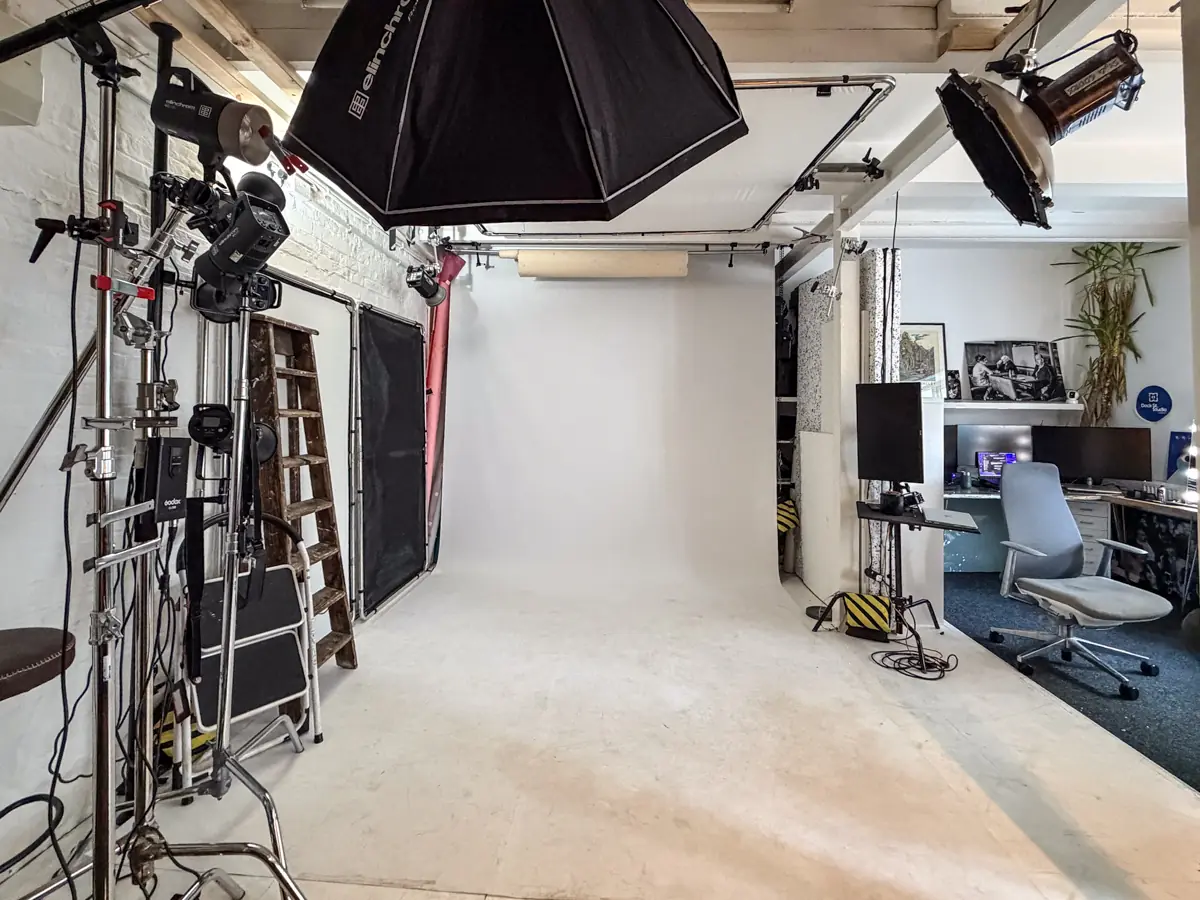
Action shots that show the service in motion
Some brands are hard to explain with still products alone. If you offer training, manufacturing, treatments, events, food preparation, workshops or hands-on services, action photography gives potential customers a much clearer sense of what happens.
These images sit somewhere between documentary and advertising. They should feel real, but still be properly lit, well framed and on-brand. We often find they work best when the activity is genuine rather than over-directed. People can spot a fake moment a mile off.
The practical benefit is simple. A customer who understands the process is more likely to enquire. They can picture themselves there.
Editorial-style brand photography for campaigns and PR
This is where brands can push things a bit further creatively. Editorial-style photography has more atmosphere, more point of view, and often a stronger visual narrative. It is useful for launches, seasonal campaigns, features, magazine submissions and higher-end brand content. Our editorial brief template covers what to pin down before the day.
It can include people, products, styling and location, but it still needs commercial discipline behind it. The image has to support the message. Looking striking is not enough if nobody understands what is being sold.
For fashion, hospitality, beauty and culture-led brands, editorial visuals can set you apart quickly. For more straightforward sectors, a lighter editorial touch may be enough. Again, it depends on where the images are going and who they need to persuade.
Food and drink photography that sells taste before the first bite
Food photography is rarely just about making a dish look pretty. It needs to make it feel worth ordering, booking or stocking. There is a difference.
Restaurants, cafés, producers and drinks brands all need slightly different approaches. A restaurant might need moody, atmospheric images that fit the dining experience. A packaged food brand often needs cleaner, brighter photography that works in retail and online. A drinks company may need both product packshots and styled campaign images.
The common thread is control. Steam disappears, ice melts, garnishes wilt, and reflective packaging can be awkward. Good food and drink photography is planned carefully because the window for getting it right is often short.
Social-first content that still looks professional
Not every brand image needs to be a polished hero shot. Sometimes the brief is volume, flexibility and consistency. Social-first content is built for Instagram, paid social, email crops and regular posting. It might include looser compositions, vertical formats, room for text and a wider mix of simple setups.
That does not mean lower standards. It means smarter planning. A half-day shoot can produce a lot of useful material if the content is mapped out properly in advance. Different crops, changing props, quick model direction and a few background swaps can stretch a budget far further than people expect. Our content studio is set up for exactly this kind of volume day.
For growing brands, this is often one of the most commercially useful investments because the images keep working long after the shoot day.
Case study and testimonial imagery that builds trust
If you deliver projects for clients, case study photography can be one of the strongest sales tools you have. This is common in interiors, construction, healthcare, education, design, events and B2B services, but it applies more widely than many people think.
A good case study image set shows outcomes, not just effort. It might include the finished space, the product in use, the team involved, and a few detail shots that support the story. When paired with a client testimonial or short project write-up, it becomes much easier for future customers to picture the standard of your work.
This sort of photography tends to age well too. Unlike trend-led social content, a strong case study can stay useful on your website and in pitch decks for years.
What brands often get wrong when planning a shoot
The biggest mistake is asking for "a bit of everything" without deciding what the images need to do first. That usually leads to a shoot with too many setups, not enough time, and a gallery full of photos that are fine but forgettable.
A better approach is to think in layers. Start with the essentials. What absolutely needs to be photographed for sales, trust and day-to-day marketing? Then look at the supporting images that give the brand more personality. That way, the budget goes towards images with a clear use. Our commercial shoot planning guide and brand photography shot list both go into that page by page.
It also helps to be honest about where your brand is now. A new business may need clean, foundational photography before it needs a glossy campaign. An established company with a solid catalogue may benefit more from refreshing portraits, team shots or editorial content. There is no fixed order that suits everyone.
At our studio in Leeds, we often talk clients through this before a camera comes out. Not because the planning is glamorous, but because it saves time and gets better results.
If you are looking at your current imagery and feeling that it is all a bit mixed, that is usually a sign to simplify the brief, focus on purpose, and build a set of pictures that actually earns its keep.
Frequently Asked Questions
How many types of image does a brand actually need?
Fewer than most shot lists suggest. Start with what sells and what builds trust — usually product, portraits and one strong image per service — then add the supporting styles once those are covered.
Can we shoot several of these styles in one day?
Often yes, if they share a setup. Grouping everything that uses the same lighting and background is what makes a single day stretch; jumping between styles is what eats it.
Do we need the studio or our own premises?
Usually both, in that order. Product, portraits and controlled brand images are easier here with no weather to negotiate, then we photograph process and workspace where the work actually happens.
How long until we get the images?
Retouched selects are typically with you within 48 to 72 hours, organised so your team can find what they need without renaming files.
Where is the studio and how do we book?
Dock Street Studio, Unit 9, 30–38 Dock Street, Leeds LS10 1JF — central Leeds near Leeds Dock, a short walk from the train station, with parking on site.
Plan a commercial shoot in Leeds
Send us the pages and channels you need to fill and we will tell you honestly which of these ten are worth photographing first, and which you already have covered. Book online, email hello@dockstreetstudioleeds.co.uk, or call 0113 4400102. Full details are on our commercial photography page.
Written by Mark Wheelwright
Commercial photographer & studio owner, Leeds | ISO Photographic Ltd
Dock Street Studio, Unit 9, 30–38 Dock Street, Leeds LS10 1JF
18+ years' experience | 900+ projects | 300+ five-star reviews | 1M+ shutter count
dockstreetstudioleeds.co.uk
Shot, written and built by the Dock Street team
Every guide on this blog comes from the team at Dock Street Studio — Mark behind the camera with 18+ years' experience, Nicole on styling and lighting, Beya on video and bookings and Austin keeping the site fast and findable. If you'd rather have us do it than read about it, book a session or explore our photography services in Leeds.