


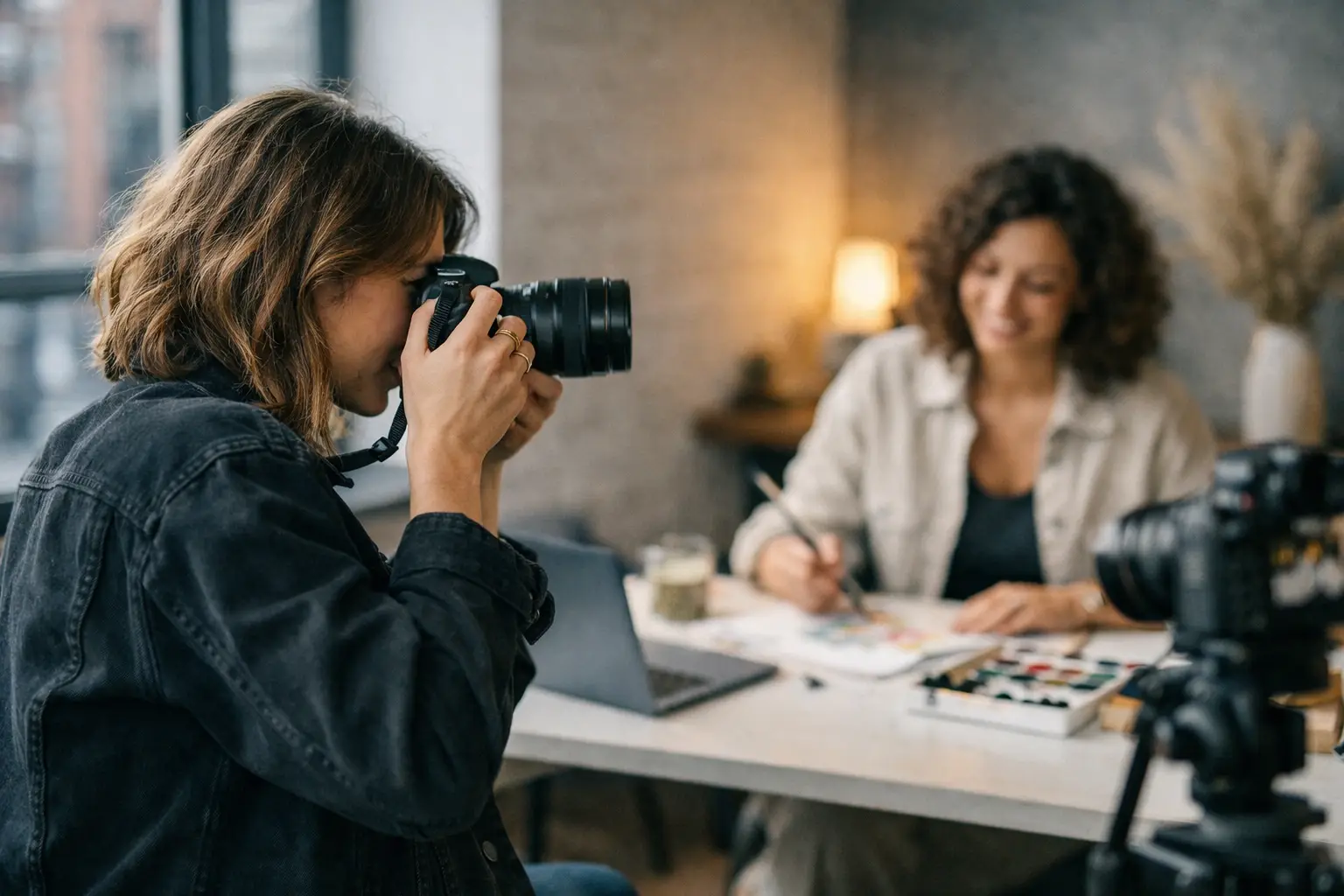
If your website still shows a cropped party photo, or your profile picture changes depending on which platform someone finds first, there’s a good chance your personal brand is doing more guesswork than it should. Personal branding photography for creatives is about giving people a clear, believable sense of who you are, what you do and whether you’re someone they want to work with.
For designers, makers, performers, writers, illustrators, consultants and small creative teams, that matters more than people sometimes expect. Before anyone reads your case studies or checks your credits, they look at your images. They decide whether you seem established, approachable, polished, interesting, commercial or a bit all over the place. Good photography will not do your job for you, but it can make sure your work is being introduced properly.
What personal branding photography for creatives actually needs to do
This kind of shoot is not just a smarter headshot. It needs to cover more ground than that. A strong set of brand images should show your face clearly, yes, but it should also show your working style, your personality and the context around what you do.
That might mean clean portraits for your website and press use, looser images for social media, detail shots of your hands at work, or wider frames that place you in a studio, workshop, desk space or rehearsal setting. The right mix depends on the job the images need to do. A ceramicist and a creative director both need credibility, but they may not need the same visual language.
We usually encourage clients to think less about having one perfect hero image and more about building a usable set. You need photographs that work across different formats and different moments - profile photos, About pages, speaker bios, media features, launch announcements and day-to-day posting. One image rarely covers all of that well.
The biggest mistake creatives make
Most people come in thinking they need to look more polished. Sometimes that’s true. Just as often, the real issue is inconsistency.
You might have one very formal headshot, a few warm candid images taken on a phone, an old logo, and a website portrait that no longer looks like you. None of these is necessarily bad on its own. Together, though, they can make your brand feel muddled. Clients start filling in the gaps for themselves, and they do not always fill them in kindly.
Good personal branding photography gives you consistency without making you look corporate. That balance matters. If the pictures are too stiff, they can flatten your personality. If they are too casual, they can make you look less established than you are. The right middle ground depends on your audience.
A freelance copywriter pitching to agencies may want something sharper and more editorial. A movement coach may need warmth and energy. An actor who also teaches workshops may need one set of images that feels castable and another that feels professional and trustworthy. It depends on what people are hiring you for.
Start with the use, not the moodboard
Moodboards have their place. They help people explain what they like, especially if they are not used to talking about photography. But they can also send people slightly off course.
We’ve seen plenty of clients arrive with saved images that look great in isolation but are built around someone else’s face, someone else’s studio, someone else’s styling and someone else’s audience. A better place to start is with the practical question: where will these photos actually be used?
That changes everything. A square profile image needs different framing from a homepage banner. A portrait for a press release needs different energy from a behind-the-scenes image for Instagram. (If short video and social content are part of the plan, our content studio is set up for that alongside the stills.) If you know the end use, we can shape the shoot around it and avoid spending half the session on images that never leave the hard drive.
What to wear, and what not to overthink
Clothing matters because it affects how current, confident and relevant you look. It also affects the feel of the whole shoot. But this is one area where people often tie themselves in knots.
The best outfit is usually one that already feels like you on a good working day. Not your scruffiest version, and not something you bought in a panic the week before. If you work in bold colours and expressive design, your wardrobe can reflect that. If your brand is more minimal and considered, quieter styling may suit you better. Either way, fit matters more than trends.
We usually suggest bringing options rather than betting everything on one look. A jacket on and off, a couple of tops, maybe one smarter choice and one more relaxed. Texture photographs well. Tiny busy patterns often do not. Logos can date an image quickly unless they are part of your own brand.
The goal is not to look dressed up. The goal is to look like yourself, just with a bit more intention.
Why the location changes the message
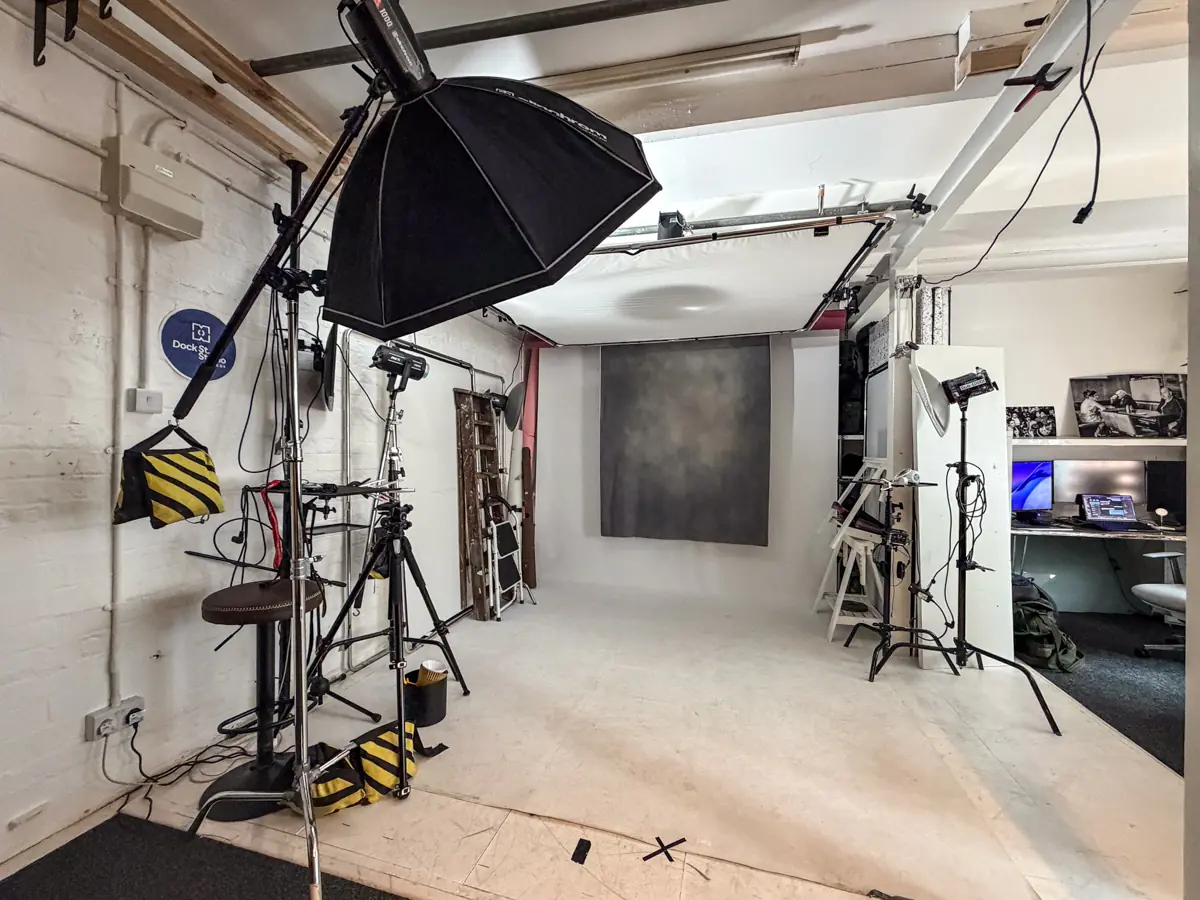
Studio portraits are useful because they are clean, controlled and flexible. They give you focus. There’s no visual noise and no distraction from expression, posture or styling. For a lot of creatives, that’s the right starting point.
But not every personal brand should be shot against a plain backdrop from start to finish. Sometimes the environment tells part of the story. If you’re a florist, a stylist, a printmaker or a designer, your space and tools may help people understand your work faster. If you spend your days meeting clients, speaking at events or working across teams, a more editorial setup can make your images feel more lived-in and less generic.
This is where experience matters. There is a difference between adding context and adding clutter. A good shoot uses the setting to support the message, not swamp it.
Looking natural is not an accident
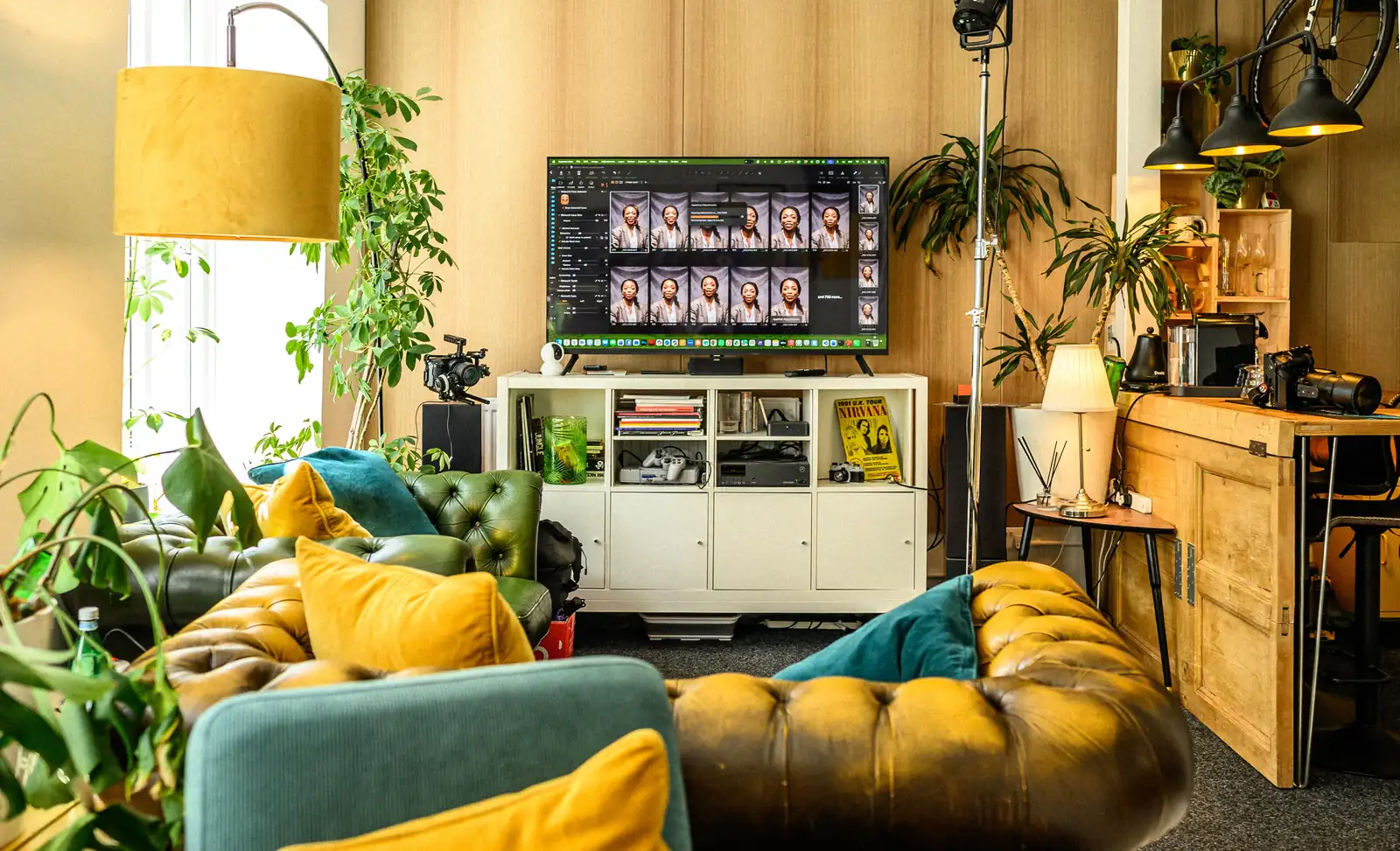
A lot of clients tell us the same thing before a shoot: “I’m awkward in front of the camera.” In practice, that usually means they’ve been photographed without enough direction.
Most people are not models. They should not be expected to know what to do with their hands, how to angle their body or how expression changes between frames. That is our job. The more relaxed and well-guided the session feels, the more natural the final images tend to look.
This is especially important for personal branding photography for creatives, because the pictures need to feel believable. You want confidence, not forced confidence. You want personality, not performance. That takes a bit of pacing, clear feedback and room to settle in.
Often the strongest images come after the first twenty minutes, when the pressure drops and the client stops trying so hard. A decent photographer knows how to get you there.
Don’t confuse trendy with useful
There are visual trends in branding photography, same as anywhere else. Soft blur, heavy motion, extreme crops, loads of negative space, direct flash, hyper-candid poses. Some of these can work brilliantly. Some date very quickly.
If you’re investing in a shoot, it’s worth asking whether a style will still make sense in a year or two. That doesn’t mean everything has to be plain or safe. It just means your images should still feel like a working asset, not a short-lived aesthetic experiment.
We tend to favour photography that feels current but solid. Clean lighting. Thoughtful composition. Enough variation to keep the set flexible. If a more stylised approach suits your brand, great - but it should still serve the brief.
What a strong set of images usually includes
Most creatives benefit from a mix rather than a single type of photo. That often includes a clear head-and-shoulders portrait, some half-length and full-length options, a few horizontal images for web banners, and informal frames that feel more conversational. If your work is tactile or process-led, detail shots can add depth. If you appear in press, podcasts or event listings, simpler options with clean space around you are useful too.
This is one reason we plan shoots carefully before the camera comes out. The edit should give you range without turning into a grab bag of unrelated pictures.
When it’s time to update your branding photos
If people regularly say your old photo “doesn’t really look like you anymore”, that’s a sign. So is a major shift in your business, audience or offer. Rebranding, launching a new service, moving upmarket, stepping into speaking work, signing with a new agent, or finally replacing DIY visuals with something more professional — all good reasons to refresh. If you only need the room and are bringing your own photographer, studio hire starts at £125 for two hours.
You do not need a new shoot every few months. But you do need images that reflect where your business is now, not where it was three years ago.
For many clients, the sweet spot is a set of evergreen core portraits with enough supporting images to keep content feeling fresh. That gives you longevity without making everything repetitive.
It should feel like an investment you can actually use
The value of a branding shoot is not in the number of frames delivered. It’s in whether the images solve real problems for you afterwards.
Can you update your website without scraping together mismatched photos from old jobs? Can you send a press image quickly when someone asks? Can you post consistently without using the same one portrait over and over? Can a potential client get a solid sense of you in ten seconds?
That is where personal branding photography earns its keep.
If you’re a creative professional and your current images feel vague, dated or pieced together, it may be time to sort it properly. A good shoot should leave you with more than flattering pictures. It should leave you with clarity, confidence and images that work as hard as you do.
Frequently Asked Questions
How much does personal branding photography cost in Leeds?
A single-look session starts at £95 (LinkedIn Express, 20 minutes, 3 images). The In-Depth Portrait at £200 gives you 60 minutes, five looks and 10 retouched images, which suits most branding briefs. Full commercial shoots with editing included are £450 for a half day or £750 for a full day.
How many outfits should I bring?
Two or three. A jacket on and off, a couple of tops, one smarter and one more relaxed. We will help you choose under the lights rather than guess beforehand.
Studio or location for branding photos?
Start in the studio for clean, consistent portraits, then add location frames if your space or tools help tell the story. Many creatives do both in one booking.
How quickly will I get the images?
Retouched images are delivered within 48 hours of the session.
Where is the studio and how do I book?
Dock Street Studio, Unit 9, 30–38 Dock Street, Leeds LS10 1JF, a short walk from Leeds train station, with lift access and parking on site. Book online, email or call and we will talk the brief through first.
Book a personal branding shoot in Leeds
Tell us where the images will be used and we will plan the looks around that before you arrive. Book online, email hello@dockstreetstudioleeds.co.uk, or call 0113 4400102.
Written by Mark Wheelwright
Commercial photographer & studio owner, Leeds | ISO Photographic Ltd
Dock Street Studio, Unit 9, 30–38 Dock Street, Leeds LS10 1JF
18+ years' experience | 900+ projects | 300+ five-star reviews | 1M+ shutter count
dockstreetstudioleeds.co.uk
Shot, written and built by the Dock Street team
Every guide on this blog comes from the team at Dock Street Studio — Mark behind the camera with 18+ years' experience, Nicole on styling and lighting, Beya on video and bookings and Austin keeping the site fast and findable. If you'd rather have us do it than read about it, book a session or explore our photography services in Leeds.