


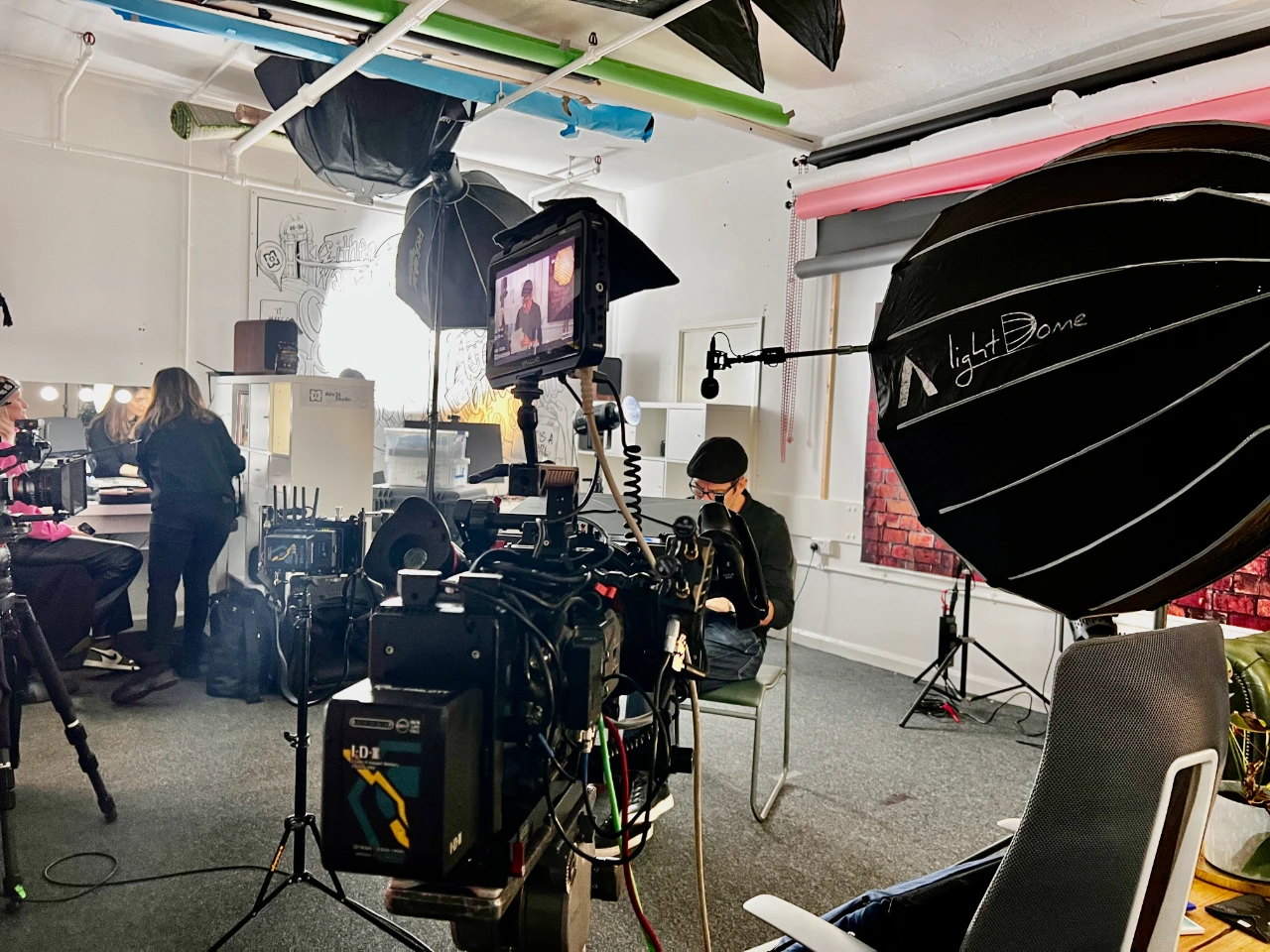
A photoshoot call sheet is the one-page production document that tells everyone where to be, when to arrive and what to bring. Send the final PDF at least 12 hours before the shoot, then follow up with a short update on the morning. That is the whole discipline, and it is the same one we run for editorial, commercial and product work at our studio on Dock Street in Leeds.
Below is our photoshoot call sheet template, the fields that earn their keep, and the seven-step workflow we go through before every shoot. Take it, adapt it to your own jobs, and the panicked 7am phone call about the address stops happening.
In short: send the final call sheet at least 12 hours before the shoot and a two-line update on the morning. Small shoots run happily on a Google Docs or Sheets template; multi-location commercial productions earn a proper cloud tool. Every call sheet needs the address, call times, key contacts, weather, a schedule in shoot order and emergency details, all checked before it goes out. Scout at the real call time and agree your kill order in advance, and most schedule failures simply never happen.
What is a photoshoot call sheet?
A call sheet pulls everyone involved in a shoot — crew, talent, suppliers, the client — into one shared reference for the day. Once the shoot starts, it is the single source of truth. Production crews often call it the lifeline of a production, because it prevents the late-night calls that happen when nobody agreed on arrival times or the postcode.
Photoshoot call sheets differ from film call sheets in one important way: they are organised around shot lists and camera setups rather than scripted scenes, as StudioBinder template guidance points out. On smaller shoots the photographer or producer writes it themselves. On larger commercial productions an assistant director or production coordinator usually owns it.
Formats vary with scale. Most photographers still build call sheets in Google Docs or Sheets and export to PDF. Larger teams increasingly draft them in cloud-based production tools that handle attachments and version control for you.
The photoshoot call sheet template: fields that earn their keep
Every field on a call sheet is there to answer a question someone will ask on the day. Miss one and you get a phone call at 7am instead of a smooth start.
A comprehensive photoshoot call sheet covers:
- Production title and shoot date, plus the client or campaign name if it is a commercial job.
- General crew call and individual call times, because hair and make-up rarely start at the same time as the photographer or the talent.
- Exact location address, with parking instructions, load-in notes and a mobile number for whoever holds site access.
- Key contacts grid, listing role, name and mobile for the photographer, producer, client contact and any department heads.
- Weather forecast plus sunrise and sunset times, essential for anything outdoors or relying on natural light. In Yorkshire, that forecast can change in the time it takes to make a coffee, so check it again on the morning.
- Shooting schedule in shoot order, not brief order, referencing the attached shot list.
- Wardrobe, props and equipment notes, so nobody arrives without the one prop the shoot depends on.
- Meal and wrap times, particularly on full-day shoots where energy and light both drop off in the afternoon.
- Emergency contact details and nearest hospital — the field people skip until the day they need it.
Before sending, run a final check: correct date, live contact numbers, attachments included, and the address tested in a map link. That five-minute pass catches most of the errors that cause late starts.
How to create a call sheet in seven steps
Once your schedule and shot list exist, the call sheet itself comes together quickly. Working in this order stops you missing a field.
- Confirm the basics. Lock the date, venue, primary contact and access arrangements before you write anything else. Every other field depends on these.
- Set call times. Fix the general crew call, then work outwards for individual calls, hair and make-up, and kit load-in.
- Build the shoot-order schedule. Sequence setups by light, location changes and talent availability, not by how the shots appear in the brief. Mark your kill order — the shots you will drop first if time runs short.
- Assemble the contacts grid. Add department notes for styling, props and equipment alongside names and mobiles.
- Attach your shot list and moodboard. Pin the frozen moodboard, shot list and any scout images to the same document, so nobody is working from an old version.
- Proof and export. Read it once for typos and once for logic (do the times actually work?), then export to PDF. Prepare a shorter mobile digest for anyone who will not open a full PDF in a car park.
- Send it. Distribute the final call sheet no later than 12 hours before the next working day, then reissue a brief update on the morning if anything has shifted overnight.
Our tip: build the call sheet as a living section of your photography brief template, so the shot list and the call sheet never drift apart.
Which template or tool should you use?
The right tool depends on how many moving parts your shoot has, not on what looks most professional.
For a single-subject headshot session, a small product run, or a self-shot day when you are hiring our studio in Leeds, a Google Docs or Sheets template — or a static PDF — is enough. You do not need software that tracks confirmations for a two-hour shoot with three people. Simpler planning tools tend to be faster for exactly this reason: no login, no learning curve, fill in the fields and export.
Multi-setup commercial shoots are a different job. Once you are juggling several locations, a full crew and client approvals, lightweight boards or dedicated call-sheet software start paying for themselves through automated resends and mobile-friendly views.
Whichever route you take, check your template against four things:
- Editable fields that match your actual shoot structure, not a generic film production layout.
- Attachment support for a shot list, moodboard and location photos.
- Mobile readability, since most people will open it on a phone on the way in.
- A resend or confirmation feature, even if that is just a “reply to confirm” line.
When should you send the call sheet?
Twelve hours before the next working day is the accepted industry minimum for a final call sheet. Where the schedule allows, sending 24 to 48 hours ahead gives talent and crew far more room to sort travel, childcare or overlapping bookings.
- 24–48 hours ahead: send the full call sheet where the schedule allows.
- 12 hours before call: the accepted minimum for the final PDF.
- Morning of the shoot: a two-line update — even “no changes, see you at 8”.
Resend a short update on the morning of the shoot itself. Even a two-line message saying “no changes, see you at 8” reassures the people already second-guessing whether they read the address correctly.
For delivery, pair the full PDF by email with a shorter SMS or WhatsApp digest for anyone likely to be driving or on the train. Mark clearly who is on call (O/C) and who is not called (N/C) for that day, particularly on shoots with a rotating cast or crew.
What experienced studios do differently on set
Scouting a location at the exact hour you intend to shoot is the single habit that prevents the most schedule failures. Morning light and afternoon light on the same Leeds street can be unrecognisable, and checking access and sun position at your real call time catches problems that no amount of Street View will show you.
Agree your kill order before the shoot, not during it. Deciding in advance which shots you will drop if the schedule slips protects your priority frames from being sacrificed in a rushed decision on the day.
Build a final-send checklist that includes a printed parking map, signed model releases, agreed filenames and clear retouching expectations. Attach the shot list, frozen moodboard and any scout images to the call sheet itself, so everyone on set is working from the same visual reference rather than three slightly different versions of the brief.
- Scout at the real call time, not a convenient hour earlier in the day.
- Agree the kill order in advance, so priority frames survive a slipping schedule.
- Run a final-send checklist: parking map, signed releases, agreed filenames and clear retouching expectations.
How we use call sheets at Dock Street Studio
We treat the call sheet as part of the brief, not something bolted on the night before. That discipline is a big part of why we can promise retouched images within 48 hours: nothing gets discovered on the day that should have been settled a week earlier. It also means we shoot tethered against a shot list everyone has already seen, so the client is signing off frames as we go rather than waiting for a gallery.
If you are planning a shoot in Leeds, take the template above and adapt it. Or book our commercial photography team — half days from £450, full days £750, editing included — and we will help you build the brief and the call sheet properly from the start, over a brew if you like. If the day is a team headshot session rather than a campaign, headshot sessions start at £95 and on-location team days are £595 for a half day.
Frequently Asked Questions
What is the difference between a call sheet and a shot list?
The shot list says what you are photographing and in what order. The call sheet says who needs to be where, and when, to make that happen. They belong together: attach the shot list to the call sheet so nobody is working from two different versions.
How far in advance should a photoshoot call sheet go out?
Twelve hours before the shoot is the minimum. If you can send it 24 to 48 hours ahead, do — people plan travel and childcare around it. Always follow up with a short confirmation on the morning.
Do I need a call sheet for a small studio shoot?
For a two-hour headshot session with three people, a short version is plenty: address, parking, call times, contacts and what to bring. It still saves the 7am phone call, and it makes you look organised to the client.
Who writes the call sheet on a commercial shoot?
On small jobs, the photographer or producer. On larger productions, an assistant director or production coordinator usually owns it, with the photographer supplying the shot order and lighting notes.
Can you help us plan a shoot at your studio in Leeds?
Yes. Dock Street Studio is a ten-minute walk from Leeds train station with onsite parking, and we help clients build the brief, shot list and call sheet before the day. Talk it through with us before you book and we will tell you honestly whether the studio or a location is the better fit.
Plan your next shoot in Leeds
Whether it is a product run, a brand campaign or a day of headshots for the whole team, a good call sheet is where a smooth shoot starts. Book online, email hello@dockstreetstudioleeds.co.uk, or call 0113 4400102.
Further reading
StudioBinder’s photoshoot call sheet template covers shot-list-driven layouts well. VT Photo Workplace’s guide walks through a full field-by-field PDF structure, and Mandy’s explainer is useful background on why the document matters on set.
Related posts
- Product Photoshoot Planning Guide
- Editorial Photography Brief Template: What to Include Before Your Shoot
- How to Plan Campaign Photography | Leeds Studio
Written by Mark Wheelwright
Commercial photographer & studio owner, Leeds | ISO Photographic Ltd
Dock Street Studio, Unit 9, 30–38 Dock Street, Leeds LS10 1JF
18+ years' experience | 900+ projects | 300+ five-star reviews | 1M+ shutter count
dockstreetstudioleeds.co.uk
Shot, written and built by the Dock Street team
Every guide on this blog comes from the team at Dock Street Studio — Mark behind the camera with 18+ years' experience, Nicole on styling and lighting, Beya on video and bookings and Austin keeping the site fast and findable. If you'd rather have us do it than read about it, book a session or explore our photography services in Leeds.