


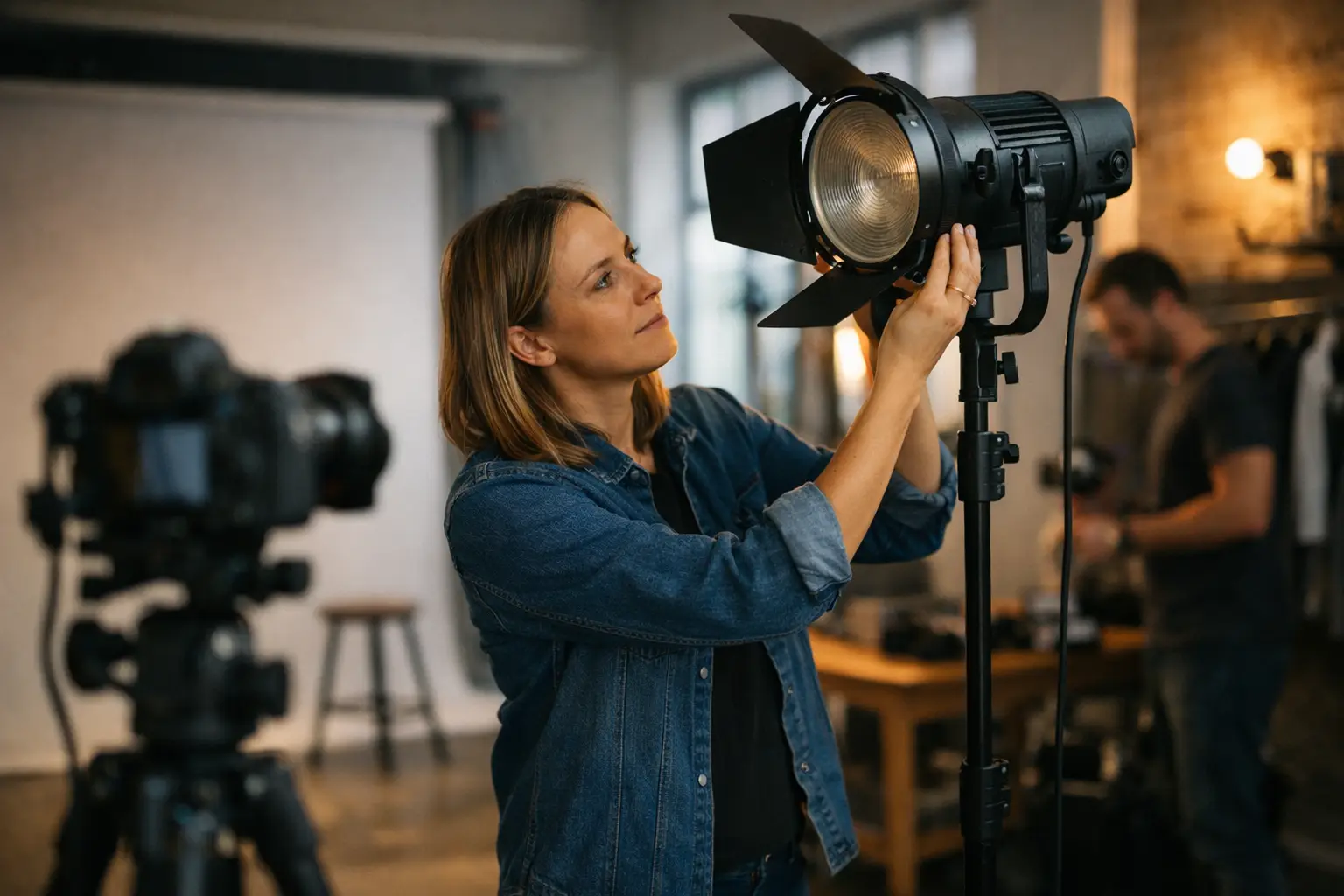
A cheap studio can become an expensive shoot very quickly. If the loading is awkward, the lighting is limited or the space is smaller than it looked online, you lose time before the camera has even come out. Good studio hire for photographers is not simply about getting four walls and a white backdrop. It is about having a workable space that lets you deliver the pictures your client expects.
At our studio in central Leeds, we see every type of booking: a photographer shooting a new clothing range, a content producer filming social clips, a small business making product images for an online shop, or an actor coming in with a photographer for fresh headshots. The brief may change, but the practical questions are much the same.
Start with the shoot, not the room
Before comparing studio hire options, get clear on what you are making. A clean headshot session for one person needs very different things from an ecommerce shoot with rails of clothing, a large set build or a day of video interviews.
Think about the number of people on set, the size of the products, how much kit is arriving and whether you need to photograph full length. If you are shooting furniture, groups or wide compositions, ceiling height and shooting distance matter. For close product work, you may value a clean tabletop area, controllable light and space to keep products organised more than a huge floor.
It also pays to consider the intended use of the images. A single portrait for a press release has a simpler requirement than a campaign needing landscape, portrait and square crops across print, web and social. The latter needs room to work around the subject and build lighting that stays consistent as the format changes.
A studio should support the brief rather than force you to compromise it. If you are not sure what space or kit the job calls for, ask before you book. A five-minute conversation can prevent a very long day.
Studio hire for photographers: the practical checks
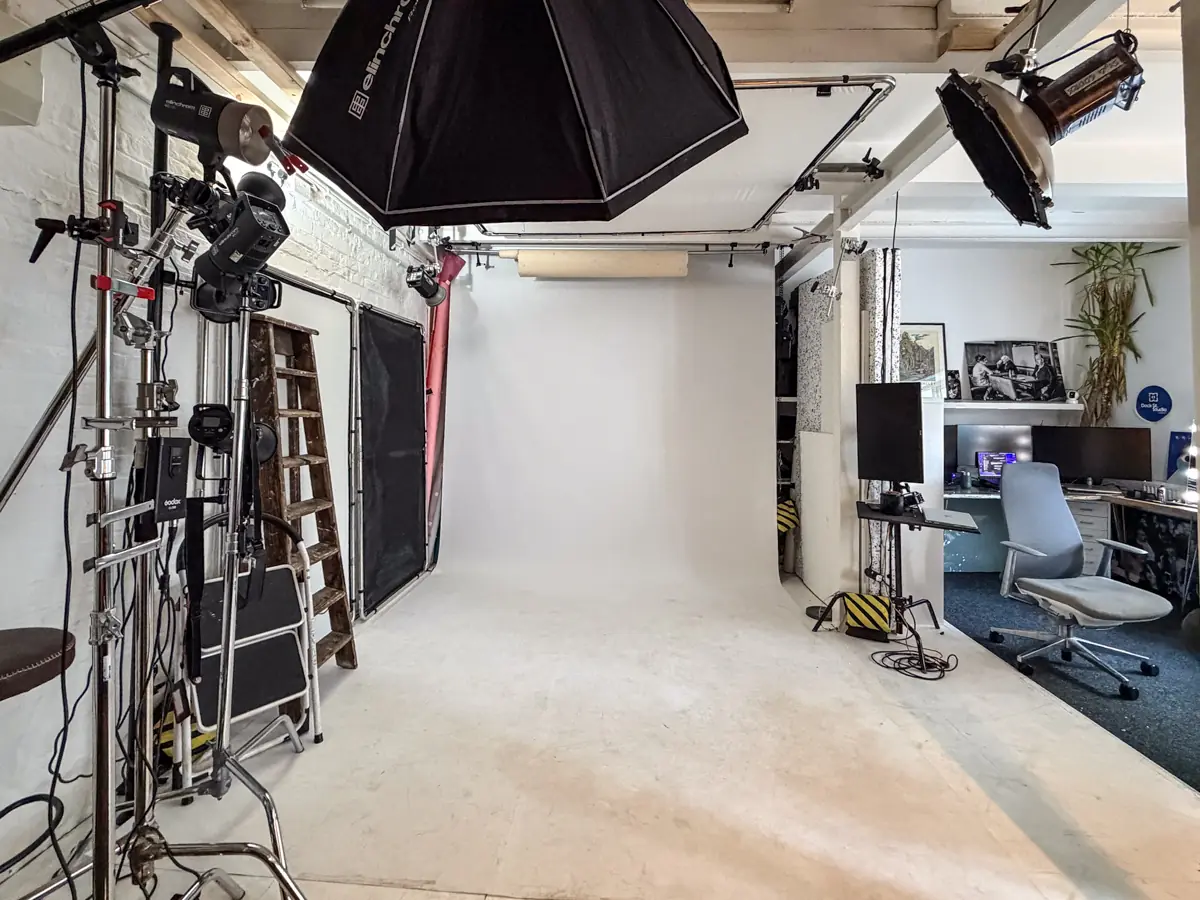
Photographs can make any space look generous, so ask direct questions. A professional studio should be able to tell you the usable shooting area, ceiling height, available backgrounds and exactly what is included in the hire.
The following details are worth checking before you confirm a date:
- Lighting and modifiers: Find out whether flash heads, continuous lights, softboxes, reflectors, stands and triggers are included, and whether they are suitable for your camera system.
- Daylight control: Bright natural light is useful for some shoots, but it can be a problem when you need repeatable results. Check whether windows can be blacked out.
- Backgrounds and surfaces: Ask which paper colours, walls, floors, tables and props are available. A white wall is not always a clean white infinity curve.
- Access and parking: Loading cases, stock and props through a city-centre entrance is manageable when planned properly. It is less fun when you discover it on the morning of the shoot.
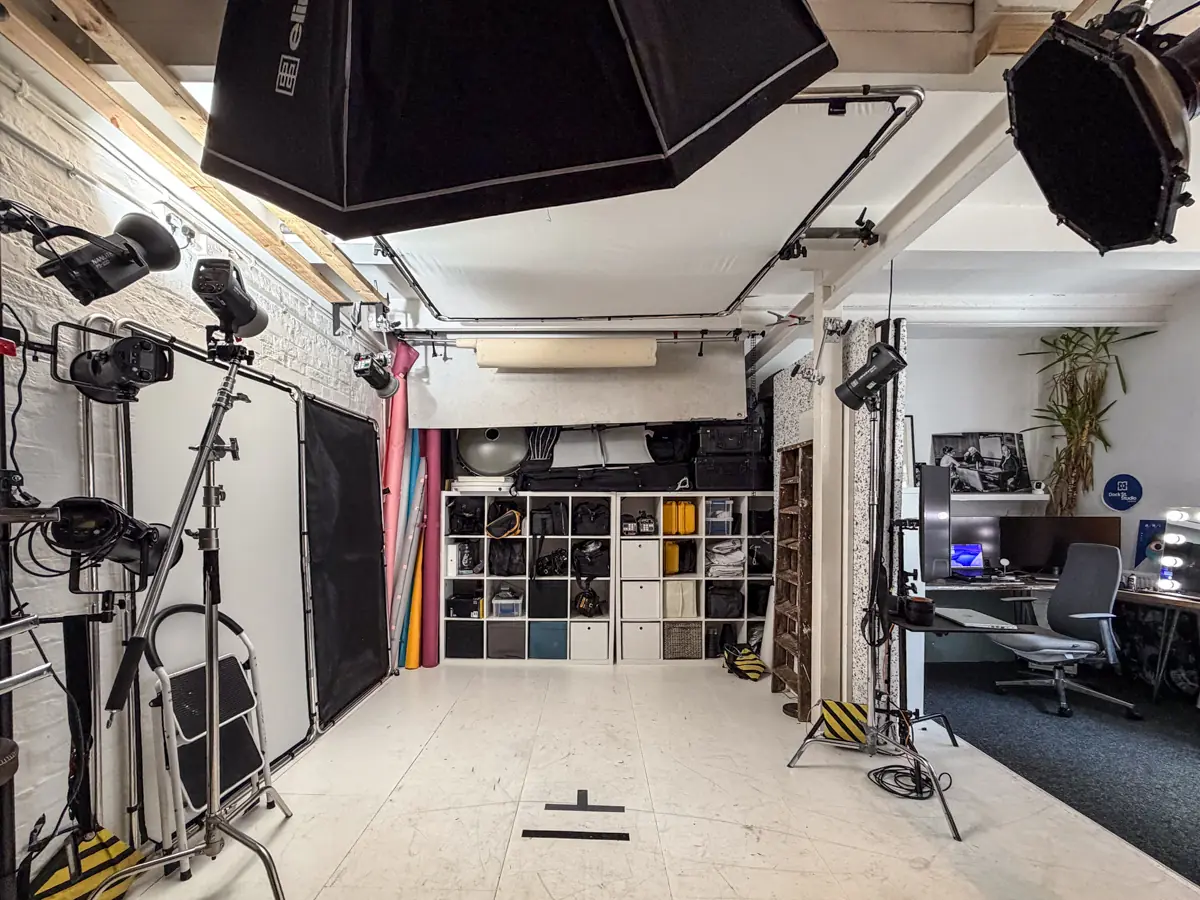
- Changing and client space: For fashion, headshots and brand shoots, people need somewhere comfortable to prepare, sit down and keep their belongings.
- Power, heating and facilities: These sound basic, but they affect how well a full-day shoot runs, especially with video lights, steaming, hair and make-up, laptops and several people on set.
Also ask about set-up and pack-down time. If your booking starts at 9am, does that mean you can begin carrying kit in at 9am, or can you be ready to shoot then? Build in enough time for both ends of the day. It keeps the atmosphere calmer and protects the time you have promised your client. Our studio hire checklist runs through every one of these questions, and the full spec of what you get here answers them for Dock Street specifically.
Equipment is useful only when it is right for the job
A long kit list looks impressive, but the useful question is whether the equipment will help you create the pictures in your treatment. For a portrait, a large soft source, a reflector and a suitable backdrop may be all you need. For glossy products, you might need flags, diffusion, a shooting table and enough grip equipment to control reflections properly.
If you are filming, check the continuous lighting output, fan noise, blackout options and whether there is enough room for a camera, tripod, sound kit and interviewer. Video takes up more space than most people expect. Once you add a two-light set-up and a crew of three, a compact room soon feels crowded. If video is the bulk of the day, the content studio is set up for it.
Do not assume kit is included just because it appears in a studio photograph. Confirm what comes with the booking, what costs extra and whether someone can show you how it works. That last point matters if you are hiring unfamiliar lighting or bringing an assistant who has not used the system before. The equipment checklist covers what is worth bringing regardless.
For clients who do not normally work in studios, technical support can be the difference between a smooth session and a frustrating one. We can provide the space for self-produced shoots, but we can also bring experienced photographic direction when a business needs more help with the brief, lighting or final image quality.
Leave room for the people in the room
A studio day is rarely just photographer and subject. There may be a client, stylist, make-up artist, producer, videographer, assistant, talent and a person from the marketing team who needs to approve the work. Plan for the real headcount, not the ideal one.
This matters particularly for brand photography. A business owner may arrive feeling slightly unsure about being on camera. Give them a clear place to put their coat, a private area to get ready and enough breathing room away from the lens. That practical care helps people relax, and relaxed people look more like themselves in the final pictures.
The same applies to actors and performers. Headshots work best when the person does not feel rushed or watched. A calm, well-organised studio gives the photographer room to direct and the sitter room to settle in. You cannot fake that with editing later.
Budget for time, not just the hourly rate
The lowest hourly studio rate is not necessarily the best value. A better-equipped space can save you hiring lighting elsewhere, paying for extra assistants or spending an hour trying to make an unsuitable corner work. On a commercial job, those costs add up quickly. For reference, hire at Dock Street is £125 for two hours, £175 for a half day and £300 for a full day, with lighting, backdrops and grip included in all three.
Be realistic about the schedule. Product photography often takes longer than expected because each item needs steaming, cleaning, styling and checking. A portrait session may move quickly, but a team headshot day needs turnaround time between people. Video includes sound checks, retakes and pauses that still need to fit within the hire.
It is usually wiser to book a little more time than you think you need, especially if the client is attending. Finishing early is a good result. Asking a client to leave while you are still chasing the last shot is not.
Know when a studio-only booking is enough
There is nothing wrong with hiring a studio and running the shoot yourself. If you have a clear lighting plan, the right kit and a crew you trust, a well-prepared space is exactly what you need. It gives you control without paying for services you will not use.
But sometimes the business need is not really studio hire. It is a set of usable images, produced without the client having to manage every creative and technical detail. That is common with growing brands, busy marketing teams and people who are nervous in front of the camera.
In that case, bringing in an experienced commercial photographer can make better commercial sense. You get help shaping the shot list, directing people, dealing with lighting changes and keeping the day moving. The aim is not to make the process more complicated. It is to get the right images first time, with fewer decisions left sitting on the client's desk. Adding a studio-based photographer to a hire is £350–£550 depending on the level and seniority of the shooter; full commercial shoots are £450 for a half day or £750 for a full day with editing included.
A quick pre-shoot conversation saves the day
Before you book, share the brief, reference images, product dimensions, number of people attending and your planned timings. Mention anything that might affect the set-up, from a model needing a changing area to a brand bringing twenty boxes of stock. A good studio team will spot practical issues early and suggest a sensible way round them.
The best hire is the one you barely have to think about once the shoot begins. Your lights are where they need to be, your client feels looked after and you have enough time to concentrate on making pictures worth using. That is when a studio stops being just a room and becomes part of a properly run shoot.
Frequently Asked Questions
What is included in a studio hire at Dock Street?
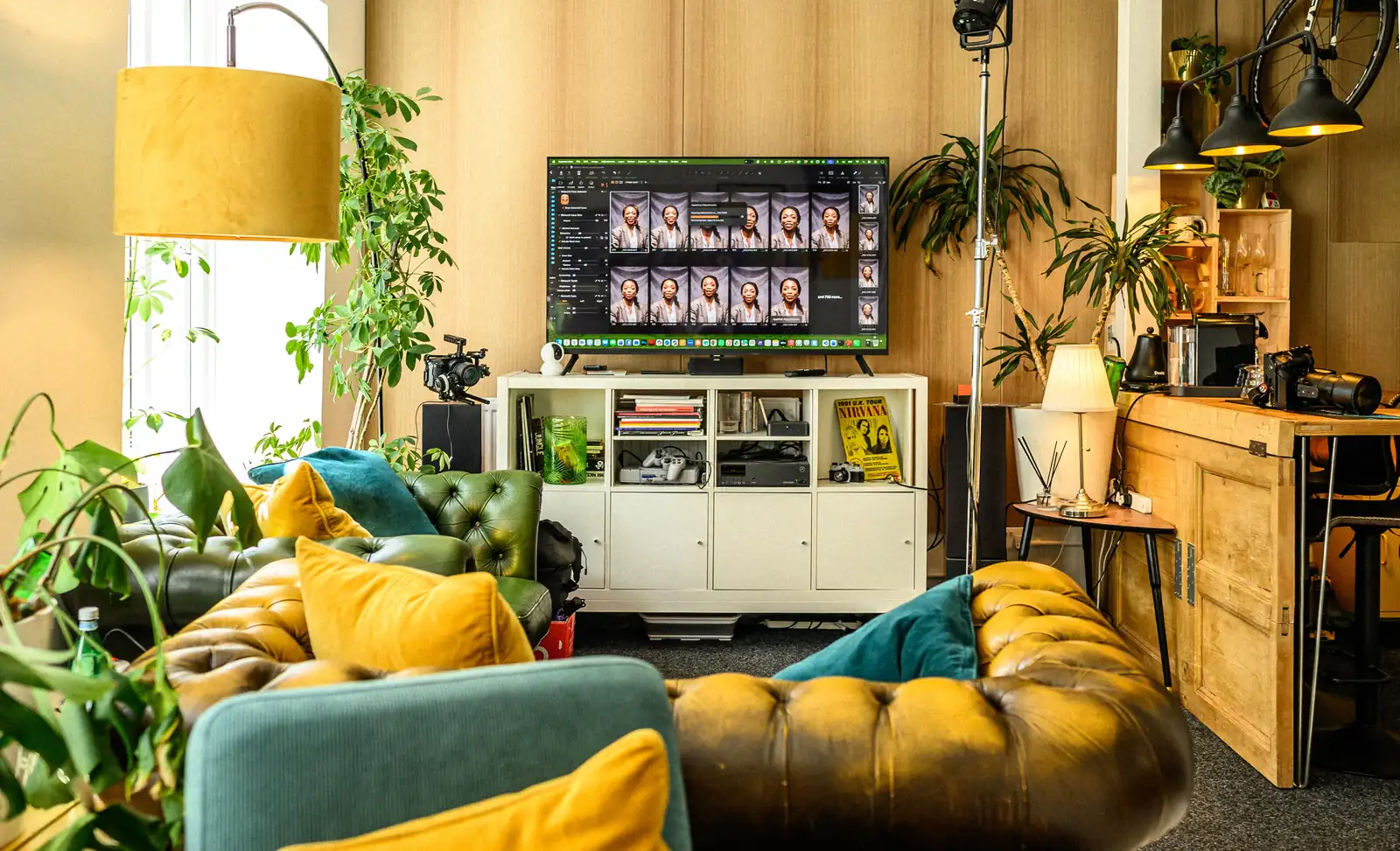
The space, Elinchrom and Godox lighting with modifiers, backdrops including the white infinity cove, stands, sandbags and grip, a tethered workstation, the client lounge and free on-site parking. You bring your camera and run your own session.
How much time should I allow for set-up and pack-down?
It sits inside your booking, so allow at least half an hour at each end for anything beyond a simple portrait. For product runs and video days, more. Booking a half day for a job you think is two hours is rarely wasted.
Can I bring my own lighting?
Yes. Our Godox heads take the standard Bowens mount, so your own modifiers clip straight on, and there is space and power for whatever you bring in.
Is the studio suitable for video?
Yes for talking-head, interview, product and social content. If audio is the whole product, tell us what you are recording and we will be straight about whether the room suits it.
Can you supply a photographer as well as the room?
Yes. A studio-based photographer added to a hire is £350–£550 depending on experience. For a fully produced day with editing included, commercial shoots are £450 for a half day and £750 for a full day.
Where is the studio and how do I book?
Dock Street Studio, Unit 9, 30–38 Dock Street, Leeds LS10 1JF — central Leeds near Leeds Dock, a short walk from the train station, with parking on site for loading. Book online or call to talk the brief through first.
Hire the studio in Leeds
Send us the brief, the crew size and the date you are holding, and we will tell you honestly whether the space fits the job before you commit. Book online, email hello@dockstreetstudioleeds.co.uk, or call 0113 4400102.
Written by Mark Wheelwright
Commercial photographer & studio owner, Leeds | ISO Photographic Ltd
Dock Street Studio, Unit 9, 30–38 Dock Street, Leeds LS10 1JF
18+ years' experience | 900+ projects | 300+ five-star reviews | 1M+ shutter count
dockstreetstudioleeds.co.uk
Shot, written and built by the Dock Street team
Every guide on this blog comes from the team at Dock Street Studio — Mark behind the camera with 18+ years' experience, Nicole on styling and lighting, Beya on video and bookings and Austin keeping the site fast and findable. If you'd rather have us do it than read about it, book a session or explore our photography services in Leeds.