


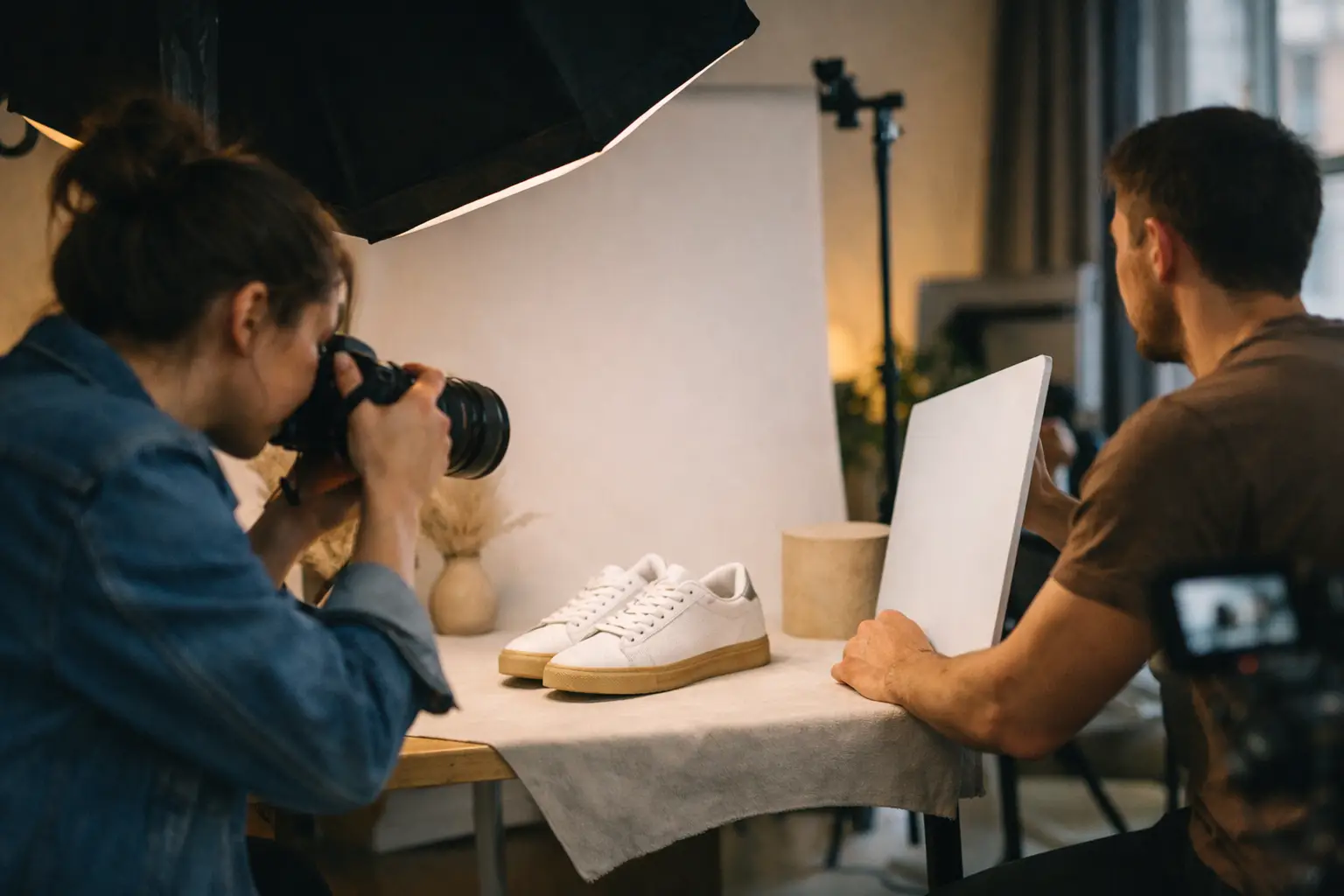
Most people book a product shoot with one picture in their head. Usually it is the main image on the shop page, clean and sharp, and that is a fair place to start. The trouble arrives a fortnight later, when the same product needs to sit in an email banner, a square social post and a vertical ad, and the only file that exists is cropped tight to the edges of the box.
That is the honest question underneath most of what gets called an ecommerce trend. Not which style is in this season, but how many different shapes and places one photograph now has to survive. Planning a product shoot in Leeds around that from the start costs nothing extra on the day, and saves a reshoot later.
What one shoot has to feed now
The durable shift is not really about taste. It is that the places your product turns up have multiplied, and they do not agree on shape. A shop page wants something tall enough to show the whole item. A feed wants a square. Paid ads want a vertical frame with room at the top for text. Email wants a wide strip.
None of that will pass by spring. Screens are the shape they are, and the same handful of proportions have been doing the rounds for years. What changes is which of them your marketing leans on this quarter.
So the useful planning question is not "what should this look like". It is "where is this going, and what shape is it when it gets there". What a shopper is quietly asking of the picture once it arrives is a separate problem, and we have written about what product images have to answer elsewhere.
Frame for the crop nobody has thought of yet
The fix is unglamorous. We shoot a little wider than the tightest crop anyone has asked for, and where the layout allows it we keep the product off-centre. That leaves room to crop in later without losing the bit that matters, and room for a headline to sit over the frame without covering the product.
It costs a few seconds per setup. Reframing after the fact costs a day.
The plain-background packshot is the exception. That one wants the product filling the frame properly and consistently, because it is doing a different job entirely. Shoot those as their own set, then take the looser frames afterwards while the lighting is still up and the product is still clean.
Short clips that answer one question
The thing brands most often skip, then wish they had not, is a few seconds of movement. Not a glossy brand film. A short clip that answers the one question the stills cannot.
Does the lid actually seal. How does the fabric fall when someone moves. How big is it next to a mug. How does the clasp work. Ten seconds showing the answer will do more for a hesitant buyer than another paragraph of description.
These are cheap to get if you plan them in. The set is built, the light is up and the product is already in position, so a handful of clips is a small addition to the day rather than a second booking. Ask a month later and you are paying to build the whole thing again.
Be honest about what you actually need, though. If the answer is a proper film with a crew, a script and someone directing, that is a different job with a different budget, and squeezing it into a stills day serves neither well. We would rather say so up front than hand you something thin.
Keeping a range looking like a range
The other shift worth building around is consistency, which sounds dull and matters more than almost anything else on a product page. A category page where every item shares the same lighting direction, the same distance and the same background reads as a proper shop. One where they do not reads like a car boot sale, however good the individual pictures are.
Customers rarely notice this consciously. They notice that browsing feels easy, or that something feels slightly off, and usually could not tell you why.
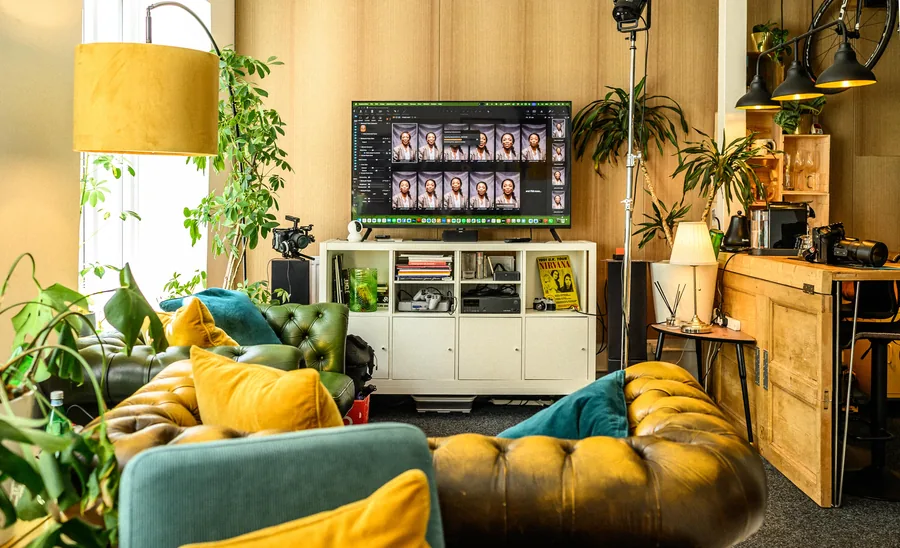
Frames landing on a big screen as we go is what makes matching possible, because we can hold a new item against the last one rather than hoping. It is the main reason we shoot tethered for anything that has to sit in a set. It also means decisions get made while the set is still up. Agreeing on the day that a colourway needs its own full set, rather than a fortnight afterwards, is the difference between a small addition and a return trip.
Where generated images come into it
We get asked about generated imagery most weeks now, and it is a fair question rather than a threat. Our view is that accuracy is a commercial matter before it is a technical one. If what arrives does not match what somebody thought they were buying, you pay for that in returns and in goodwill, whatever made the picture.
So photograph the actual item for the frames a buying decision rests on. We have set out where generated images earn their keep and where they do not, and there is no sense repeating it here.
Start with the page costing you most
You do not need to rephotograph a whole catalogue because the shape of an ad unit moved. Start where the gap is obvious. A bestseller with no sense of scale. A product that comes back more often than the rest. A launch that deserves better than the sample photo somebody took on a desk under the office lights.
Look at that page the way a customer would, on a phone, in a hurry. What can they not tell from it. That is your next photograph, and usually your next clip as well. Working out which pages those are is where most of our product work starts anyway.
Frequently Asked Questions
Can we get stills and short clips out of the same session?
Usually yes, provided we know before the day. The same set, lighting and styling can cover both, but it changes how we schedule the time, so it needs to be in the brief rather than mentioned at four o'clock.
Do I need a different set of images for every place the product appears?
No, and it would be an expensive way to work. Shoot a little wider than you think and most placements can be cropped from the same frame. Only bother with a purpose-built version where the layout genuinely demands it.
How many photographs does one product actually need?
It depends on how much doubt the product creates. Something simple and familiar needs very little. Something where size, material or how it works is hard to judge from a description needs more, and that is where the extra frames earn their keep.
Will new photos match the ones I already have?
Often, if you bring us examples of the existing set at the planning stage. Matching an old lighting setup is doable but it is easier when we can see it in advance rather than reverse-engineer it halfway through the day.
Where are you, and how do I book?
We are at Dock Street Studio, Unit 9, 30–38 Dock Street, Leeds LS10 1JF, near Leeds Dock and a short walk from the station, with parking onsite. Bring the products down and we can talk the plan through over a brew.
Book a product shoot in Leeds
Tell us where the images are going and what your customers keep asking, and we will build the day around that rather than around a shot count. Book online, email hello@dockstreetstudioleeds.co.uk, or call 0113 4400102.
Written by Mark Wheelwright
Commercial photographer & studio owner, Leeds | ISO Photographic Ltd
Dock Street Studio, Unit 9, 30–38 Dock Street, Leeds LS10 1JF
18+ years' experience | 900+ projects | 300+ five-star reviews | 1M+ shutter count
dockstreetstudioleeds.co.uk
Shot, written and built by the Dock Street team
Every guide on this blog comes from the team at Dock Street Studio — Mark behind the camera with 18+ years' experience, Nicole on styling and lighting, Beya on video and bookings and Austin keeping the site fast and findable. If you'd rather have us do it than read about it, book a session or explore our photography services in Leeds.