


We get asked this in the studio most weeks now, usually while we're still rigging lights. If a laptop can make a picture in twenty seconds, why pay someone to take one? It's a fair question, and we have an obvious commercial interest in the answer, so we'll try to be straight rather than defensive.
The honest version is that AI image trends have moved well past the six-fingered-hands stage, and for a fair few jobs a generated image is now the sensible call. For others it quietly costs you money. The line between the two has very little to do with the software and everything to do with whether the picture has to be true.
Where generated images genuinely earn their keep
Concepting is the obvious one. If you're trying to settle whether a spring campaign should feel bold and colourful or quiet and neutral, roughing out six versions on a screen beats a fortnight of arguing about adjectives. "Make it feel more premium" is not a brief. Six pictures, four of which everyone hates, is a brief.
Mood boards and layout mock-ups are the same. A designer needs something in the hero slot to see whether the page holds together. Filling that with a generated placeholder while the real shoot gets organised is sensible, as long as somebody remembers to swap it out.
Then there's the short-lifespan work. A one-day social post, an internal deck, a light-hearted graphic for a newsletter. If an image is going to be looked at for an afternoon and never referenced again, commissioning a shoot for it is hard to justify, and we'd say so in the room rather than quote you for it.
There are also jobs where a shoot simply isn't viable. A scene nobody would build, a place you can't get to, an abstract background sitting behind text. If nobody could mistake the image for a claim about your business, generating it is a perfectly reasonable answer.
Production help sits in the same bucket. Extending clean seamless background so a packshot fits a wide banner crop, or taking a scuff off a studio floor, is retouching work that has always happened. It's faster than it used to be. That's a good thing, and we'll use it.
Where a photograph is still doing a job a generator can't
Your actual product
This is the one that costs real money when it goes wrong. A generator produces something plausible. Product work usually needs something precise. Those aren't the same task.
Somebody deciding whether to buy your candle, your jacket or your gin is reading the label, the finish, the weave, the fastening and the scale. A generated version guesses at all of it. When the parcel lands and the thing inside doesn't match the picture, you get a return, a refund and a customer who trusts you slightly less next time. That isn't a legal point, it's just what happens.
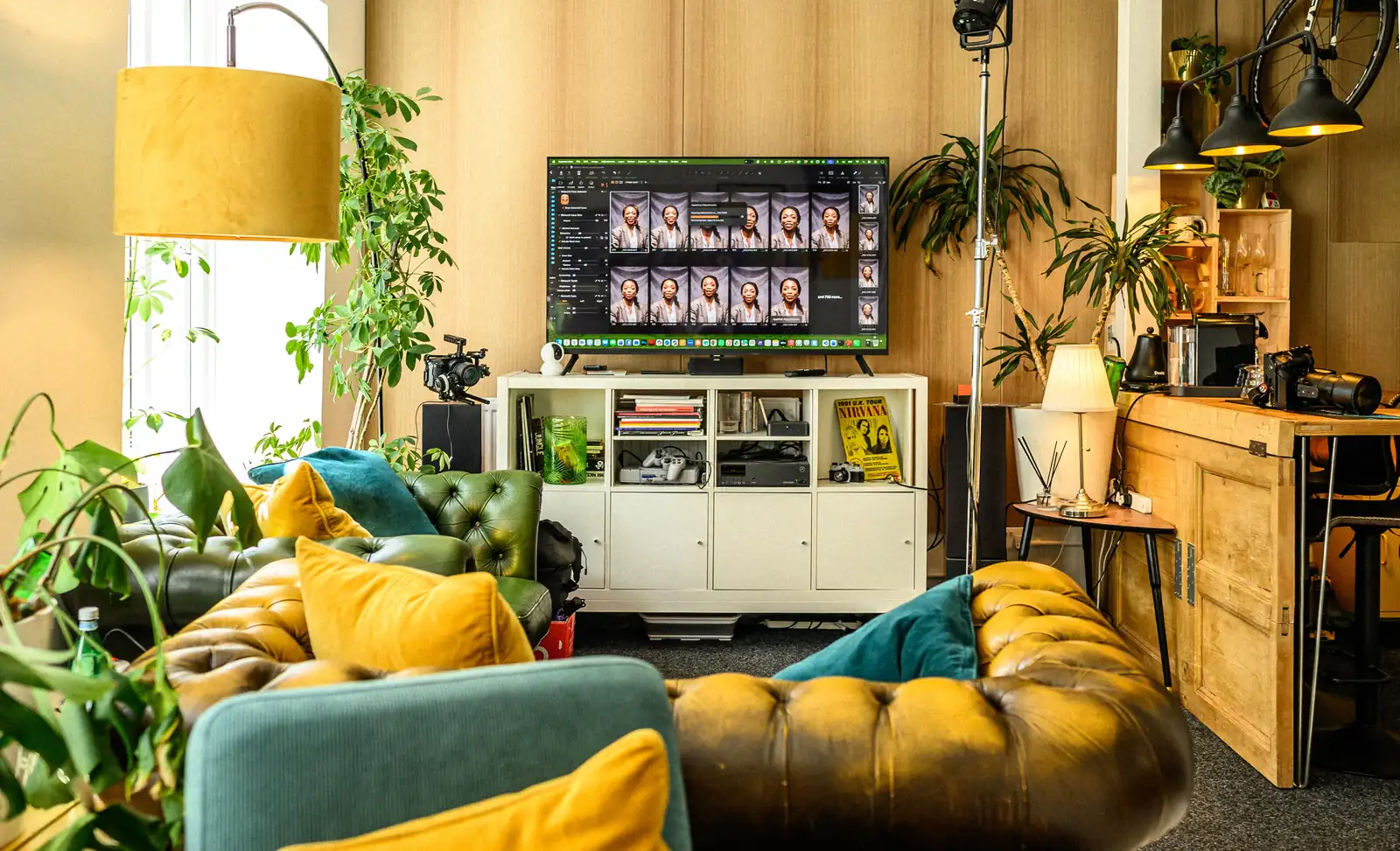
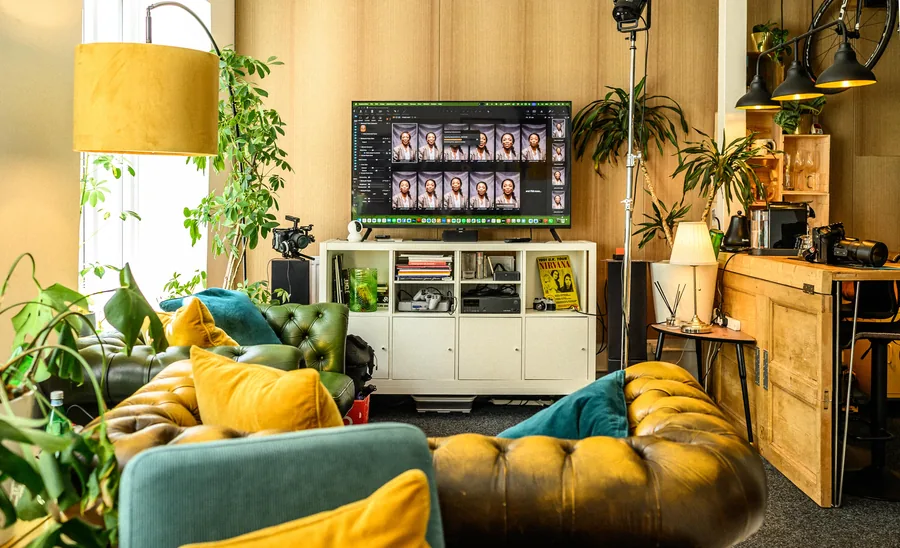
Getting it right is fussy work. Reflective surfaces need controlled highlights. Dark packaging needs separating from a dark background. We shoot tethered so the frames land on the big screen as we go and you can say "that label's reading warm" before we've moved a light, which is why we work that way.
Your actual people
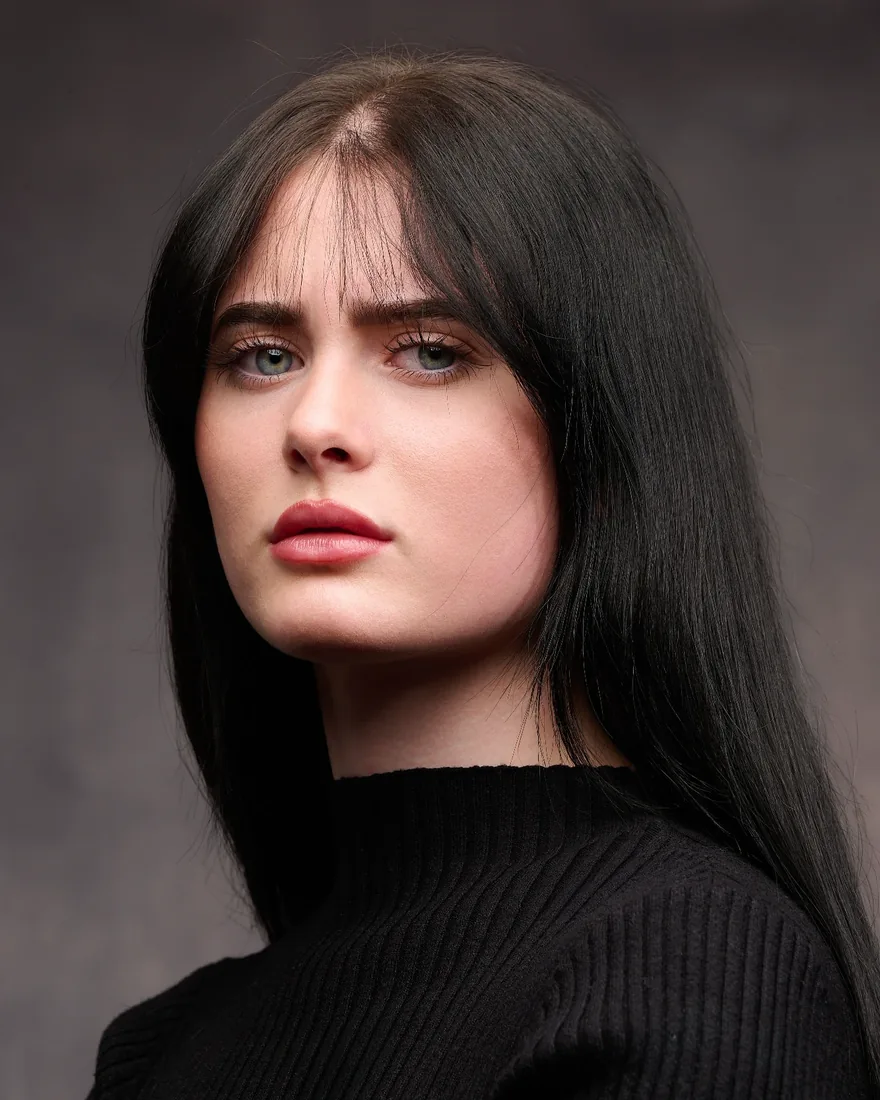
Generated faces are convincing now. They're still a poor fit anywhere trust depends on identity. An about-us page, a team page, a testimonial, a casting profile — the whole point is that the person in the picture is the person you'll be sat across from.
With headshots, the file at the end is only part of what you're paying for. Most people arrive quietly dreading it. Someone has to notice the shoulders have crept up, wait for a believable expression rather than a held one, and tell you honestly when we've got it. Don't feel you need to turn up knowing how to pose — that part is our job. A prompt can't do the reassuring.
Something that actually happened
Launches, panels, awards nights, the morning the new Leeds office opened. The whole value is the record: real people, real room, real evening. There's nothing there to generate.
A rough way to decide, brief by brief
Start with the job rather than the tool, and ask two questions about each image on your list.
How long will it live? A week on Instagram is a different level of risk from three years on your homepage, in a brochure and on an exhibition stand. The longer an image lives and the more closely it gets judged, the more the properly art-directed version earns its keep.
Is it making a claim? If the picture says "this is our product", "these are our people" or "this happened", it needs to be true. If it says "here's roughly the mood we're after", it doesn't.
Then split the brief. For most businesses the non-negotiables are the product, the faces, the premises and the brand colours. The flexible bits are backgrounds, props, early mock-ups and extra crops for different placements. Plenty of good campaigns end up as photographs of real things with generated work around the edges, and that's a fine place to land — planning the campaign properly is what stops the two getting muddled.
Whatever you do generate, have one person check it properly before it goes out. Spelling on packaging and signage, hands, reflections, whether every variant is the right colour. Generated images tend to fail in small embarrassing ways rather than obvious ones.
What AI image trends mean for your image budget
There's no prize for using AI everywhere and none for refusing it on principle. If half your image list is mood boards, placeholders and posts with a week's shelf life, generate those and spend the budget on the half that has to be real. That isn't us talking ourselves out of work. It's how we'd rather you spent it.
Frequently Asked Questions
Are AI product images good enough to sell from yet?
For mood, atmosphere and marketing around the product, often yes. For the image somebody actually buys from, we'd still shoot the real item — a customer receiving something that doesn't match the listing is a returns problem and a trust problem.
Could we use generated headshots for our team page?
We wouldn't. The job of a team page is to show who you really are, and a face that isn't the person undercuts that the moment someone walks into a meeting.
Where do we stand legally on AI-generated images?
Genuinely unsettled, and shifting. We're photographers rather than advisers, so for anything commercially significant put that question to your own legal adviser instead of taking a blog's word for it.
Will you use AI tools on our shoot?
Where it saves production time and changes nothing about the truth of the image — extending clean background, removing a stray cable — yes, and we'll tell you what we've done. Not on your product's colour, shape or detail.
Is it obvious to customers when an image is generated?
Sometimes, sometimes not, and we wouldn't build a decision on being able to fool anyone. The stronger question is what happens if they do notice, and how much that matters for the page it's sitting on.
Where is the studio, and how do we book?
Dock Street Studio, Unit 9, 30–38 Dock Street, Leeds LS10 1JF — central Leeds near Leeds Dock, a short walk from the train station, with parking onsite. Book online or give us a ring and we'll go through the brief first.
Work out what actually needs photographing
Bring us your image list and we'll tell you honestly which parts are worth a shoot and which you can handle another way, over a brew. Book online, email hello@dockstreetstudioleeds.co.uk, or call 0113 4400102.
Written by Mark Wheelwright
Commercial photographer & studio owner, Leeds | ISO Photographic Ltd
Dock Street Studio, Unit 9, 30–38 Dock Street, Leeds LS10 1JF
18+ years' experience | 900+ projects | 300+ five-star reviews | 1M+ shutter count
dockstreetstudioleeds.co.uk
Shot, written and built by the Dock Street team
Every guide on this blog comes from the team at Dock Street Studio — Mark behind the camera with 18+ years' experience, Nicole on styling and lighting, Beya on video and bookings and Austin keeping the site fast and findable. If you'd rather have us do it than read about it, book a session or explore our photography services in Leeds.