


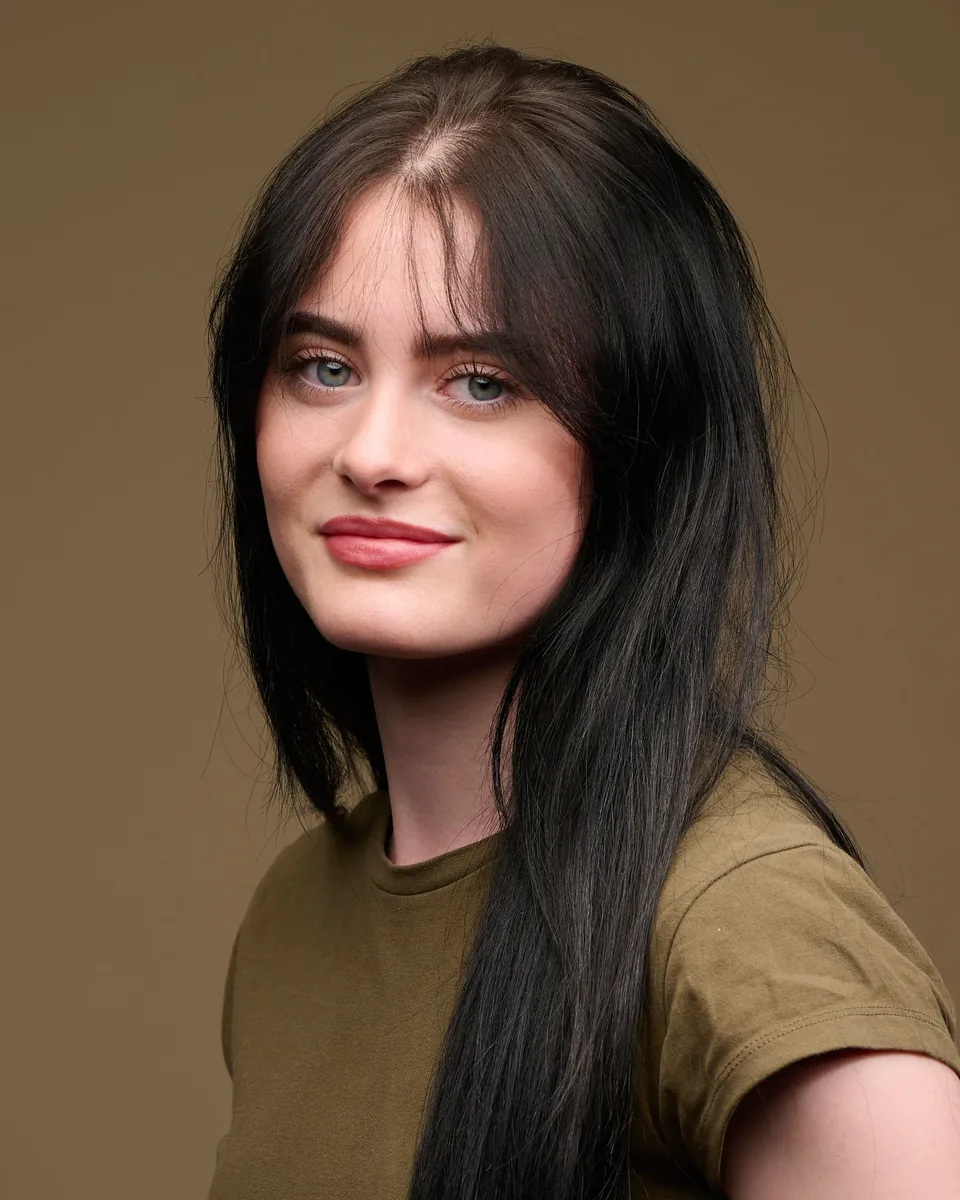
A casting assistant might open your submission on a phone, on a train, with sixty more faces to get through before lunch. You get a few seconds. In that time the photo has to show your face clearly, suggest where you sit against the brief, and convince them that the person in the frame is the person who will walk into the room or appear on the self-tape.
Most advice about actor headshots in Leeds stops at the shoot itself. The picture is only half the job. The other half is which frame you choose, how it is cropped, what the file is called, and whether your Spotlight page, your agent's website and your CV all agree with each other. That is the part actors ask us about afterwards, usually over a brew while we go through the gallery together.
Choose one main image and let it do the heavy lifting
Your main headshot is the one that appears on casting platforms, on your agent's roster page and at the top of email submissions. It is doing more work than everything else in your set combined, so pick it on usefulness rather than on how much you like it.
The test we give people is simple. If a casting director rang tomorrow on the strength of this photo, would they recognise you the moment you walked in? If the answer is anything slower than an immediate yes, choose a different frame. Recognition is the whole point. A picture that flatters you into someone else costs you the room before you have opened your mouth.
A main shot that works usually has a clean composition from the chest or shoulders up, direct or near-direct engagement with the camera, and enough air around the head that a platform crop will not squash it. Casting sites all crop thumbnails slightly differently, and some are more aggressive than others. Look at your choice at postage-stamp size. Subtle expressions and fussy backgrounds fall apart at that scale, and if your eyes stop reading in the thumbnail, the image is not earning its keep.
We shoot tethered into Capture One, so you see the frames on a large screen as we go rather than squinting at the back of a camera. That matters here more than it sounds. Choosing your main image is much easier when you have watched it happen and know which one felt like you.

Keep a second look only if it shows a real contrast
Two strong, genuinely different images beat six near-identical ones. A second shot is worth keeping when it does something the first cannot: warmer against more serious, contemporary against period-capable, open against guarded. If you have to explain the difference, there isn't one.
Where actors get into trouble is the middle ground. A profile with five variations on the same expression makes a casting team work out which face is really yours, and they will not spend long doing it. We have written more about how many images actually serve you in our piece on how many headshots actors need, and it is usually fewer than people expect.
Your agent may ask for a specific image for a specific brief, which is exactly what a second look is for. That is different from putting every option on public display and hoping one lands.
Crop, size and name the files properly
A good portrait can be undone by ten minutes of careless preparation. Before anything goes near an upload form, check three things: your face is not cut too tight at the top of the frame, your eyes are still visible in the small preview, and the image is the right way up. That last one sounds daft until you have seen a rotated headshot sitting on a casting profile for a fortnight.
Files and formats
A portrait-orientation JPEG covers almost every submission you will make. Keep the full-resolution original stored somewhere safe, then export a good-quality working version for uploads and email. There is nothing to gain from sending a file so large it crawls to load or bounces off an attachment limit, and nothing to gain from a file so small it goes soft the moment a platform resizes it.
Naming
File names matter more than most actors think. A casting office downloading a few hundred images should not end up with IMG_4827_FINALfinal.jpg on their desktop. Use something plain and searchable:
Firstname-Surname-Headshot-2026.jpg
If you are sending two looks, add a straightforward descriptor: warm, or serious, or bearded. Keep it factual rather than clever. It makes the file easy for an agent, a casting assistant or a production coordinator to find again three weeks later, which is often when it matters.
What not to add
No text across the image. No agency logos, no watermarks, no borders. They cover the work and make a clean professional photograph look like a social media graphic. Your name lives in the file name and the submission details, not across your cheekbone.
Match the image to what you are submitting for
The right choice shifts a little with the brief. A relatable parent, a friendly commercial lead, a straight-talking Yorkshire character: each of those is served better by one image in your set than another. This is not about forcing yourself into a type you are not. It is about picking the most relevant honest picture you already have.
Casting priorities differ by medium too. Theatre submissions often weigh training, credits and vocal range alongside the photo. Screen work wants a clear read on your natural presence, because that is what the camera will be sitting on for a whole scene. Commercial castings tend to look for warmth and approachability. The headshot is not the decision, but it sets the tone before anyone reaches your Spotlight profile, your CV or your self-tape.
If the instructions ask for one headshot, send one. If they specify a file size or a format, follow it exactly. It sounds trivial. It is not. A submission that arrives clear, correctly labelled and in the requested format quietly signals that you will be easy to work with on set, and that impression is worth having. If you want a longer look at how casting range reads in a photograph, our post on casting type and actor headshots goes into it properly.

Keep your profiles telling the same story
Use the same current main headshot across your core profiles wherever you can. A different photo on Spotlight, on your agent's page and on your own site makes people hesitate when they are moving quickly between all three, and hesitation is not what you want in a shortlist meeting.
Your photo, playing age, credits and contact details should agree with each other as well. If your appearance has genuinely changed, update the image promptly. New hair colour, a beard grown or shaved off, a significant weight change: those are all reasons to reshoot, and none of them are vanity.
There is no fixed annual deadline. Some actors need a new set after a few months because they have changed something for a job. Others get two or three good years out of one session. The honest rule is to change it when it stops representing the person casting will actually meet.
The submission mistakes we see most often
The most common one is loyalty to an old favourite. Casting does not need a record of your best hair day from three years ago. It needs a dependable guide to you now, and an image that flatters the wrong version of you only buys disappointment in the room.
Over-editing runs a close second. Light retouching is fine, and removing a temporary spot is doing everyone a favour. Smoothing away every line, pore and defining feature is not. A headshot should look considered, not manufactured, and skin that has been polished into plastic reads instantly on a casting platform full of real faces.
Character images are the third. Costume shots, performance stills and heavily styled editorial portraits have a place in your portfolio and on social media. They rarely make a good primary casting headshot, because they hide the simple direct view that casting needs before anything else.
The last one is treating the whole thing as a purchase you can forget about. Keep a folder with your chosen files, a note of when they were shot, and a reminder to look at them again after any visible change. It saves the scramble when an agent asks for something updated at four o'clock on a Friday.
What a session with us actually looks like
You do not need to arrive knowing how to pose. That is our job. We direct the small things that make the difference: chin position, where your shoulders sit, how to stop your jaw tightening, how to look like you are thinking about something rather than waiting for a shutter. If being photographed makes you tense, say so at the start and we will build the session around it.
The studio is a private space in central Leeds with controlled lighting, so nothing depends on Yorkshire weather doing you a favour. There is a coffee bar and somewhere to sit while you change tops. Bring a small choice of plain, well-fitting garments rather than a suitcase: mid-tones usually work, obvious logos and fine checks rarely do, and a plain black top can make a dark-haired actor melt into a dark background, so bring an alternative. Our guide on how to prepare for actor headshots covers the rest.
Sessions start at £150 for the Quick-Fire Spotlight option, with an In-Depth Portrait at £200 if you want more looks and more time. If you would rather see the range of work first, the actor headshots page has examples and the full detail.
Frequently Asked Questions
How many headshots should I upload to a casting profile?
One strong main image, and a second only if it shows a genuine contrast in tone or type. More than that tends to dilute rather than help, because casting teams stop being sure which face is really yours.
Should my headshot be in colour or black and white?
Colour, for your main image. Black and white can look striking and has its uses as a secondary shot, but casting needs to see your actual colouring, and colour film and television is what most of the work is.
Do I need different headshots for theatre, screen and commercial work?
Not necessarily different sessions. One honest, well-lit set usually covers all three, with the choice of which frame you submit shifting to suit the brief. Separate looks only make sense if you genuinely present very differently.
How often should I get new actor headshots?
Whenever the current ones stop looking like you. That might be six months after a haircut for a job, or three years if nothing much has changed. There is no calendar rule worth following.
Can I use a good photo a friend took on a phone?
Sometimes, for a holding image. Phone cameras handle faces reasonably well now, but they struggle with the even, controlled lighting that lets casting read your features quickly, and thumbnails are unforgiving. It is a lower-risk option to have one proper set you trust.
Where is the studio and how do I book?
Dock Street Studio is at Unit 9, 30–38 Dock Street, Leeds LS10 1JF, in central Leeds near Leeds Dock and a short walk from Leeds train station, with parking onsite. Book online, email hello@dockstreetstudioleeds.co.uk, or call 0113 4400102.
Book your actor headshot session in Leeds
If your current headshot no longer opens doors, come and sort it properly. We will talk through what you need before we photograph anything. Book online, email hello@dockstreetstudioleeds.co.uk, or call 0113 4400102.
Written by Mark Wheelwright
Commercial photographer & studio owner, Leeds | ISO Photographic Ltd
Dock Street Studio, Unit 9, 30–38 Dock Street, Leeds LS10 1JF
18 years in business | 900+ projects | 300+ five-star reviews | 1M+ shutter count
dockstreetstudioleeds.co.uk
Shot, written and built by the Dock Street team
Every guide on this blog comes from the team at Dock Street Studio — Mark behind the camera with 18+ years' experience, Nicole on styling and lighting, Beya on video and bookings and Austin keeping the site fast and findable. If you'd rather have us do it than read about it, book a session or explore our photography services in Leeds.