


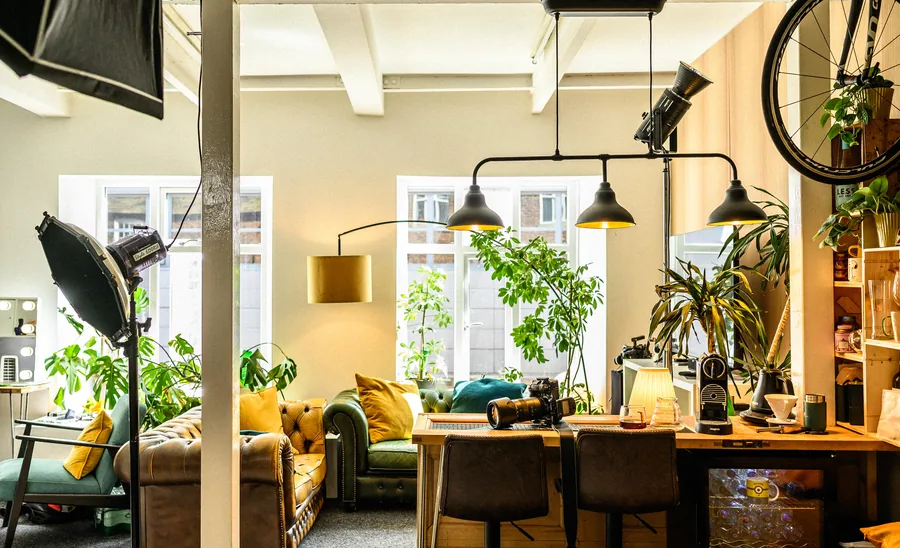
A portfolio isn't a record of everything you've ever done. It's proof of the work you want more of. Which is why the creative portfolio shoot ideas worth paying for start with a question rather than a prop list: what should this shoot help you get next?
A performer might need to show more casting range. A designer might want images that read as editorial rather than merely tidy. A small Yorkshire brand might need product shots that sit happily in a campaign, not only on the shop page. Those are three different days in the studio, and the answer changes everything that follows — the light, the styling, how hard we shoot and what you can actually use afterwards.
Start with the job you want to be booked for
Before anyone thinks about backdrops, look at the work you want to attract. If you're an actor who mostly gets seen for warm, upbeat roles, a quieter and more dramatic frame is probably the useful addition. If you run a food or homeware brand, you likely need the product used in a believable setting as well as photographed cleanly for the listing.
The temptation is to show every possible version of yourself in one session. Range matters, but a muddled portfolio rarely gets anyone hired. Two or three well-developed directions beat ten disconnected ones, and they're far easier to shoot properly in the time you've booked.
Creative portfolio shoot ideas for people and personal brands
The clean, current portrait
Everything else sits on top of this one. Good light, a simple background, and styling that looks like you on a decent day. For actors it's often the first frame a casting team sees. For consultants, artists and freelancers it's the picture that turns up beside a press quote or a speaking listing, so it's worth having a proper studio headshot in the set even when the rest of the shoot is more adventurous.
Simple doesn't mean flat. We use lighting, framing and expression to give the picture shape, rather than letting a set do the talking. Bring two or three clothing options and go easy on logos, busy patterns and anything that will look dated by spring. Our notes on what to wear apply just as well to a portfolio session.
You at work, and the details around it
Show yourself doing the thing people pay you for. A ceramicist at the wheel, a DJ building a set, an architect marking up drawings, a trainer running a session. Context lands in a fraction of a second, which is why these frames earn their keep on websites, in editorial features and across a month of social posts.
Make the activity real. Don't mime a job you don't do, and bring the actual tools, materials or half-finished work with you. We'll usually shoot a mix of wider scenes and close details: hands, sketches, samples, a screen mid-edit. The wide frames set the scene and the details fill the awkward crops later.
A character-led series
For actors and performers, a few distinct looks can suggest range without tipping into fancy dress. Think casting types rather than costumes: grounded professional, warm parent, guarded authority, sharp comic energy. A change of jacket, a different posture and a shift in expression usually does more than a props box ever will.
If the idea of that makes you uneasy, you're in normal company. Don't feel you need to arrive knowing how to pose or how to be a character on cue. That's our job, and we'd rather build a believable shift in mood than send you home with pictures that look like four unrelated people.
The editorial frame
Editorial portraits carry more atmosphere. Heavier shadow, an odd crop, bold colour, a small set build. They suit musicians, makers, artists and founders whose public identity already has a visual point of view.
There's a trade-off, and it's worth saying plainly. A striking editorial image is memorable but often a poor main profile picture. Pair it with the clean portrait so you've got something flexible for the practical jobs.
Movement and gesture
Still photography doesn't have to feel still. Dancers, instructors and stylists obviously need movement, but almost everyone loosens up once they're walking, turning or handling something instead of sitting to attention.
Movement needs room, safe footing and a shutter speed that can keep up. That's one of the honest arguments for a studio: we control the light and still leave you space to work, rather than asking you to edge around a sofa in someone's front room.
Portfolio shoot ideas for products and independent brands
The hero shot
Every range needs one image that makes the item easy to understand: scale, colour, finish, the features that matter. That might be on white, on a soft neutral, or against a colour picked to suit the brand. It's the frame most product photography days should get safely in the bag first.
The hero isn't usually the most dramatic picture of the day. Its job is to sell the thing cleanly. Nail it early, then build the more interesting frames around it.
The product in use
Context answers the question buyers are already asking themselves: what does this look like in my life? A candle on a laid table, a bag on the morning train into Leeds, a kitchen tool caught mid-prep.
Keep the styling purposeful. Too many props confuse the picture and date it quickly. We choose things that support the product's scale, customer and price point, not clutter for the sake of filling the frame.
Texture, detail and craft
If the product has a tactile quality, get close. Stitching, grain, ingredients, a foil edge on packaging — these give people a reason to keep looking, and they crop well for print and press.
They also need accurate light. Shiny surfaces reflect the whole room back at you, and dark products lose their shape entirely if the light is blunt. This is where the technical side of a studio shoot earns its keep, and where shooting tethered into Capture One helps: you see each frame on a proper screen while we work, so nothing gets discovered a week later.
A colour story
Pick one or two colours already living in your branding and build a small world around them. Coloured paper, painted boards, fabric, a few carefully chosen props. Done well, it gives a modest range the feel of a campaign shot on a much bigger budget.
It only works when the colour has a reason behind it. Bright and playful suits confectionery or accessories. Muted tones tend to suit premium stationery, homeware and wellness. It depends on who you want to reach, not what's fashionable this month.
The founder, and the making of it
People buy from independent businesses partly because they can see who's behind them. A relaxed portrait of you with the product does a lot of work on an About page, in PR requests and in launch posts. So do a handful of honest process frames: packing orders, testing a prototype, sorting stock before a market.
No need to force a big smile. Calm, well lit and visibly interested in your own work is plenty. Plan those frames deliberately rather than hoping they happen in the last ten minutes.
Plan the shoot so the images stay useful
Creative direction is only half of it. Decide where each picture is going before you arrive: a website header needs space for text, a shop listing may need a square crop, a press image usually needs a clean landscape version. Tell us if you need portrait and landscape, tight details, or room for a headline, and we'll frame for it on the day. Writing it down as a shot list takes half an hour and saves the whole afternoon.
Bring more choice than you expect to use, then edit hard once you're here. Outfits, props and samples give us options. It shouldn't turn into a car boot sale on the studio floor, and we'll help you narrow it down to what the brief and the clock allow.
Think about consistency as well. A portfolio can hold different moods, but the standard of light, styling and finishing should feel considered all the way through. Not identical, just recognisably the same capable person or business.
When a studio isn't the right answer
If your work only makes sense in its own setting — a farm shop, a workshop that's part of the story, a venue you're known for — then shooting on location will beat anything we build indoors. Same if the light in that place is genuinely part of the look.
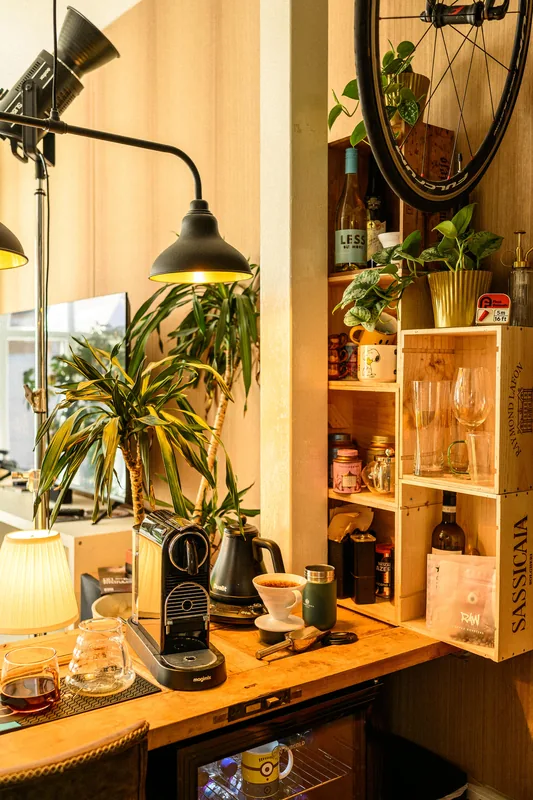
What a studio gives you instead is certainty and pace. No weather to negotiate, which counts for something in Yorkshire, and enough control to get through several distinct looks in a day. Neither is automatically better. Send us the list of images you need and we'll tell you honestly if some of them belong somewhere else.
Frequently Asked Questions
How many different looks can we cover in one session?
It depends how far apart they are. Changing a jacket, hair and mood is quick, while rebuilding a set and relighting for a completely different feel takes real time. Tell us the shortlist when you book and we'll say honestly what fits.
I hate having my photo taken. Is that a problem?
Not remotely, and most people say some version of it as they walk in. You don't need to arrive knowing how to pose. We'll direct you, show you frames as we go, and work towards something that looks settled, present and recognisably yourself.
What should I bring to a portfolio shoot?
A few clothing options, anything that shows your process, and the actual products or tools if they're part of the story. Bring the list of places the images need to go too, because that quietly decides how we frame.
Can we shoot portraits and product images on the same day?
Often yes, and for small brands it's usually the sensible way to do it. It needs planning, because the two want different lighting setups, so we'd rather group them than swap back and forth all afternoon.
Where is the studio, and how do I book?
We're at Unit 9, 30–38 Dock Street, Leeds LS10 1JF, by Leeds Dock and a short walk from the train station, with parking on site. You can book online, or ring first if you'd rather talk the brief through.
Plan your portfolio shoot in Leeds
Send us the images you need and what you want them to get you, and we'll work out a shoot that earns its keep. Book online, email hello@dockstreetstudioleeds.co.uk, or call 0113 4400102.
Written by Mark Wheelwright
Commercial photographer & studio owner, Leeds | ISO Photographic Ltd
Dock Street Studio, Unit 9, 30–38 Dock Street, Leeds LS10 1JF
18+ years' experience | 900+ projects | 300+ five-star reviews | 1M+ shutter count
dockstreetstudioleeds.co.uk
Shot, written and built by the Dock Street team
Every guide on this blog comes from the team at Dock Street Studio — Mark behind the camera with 18+ years' experience, Nicole on styling and lighting, Beya on video and bookings and Austin keeping the site fast and findable. If you'd rather have us do it than read about it, book a session or explore our photography services in Leeds.