


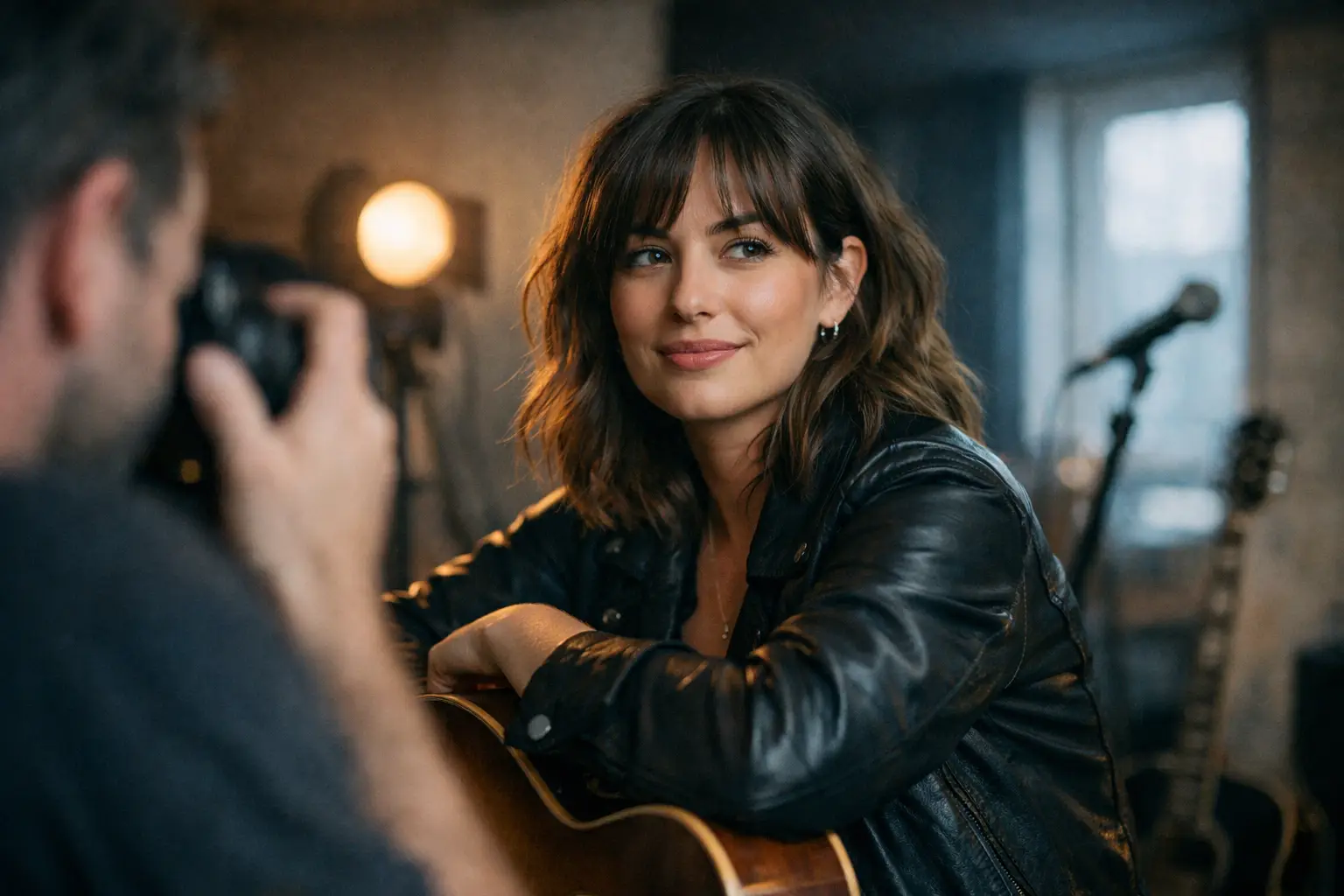
A bland press shot can make a brilliant musician look forgettable. We see it often. Great tracks, strong live set, proper talent - but the first image people find is flat, awkward or trying far too hard. Creative headshots for musicians need to do more than look nice. They need to feel like you, fit where they’ll be used, and give people a reason to stop scrolling.
That matters whether you’re pitching to promoters, updating Spotify and Apple Music profiles, sending out press shots, or just trying to look more put together across your socials. The best musician headshots sit somewhere between portrait and branding. They show personality, but they still look professional. That balance is where most of the work happens.
What makes creative headshots for musicians actually work?
The word creative can be a bit slippery. For some artists it means dramatic lighting, bold styling and something editorial. For others it means a simple portrait with a bit of character - honest, direct and not over-polished. Neither is wrong. The right approach depends on your genre, your audience and where the images need to live.
A jazz pianist, an indie singer-songwriter and a heavy band should not all be photographed in the same way. If the portrait could belong to anyone, it is not doing its job. Good headshots carry clues. Clothing, colour, posture, expression, lens choice, background and lighting all play a part. Even small decisions can shift the feel from approachable to distant, from commercial to artistic, from polished to raw.
That said, creative does not mean chaotic. If the image is so stylised that it stops being useful, it becomes a poster rather than a headshot. We usually advise musicians to think in terms of range. Get the strong, clean shot first. Then build out into something moodier, looser or more experimental once you know you’ve covered the essentials.
Start with the use, not the mood board
Before any camera comes out, it helps to answer a boring question: what are these photos actually for? It sounds obvious, but it saves a lot of wasted effort.
A headshot for a festival programme needs to crop well and read quickly. A portrait for music press might have more atmosphere and space around the subject. Social content can be more relaxed. If you need one set of images to cover all of that, the shoot has to be planned properly. We tend to build sessions so clients leave with a mix - tight frames, wider crops, landscape and portrait options, and a few expressions that suit different uses. The In-Depth Portrait session at £200 — five looks and ten retouched images across an hour — is built for exactly that spread.
Mood boards are useful, but only if they stay grounded. Bring references, yes, but bring the practical context too. Tell us whether you want something for an EP launch, an agency submission, a new website or a run of gigs. That gives the creative choices a purpose.

Style should support the music
The strongest musician portraits usually have a clear connection to the work. Not in a cheesy, literal way. You do not need to turn up with a guitar case and stare moodily into the middle distance unless that genuinely fits. But the visual tone should make sense alongside your sound.
If your music is stripped back and intimate, a loud, high-fashion image might feel off. If your brand leans glossy pop, a dimly lit documentary portrait may undersell it. This is where honest conversations help. A lot of clients worry they need to invent a persona for the camera. In reality, it is more effective to refine what is already there.
Clothes matter more than people think. Texture reads well. Layers help. Logos often date quickly and can distract unless they are part of your brand. Black can look brilliant, but it needs shaping with good light or it can lose detail fast. White can feel clean, though it can also come across a bit corporate if everything else is too safe. Usually, we suggest bringing a few options and testing them under the lights rather than guessing at home.
Lighting changes the whole message
This is one of the biggest differences between a quick portrait and a professional headshot session. Lighting is not just there to make you visible. It tells people how to read the image.
Soft, open light can feel approachable and current. Harder directional light can add edge, drama and structure. Backlighting can create atmosphere, but if it is overdone the portrait starts to feel vague. Coloured light can work beautifully for musicians, especially when the aim is to echo stage energy or a certain genre, but it has to be handled carefully. Too much, and you lose the face. At that point, the image may still look interesting, but it stops functioning as a strong headshot.
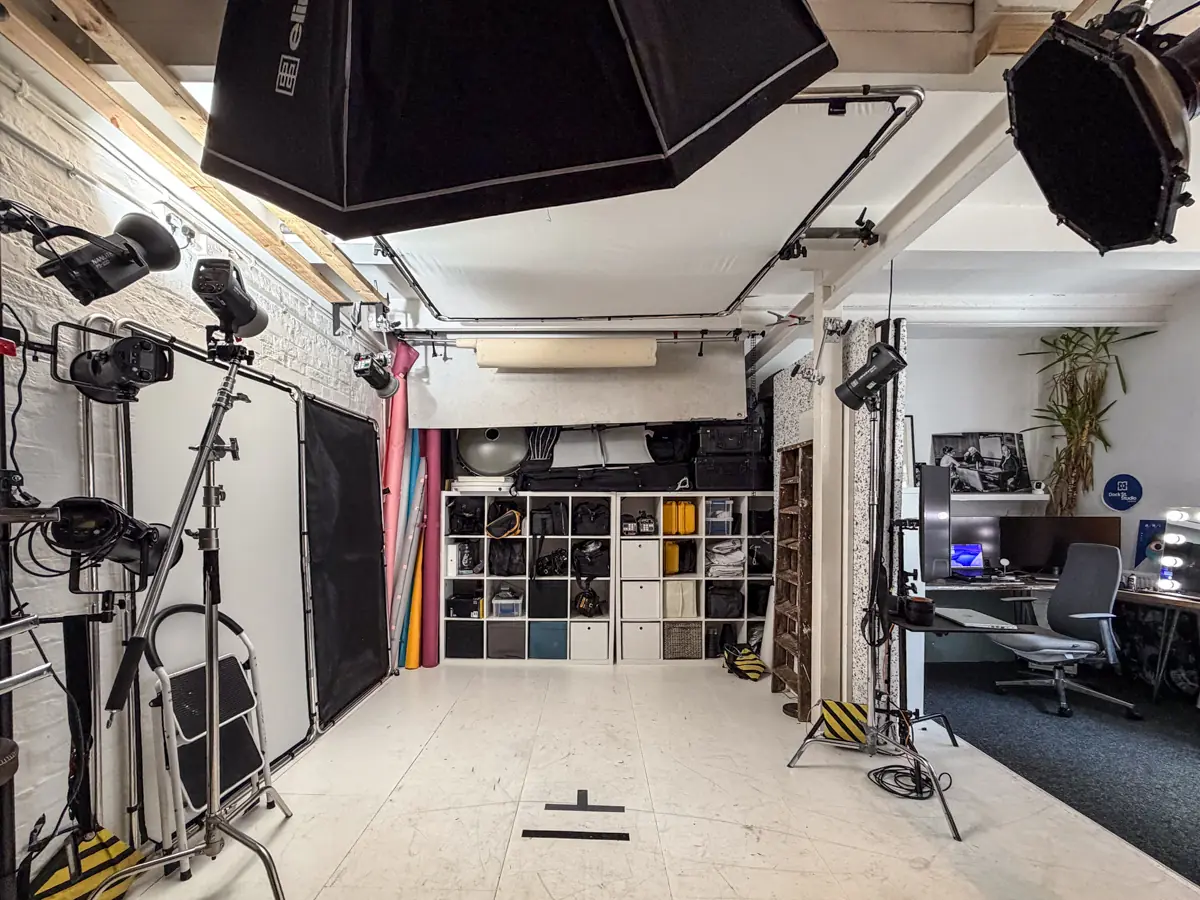
In the studio, we can adjust this quickly. That matters because most people are not fully sure what suits them until they see it. Someone may arrive asking for something dark and moody, then realise a cleaner setup gives them more authority and versatility. Or the opposite. Testing a few lighting directions during the session usually gets us to the right answer faster than trying to settle everything in advance. Because we shoot tethered, you see each setup on the big screen as we go, so the decision is yours rather than a guess.
Expression matters more than poses
Musicians often worry about posing. Fair enough. Most people are not used to standing in front of a camera, and nobody wants that stiff school-photo look. But for headshots, expression usually matters more than pose.
A good expression does not have to be smiling. It just needs to look intentional. Relaxed, focused, open, self-assured, intense - all valid, depending on the brief. What we are trying to avoid is the in-between face, where you look uncertain about what you’re meant to be doing. That is why direction matters. A decent photographer will guide you through it without making it weird. You don’t need to arrive knowing how to pose. That part is our job.
Small changes can make a big difference. A slight turn of the shoulders. Chin forward a touch. Breathing out before the frame. Looking just off camera instead of straight into lens. These are simple adjustments, but they affect how confident and natural the portrait feels.
Should musician headshots be shot in a studio?
Often, yes - but not always. Studio headshots give you control. Clean lighting, reliable results, privacy, and no battling with Yorkshire weather or patchy daylight. That makes a studio the sensible choice if you need polished images that will work across press, web and promo materials.
But there are times when location makes more sense. If your image is closely tied to a venue, city setting or particular atmosphere, a location portrait may add something important. The trade-off is consistency. Outdoor shoots can look great, but they are less controlled and usually give you fewer safe options in the bag.
For many musicians, the best answer is a mix. Start in the studio for the core headshots. Then, if time and budget allow, create a second look with a different background or more editorial feel. That way you get both reliability and personality. If your band wants to run its own shoot with a photographer you already work with, the studio is available to hire from £125 for two hours with lighting and backdrops included — and the content studio covers video, session recordings and social clips in the same building.

Keep retouching believable
This one matters. Music audiences are quick to spot imagery that feels overly manufactured. So are editors, promoters and industry people. Skin can be tidied. Stray hairs can go. Tone and contrast can be shaped. But if the final image no longer looks like the person who walks on stage, it is not helping.
Retouching should support the portrait, not flatten it. Texture is not the enemy. Character lines are not a problem. The aim is to look like yourself on a very good day, with decent sleep and proper lighting.
A good shoot feels collaborative
The best results usually come when the session does not feel rushed or overcomplicated. You do not need a massive production for strong musician headshots. You need a clear brief, a photographer who understands how to direct people, and enough space to try a few ideas without panicking.
That is often where nervous clients relax. Once they realise they are not expected to know how to stand, where to look or what to do with their hands, things settle down. A proper headshot session should feel structured, but not rigid. You want enough guidance to stay on track and enough freedom for something natural to happen.
At our studio in Leeds, that is usually the point where the strongest frames appear. Not in the first five minutes, and not after fifty complicated setups. Somewhere in the middle, when the pressure drops and the image starts to match the person.
If you are planning creative headshots for musicians, the main thing is not to chase an image that looks impressive but feels borrowed. Aim for something that fits your work, gives you options, and still feels believable six months from now. That kind of portrait tends to last longer - and gets used more often.
Frequently Asked Questions
Which session should a musician book?
For a full press kit — tight headshot, wider portrait, landscape crop for a festival programme, plus a moodier second look — the In-Depth Portrait at £200 gives you five looks and ten retouched images. If you only need a clean profile shot for Spotify and socials, the Quick-Fire at £150 covers two or three looks in 40 minutes.
Can a whole band be photographed in one session?
Yes. Tell us the line-up when you book and we will plan the time so everyone gets individual frames as well as the group shot. Larger bands usually work best as a half-day commercial booking from £450, which includes editing.
Do you shoot with coloured light or gels?
Yes, where it suits the music. We will always shoot the clean version first so you have a safe set, then build into gels, backlight or harder directional light for the second look.
What should I bring?
Two or three wardrobe options with texture and layers, nothing with a big logo unless it is part of your brand, and a note of where the images will be used — press, streaming profiles, posters, socials. That last part shapes the crops we shoot.
How long until I get the images?
Your gallery is supplied the same day and retouched selects are typically with you within 48 hours. If you have a release date or a submission deadline, tell us when you book.
Where is the studio and how do I book?
Dock Street Studio, Unit 9, 30–38 Dock Street, Leeds LS10 1JF — central Leeds near Leeds Dock, a short walk from the train station, with parking on site for kit. Book online or call to talk the brief through first.
Book musician headshots in Leeds
Send us a link to your music and a note of where the images need to go, and we will plan a session that fits your sound rather than a generic look. Book online, email hello@dockstreetstudioleeds.co.uk, or call 0113 4400102.
Written by Mark Wheelwright
Commercial photographer & studio owner, Leeds | ISO Photographic Ltd
Dock Street Studio, Unit 9, 30–38 Dock Street, Leeds LS10 1JF
18+ years' experience | 900+ projects | 300+ five-star reviews | 1M+ shutter count
dockstreetstudioleeds.co.uk
Shot, written and built by the Dock Street team
Every guide on this blog comes from the team at Dock Street Studio — Mark behind the camera with 18+ years' experience, Nicole on styling and lighting, Beya on video and bookings and Austin keeping the site fast and findable. If you'd rather have us do it than read about it, book a session or explore our photography services in Leeds.