


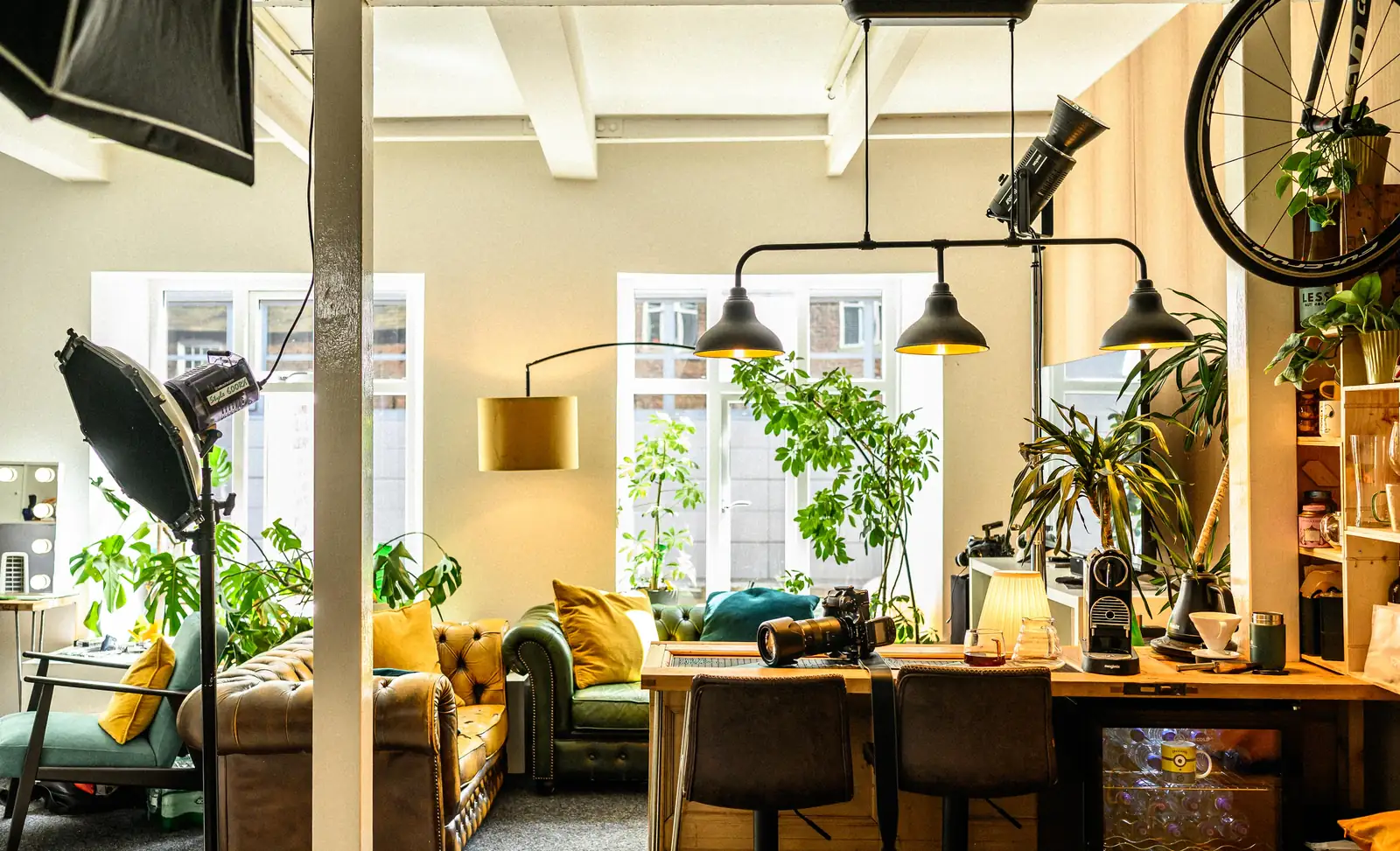
Two studios can quote for the same shoot and land a long way apart on price, and the cheaper one can still cost you more by the time you pack down. A studio rental is sold as a rate per hour or per day, but the rate is only the first line of the bill. What matters is what sits inside it.
So the useful question is not "how much is it". It is "what does that fee actually cover, and what will I be asked to pay for once I am through the door". If you want the practical questions to ask before booking, our studio hire checklist already covers those. This one is about the money, and how to compare one studio's hire against another's without guessing.
Why an hourly rate tells you almost nothing
An hour of studio time is not a fixed unit. In one space, an hour means an hour on the floor, with the room already set up and a clear run from the door. In another it means an hour that starts the moment you find a parking space and includes carrying six cases up a flight of stairs.
Then there is what you spend the hour doing. If the lighting has to be built from nothing, the first part of a four-hour booking is set-up and the last part is pack-down. That same four hours might leave you two and a half on the shoot. In a room that is already rigged and ready, it might leave you three and a half.
Divide the fee by usable shooting time rather than by hours booked, and a lot of cheap hires stop looking cheap. It is a rough sum, but it is the one worth doing before you commit to anything.
What a studio rental fee usually covers, and where it stops
There is no industry standard here, which is the root of the confusion. Two studios can both write "lighting included" and mean quite different things. One means a couple of heads and a softbox you are welcome to use. The other means the room is genuinely equipped and you can shape light however the brief needs.
The honest way to read a quote is to assume nothing is included unless it is written down. The things that most often sit outside the hire fee, across the market generally, are:
- Someone behind the camera. Hiring a studio and hiring a photographer are two different purchases.
- Editing and retouching after the day.
- An extra pair of hands to help with lights, stands and backdrops.
- Access outside the standard hours, and extra time if the shoot overruns.
- Specialist or consumable items, from an unusual backdrop colour to kit that lives in someone's personal bag.
None of that is sharp practice. A studio that lists its add-ons openly is easier to budget for than one that quotes a low headline rate and stays vague. We have set our own answer out in full in what you get when you hire Dock Street Studio, mostly so nobody has to email three times to find out. For reference, ours is £125 for two hours, £175 for a half day and £300 for a full day.
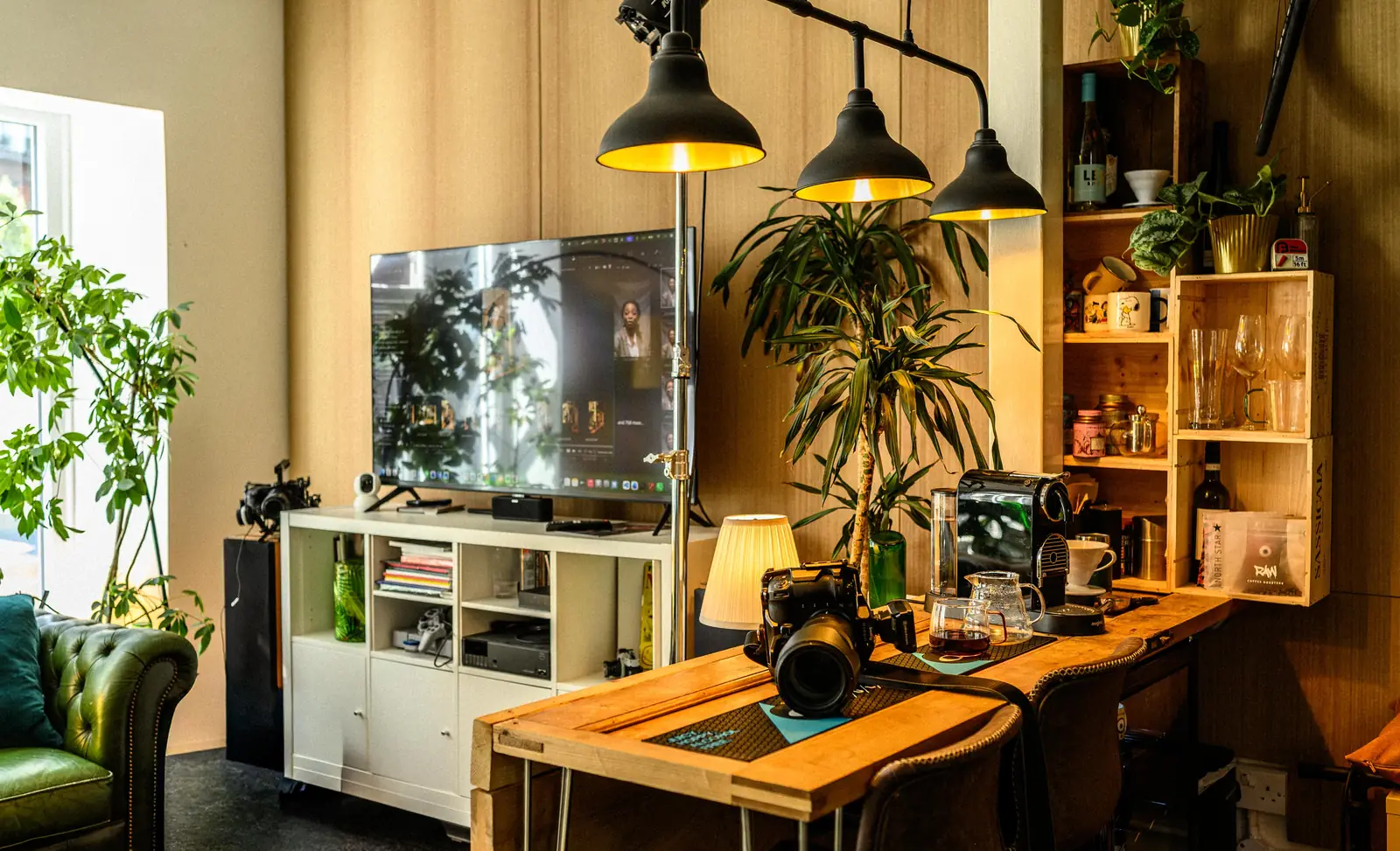
A room, or a working studio
The gap between the two is not really about size or kit lists. It is whether the space has been set up for the job of shooting, or whether you have to make it work around you as you go.
Somewhere to change. Somewhere for a client to sit that is not in the shot. A desk you can put a laptop on. Power that takes the load without anyone hunting for the fuse box. A kettle. These read as small comforts on a booking form, and then on the day they turn out to be the difference between a calm shoot and a scrappy one.
That matters most when there are people in front of the camera. Most founders, staff and performers do not enjoy being photographed, and nobody looks settled after getting changed behind a backdrop. A private space, somewhere to leave a coat, a seat between looks and a brew will often do more for the pictures than another light would. It is the same reason we shoot tethered on headshot sessions — people settle faster when they can see it is going well.
When a cheap bare space is the right call
Sometimes it genuinely is, and we would rather say so than pretend otherwise. If you are a photographer with your own lights, stands, modifiers and laptop, a fully equipped studio means paying for kit that stays in the cupboard. A big empty room with reliable power, a wide door and decent ceiling height is exactly what you want.
The same goes for a simple job. One backdrop, one look, a short slot, everything you need in the car. A bare space does that perfectly well, and hunting for extras you will not use is a waste of your budget.
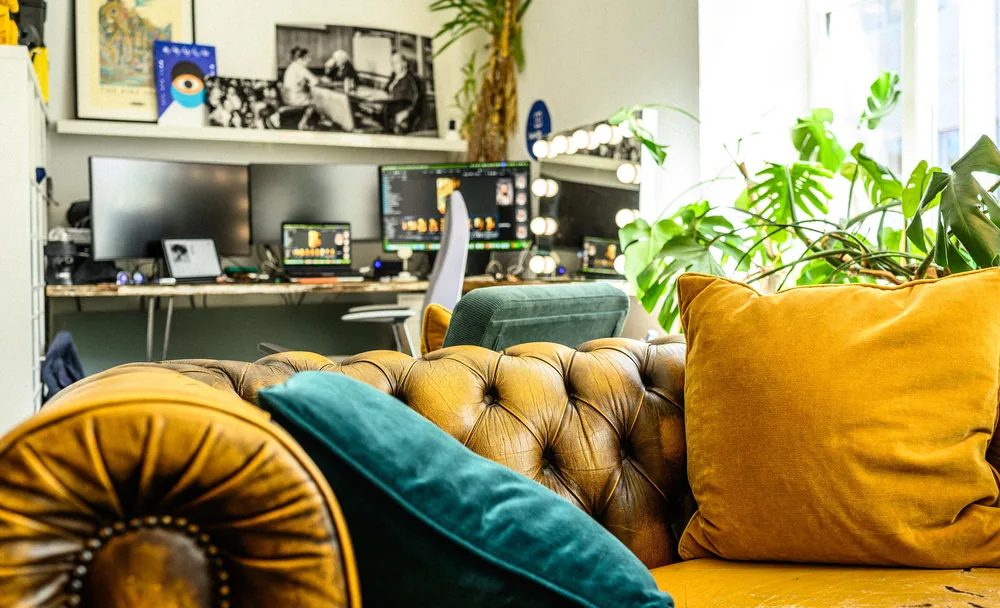
Bare rooms go wrong when you assume something is there and it is not. That is when the day turns into a hunt for a light stand at short notice, and the saving disappears in one phone call. The trade-off is straightforward. A bare space is cheaper when you are bringing everything, and slower and more expensive when you are not. Our equipment checklist is worth a look before you assume anything is on the shelf.
How to compare two studios on the same terms
Work out one number per studio rather than comparing rates. Take the fee, add everything you would have to bring in or pay extra for to deliver your particular brief, then add the time the room will cost you in set-up and pack-down. Two quotes that looked far apart often finish within a few pounds of each other, and occasionally they swap places entirely.
Ask what happens if you run over, too. A rate that only holds if the day goes perfectly is not really a rate, and shoots with people in them rarely run to the minute. Knowing whether extra time is available, and what it costs, is worth more than a small discount on the booking.
Then ask who is actually on site. A cheaper hire with nobody about is fine right up to the moment a trigger stops firing and you are stood there with a client watching. If you would like to see how we set ours out, it is all on our studio hire page, and we are happy to go through it before you book rather than after. If you are shooting video or social rather than stills, the content studio is the better starting point.
Frequently Asked Questions
Is studio hire better value by the hour or by the day?
It depends almost entirely on set-up time. If your shoot needs the room rebuilt for each look, short hourly slots spend most of their value on rigging, and a half or full day usually works out better per usable image.
Does "lighting included" mean I can use everything in the room?
Not always, so ask plainly. Some studios include the lot, some hold certain items back or charge for them separately, and the wording in a quote rarely makes that clear on its own.
What is the most common hidden cost in a studio rental?
Time. Set-up and pack-down almost always happen inside your booked slot, so a slot that looks generous on paper can be tight in practice once the lights go up and come down again.
Where is your studio, and how do I book it?
We are at Dock Street Studio, Unit 9, 30–38 Dock Street, Leeds LS10 1JF, a short walk from Leeds station with parking on site. You can book online, or ring us first if you would rather talk the brief through.
Talk it through before you book
Tell us what you are producing and how long you think it will take, and we will tell you honestly what the day needs and what it will cost, including the parts other quotes leave out. Book online, email hello@dockstreetstudioleeds.co.uk, or call 0113 4400102.
Written by Mark Wheelwright
Commercial photographer & studio owner, Leeds | ISO Photographic Ltd
Dock Street Studio, Unit 9, 30–38 Dock Street, Leeds LS10 1JF
18+ years' experience | 900+ projects | 300+ five-star reviews | 1M+ shutter count
dockstreetstudioleeds.co.uk
Shot, written and built by the Dock Street team
Every guide on this blog comes from the team at Dock Street Studio — Mark behind the camera with 18+ years' experience, Nicole on styling and lighting, Beya on video and bookings and Austin keeping the site fast and findable. If you'd rather have us do it than read about it, book a session or explore our photography services in Leeds.