


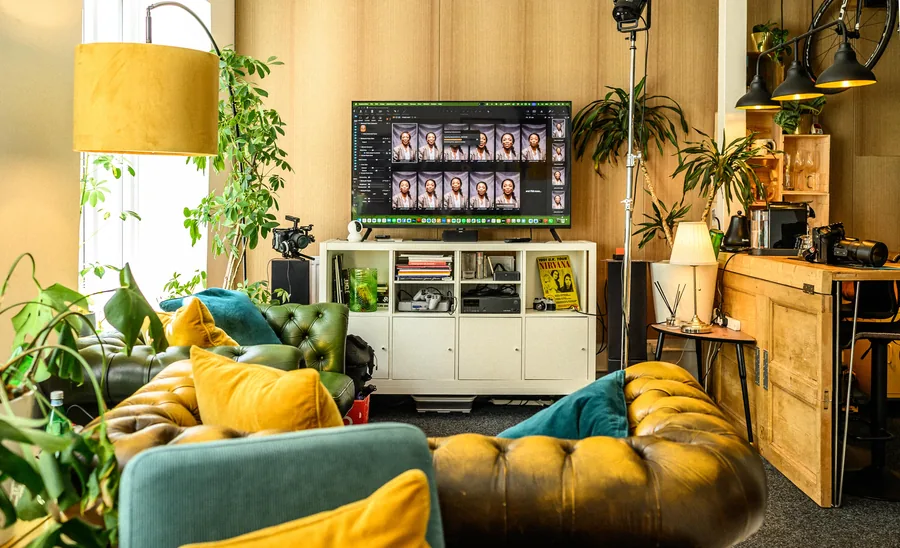
A jumper can look properly navy under the lights and read as purple on the screen. Catch that at frame one and it costs you ten minutes. Catch it after eighty products have gone through the set and it costs you the day, and possibly the launch date.
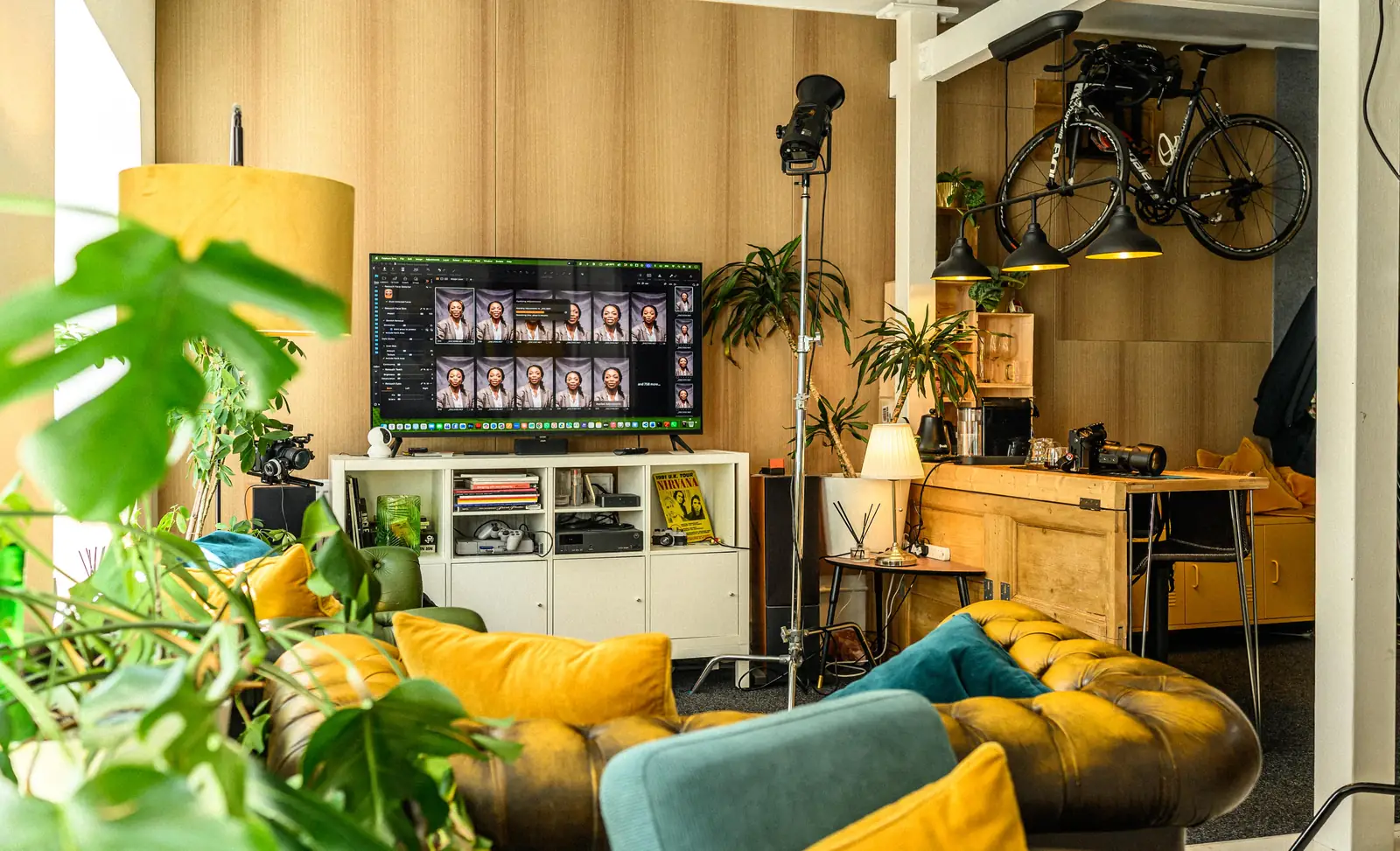
That is the whole argument for tethered shooting for ecommerce. The camera is plugged into a computer running Capture One, every frame lands on a large screen a second or two after it is taken, and the people who care about the product see it while changing it is still cheap. We shoot tethered as standard at Dock Street Studio, so this is less about what tethering is and more about what it does for volume product work.
Frame one is the frame that matters
Ecommerce briefs are repeatable by nature. Every product in a category needs the same angle, spacing, background and light as everything either side of it. One image slightly out looks like nothing on its own, then becomes glaringly obvious the moment a customer scrolls a collection page.
So we spend proper time on the first item. Exposure, camera height, focal length and product position all get agreed on a big screen rather than guessed from a three-inch camera back in a dark room. Once that frame is signed off it becomes the benchmark, and everything after it is measured against the same standard.
We write the settings down, too. If a range runs over two days, or a late colourway turns up a fortnight later, we can pick it up exactly where we left off instead of rebuilding the set from memory.
Approval on the day beats an email chain on Thursday
The saving here is not in the shooting. It is in not doing the job twice.
A reshoot means stock coming back out of the warehouse, a stylist rebooked, a set rebuilt and a gap found in a launch schedule that had none. If the samples have been worn, eaten or sent on to a retailer, it is worse than that. Seeing frames properly as they happen lets the right person approve the essentials there and then.
It keeps the small decisions moving as well. Marketing wants clean space around the bottle for a banner crop. The buyer notices a colourway has been missed. The owner checks the new packaging is reading accurately. All of that gets dealt with in the room, rather than three days later in a thread nobody enjoys.
There is a trade-off, and it is worth saying plainly. More people looking at every frame can slow a shoot to a crawl if nobody has agreed who signs off. We ask for one clear contact on set, a short shot list, and references agreed beforehand. That keeps feedback useful and stops good work being second-guessed to death.
It also helps to approve in stages. Lighting and framing first, then product preparation and styling, then the hero frame for each item or variation. Trying to settle crops, retouching and campaign strategy in one go while the next twelve products wait on the table is the quickest way to lose an afternoon.
Colour is where ecommerce gets expensive
Tethering helps you judge colour. It does not manage it for you. A calibrated monitor still shows something different from a customer's phone on the 8:12 into Leeds, and materials misbehave under light in their own particular ways. Glossy packaging throws reflections, dark fabric loses its texture, and pale products quietly vanish into a white background.
Where the shade is the sale, we photograph a colour target, work from a controlled lighting setup, and hold the product up next to the screen rather than trusting a file because it looks nice. That matters most for fashion, cosmetics, paint finishes and homeware, where getting the colour wrong is paid for in returns rather than in reshoots.
Files your web team can actually use
The camera card is not a backup plan. Frames land on the computer and get copied to a separate drive at sensible intervals through the day, and the folder structure is built on product codes or whatever naming convention your team already works to.
Retouching notes go in as we capture. A scratch on a sample, a crease in the backdrop, a reflection that wants softening, each one flagged against the file it belongs to. Post-production then gets a clear brief instead of "make it look better".
None of this is glamorous, but it is the difference between a hundred listings going live on Friday and someone trying to work out which of forty near-identical files called IMG_4387 was the approved one. Framing choices matter just as much at that stage, and we have written separately about the angles that earn their keep on a product page.
When we would not bother
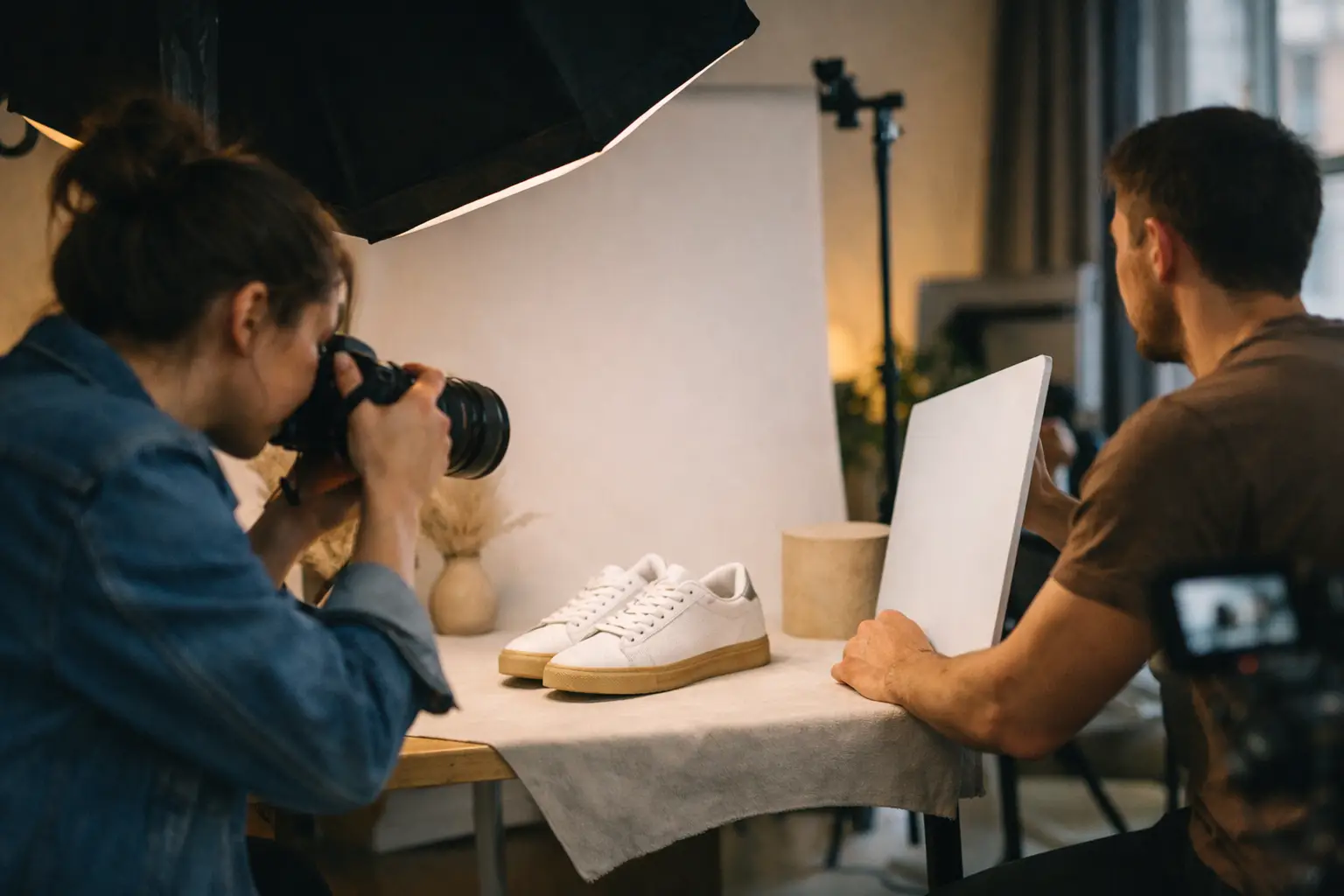
Tethering earns its place when consistency, collaboration and file control matter. It is not a virtue in itself, and we would not use it just because the cable is on the bench.
If you need a handful of quick lifestyle images outdoors, or you are moving location every twenty minutes, a laptop and a cable become a liability. Same for one product, one angle, one afternoon. For a range going onto a website, or a seasonal drop with fifty codes and a fixed go-live date, it is the part of our product photography setup we would give up last.
Frequently Asked Questions
Does tethering slow the shoot down?
It adds a few minutes at the start and saves hours later. The first product takes longer because that is where the standard gets set, then the rest of the range moves faster because nobody is guessing.
Do I need to be in the studio for a tethered shoot?
It helps, particularly on the first item, but it is not essential. If you cannot get across to Leeds we agree the benchmark frame with you before we start on volume, then send selects at agreed points during the day.
Will the colours match my product exactly?
We get very close, and we will tell you honestly where a material is going to fight us. What we cannot control is every screen your customer might be using, which is why a colour target and consistent lighting matter more than a perfect-looking preview.
What should I bring for a volume product shoot?
Clean, finished samples including packaging and all colour variations, a spare of anything fragile or easily marked, and one person who can approve framing and styling. If the images need to match previous work, send those files over beforehand.
Where is the studio, and how do I book?
We are at Unit 9, 30–38 Dock Street, Leeds LS10 1JF, near Leeds Dock and a short walk from the train station, with parking on site. You can book online or ring us to talk the range through first.
Book a tethered product shoot in Leeds
Send us your product list and where the images need to end up, and we will tell you honestly whether a tethered day is the right shape for it. Book online, email hello@dockstreetstudioleeds.co.uk, or call 0113 4400102.
Written by Mark Wheelwright
Commercial photographer & studio owner, Leeds | ISO Photographic Ltd
Dock Street Studio, Unit 9, 30–38 Dock Street, Leeds LS10 1JF
18+ years' experience | 900+ projects | 300+ five-star reviews | 1M+ shutter count
dockstreetstudioleeds.co.uk
Shot, written and built by the Dock Street team
Every guide on this blog comes from the team at Dock Street Studio — Mark behind the camera with 18+ years' experience, Nicole on styling and lighting, Beya on video and bookings and Austin keeping the site fast and findable. If you'd rather have us do it than read about it, book a session or explore our photography services in Leeds.