


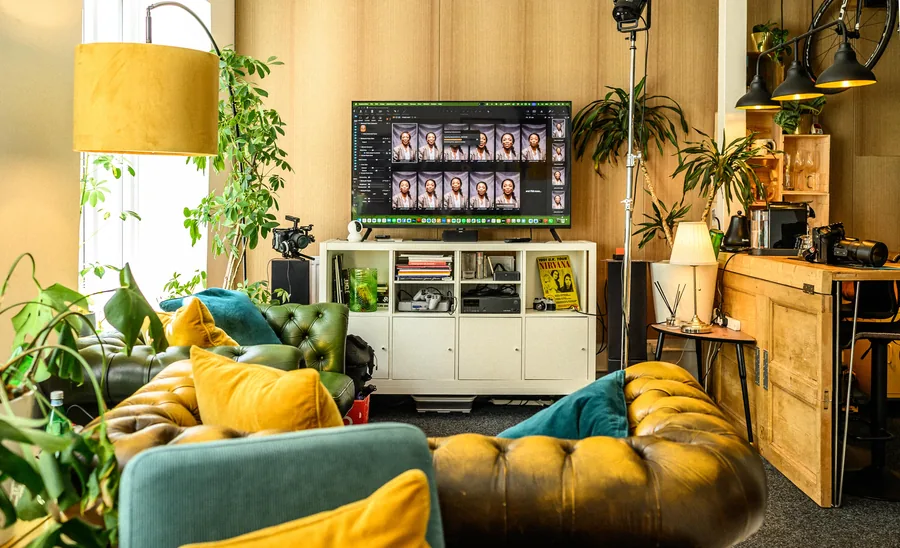
Somewhere near the end of a commercial shoot, someone usually asks a version of the same question. Can we have the raw files as well? It comes up after a busy day, when a client has watched hundreds of frames go past on the screen and is working out where they all end up.
It is a fair thing to ask, and we are happy to have the conversation. Sometimes handing over raw files is the right call, and we will say so. More often, what the person asking actually wants is a set of finished pictures they can put to work on Monday morning, and raws are the slow road to that.
What a raw file is, and what it isn't
A raw file is closer to a negative than to a photograph. It holds what the sensor recorded, including detail in the highlights and shadows that never shows on a quick glance at the back of the camera. That headroom is the whole point. It is what lets us pull a bright window back, or lift a face out of shadow, without the picture falling apart.
What a raw file is not is finished. Open one straight off the card and it usually looks flatter and duller than the image you watched land on the screen during the shoot. The version you liked on the day was a preview with the camera's own interpretation laid over the top. The raw underneath is the ingredients, not the meal.
They also need software that can read them and a bit of familiarity with it, since different camera makers write raws in their own way. None of that makes raw files a problem. It just means they arrive as work in progress rather than as something you can drop into a press release on a Friday afternoon.
What the edit actually contributes
Photography doesn't stop when the shutter closes. Lighting, composition and the way we direct someone do most of the heavy lifting on set. The edit is where a pile of frames turns into a set of pictures that belong together.
On a headshot, that means choosing the frame where the expression looks like you rather than like someone holding a pose, balancing skin tones so nobody is left ruddy under a key light, and tidying the temporary things, a stray hair or a spot that'll be gone next week, without sanding the face down. Nobody arrives knowing what to do with their hands, and sorting that out is our job rather than yours. The aim is settled, present and recognisably yourself.
On a brand or product job it is mostly consistency. A dozen products photographed across a day need the same background and the same colour, or they look like a dozen different shops once they land on one page. Crops get made with the final use in mind too, because a frame built for a wide banner doesn't survive being squeezed into a square.
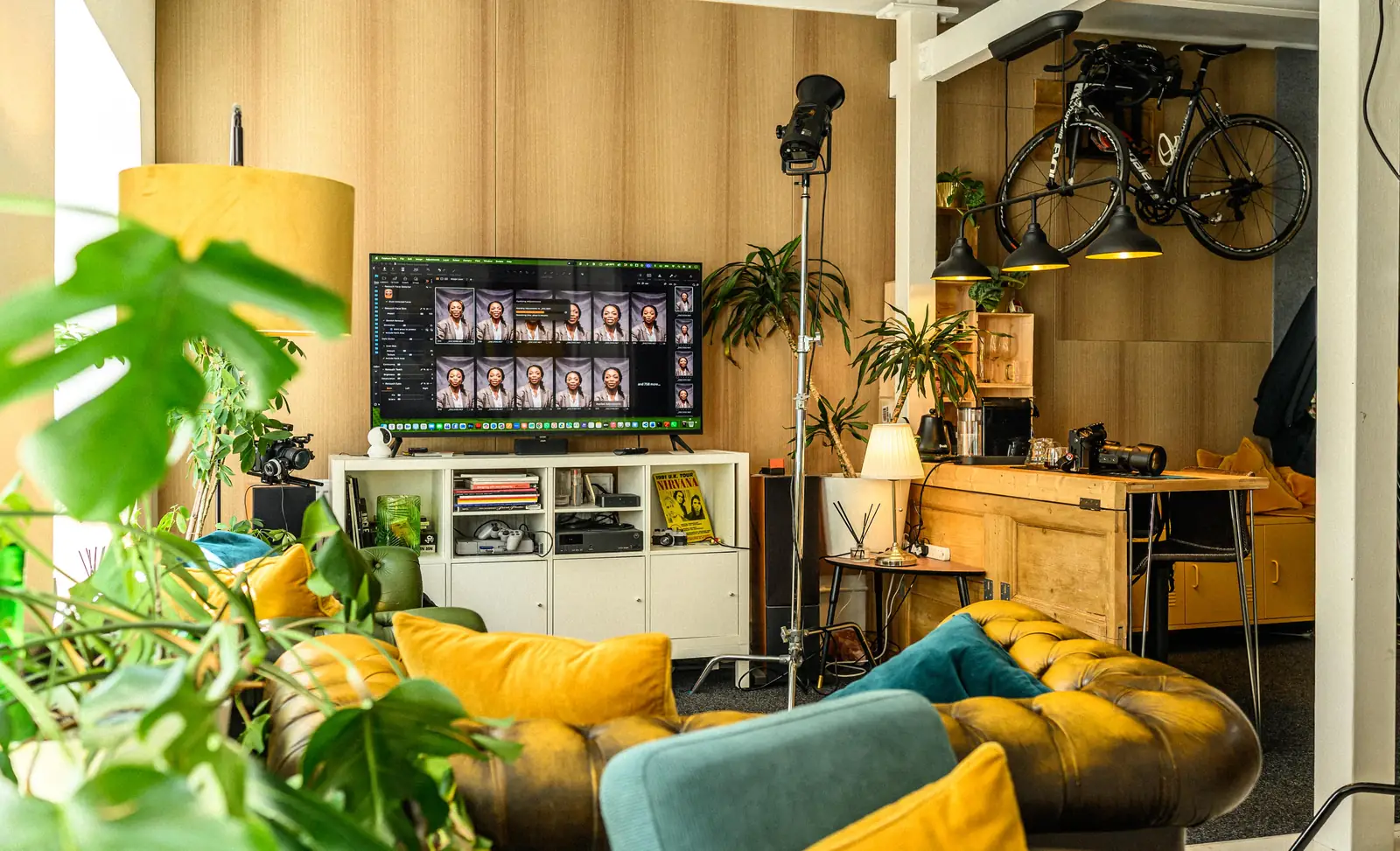
None of that is polish bolted on at the end. It is a run of decisions about what each picture is for. We shoot tethered into Capture One so you can see frames full size while we work, which means plenty of those decisions get made with you stood next to us rather than a week later over email.
Why "just send everything" rarely helps
Asking for every frame sounds like asking for more, and in one narrow sense it is. But a shoot isn't a folder of finished photographs. It is test frames while we set the lights, near-duplicates taken so we can catch the expression that works, and a fair number where somebody blinked or wandered through the back of shot.
Editing down is part of what you're paying for. A tight gallery that tells the story of the day is more use than one you wade through with a colleague, arguing about which of four nearly identical frames is the good one. The big folder looks generous and quietly hands you our job.
That's no reason to keep you out of the selection, mind. Tell us what has to be in there: the chief exec, the new product, the team member who leaves in a month. A clear steer before the day beats a big delivery after it.
When asking for raw files is the right call
There are jobs where we'd hand raws over without blinking, and it's worth being straight about them rather than defending the edit as if it were sacred.
The first is an in-house team with its own colour pipeline. If your studio manager has a look that runs across every campaign and knows exactly how to get there, our interpretation is a step they'd only have to undo. The second is a retoucher already engaged on the work, particularly where images will be composited with CGI or heavy design. They'll want as much latitude as they can get, and it's reasonable to give it to them.
The third is hiring the studio and shooting the session yourself. You're behind the camera, so processing the captures is yours to do however you like, and our part is the space, the light and a hand with the setup if you want one. What's owned and licensed between any two parties is a matter for the agreement they make, so read yours or ask before the day, and treat none of this as legal advice.
In all three cases, say so early. "Selected raws from the shortlist" and "every frame on the card" are different requests, and both are far easier to agree at the quoting stage than the week after.
Settle the deliverables before the camera comes out
Most confusion about files is really confusion about the brief. If we know where the pictures are going, who's handling them at your end and whether anyone downstream needs room to work, the raw question mostly answers itself.
Our commercial shoot planning guide goes further, but the short of it is to bring the intended uses, the crops you already know you need, and any dates that can't move. If your designer works a particular way, say so at the start and we'll build it in. It's a short conversation over a brew, and it saves the awkward one later.
Frequently Asked Questions
Will you hand over the raw files if we ask?
Sometimes, and we'd rather talk it through than refuse on principle. It depends on who is processing them and what the pictures need to do, which is why we ask before the shoot rather than after.
Why do raw files look worse than the shots we saw on the day?
Because the picture on the tethered screen has an interpretation applied to it and the raw underneath doesn't. Nothing has gone wrong. You're seeing the file before anyone has made a decision about it.
Can we have every single frame from the shoot?
You can ask, but it usually creates work rather than saving it. Test frames, blinks and near-duplicates all sit in that folder, and sifting them is the part we're good at.
Our design agency wants to composite the images. Does that change things?
Often, yes. If someone is building the picture out further, they may want more latitude than a finished file gives them, and that's a sensible reason to discuss the handover before we shoot.
Where is the studio, and how do we book?
We're at Unit 9, 30–38 Dock Street, Leeds LS10 1JF, a short walk from Leeds train station with parking on site. Book online, or give us a ring and we'll talk the job through first.
Talk deliverables through before you book
Tell us where the pictures need to end up and who's handling them, and we'll be honest about whether raws or finished images serve you better. Book online, email hello@dockstreetstudioleeds.co.uk, or call 0113 4400102.
Written by Mark Wheelwright
Commercial photographer & studio owner, Leeds | ISO Photographic Ltd
Dock Street Studio, Unit 9, 30–38 Dock Street, Leeds LS10 1JF
18+ years' experience | 900+ projects | 300+ five-star reviews | 1M+ shutter count
dockstreetstudioleeds.co.uk
Shot, written and built by the Dock Street team
Every guide on this blog comes from the team at Dock Street Studio — Mark behind the camera with 18+ years' experience, Nicole on styling and lighting, Beya on video and bookings and Austin keeping the site fast and findable. If you'd rather have us do it than read about it, book a session or explore our photography services in Leeds.