


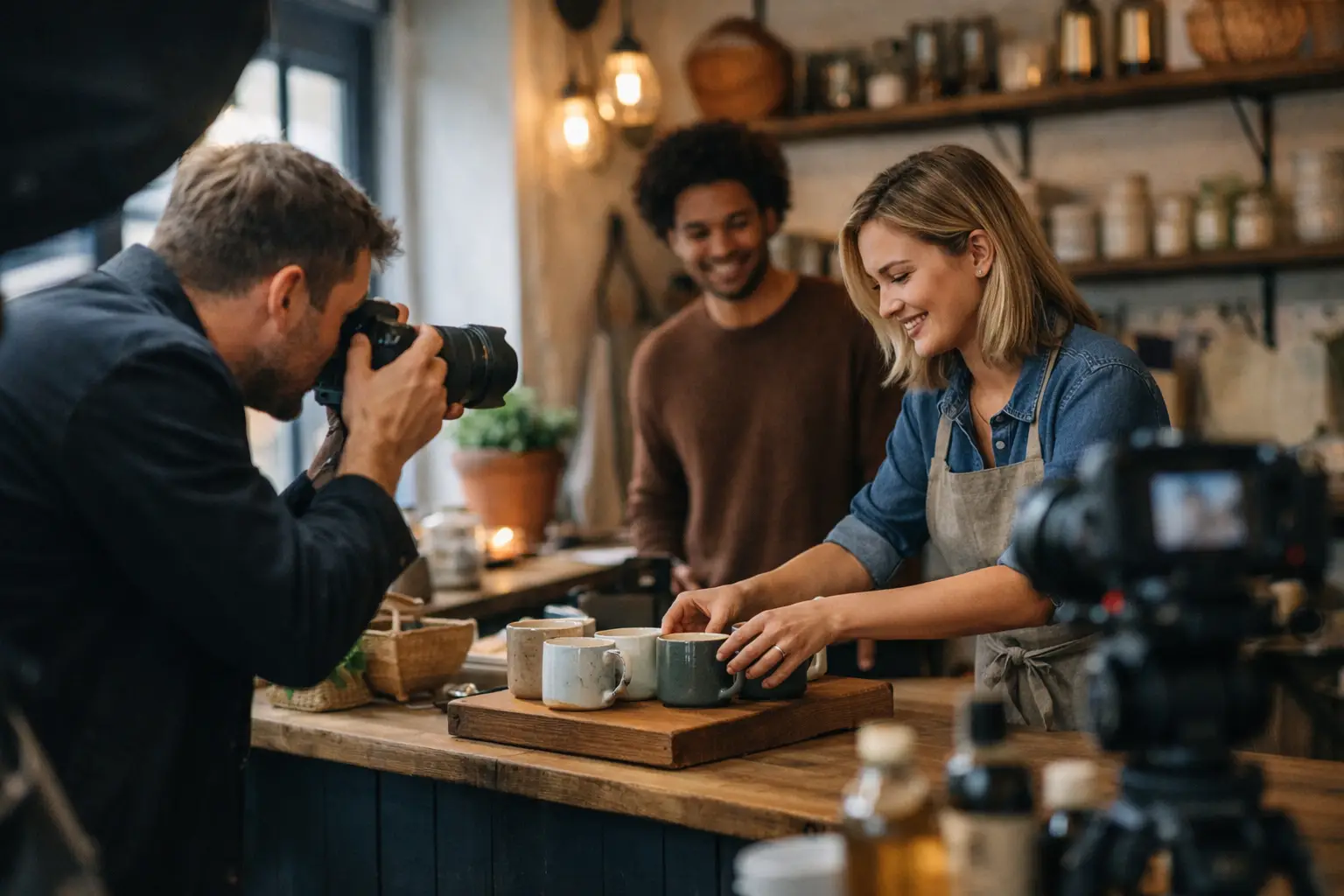
A potential customer has landed on your website, found your Google profile or seen a post on social media. Before they read a word, they’ve made a quick judgement from the pictures. Are the products clear? Do the people look approachable? Does the business feel organised, credible and worth contacting? That’s where commercial photography for small business earns its keep.
We work with plenty of businesses that have reached the point where phone photos and a mix of old images no longer represent the quality of their work. You don’t need a glossy campaign for the sake of it. You need a useful set of images that helps people understand what you do and feel confident choosing you.
What commercial photography should do for a small business
Good commercial photography isn’t simply about making everything look expensive. It should make buying, booking or getting in touch easier. For a café, that could mean natural images of the food, the room and the people behind the counter. For a construction firm, it may be completed projects, skilled work on site and confident portraits of the team. For an ecommerce brand, it starts with clean, accurate product pictures, then adds the detail and lifestyle shots that answer questions before a customer asks them.
The aim is to give your business a recognisable visual standard. Your homepage, brochure, press release, LinkedIn profile and social posts should feel like they belong to the same company. When the imagery is inconsistent, customers notice — even if they can’t quite put their finger on why.
A professional shoot also saves time. Rather than continually scrambling for something to post, you have a bank of current images ready for the channels that matter. That’s especially useful for small teams, where one person is often doing the marketing alongside their actual job.
Start with the job the images need to do
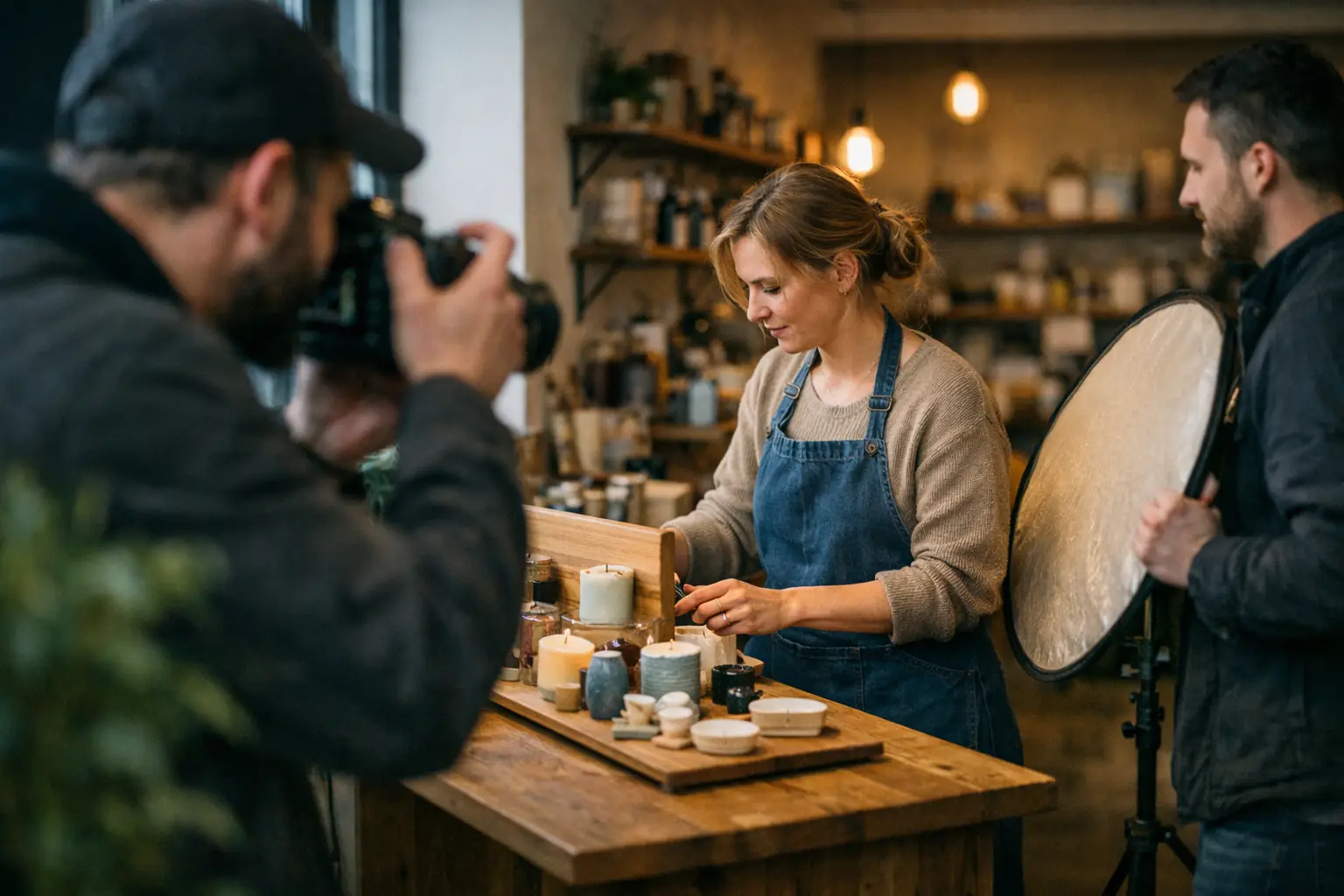
The best shoots begin with a proper conversation, not a camera. Before we plan lighting or choose a backdrop, we ask where the images will appear and what they need to communicate. A wide banner image for a website needs different framing from a portrait for LinkedIn or a square crop for Instagram.
Think about the next six to twelve months. Are you launching a new product range? Recruiting? Updating your website? Pitching for larger contracts? Opening new premises? These moments shape the shot list and help us avoid spending time on photographs that will never be used.
It helps to separate essential images from nice-to-haves. Essential might include key products, a team portrait, photographs of your premises and a handful of real working moments. Nice-to-haves could be seasonal social content, extra staff portraits or more stylised campaign images. If the budget is tight, get the essential work right first.
Product, people and place
Most small businesses need a mixture of three types of image. Product photography shows exactly what’s being sold. People photography puts faces to the service and builds trust. Place photography gives context, whether that’s a workshop, salon, office, restaurant or event space.
The right balance depends on your business. A Yorkshire food producer may need product shots that show packaging clearly, alongside recipe or serving images that create appetite. A solicitor may have no physical product at all, so staff portraits and photographs of a welcoming office do more of the work. A trades business needs evidence of quality: clean finished work, real jobs in progress, and a team that looks professional on site.
Stock imagery can fill an occasional gap, but it rarely tells your own story. Customers can tell when the smiling person on a website has never set foot in the business.
Plan before the shoot
A little preparation makes a surprising difference. We don’t expect business owners to know photography, but we do need the practical details sorted before the first frame is taken. Make the space presentable, choose who needs to be photographed, and make sure products, samples, uniforms or props are available.
For product photography, send or bring more than one of each item where possible. Packaging can get scuffed, labels can sit crookedly, and food can wilt under studio lights. Having a spare keeps the day moving. If colour accuracy matters, tell us at the start — product colours are edited carefully, but the original product and packaging still need to be correct.
For staff photographs, give people notice and explain the purpose. Few people enjoy being photographed without warning. A clear message such as “We’re updating the website and need friendly, straightforward portraits” sets the tone far better than springing it on them between meetings.
We direct people throughout. You don’t need a team of models, and you don’t need to know what to do with your hands. Small adjustments to posture, eye line and where someone stands can turn an awkward image into a natural one. The goal isn’t to make everyone look like a different person — it’s to show them at their best, without the result feeling forced.
Studio or location: choose what serves the brief
A studio is often the sensible choice for products, headshots, controlled portraits and clean content that needs a consistent look. At our central Leeds studio we can control the light, work around the weather and create images without the distractions of a busy workplace. That is useful when products need repeatable angles, or a team needs individual portraits that match.
Location photography works better when the environment is part of the story. A restaurant kitchen, a manufacturing floor, a treatment room or a client-facing office can say more about the business than a plain backdrop. It can also be more demanding: we need to work around customers, safety requirements, clutter, mixed lighting and the realities of a working day.
Sometimes the strongest approach is both. We might photograph products in the studio for crisp web listings, then photograph them in use at your premises for social media and editorial content. It depends on where customers need clarity and where they need a little more personality.
Why lighting and editing aren’t just finishing touches
Lighting affects how a product feels, whether skin tones look natural, and whether a space appears warm, clean or flat. Shiny packaging, glass, jewellery, food and reflective surfaces all need careful control. A quick phone image may show the object, but it often can’t show it clearly enough to sell.
The same applies to people. Overly harsh light can make a friendly team look tired. Poorly balanced room light can make a well-designed office look gloomy. Our job is to manage those details while keeping the photograph believable.
Editing then brings consistency across the final selection — colour correction, tidying small distractions, balancing exposure and preparing crops for the places you’ll use them. It shouldn’t mean turning your product into something it isn’t, or making staff unrecognisable. Accurate, polished images create trust. Over-edited ones do the opposite.
Get more value from one shoot
A planned shoot can produce more than a handful of hero images. We can photograph landscape, portrait and square options where it makes sense, leaving room for website text or a social caption. A single team member might have a formal headshot, a more relaxed working portrait, and an image interacting with a customer or product.
That doesn’t mean photographing everything from every angle. It means thinking ahead about real use. Tell us if your website has banner spaces, if a magazine has asked for a press image, or if you regularly need portrait-format pictures for LinkedIn. The more clearly we understand the brief, the more useful the final set will be.
Keep the images organised after delivery. Name folders clearly, separate product images from team and location photographs, and make sure whoever handles your website or social media knows where to find them. Good photographs have little value if they’re buried on someone’s desktop.
Budget for the pictures that matter most
Small business budgets are real, and we’re always better off discussing them plainly. The cost of commercial photography depends on the time needed, the number of products or people involved, the location, styling, retouching and how broad the final brief is. A straightforward set of headshots is a different job from a full day producing ecommerce images and workplace content.
The cheapest option isn’t always the best value, but neither does every business need a large production. A focused half-day shoot can make a real difference when it’s built around clear priorities. The key is avoiding the temptation to cover a year’s worth of marketing, every product and every member of staff in an unrealistic window.
If your current photos no longer reflect the business you’ve become, start with the customer’s view. What would they need to see to trust you, understand the offer and take the next step? Get those images made properly first. The rest can grow from there, one useful shoot at a time.
Frequently Asked Questions
How much does commercial photography cost for a small business?
It depends on the time needed, how many products or people are involved, whether we shoot in the studio or on location, and how much styling and retouching the brief requires. A set of headshots is a very different job from a full day of ecommerce and workplace content, so it’s worth sharing your priorities when you enquire and we’ll quote around them.
Should I shoot in the studio or at my premises?
Studio suits products, headshots and anything needing a consistent, controlled look. Location suits work where the environment is part of the story — a kitchen, workshop or client-facing office. Many businesses do both: clean studio product shots for web listings, plus in-use images at their premises for social and editorial.
What should I prepare before a commercial shoot?
Make the space presentable, decide who’s being photographed and give them notice, and have products, samples, uniforms or props ready. For product work, bring spares where possible — packaging scuffs and labels sit crookedly more often than you’d think.
How many images will I get?
That’s set by the brief rather than a fixed number. We’d rather produce a focused set you’ll actually use across your website, social channels and press than a large gallery that mostly sits unopened. Tell us the formats you need — banner, portrait, square — and we’ll build them into the shoot.
Can you photograph our team as well as our products?
Yes, and combining them in one production is usually the most efficient approach. We can cover essential product angles first, then move on to team portraits and working shots while the lighting and setup are already in place.
Where is the studio and how do I book?
Dock Street Studio is at Unit 9, 30–38 Dock Street, Leeds LS10 1JF, in central Leeds near Leeds Dock and a short walk from Leeds train station. Book online, email hello@dockstreetstudioleeds.co.uk, or call 0113 4400102.
Book commercial photography in Leeds
If your images no longer match the business you’ve built, get in touch with a rough sense of what you need and where it’ll be used. Book online, email hello@dockstreetstudioleeds.co.uk, or call 0113 4400102 to talk it through.
About the author
Mark Wheelwright
Commercial photographer & studio owner | ISO Photographic Ltd, Leeds
Dock Street Studio, Unit 9, 30–38 Dock Street, Leeds LS10 1JF
Mark is a commercial photographer with 18+ years’ experience working with brands, businesses and individuals across Leeds and West Yorkshire. He has completed more than 900 projects covering headshots, commercial and product photography, events and video, and runs Dock Street Studio in central Leeds. Clients include Clear Channel, Habitat, Kirkstall Brewery and Paystrax.
900+ projects | 300+ five-star reviews | 1M+ shutter count
Shot, written and built by the Dock Street team
Every guide on this blog comes from the team at Dock Street Studio — Mark behind the camera with 18+ years' experience, Nicole on styling and lighting, Beya on video and bookings and Austin keeping the site fast and findable. If you'd rather have us do it than read about it, book a session or explore our photography services in Leeds.