


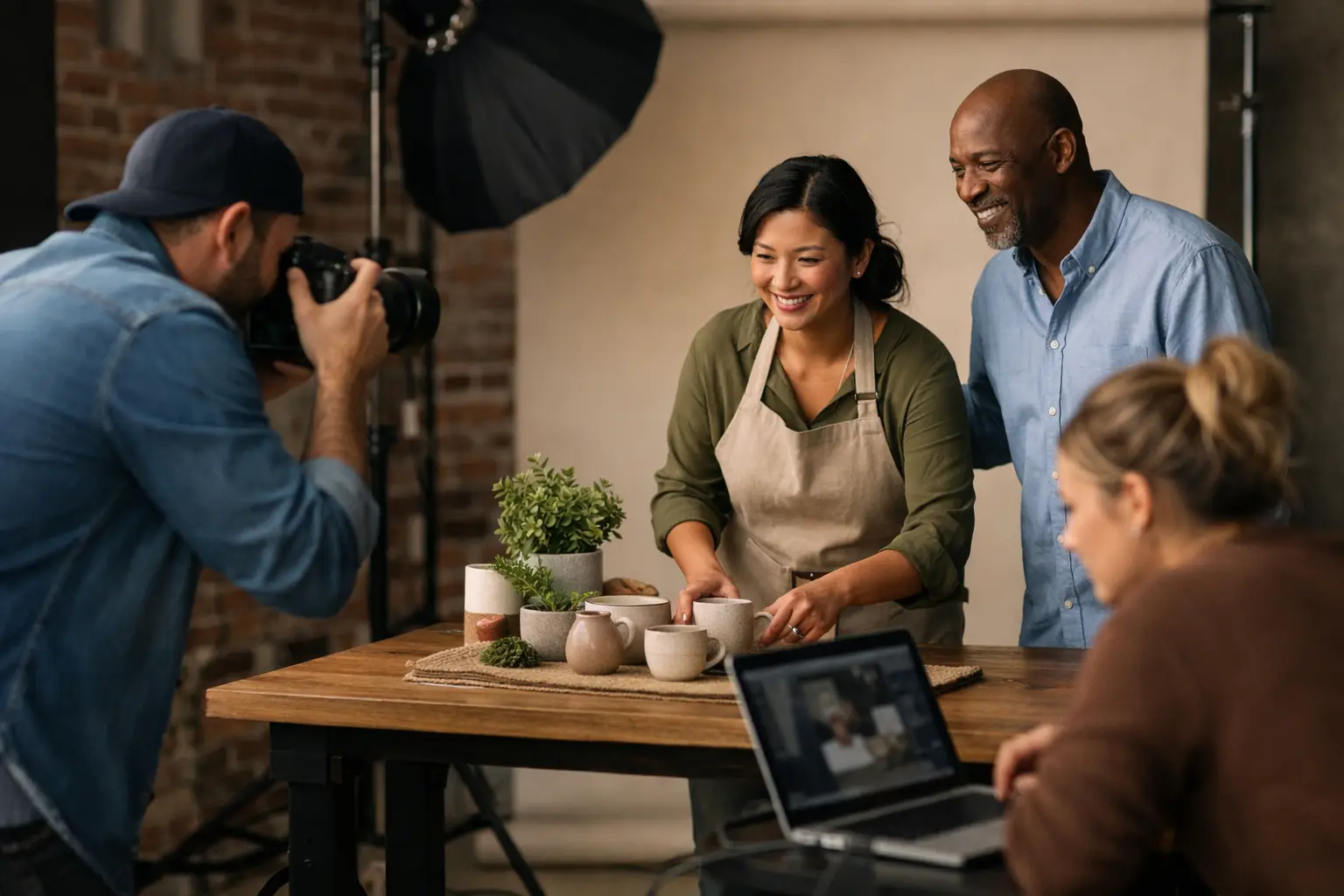
A lot of small businesses wait too long to sort their photography. They launch with a logo, a website and a few hurried phone snaps, then wonder why the brand still feels a bit makeshift. Commercial photography for small business is not about making everything look glossy for the sake of it. It is about helping customers understand what you do, trust what they see and feel more certain about buying from you.
We see this all the time. A business owner has put serious effort into the product, the service and the customer experience, but the pictures do not match. That gap matters. If your images look rushed, people assume other parts of the business might be rushed too. Fair or not, that is how most buyers make quick decisions.
Why commercial photography for small business matters
Good photography does a few jobs at once. First, it gives your business a more professional face. That applies whether you sell handmade skincare, run a café, offer legal services or need fresh team portraits for a growing company. People want to know who they are dealing with, what they are buying and whether you look established enough to trust.
Second, it saves you from mixed messages. We often see websites where the tone is polished but the imagery is inconsistent - one dark mobile photo, one stock image, one cropped headshot from ten years ago. That makes a business feel less clear than it really is. Strong commercial images bring consistency across your site, social channels, brochures, press coverage and online listings.
Third, good photography can make selling easier. Not because photos do all the work on their own, but because they remove doubt. If a product is shown clearly, if a workspace looks welcoming, or if a founder comes across as capable and approachable, customers do not have to fill in the gaps themselves.
What small businesses actually need from a shoot
This is where a lot of people overcomplicate things. Most small businesses do not need hundreds of random images. They need a useful set of photographs with a clear purpose.
That might mean product images on white for an ecommerce shop, alongside a handful of lifestyle shots that show scale, texture and use. It might mean team portraits that look consistent without being stiff. It might mean interiors, food, editorial-style brand photography or a set of images for a PR campaign. The right brief depends on where the photographs will be used.
We usually encourage clients to start with the practical questions. What are the images for? Who needs to see them? Where will they appear first? A homepage banner image has a different job from a marketplace product photo. A press portrait needs a different feel from an actor headshot or a set of social content for a local launch.
The more clearly you define the job, the better value you get from the shoot.
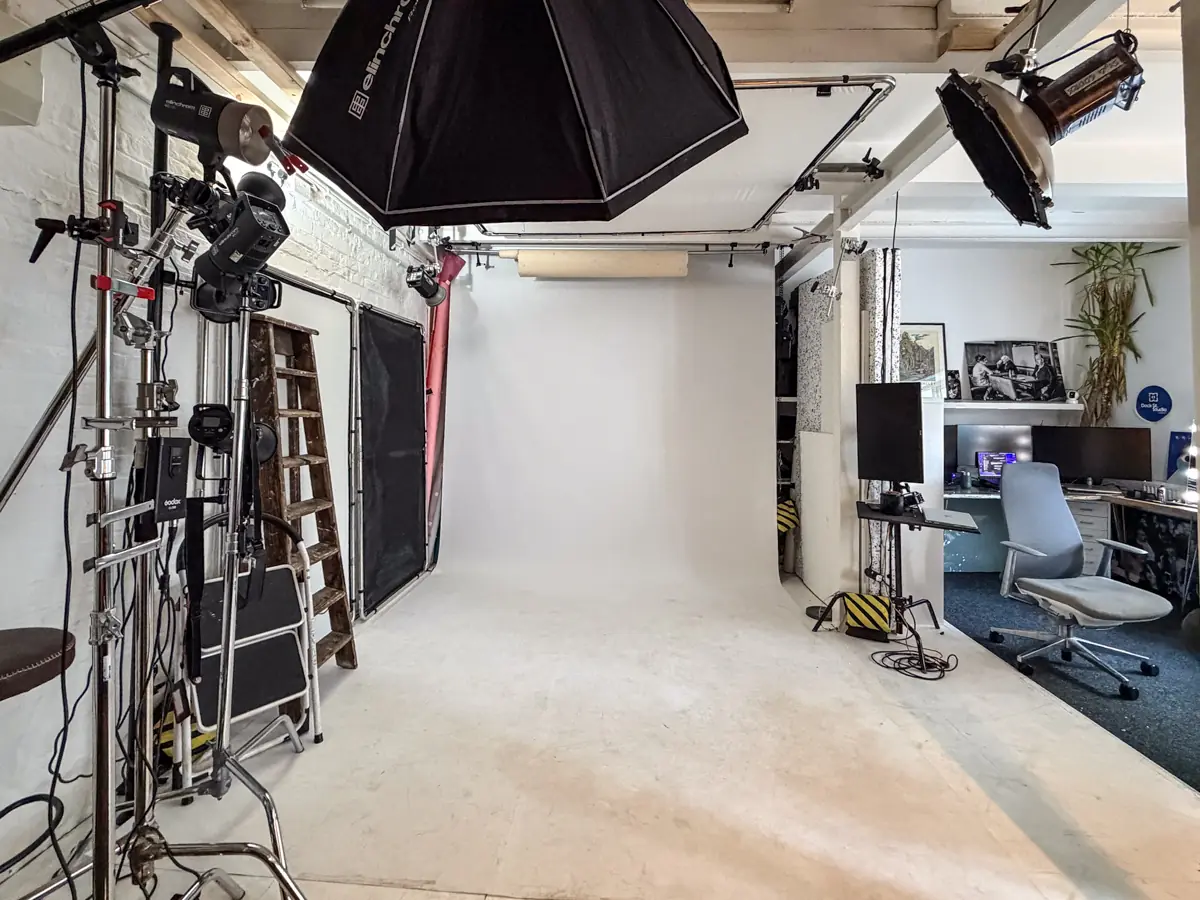
Studio or location — which works best?
It depends on the business and the kind of story you need to tell. A studio gives you control. Lighting stays consistent, backgrounds are clean and you are not fighting with weather, clutter or awkward office lighting. That is often the best option for product photography, headshots and brand portraits where polish matters.
Location photography can be stronger when your environment is part of the service. If you run a salon, a workshop, a restaurant or a retail space, showing the real setting can build confidence fast. Customers like to see where they are going and what the experience feels like.
Sometimes the best answer is both. A short studio session for clean portraits and product shots, then a few hours on site for wider brand imagery. That gives you flexibility without forcing one style to do everything.
The difference between decent photos and useful photos
This is an important distinction. A photograph can look nice and still be no help to your business.
Useful commercial photography starts with intent. It considers composition, lighting, crop options, negative space for design, and how the image will sit on a website or in print. It also considers your customers. If they need to compare colours, see product details or get a sense of quality, the images have to support that properly.
For service businesses, useful photography often means showing more than a smiling portrait. It can include hands at work, client interaction, tools, workspace details and a sense of process. Those are the images that help someone imagine hiring you.
For product brands, consistency is usually the biggest win. If your packshots vary in tone, angle and lighting, the whole range looks less reliable. The products might be excellent, but the presentation creates friction.

Planning a commercial shoot without wasting money
Small businesses are usually working to a budget, and rightly so. The answer is not to cut photography altogether. It is to plan it properly.
Start by deciding what you need in the next six to twelve months, not just next week. If you are launching a new site, updating LinkedIn profiles, sending out press releases and posting regularly on social media, build a shoot around that wider use. One well-planned session can cover a lot of ground.
It also helps to think in sets rather than one-off hero shots. Portraits with vertical and horizontal crops. Product images from a few key angles. Detail shots. Wider scenes. Close-ups. A mix of polished images and more natural ones. That variety means the work keeps earning its keep long after the shoot day.
Preparation makes a bigger difference than people expect. Products should be clean and camera-ready. Clothing for team portraits should be thought through. Locations should be tidied with the frame in mind, not just given a quick once-over. If there are props, packaging, signage or branded materials involved, they need to be ready beforehand.
A good photographer will guide this part, but the most efficient shoots happen when everyone knows the brief.
What to expect from commercial photography for small business
If you have never booked a professional shoot before, it is normal to feel unsure about the process. Most clients are not models, and most business owners are busy enough without trying to decode photographic jargon.
A straightforward commercial photography process should feel clear from the start. There should be a proper conversation about your business, your audience and how the images will be used. You should know what is being photographed, how long it is likely to take and what kind of result you are aiming for.
On the day, direction matters. People often worry that they will not know how to stand, where to look or what to do with their hands. That is our job. The same goes for products and spaces. Small adjustments in styling, angle and lighting can make a huge difference, but they only happen when someone is paying attention.
After the shoot, editing should refine the work rather than rescue it. Good retouching polishes an image. It should not have to fix poor planning, bad lighting or inconsistent styling.
Common mistakes we see
The most common one is trying to make one image do every job. Your website header, brochure cover and Instagram post may all need different crops or compositions. Planning for that saves headaches later.
The second is underestimating consistency. Businesses often book photography in bits and pieces, months apart, with no visual plan. The result is a patchwork brand. Even if the individual images are fine, the whole thing lacks cohesion.
The third is assuming cheaper is always better value. There are times when a simple shoot is all you need, and we are not here to pretend every job requires a huge production. But if poor photography means reshoots, weak conversion or a brand that never quite looks convincing, the cheap option can cost more in the long run.
When it is worth investing more
Not every small business needs a full library of bespoke imagery straight away. Sometimes a focused half-day shoot is the sensible choice. Sometimes you are better waiting until your packaging, premises or team are settled.
But there are moments when investing properly makes sense. A rebrand is one. A product launch is another. So is a website rebuild, a press campaign or a point where your current images are clearly holding you back. If your business has outgrown its visuals, customers can usually tell before you do.
For brands selling online, strong product photography often pays back quickly because it supports the actual buying decision. For service businesses, the return is a bit less direct, but no less real. Better enquiries, stronger first impressions and a more credible public image all matter.
At our studio in Leeds, we often work with businesses that have reached exactly that stage. They are doing solid work, but their imagery has not caught up yet. Once it does, the whole brand tends to feel more settled and more believable. Commercial shoots are £450 for a half day or £750 for a full day with editing included, and on-location team headshot days are £450 for a half day (up to 15 people) or £750 for a full day (up to 30).
The best commercial photography is not about making a small business look bigger than it is. It is about making it look as good, capable and trustworthy as it already is - which, for most businesses, is more than enough.
Frequently Asked Questions
How much does commercial photography cost for a small business?
At Dock Street Studio a commercial shoot is £450 for a half day or £750 for a full day, editing included. Team headshots on location are £450 for a half day covering up to 15 people, or £750 for a full day covering up to 30.
What should a first commercial shoot cover?
A usable set rather than one hero image: consistent team portraits, key product angles, a few wider brand frames and some detail shots. Plan for the next six to twelve months of use.
Do you shoot on location as well as in the studio?
Yes. Studio for clean portraits and product work, location when your premises are part of the story. Many clients combine both in one booking.
How long until we get the images?
Retouched images within 48 hours for studio work, 48–72 hours for team headshot days.
Where is the studio and how do I book?
Dock Street Studio, Unit 9, 30–38 Dock Street, Leeds LS10 1JF, a short walk from Leeds train station, with lift access and parking on site. Book online, email or call and we will talk the brief through first.
Book a commercial shoot in Leeds
Send us a rough list of what the images need to do and we will build a half or full day around it. Book online, email hello@dockstreetstudioleeds.co.uk, or call 0113 4400102.
Written by Mark Wheelwright
Commercial photographer & studio owner, Leeds | ISO Photographic Ltd
Dock Street Studio, Unit 9, 30–38 Dock Street, Leeds LS10 1JF
18+ years' experience | 900+ projects | 300+ five-star reviews | 1M+ shutter count
dockstreetstudioleeds.co.uk
Shot, written and built by the Dock Street team
Every guide on this blog comes from the team at Dock Street Studio — Mark behind the camera with 18+ years' experience, Nicole on styling and lighting, Beya on video and bookings and Austin keeping the site fast and findable. If you'd rather have us do it than read about it, book a session or explore our photography services in Leeds.