


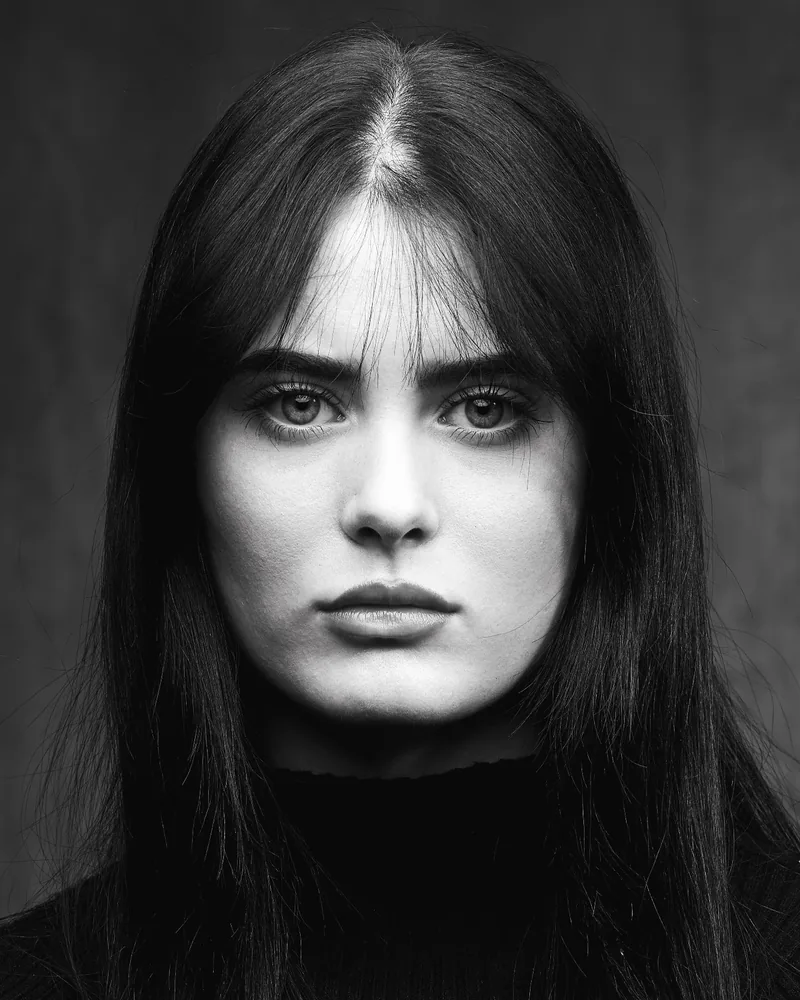
Strip the colour out of a portrait and you are left with shape, light and expression. That is why black and white headshots divide opinion: for editorial, acting and creative work they can be the strongest choice you make, while for a conservative corporate profile they can quietly work against you. Neither answer is automatically right — it depends on what the image needs to do.
As a headshot photographer in Leeds, we get asked about monochrome most weeks, usually by someone torn between "striking" and "safe". This guide covers when black and white earns its keep, the eight styles worth knowing by name, and what to tell your photographer so the session delivers images you'll actually use.
When black and white works — and when it doesn't
Monochrome changes how a face reads. Whoever is judging the image — a casting director scanning a hundred thumbnails, a hiring manager checking a LinkedIn profile against a CV — will register it as more serious, more editorial, sometimes more artistic than a colour equivalent.
That shift helps in some places and hurts in others. For acting and casting portfolios it is often the stronger choice, because casting directors are reading expression and bone structure, not branding. For editorial and press use it is a natural fit. On LinkedIn it works well in creative, media and design sectors, but it is riskier in law, finance or anywhere clients expect a conventional, approachable colour photo. If you sit in that cautious camp, shoot both and compare before committing.
One rule has no exceptions: passport and travel document photos must be in colour. HM Passport Office won't accept black and white images because they make it harder to check skin tone, eye colour and genuine likeness — so monochrome is never an option for official ID, whatever a platform allows elsewhere.
Eight styles worth knowing by name
Lighting terms get interpreted differently from one studio to the next, so save a reference frame for any style you like and bring it along, rather than describing it in words alone. These are the eight we get asked for most.
- High-key. Bright, even light with minimal shadow against a white or pale grey background. Keep wardrobe light to mid-tone so it doesn't vanish into the backdrop, and keep the edit gentle — protect highlight detail in the skin rather than letting it blow out. A good fit for approachable corporate bios.
- Low-key or noir. A single hard light, background left dark, deep-toned clothing disappearing into shadow so the face carries everything. Hold onto a visible catchlight in both eyes or the frame goes dead. Suits dramatic actor portfolios and editorial covers.
- Clean corporate. Soft, even key light with fill, shot against neutral mid-grey. Solid mid-tone clothing converts best; busy patterns read as noise once the colour goes. This is the safest route for sectors still wary of monochrome.
- Minimalist. One soft light, a plain background, and a frame shot slightly wider than usual so negative space does some of the work. A quiet expression beats an animated one here. Cropping tighter later is easy — adding back space you didn't capture isn't.
- Textured or grain-led. Deliberately visible grain, from higher ISO or genuine film stock, gives the image a tactile quality. Natural fabrics and textured backgrounds — brick, plaster, raw wood — support the look. Add grain after contrast is set, not before, so it doesn't amplify shadow noise.
- Environmental. The subject in a real setting — studio, workshop, office — with the background softened but identifiable. The risk is everything collapsing into grey mush, so keep clear tonal separation between skin and setting.
- Dramatic cinematic. Hard, directional side light with heavy shadow on one side of the face. A held, direct stare works better than a smile. Lean into contrast in the edit, but never let the lit side of the face clip to pure white.
- Close-cropped expressive. A tight frame, cutting close to hairline and chin, with the eyes and mouth centre stage. There is nowhere for a forced smile to hide at this crop, so a believable expression matters more than anywhere else.
Lighting and posing: where monochrome is won or lost
Colour forgives lighting mistakes that monochrome exposes. With no hue to separate tones, shape comes entirely from light and shadow, which makes the light pattern the most consequential decision of the session. The classics all have their place: Rembrandt for drama, loop for most corporate work, butterfly for high-key looks, split for noir, and broad or short lighting to subtly widen or slim a face.
On set, three checks matter more than any lighting diagram. Confirm a visible catchlight in both eyes before moving on. Check shadow detail on the histogram rather than trusting the screen, which lies about what survives in deep shadow. And keep a reflector or flag within reach, so shadow density gets fixed in the room rather than in the edit. This is one reason we shoot tethered — you see each frame on a large screen as it's taken, so a weak catchlight gets caught in seconds, not discovered after the shoot.
Posing should work with the light, not against it. A slight head tilt away from the key light sculpts the face more than a square-on pose; chin forward and slightly down keeps a jawline defined without looking stiff. And don't feel you need to arrive knowing how to pose — that's our job. One trick that always helps: close your eyes, relax, and open them on a count. It removes the strained look that comes from holding a stare between frames.
Capture and edit: three routes into monochrome
Shooting colour and converting later gives the most flexibility, because the colour channels let you adjust skin, background and wardrobe contrast independently. A camera's in-camera monochrome preview helps you judge light in the moment while still capturing the colour file underneath. Shooting genuinely black and white — on film, or treating a digital session as mono from the first frame — tends to produce more deliberate results. Practitioner guidance on the three routes makes the same point: committing to monochrome at capture changes the decisions made on set, not just in the edit.
The edit itself rewards restraint. Use a channel mixer rather than a flat desaturate, dodge and burn to guide the eye to the eyes and cheekbones rather than reaching for a global contrast slider, and protect eye and shadow detail above all — no retouching step rescues a frame that was lit flat to begin with. For delivery, LinkedIn compresses images fairly hard, so a clean, moderately sized JPEG holds up better than an oversized file; casting agencies usually specify exact pixel dimensions, and press use generally wants a high-resolution file for print.
What to tell your photographer before the shoot
A short brief before the session saves far more time than a long conversation afterwards. Tell us where the image will be used, pick one or two styles from the list above rather than describing a vague mood, and flag what you're planning to wear — in monochrome, what matters is how light or dark each piece reads, not its colour. Our guide on what to wear for headshots covers the detail. Confirm the practical bits too: how many retouched images you'll receive, turnaround time, and whether usage covers commercial work.
Before committing to a full monochrome session, test one frame and judge it on two things alone: does the lighting shape the face, and do both eyes still read clearly once the colour is gone? If the answer is yes twice, the style will hold up wherever you use it.
How we approach black and white headshots at Dock Street Studio
We build the session around the brief, not the camera. Styles, backgrounds and wardrobe get agreed before a single frame is shot, which keeps sessions running to time and the delivered set consistent. Our headshot sessions run from a fast LinkedIn-ready portrait through to a longer sitting built around multiple looks, with retouched images typically back within 48 hours — which matters when a casting deadline is bearing down on you. And if you'd rather bring your own photographer or self-shoot, our studio hire options cover the same controlled lighting without us behind the camera.

Frequently Asked Questions
Why do black and white headshots feel different from colour ones?
Removing colour shifts attention to shape, light and texture rather than literal appearance, which is why museum portrait collections and editorial photographers have leaned on monochrome for well over a century. It tends to read as more considered and more timeless than a colour version of the same frame.
Can I use a black and white photo for my passport or ID?
No. HM Passport Office requires colour photos because they make it easier to verify skin tone, eye colour and genuine likeness. However good the monochrome frame looks, official ID always needs colour.
Do black and white headshots work on LinkedIn?
It depends on your sector. In creative, media and design circles a monochrome headshot can set you apart; in law, finance or client-facing corporate roles, a conventional colour photo is usually the lower-risk option. If you're unsure, we'd shoot both and let you compare side by side.
What makes a strong monochrome portrait? Any good examples?
Controlled, directional light and a believable expression — not a stock-photo version of confidence. Sharif Hamza's portrait of Riz Ahmed is a good reference: a plain background and controlled side light putting all the attention on gaze and expression.
Does a professional headshot really make a difference online?
Yes. A poorly lit or inconsistent photo undermines the rest of a profile no matter how polished the surrounding content is — a pattern seen across websites and professional profiles generally. A well-lit, properly styled headshot, mono or colour, does more for first impressions than almost any other single change.
Where are you based, and how do I book?
We're at Dock Street Studio, Unit 9, 30–38 Dock Street, Leeds LS10 1JF — central Leeds, a short walk from the train station, with onsite parking. Booking takes a couple of minutes online, or get in touch and we'll talk your brief through properly.
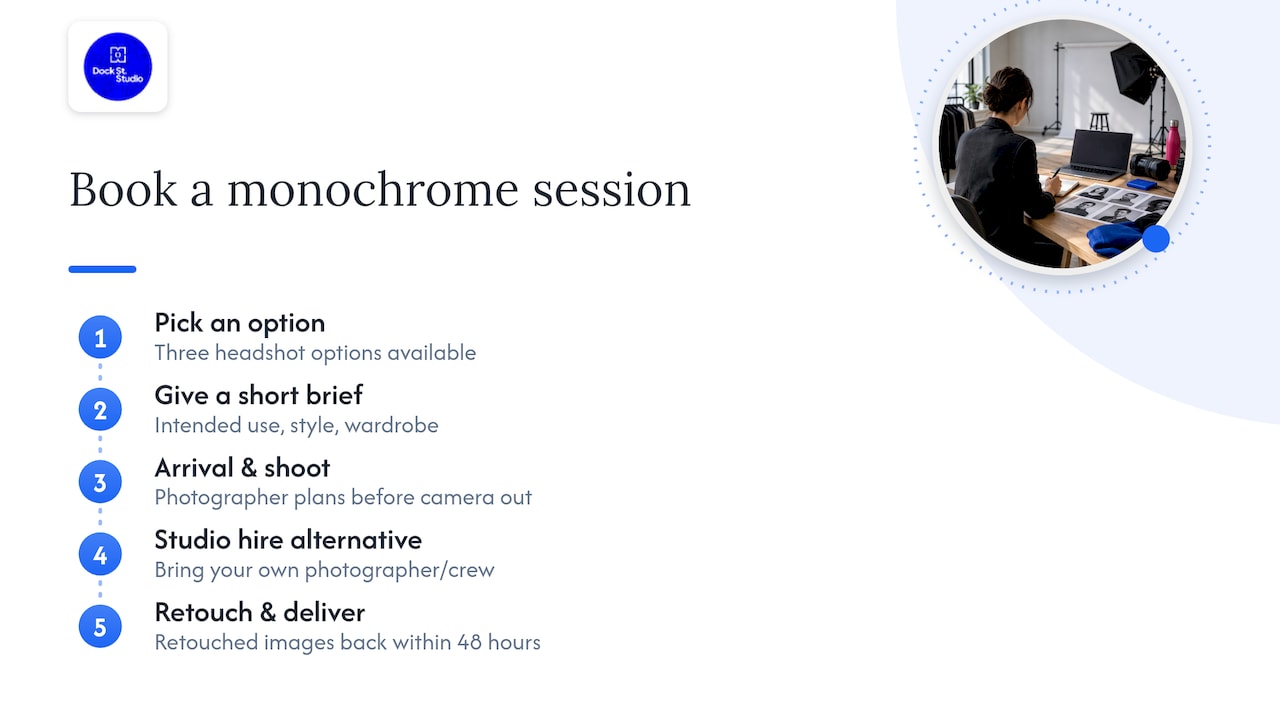
Book your black and white headshots in Leeds
If monochrome suits your brief, the fastest way to get it right is with a photographer who plans the shot before the camera comes out — and if it doesn't, we'll say so and shoot colour instead. Book online, email mark@isophotographic.org, or call 0113 4400102.
Sources
- Photos for passports — GOV.UK
- Three routes to black & white — Nether Moor Images
- Riz Ahmed by Sharif Hamza — National Portrait Gallery
- Benjamin Brecknell Turner — V&A
Written by Mark Wheelwright
Commercial photographer & studio owner, Leeds | ISO Photographic Ltd
Dock Street Studio, Unit 9, 30–38 Dock Street, Leeds LS10 1JF
18+ years' experience | 900+ projects | 300+ five-star reviews | 1M+ shutter count
dockstreetstudioleeds.co.uk
Shot, written and built by the Dock Street team
Every guide on this blog comes from the team at Dock Street Studio — Mark behind the camera with 18+ years' experience, Nicole on styling and lighting, Beya on video and bookings and Austin keeping the site fast and findable. If you'd rather have us do it than read about it, book a session or explore our photography services in Leeds.