


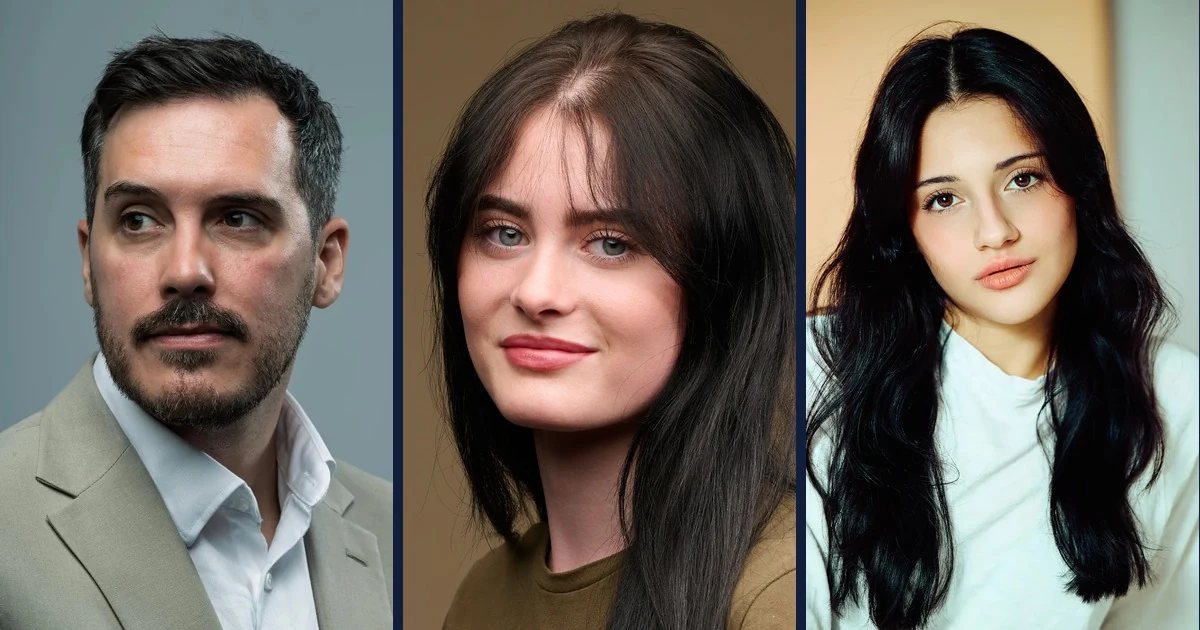
Ask most people which lens to use for a headshot and you get one answer: 85mm. It's a good answer. It isn't the whole one. The best lenses for headshots depend on the look the picture needs, the room you have to shoot in, and how comfortable the person in front of the camera feels while you work.
An actor usually needs an honest, engaging frame that looks like them on a good day. A consultant might want a little more context around them. A senior leader may be after something closer to editorial. All three briefs can be shot well, and focal length starts shaping the result before we've touched a light.
At our studio in Leeds we choose focal length to suit the person and the brief, not because one lens has become the internet's favourite. Here's what actually earns its keep in a working headshot session.
The best lenses for headshots start at 85mm
On a full-frame camera, an 85mm is the classic choice for good reason. It gives natural proportions while letting us stand far enough back that you don't feel crowded. Backgrounds fall away gently. The result looks polished without looking stylised.
For a close head-and-shoulders portrait, it's usually where we start. It suits actor headshots, business portraits and LinkedIn photography because it keeps attention where it belongs: expression, eyes, connection.
A fast 85mm — an f/1.8 or f/1.4 — can give lovely background blur in available light. In the studio we rarely shoot it wide open. Somewhere around f/4 to f/8 is more useful, because both eyes need to be sharp and we're already controlling the background with light rather than with a wafer-thin depth of field.
The trade-off is space. An 85mm needs a decent gap between camera and sitter. In a cramped home office or a small meeting room it backs the photographer into a corner. That's the point where a 50mm starts to look sensible.
When a 50mm earns its place
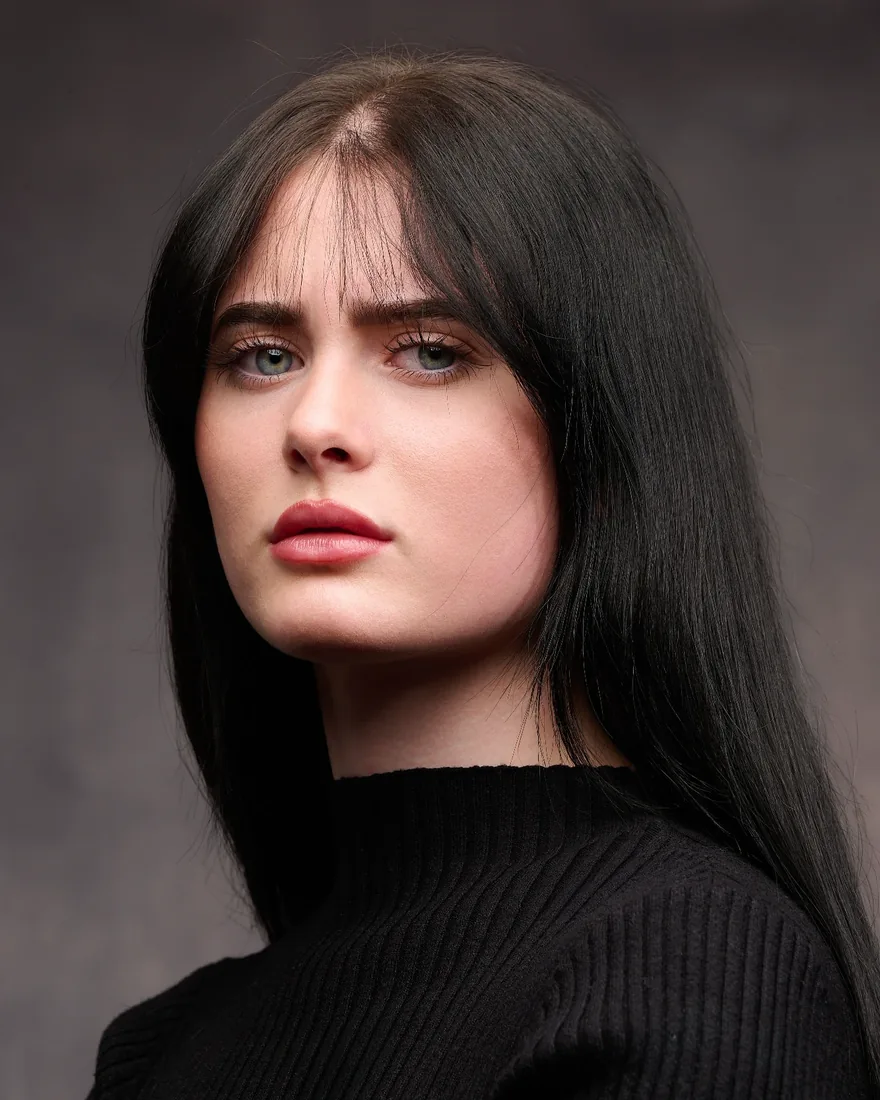
A 50mm is one of the most practical lenses for portraits, particularly when the picture needs to show more than a face. It handles waist-up frames, environmental portraits and personal-brand images where a workshop, a desk or a bit of architecture belongs in the shot.
It's also forgiving in smaller rooms. We can keep a comfortable working distance and still leave enough of the space visible to tell a story. For a Leeds business owner who wants portraits in their cafe, workshop or office, a 50mm gives an immediate sense of place without letting the background take over.
There's a caveat, and it's worth being straight about it. Move in too close with a 50mm and features start to look exaggerated — the nose comes forward, the centre of the face gets more prominent. That's not the lens being unkind. It's perspective, and it comes from how close the camera is, not from the glass.
Given a bit of room, a 50mm is flattering and flexible. We tend to use it for chest-up frames and wider compositions, then reach for something longer when the crop gets tight.
Where a 70-200mm zoom is worth carrying
A 70-200mm zoom is a workhorse for professional portraits. Towards the long end, around 135mm to 200mm, it gives a gently compressed perspective that's very kind to faces. It's excellent for outdoor business portraits, press images, events and editorial work, where we need to move quickly and can't stop to swap primes.
The zoom range also lets us find the framing without stepping into someone's personal space. That matters more than people expect. Somebody who's been dreading the whole thing usually settles faster when there is a comfortable bit of distance between them and the camera.
Longer focal lengths need room, though, so they're little use at a desk in a small office or in a tight corner of a studio. They also make the background more prominent, because a narrow field of view fills the frame with less of it. Useful when the background is good. Less useful when there's clutter we can't move.
For a straightforward studio headshot, an 85mm prime is lighter and simpler. For a day of varied corporate portraits or location work, the zoom gives us speed and options.
Are 105mm and 135mm worth it?
If you've got the space and want something a little more refined, yes. Both produce beautiful portraits, with very natural proportions and clean separation between the subject and the background.
A 135mm is particularly good for close portraits outdoors or in a large studio. It lets the photographer stand well back, which helps a self-conscious sitter forget the camera is there at all. It's also excellent at turning a busy background into soft nothing.
The catch is simple: distance. In a compact room you may not be able to frame head-and-shoulders at all. Longer isn't automatically better. The right focal length is the one that fits the space, suits the brief and keeps the session relaxed.
The lenses we'd avoid for a straight headshot
A wide-angle lens is rarely right for a traditional headshot. A 24mm, 28mm or even a 35mm can work for an environmental portrait where the surroundings are part of the story, but only from a sensible distance and never on a tight crop.
Get close with a wide lens and the face stretches. The nose comes forward, the sides of the head fall away, and the result can look faintly comic. Editorial photographers sometimes do it deliberately. It isn't what an actor or a business client wants from their main profile picture.
We'd also think twice about an ultra-fast aperture chosen purely for more blur. An f/1.2 frame can look lovely, but it leaves almost no margin for movement — turn your head slightly and one eye is sharp while the other isn't. A believable expression is worth far more than the widest setting on a lens.
Full frame, crop sensor and phone cameras
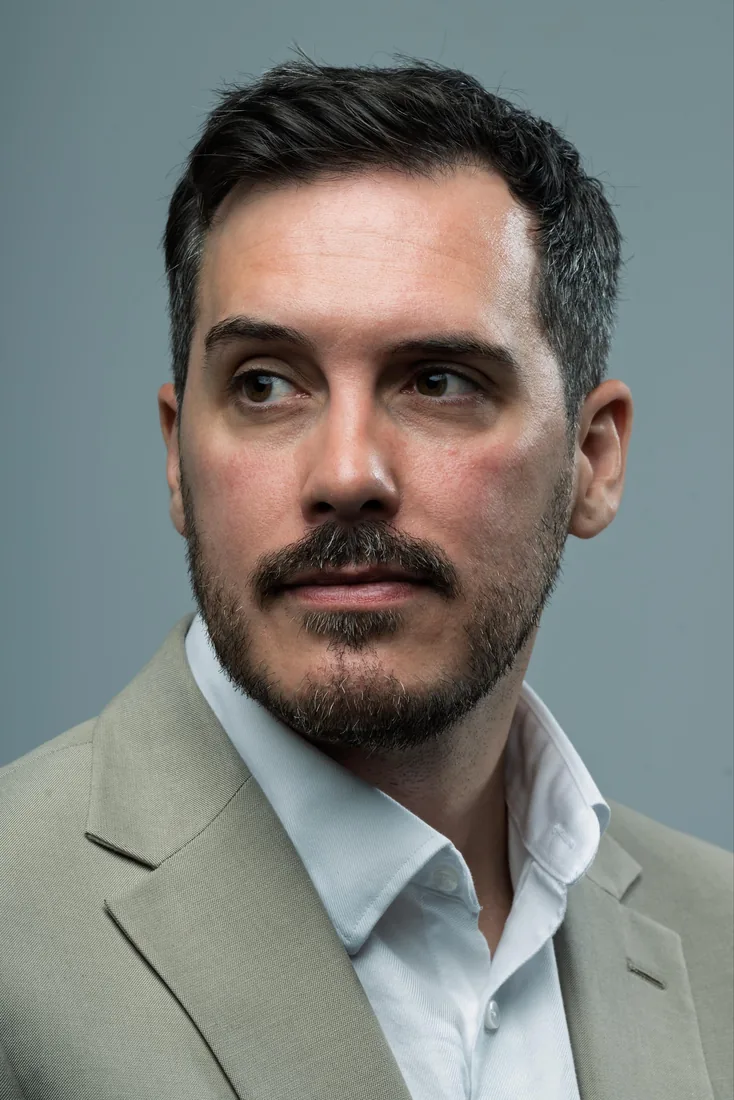
Focal length numbers don't tell the whole story. An 85mm on a full-frame body behaves differently from an 85mm on a crop sensor. On APS-C it often gives a field of view nearer 127mm to 136mm, depending on the system, which makes it a strong portrait option but a hungry one for space.
On a crop-sensor camera, a 50mm is usually the sweet spot, giving roughly the equivalent of 75mm to 80mm on full frame. A 56mm is popular on APS-C systems for the same reason.
What about portrait mode on a phone?
Phones are useful for quick content, and we'd never tell anyone to stop using one. Software blur still struggles around hair, glasses and hands, though, and a small sensor leaves less to work with. For a casual update it might be plenty. For a casting profile, a company website or a press release, proper lighting and a suitable lens show.
Distance and light matter more than the lens
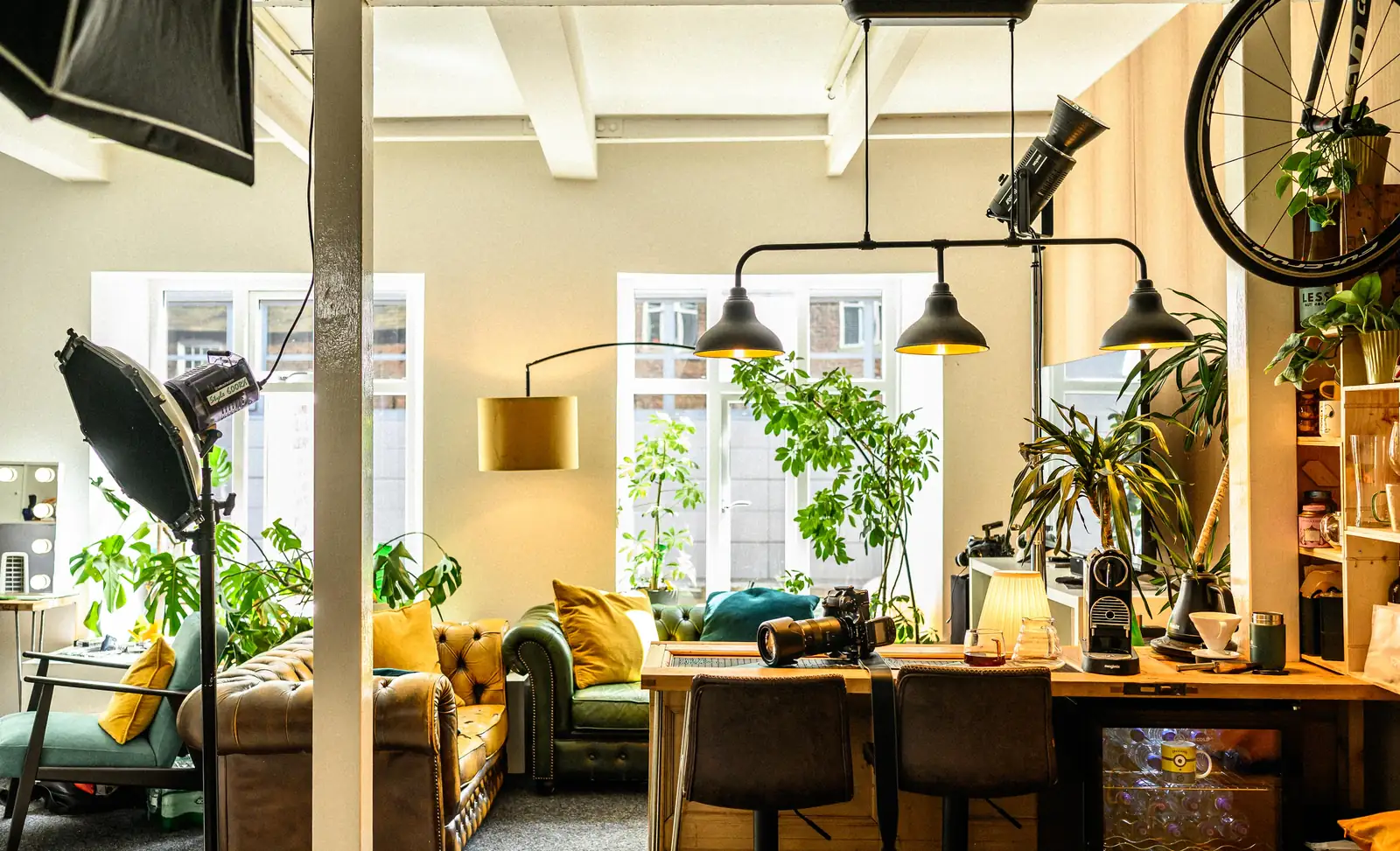
This is the part that usually gets missed. Perspective comes from where the camera is standing, not from the lens itself. We pick a focal length that lets us put the camera at a flattering distance, then frame from there.
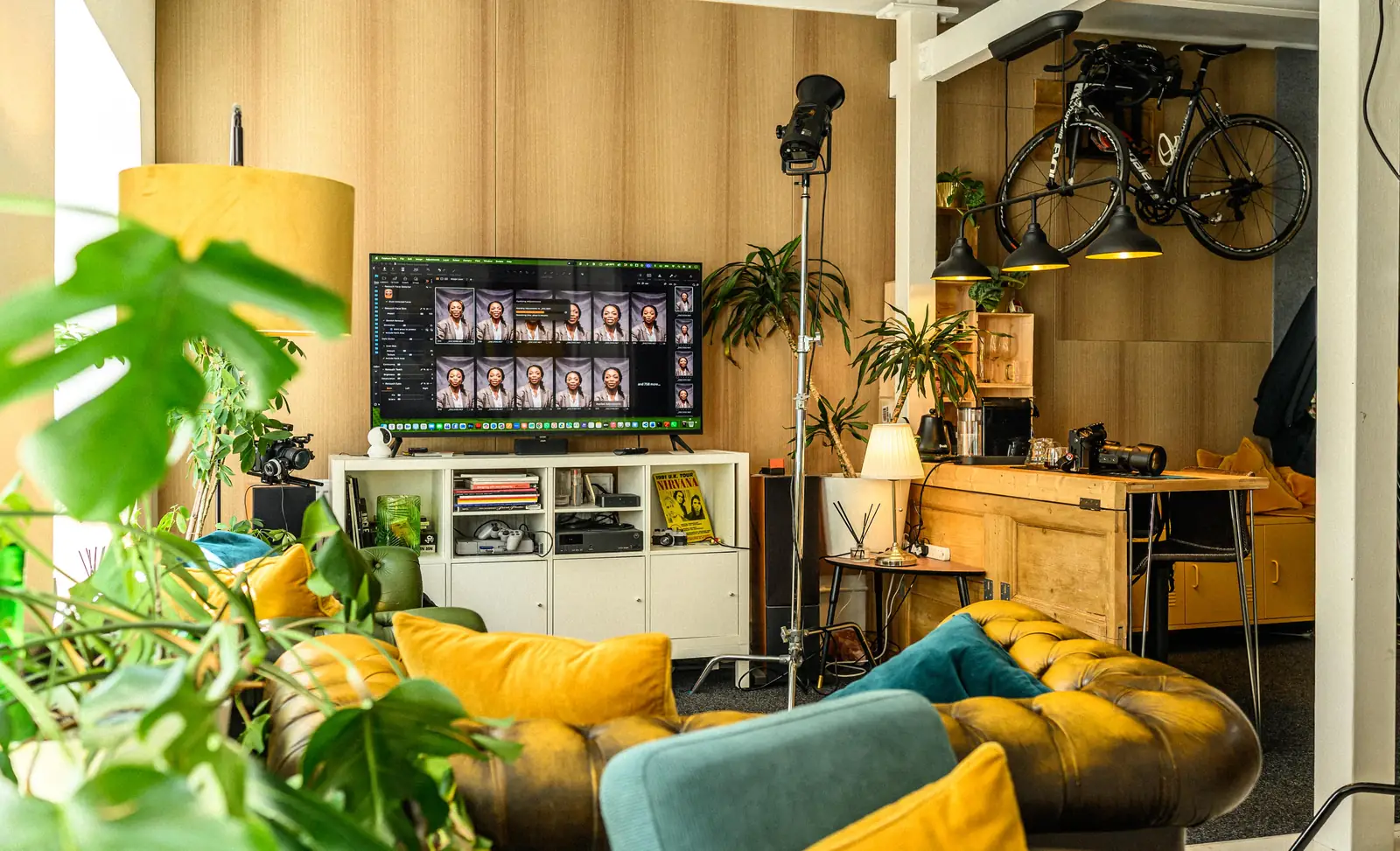
Lighting does at least as much of the work. The best 85mm in the world won't rescue harsh overhead office lights, a distracted expression or a background full of distractions. In the studio we shape the light to suit the face, make small adjustments to posture as we go, and keep the session moving so the pictures stay natural. Everything lands on a big screen as we shoot, so you can see how it's going rather than take our word for it, which is why we shoot tethered.
Which is why a good headshot is never a shopping list. A 50mm in thoughtful hands will beat an expensive 135mm used carelessly. The lens is a tool. The conversation, the direction, the light and the timing are what make somebody look like themselves at their best.
Choosing one lens for your own kit
If you're buying a single lens mainly for traditional headshots on full frame, an 85mm f/1.8 is a sensible place to start: flattering, compact and usually a good deal cheaper than the premium fast versions. If you also want room for wider personal-brand portraits, a 50mm is more versatile. If you photograph people at events, on location and in varied settings, a 70-200mm gives you the range.
If you're booking a shoot rather than buying glass, none of this needs to worry you. Bring the brief, a couple of examples you like and something you feel good wearing — our guide on what to wear for headshots covers the wardrobe side. We'll choose the focal length, the lighting and the background, and give clear direction the whole way through.
Don't feel you need to arrive knowing how to pose. That's our job. Bring us the intended uses and we can talk it through properly over a brew, work out which images will earn their keep, and shoot them at a distance that leaves you looking settled, present and recognisably yourself.
Frequently Asked Questions
What is the best lens for headshots?
On a full-frame camera, an 85mm prime is the reliable all-rounder. It gives natural proportions, keeps a comfortable distance between camera and sitter, and separates the face from the background cleanly. It's the lens we reach for most often for a close head-and-shoulders portrait.
Is a 50mm or an 85mm better for headshots?
It depends on the crop and the room. An 85mm suits tight head-and-shoulders frames and needs space behind the camera. A 50mm is better for waist-up and environmental portraits, and works in smaller rooms, but it can exaggerate features if you move in too close.
What is the best headshot lens for a crop-sensor camera?
A 50mm or 56mm on APS-C, which gives roughly the field of view of a 75mm to 85mm lens on full frame. An 85mm still works on a crop body, but it behaves more like a 130mm and needs a lot more shooting distance.
Do I need an f/1.4 lens for blurred backgrounds?
Not for a studio headshot. We usually work around f/4 to f/8 so both eyes stay sharp, and control the background with lighting and distance instead. A very wide aperture leaves almost no margin if you shift your head between frames.
Does the lens matter more than the lighting?
No. Lighting, distance and direction do most of the work, and a modest lens used thoughtfully will beat an expensive one used carelessly. The lens choice mainly sets how far back we stand, which is what controls how your features are drawn.
Where is the studio and how do I book?
Dock Street Studio is at Unit 9, 30–38 Dock Street, Leeds LS10 1JF, in central Leeds near Leeds Dock and a short walk from Leeds train station, with parking onsite. Book online, email hello@dockstreetstudioleeds.co.uk, or call 0113 4400102.
Book your headshot session in Leeds
Whether it's a single portrait, a set of actor headshots or a team photographed over a few weeks, we'll choose the lens, light and background to suit what the pictures need to do. Book online, email hello@dockstreetstudioleeds.co.uk, or call 0113 4400102.
Written by Mark Wheelwright
Commercial photographer & studio owner, Leeds | ISO Photographic Ltd
Dock Street Studio, Unit 9, 30–38 Dock Street, Leeds LS10 1JF
18 years in business | 900+ projects | 300+ five-star reviews | 1M+ shutter count
dockstreetstudioleeds.co.uk
Shot, written and built by the Dock Street team
Every guide on this blog comes from the team at Dock Street Studio — Mark behind the camera with 18+ years' experience, Nicole on styling and lighting, Beya on video and bookings and Austin keeping the site fast and findable. If you'd rather have us do it than read about it, book a session or explore our photography services in Leeds.