


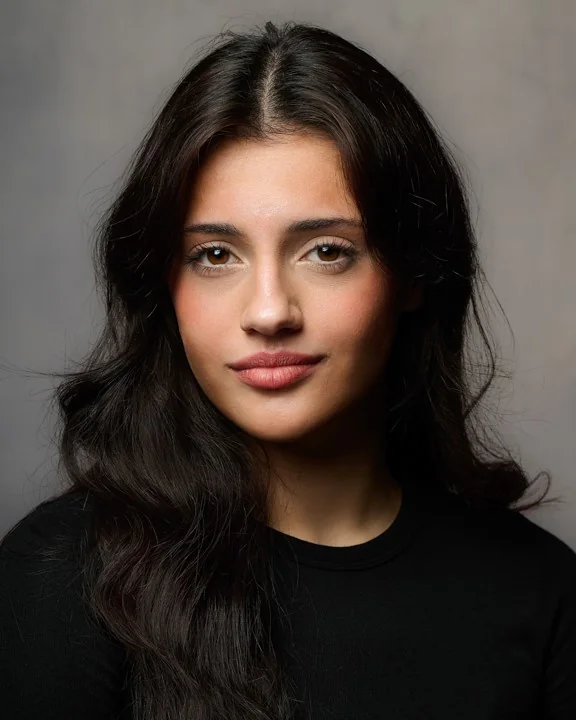
Actors — we all know the headshot is doing a lot of heavy lifting. It’s usually the first thing a casting director, agent or producer sees of you, often before they’ve read a single line of your CV.
I’m Nicole. I’m a working actor, and I also spend a fair amount of time at Dock Street Studio in Leeds, where Mark Wheelwright shoots actor headshots. Being on both sides of it — sitting in the chair myself, and watching other actors go through the same thing — has changed how I think about what a headshot actually needs to do.
Your headshot isn’t a portrait. It’s a tool.
This took me longer to accept than it should have. I used to think of my headshot as a nice photo of me. It isn’t. It’s a piece of marketing, and the sooner you treat it that way, the better decisions you’ll make about it.
Casting professionals scroll through hundreds — sometimes thousands — of submissions. Your image has to register instantly, and it has to be honest. They need a clear representation of who you actually are, with enough personality showing through that they can imagine you in the room. Not a filtered, flattered, five-years-ago version. You, on a good day.
That gap between “flattering” and “accurate” is where a lot of actors go wrong, myself included. Nobody benefits from a casting director being surprised when you walk in.
Why the session itself matters more than you’d think
Something I noticed watching Mark work: he directs throughout. Small adjustments to expression, posture, a shift in energy. It sounds minor, but it’s the difference between looking posed and looking present.
The practical effect is that you relax. And a relaxed actor takes up space differently on camera — you can see it immediately in the frames coming through. Most of us aren’t used to being photographed as ourselves rather than as a character, and that’s a genuinely odd thing to do. Having someone guide you through it makes it far less exposing. If you want the practical prep side, the studio’s guide on preparing for an actor headshot shoot covers it.
Backgrounds: more useful than they sound
Background choice changes how a shot reads, and having options in one session is genuinely valuable.
Clean, neutral backgrounds work best for commercial submissions, corporate roles and general casting — they keep everything on your face, which is the point. For more dramatic or cinematic casting, textured or darker backgrounds add depth and mood.
The reason this matters: you can leave one session with several different looks. That is real versatility across Spotlight, IMDb and casting platforms, rather than one image doing every job badly. And we all know how much versatility counts in this industry.
Lighting does more than you realise
I hadn’t appreciated how much lighting shapes the read of a headshot until I saw the same person shot two ways in a single afternoon.
Soft, even lighting gives you natural and approachable. More directional lighting brings contrast and drama. Same face, noticeably different casting suggestion. The right lighting can make an actor look warm, trustworthy, intense or authoritative — and it’s not a happy accident when it works.
It’s also why Mark runs a consultation before the shoot rather than working it out on the day. Knowing what you’re going for — and what casting lane you actually sit in — means the lighting gets used deliberately, supporting you rather than overpowering you.

Keeping current matters
Casting expectations shift. What looked right five years ago can read as dated now, and a headshot that feels out of step quietly works against you.
One advantage of a studio with a lot of creatives moving through it is that the conversation about what’s landing right now happens constantly. The aim is that you leave with images that are adaptable and current — usable across theatre, television, film and commercial casting rather than pigeonholed into one.
Choosing a photographer is a bit daunting — that’s normal
It’s a real decision and it costs money, so of course it feels weighty. What I’d say is that the environment matters as much as the equipment list. A calm, supportive studio helps you produce natural expressions, and natural expressions are the entire point of the exercise.
Whether you’re shooting your first set or updating a portfolio that’s started to feel like someone else, a good session gives you a foundation to work from. The goal isn’t to look impressive. It’s to be seen, remembered, and called in.
Frequently Asked Questions
How much do actor headshots cost in Leeds?
Sessions at Dock Street Studio range from £95 to £200 depending on session length, image output and how many setups you want. Visit the headshot photography page for detail, or get in touch to talk through what you need.
How many looks can I get in one session?
More than you’d expect. Changing background and lighting produces genuinely different reads — clean and neutral for commercial and general casting, darker or textured for dramatic and cinematic roles — so you can leave with a range that works across different casting platforms.
Are the images suitable for Spotlight and casting sites?
Yes. They’re shot and retouched for casting use and delivered as high-resolution digital files suitable for Spotlight, IMDb, casting platforms and your own portfolio.
What should I wear?
Simple, solid colours in pieces you genuinely feel comfortable in. Avoid busy patterns and anything you’ll keep adjusting — discomfort shows. Bring a couple of options so you can make the call on the day against the backgrounds. The studio’s what to wear guide goes further.
I’ve never had professional headshots before. Is that a problem?
Not at all, and you don’t need to arrive knowing your angles. Sessions are directed throughout, with guidance on expression and posture as you go — most first-timers relax within a few minutes once they realise they’re not being left to work it out alone.
How do I book?
You can book online, email mark@isophotographic.org, or call 0113 4400102. Every booking starts with a short consultation so the shoot is planned around what you actually need.
Book your actor headshots in Leeds
Dock Street Studio is in central Leeds at Unit 9, 30–38 Dock Street, LS10 1JF — a short walk from Leeds train station. Book a session online or visit dockstreetstudioleeds.co.uk.
About the author
Nicole Sheyni
Actor • Copywriter • Lighting assistant, Dock Street Studio Leeds
Nicole is a working actor and copywriter based in Leeds. She is part of the Dock Street Studio team, contributing guest articles on acting craft, the industry, and the role of strong visual presentation in an actor’s career. Her writing draws on lived experience in auditions, training, and professional practice.