


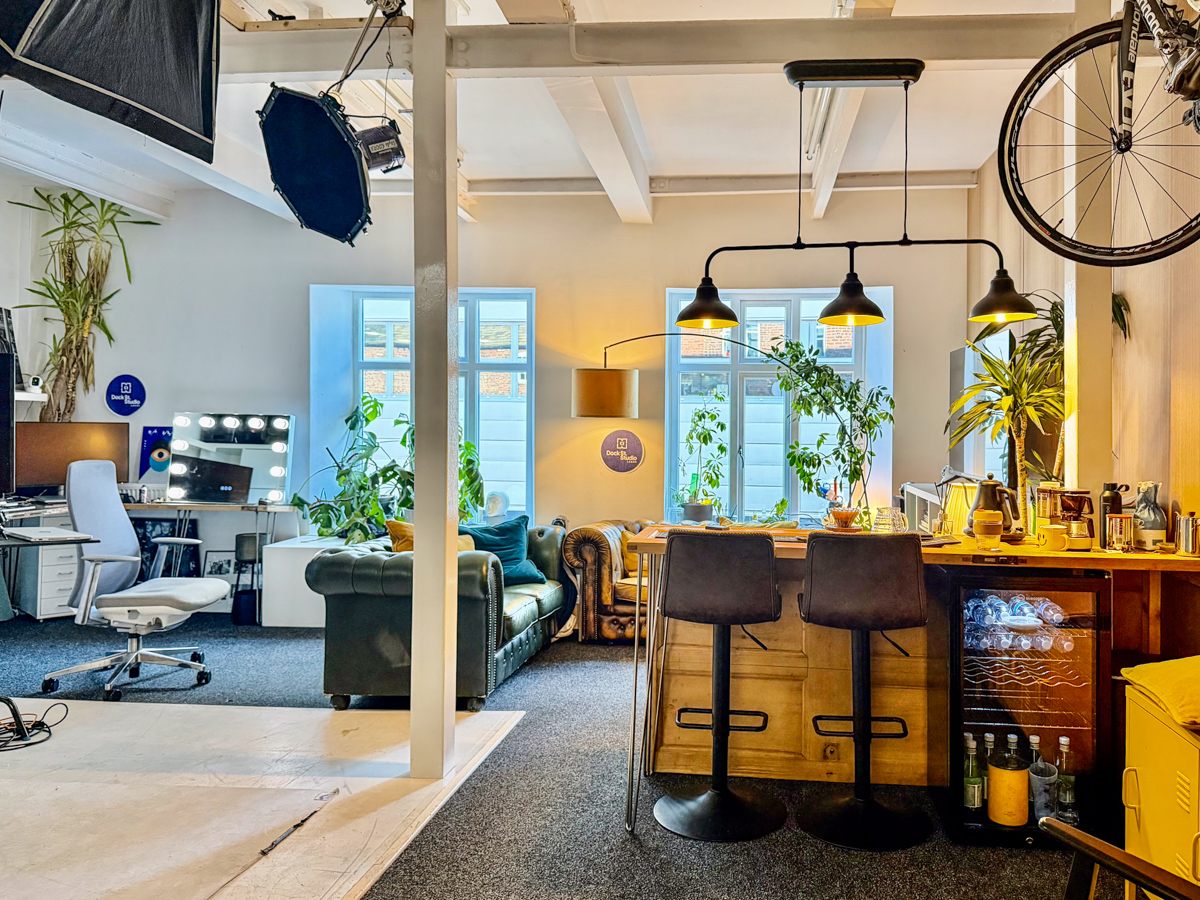
If you've ever searched for a photography studio in Leeds, you'll know the listings all start to look the same. White walls, a backdrop, a couple of lights, a day rate. On paper, one space looks much like the next.
In practice, they're not the same at all. The difference between a good shoot and a frustrating one usually comes down to details you can't see in a thumbnail — ceiling height, the kit that's actually included, how much natural light you get, and whether you can park near the door when you're carrying a boot full of gear.
I run Dock Street Studio in central Leeds, so I'm not going to pretend I'm a neutral party here. But I've shot in a lot of studios over the years, and I've watched plenty of clients turn up stressed because the last place they hired didn't have what they needed. So this is the honest version: what genuinely matters when you're choosing a studio, and how to tell the well-equipped spaces from the ones that just look the part.
If you already know what you need, photography studio hire in Leeds from £125 for two hours is on our studio hire page, with lighting, backdrops and green screen included.
1. Space — and what "enough room" really means
Square footage is the first thing to check, but the number on its own doesn't tell you much. What you're really asking is: can I do my shoot here without fighting the walls?
For headshots and small product work, you can get away with a compact space. But the moment you need distance — to separate your subject from the backdrop, to light a full-length fashion shot, or to pull back for a wide product set — a cramped room shows up immediately in your images. You end up with backdrop wrinkles in shot, spill from your lights bouncing off nearby walls, and no room to move your modifiers.
Ceiling height matters just as much as floor space, and it's the thing most people forget. High ceilings let you boom a light overhead, use larger softboxes, and shoot full-length without the top of the frame closing in. Low ceilings quietly limit everything you can do.
For reference, our space at Dock Street is over 450 square feet with 10-foot ceilings — enough to shoot full-length, run a proper backdrop system, and still have room for a team and kit to move around. When you're comparing studios, ask for the actual dimensions, not just "spacious."
2. Kit — what's included, and what's "available at extra cost"
This is where studios differ the most, and where the day rate can be misleading. A cheap hire fee means very little if you then have to bring (or rent) every light, stand and modifier yourself.
Here's what's worth checking before you book:
- Lighting. How many heads? Strobes, continuous, or both? Good studios carry professional brands and enough power to handle anything from a soft beauty look to a punchy commercial set. We run Elinchrom and GODOX strobes alongside continuous heads, so you can shoot stills and video without swapping the whole setup.
- Modifiers. Softboxes, beauty dishes, grids — the modifiers shape the light, and a studio that only owns one umbrella is going to limit your look. It's worth asking how many, and what sizes.
- Backdrops. A proper roll system with a decent range of colours beats a single dusty white wall. We run a 2.7m backdrop system with a wide range of Colorama colours, plus black, white and green-screen options always on hand.
- C-stands, booms and grip. The unglamorous stuff that holds everything in place. If a studio is short on stands, you'll feel it within the first hour.
- Tethering. For commercial and product work, shooting tethered to a large screen changes the whole experience — the client sees the shot live, decisions get made on the spot, and you leave with images everyone's already happy with.
The point isn't to demand a specific brand. It's to make sure the studio's kit list matches the shoot you've actually planned, so you're not improvising on the day.
3. Natural light — a real one, not a nice-to-have
Plenty of studios are sealed boxes — which is fine if you want total control, but a problem if your brief calls for a soft, organic, daylight feel. That look is hard to fake convincingly, and increasingly it's exactly what brands, content creators and lifestyle shoots are after.
A studio that offers both natural light and full blackout gives you the best of both. You can shoot a bright, airy lifestyle set in the morning and switch to a controlled, strobe-lit commercial look in the afternoon without moving locations.
When you're weighing up a space, ask whether natural light is genuinely usable or just a window in the corner. The ones built for it — like ours, where natural light is an option you can dial in or shut out — give you far more range from a single booking.
4. Location and access — the part people regret ignoring
A studio can tick every creative box and still be a pain to use. Access is the thing clients underrate until they're hauling flight cases up three flights of stairs in the rain.
Before you book, think about the practical day:
- Is it actually central? A city-centre location makes life easier for clients, models and crew arriving from different directions — and for anyone coming in by train.
- Parking and loading. Can you get close to the door to unload? Is there secure parking nearby? For product and commercial shoots with a lot of kit, this is non-negotiable.
- Step-free access. Wheelchair access and easy entry matter for crew, clients and talent alike — and it's a fair signal of how much thought has gone into the space.
Dock Street sits in central Leeds on Dock Street itself, with wheelchair access, secure parking and on-site loading — because the smoothest shoots are the ones where nobody's worn out before the first frame.
5. Hire options — flexibility is the whole point
Finally, look at how you can actually book the space, because your needs will change from job to job.
The most useful studios offer more than one way in:
- Dry hire — just the space and kit, for photographers who bring their own eye and want a well-equipped room to work in.
- Hire with a photographer — for businesses, brands and individuals who want the shoot handled end to end, from lighting to direction to final edits.
- Half-day and full-day options — so you're not paying for time you don't need, or rushing a shoot that deserves more.
A studio that only offers one rigid package is really only built for one kind of customer. The better spaces flex around your project — whether you're a seasoned photographer who just needs the room, or a business owner who's never set foot on a studio floor and wants someone to guide the whole thing.
A quick checklist before you book
Run any Leeds photography studio through these questions and you'll quickly separate the genuine options from the ones that just photograph well:
- What are the real dimensions — floor space and ceiling height?
- What lighting, modifiers and backdrops are included in the rate?
- Can I shoot tethered, and is there support if I need it?
- Is there usable natural light, full blackout, or both?
- How central is it, and can I park and load nearby?
- Is it step-free and easy to access?
- Can I hire it dry, or with a photographer, on a half or full day?
If a studio answers all of those clearly and confidently, you've found a good one.
Where Dock Street Studio fits in
I'll be straight with you: we built Dock Street to be the studio I always wanted to hire. A bright, spacious, properly equipped space in the centre of Leeds — over 450 square feet, 10-foot ceilings, a full backdrop system, a deep kit list, natural light when you want it, and easy access for everyone turning up on the day.
You can hire the studio on its own if you know exactly what you're doing, or book it with me behind the lens if you'd rather hand the whole thing over. Either way, it's a room built for good work, not just good photos of itself.
The best way to know if a studio is right for you is to stand in it. Book a visit to Dock Street Studio in central Leeds — come and see the space, talk through your shoot, and decide for yourself. No hard sell, just an honest look at whether we're the right fit.
Frequently asked questions
How much does it cost to hire a photography studio in Leeds?
At Dock Street it's £125 for two hours, £175 for a half day and £300 for a full day, with lighting, backdrops and green screen included. Elsewhere the day rate alone can be misleading — always check what equipment is included before comparing prices. Full details and online booking are on our studio hire in Leeds page.
Can I hire a Leeds studio without my own photographer?
Yes. At Dock Street you can book the space and kit on a dry-hire basis if you're shooting yourself, or book it with a photographer if you'd like the shoot handled for you.
What should a good photography studio include?
At minimum: enough space and ceiling height for your shoot, professional lighting and modifiers, a proper backdrop system, the option of natural light or blackout, and easy access with parking. Tethering support is a big plus for commercial and product work.
Is Dock Street Studio suitable for product and commercial shoots?
Yes — the space is set up for headshots, product, e-commerce, fashion and commercial video, with green screen, tethering and full grip available, plus on-site loading and secure parking for kit-heavy jobs.
Shot, written and built by the Dock Street team
Every guide on this blog comes from the team at Dock Street Studio — Mark behind the camera with 18+ years' experience, Nicole on styling and lighting, Beya on video and bookings and Austin keeping the site fast and findable. If you'd rather have us do it than read about it, book a session or explore our photography services in Leeds.