


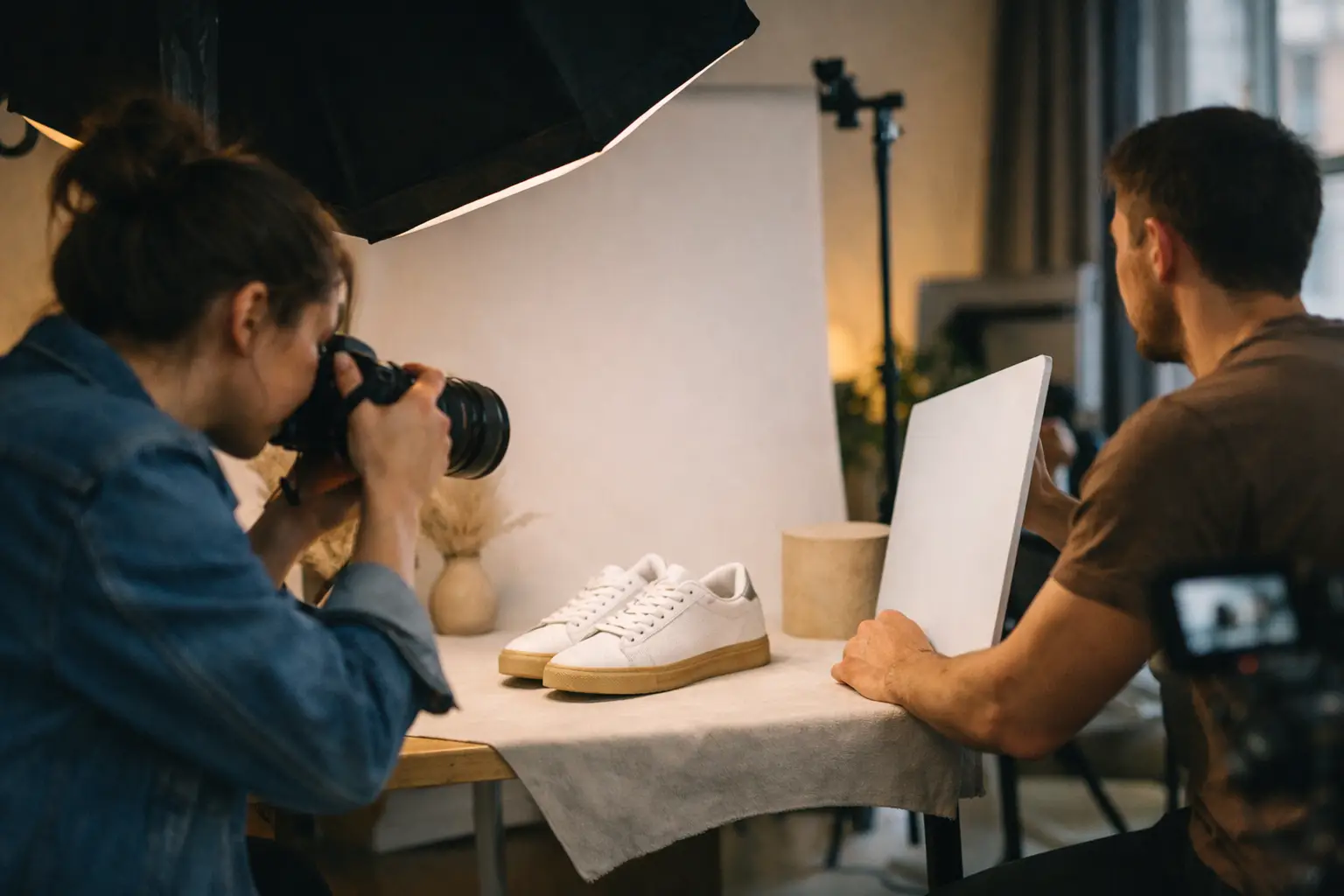
A product can be well made, fairly priced and sat ready to dispatch, and still stall because the pictures were made for the wrong place. Photographs shot for Instagram or a brochure are rarely bad. They are answering a different brief to the one a marketplace sets.
The useful question is not what the rules say. It is what those rules ask of you on the day you shoot. Product photography for Amazon listings comes with real constraints, and most of the trouble we see with ecommerce brands in Leeds comes from meeting them after the shoot rather than before it.
Why a marketplace cares what your pictures look like
A marketplace is a grid. Hundreds of products from hundreds of sellers sit side by side on one screen, and the site's job is to let a shopper compare them at a glance. That only works if the lead images all behave the same way, which is why the rules for the main image are strict and the rules for the rest of the gallery are looser.
The other reasons are just as practical. Zoom needs resolution, because a customer who cannot look closely at a weave or a finish hesitates, and hesitation costs the sale. Props confuse what is being sold. A lamp photographed with a lovely bulb, shade and side table looks great right up until the box arrives with only a base in it.
That reasoning does not expire, and once you have it the specific rules stop feeling arbitrary.
Check your own category before you shoot
Amazon's current published guidance for main images asks for a pure white background at RGB 255, 255, 255, not off-white or a sweep that looks white on your laptop and reads grey once uploaded. It asks for the product to fill most of the frame, and for enough resolution on the longest side that zoom works properly. It rules out added text, promotional badges, borders, watermarks, props and inset images in that lead shot.
Those are the requirements as published at the time of writing, not permanent laws, and they vary by category. Clothing, beauty, food, jewellery and books all carry extras. Check the current image requirements for your own category in Seller Central before anything gets styled, lit or retouched. We will shoot to whatever spec you bring us, but no photographer can promise a listing will be accepted. That sits between you and the platform. If you want the requirements set out at more length, we have written about them separately.
Worth flagging while you are checking: if your supporting images carry claims like "eco-friendly", "non-toxic" or "clinically proven", make sure you can stand them up and that they are permitted in your category, because that is a regulatory question rather than a photographic one.
A white background is a lighting job, not a cut-out
White-background shots look simple because they are simple. That does not make them easy. The work is showing true shape, colour and finish while the background stays genuinely clean.
Take a glossy black water bottle. Light it carelessly and you get a dark silhouette with half the studio reflected across it. A white ceramic mug on white can lose its rim entirely. A pale linen gives up its texture, and anything chrome collects every stray highlight in the room. These are lighting problems, and no amount of clipping the product out afterwards will reliably fix them.
So we build the light around the material rather than running one setup at everything. Soft and broad for a skincare bottle. Controlled reflections to give a metal handle its shape. For clothing, attention to drape, accurate colour and a crop that holds steady across the range.
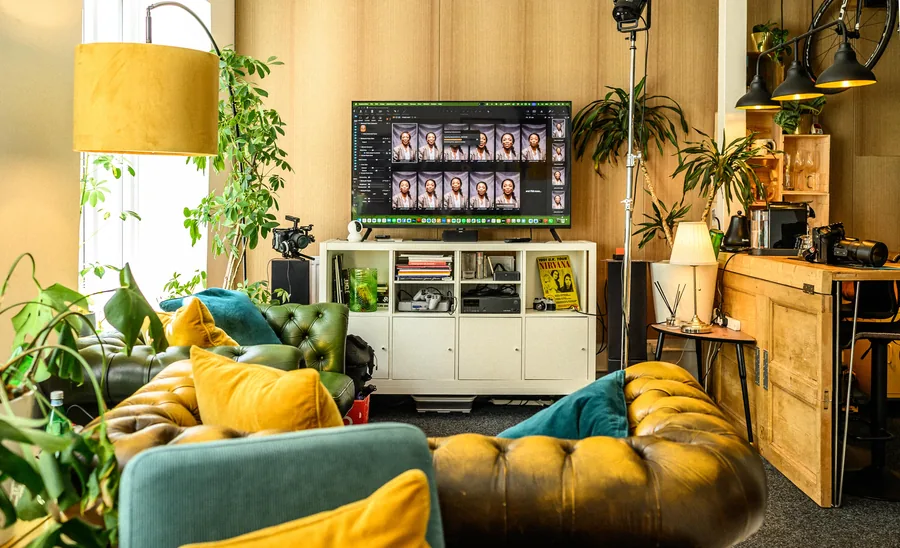
Colour is where the expensive mistakes live. We shoot tethered into Capture One so it gets judged on a proper screen rather than the back of a camera. Warming a product up because it looked nicer in the edit is how you end up with returns when the real thing lands on someone's doormat.
The rest of the gallery is where you actually sell it
Once the main image has earned its keep, the supporting shots do more of the work. Scale, texture, what is in the box, how the thing is used. A customer should not have to guess how big something is or what turns up on the day.
A Yorkshire food brand selling a gift box might lead with the sealed box on white, then show the contents, a close-up of the packaging, the box next to something familiar for scale, and a serving suggestion. A folding chair needs a picture of it folded as much as one of it open. If a listing offers a blue and a green, each variation needs a shot that makes the choice unambiguous.
Infographics and text overlays are allowed on supporting images in many categories and genuinely help with technical products. Keep them legible, keep them few, and keep them true. Most people meet your listing on a small screen with one thumb.
Planning product photography for Amazon listings
The shoots that run well start with an inventory. Tell us how many products, how many variants and pack sizes, what accessories are included with each item, and which category the listing sits in. Tell us too if the images need to work on your own site or in press, because that changes what we shoot alongside the packshots.
Then we know whether every colourway needs photographing, how tight the cropping has to stay, and where the retouching time will go. Ten candles in different scents need a method that keeps the jars aligned and the label colour accurate across the set, so the range looks like a range and next year's addition still matches.
Send the real products where you can. A good mock-up has its place, but embossing, foil, fabric weave and the sheen of a label are easier to represent honestly with the actual object in front of the camera. If you would rather talk a set of listings through before committing to a product shoot, bring us the awkward items and we will work it out over a brew.
Frequently Asked Questions
Does a white background mean my image will be accepted?
No. It is one requirement among several, and the full set varies by category and changes over time. Check your category's current guidance in Seller Central and treat the photography as one part of getting a listing right, not a guarantee.
How many images should we shoot per product?
It depends on the product and on what people ask before they buy. A simple item might need a main shot and three or four supporting views, while something with variants, parts or an obvious size question needs more.
Can we use the same photographs on our own website?
Usually, and it is worth planning for from the start. Lifestyle frames that could never serve as a marketplace main image often work hard on a homepage or in a press pack.
Do you photograph products we send in?
Yes. Send them clean, complete and in sale condition, with variants clearly labelled so nothing gets mixed up on the day.
Where is the studio, and how do we book?
Dock Street Studio is at Unit 9, 30–38 Dock Street, Leeds LS10 1JF, a short walk from Leeds station with parking on site. Book online, or ring us first if you would rather talk the range through before picking a date.
Book a product shoot in Leeds
If you have a set of listings to photograph and you would rather get it right first time, tell us what the range looks like and we will plan the day around it.
Book online, email hello@dockstreetstudioleeds.co.uk, or call 0113 4400102.
Written by Mark Wheelwright
Commercial photographer & studio owner, Leeds | ISO Photographic Ltd
Dock Street Studio, Unit 9, 30–38 Dock Street, Leeds LS10 1JF
18+ years' experience | 900+ projects | 300+ five-star reviews | 1M+ shutter count
dockstreetstudioleeds.co.uk
Shot, written and built by the Dock Street team
Every guide on this blog comes from the team at Dock Street Studio — Mark behind the camera with 18+ years' experience, Nicole on styling and lighting, Beya on video and bookings and Austin keeping the site fast and findable. If you'd rather have us do it than read about it, book a session or explore our photography services in Leeds.