


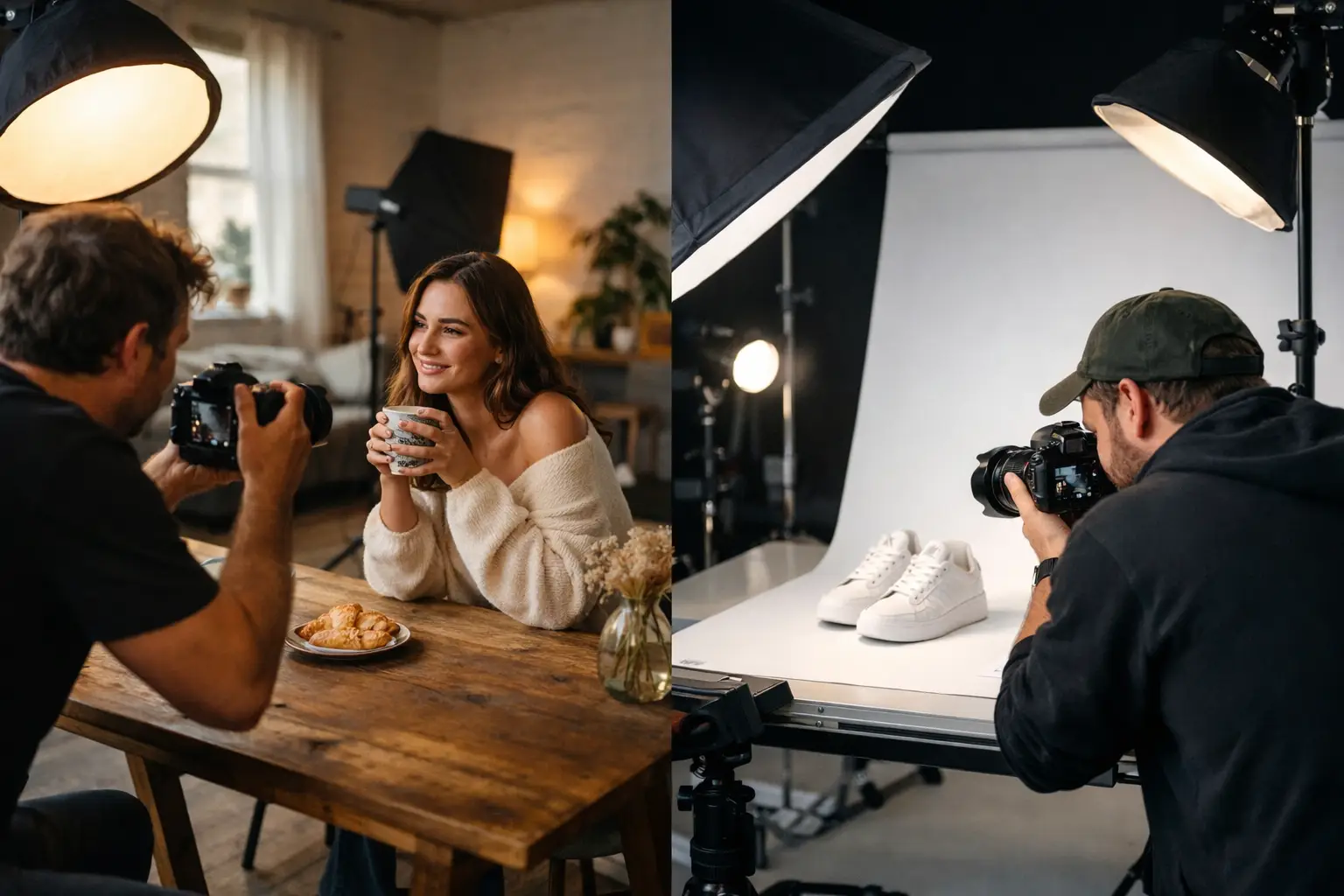
A shopper can decide whether to trust a product in seconds. That's why the choice between lifestyle and packshot product photography matters more than many brands realise. One shows the item clearly and consistently. The other gives it context, scale and a reason to want it. Neither is automatically the better option — the right answer depends on where the image will appear, what the customer needs to know, and how your product is bought.
For many businesses, the strongest approach isn't choosing one format forever. It's building a sensible image library where every photograph has a job to do. At our photo studio in Leeds we shoot both, often in the same production.
What is packshot photography?
A packshot is a clean, controlled photograph of a product, usually against a plain white, pale grey or transparent background. It's the workhorse of ecommerce. The product is centred, well lit and shown accurately, without props, hands or a busy setting competing for attention.
If you sell a black kettle, a packshot needs to show its shape, finish, handle, spout and controls properly. The customer should be able to compare it with other kettles, zoom in, and understand exactly what will arrive at their door. Good packshots deal in clarity.
That doesn't mean they need to look flat or lifeless. Lighting can reveal texture in a leather bag, control reflections on a bottle, or keep white clothing distinct from a white background. The skill is in making the product look its best without making it look like something it isn't.
Packshots are particularly useful for online shops, marketplaces, catalogues, trade brochures, product feeds and retailer listings. These places often have image specifications to meet. A consistent angle, crop and background also make a product range feel organised, which helps customers browse with confidence.
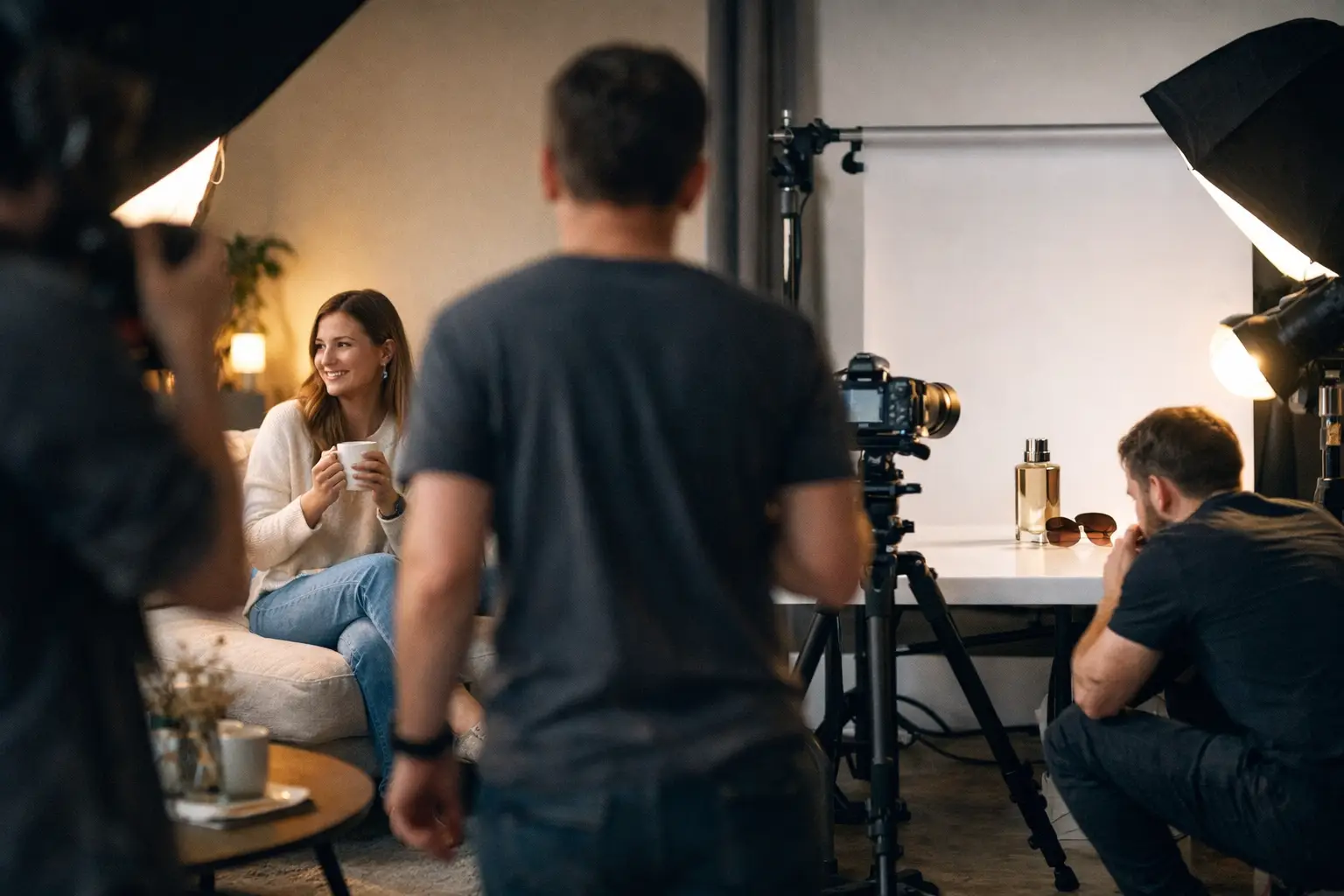
What a strong packshot needs to achieve
We look for accurate colour, believable texture and clean edges. These are small details until they're wrong. A poorly lit navy jumper can look black. A glossy product can pick up odd reflections from the studio. A cut-out with rough edges can look cheap on a retailer's website.
Consistency matters just as much. If one product is photographed from above and another at eye level, or one is bright and another looks grey, the collection becomes harder to shop. That's especially relevant when you have dozens or hundreds of SKUs. A repeatable lighting setup and a clear shot list save time later.
What is lifestyle photography?
Lifestyle photography places the product in use, or in a believable environment. It might show a coffee cup on a kitchen table on a dark Yorkshire morning, a skincare product on a bathroom shelf, or a jacket being worn on the street. It's less about listing every feature and more about helping someone picture the product in their own life.
The best lifestyle images don't feel like a prop cupboard has exploded in the frame. They create a situation that makes sense for the brand and the customer. A premium candle may suit a calm, considered home setting. A practical work bag may need to be shown with a laptop, a train platform or an office commute. The setting should add meaning, not noise.
This format works well for social content, campaign creative, email headers, advertising, editorial features and landing pages. It can also make a product page more persuasive once the essential packshots are in place. A customer may use the plain-background image to check the details, then use the lifestyle image to decide the product suits them.
Lifestyle work involves more variables. Location, weather, models, props, styling and natural light all need thought. Even when we shoot in our Leeds studio, a styled scene needs planning so it looks natural on camera rather than staged for the sake of it.
Lifestyle vs packshot: the commercial difference
The simplest distinction is this: packshots answer "What am I buying?" Lifestyle images answer "Why would I want this?"
A packshot is usually closer to the point of purchase. It supports comparison and reduces uncertainty. A lifestyle image often does its best work earlier in the customer journey, when you're trying to stop a scroll, set a mood, or show who the product is for.
Take a small independent food brand. Clean packshots of each jar are vital for its online shop and wholesale listings. But a picture of the sauce being spooned over a meal, with the label still visible, creates appetite and shows how it's used. One image supplies information. The other supplies desire.
There are exceptions. A highly technical product may need detail-led images, diagrams or close-ups more than an aspirational scene. A fashion brand may lean heavily on model photography because fit, movement and attitude are central to the sale. It depends on the product, the price point and the customer.
Platform matters too. Marketplace listings often prioritise a main image on white. Instagram, paid adverts and printed campaigns tend to give lifestyle work more room to perform. Trying to force one image to do both jobs usually leaves you with a compromise that isn't quite right for either.
When packshots should come first
Start with packshots if your customers need to compare colours, sizes, finishes, ingredients or variations. They should also be first on the list when you're launching an ecommerce site, supplying retail partners, or refreshing a large product catalogue.
They're usually more efficient to produce at scale. Once lighting, camera position and product preparation are agreed, we can work through a range in a controlled way. That makes costs and timings easier to manage, and it means you can add new products later without the whole catalogue changing character.
Preparation is still crucial. Products need to arrive clean, complete and in their final packaging. Clothing should be steamed. Bottles need labels applied squarely. Anything with fingerprints, dust or damaged corners creates extra retouching and delays. We'd rather spend the shoot day getting the lighting right than fixing avoidable issues afterwards.
When lifestyle images are worth the extra planning
Choose lifestyle photography when the product needs demonstration, emotion or a sense of scale. A packshot of a picnic blanket may be perfectly accurate, but it can't show how generously it covers a family table in the park. A simple image of someone using it answers a practical question while making the product feel more appealing.
Lifestyle is also useful when the brand itself is part of the purchase. Independent makers, homeware companies, beauty brands and food businesses often need a recognisable visual world. The colours, surfaces, casting and light all communicate something before a customer reads a word of copy.
The trade-off is time. You may need to source props, book a location, arrange talent, style the scene and allow for more selection and retouching. That doesn't have to mean a huge production — a well-planned half-day in a content studio can create a useful set of images if the brief is focused. But it does mean agreeing what each photograph is meant to say before the camera comes out.
Keep the product visible
A common mistake is making the lifestyle scene more interesting than the item being sold. If the product disappears into a crowded kitchen, or a model's face becomes the only thing the viewer notices, the image may look nice but do little commercial work.
We plan for the product to read quickly. That can mean a tighter crop, placing it near a natural point of focus, or choosing props that support its colours without matching them too closely. For packaging, the label needs to be legible where possible. For clothing, fit and fabric should stay clear.
A practical way to plan both types of shoot
Before booking, decide where the images will be used. Your website, marketplace listings, trade press, email campaigns and social posts all need different crops and levels of detail. This avoids the frustrating situation where a lovely landscape image has to be awkwardly cropped into a square advert.
Then build a shot list around priorities, not vague ideas. Include each product and variation, the angles required, any key details, whether the background needs removing, and the final formats you need. For lifestyle work, add the action, setting, props and intended message for each setup.
Bring reference images if you have them, but use them to explain the direction rather than to copy blindly. We can talk through what's realistic for the budget, product type and available time. Sometimes a minimal styled set in the studio gives you more control than hiring a location. Other times, a real café, workshop or home is exactly what gives the story credibility.
At Dock Street Studio in Leeds we often help clients combine both approaches in one production. We might photograph the full range as clean packshots first, then use selected hero products in styled scenes while the lighting kit and team are already in place. It's an efficient route for brands that need a usable library rather than a handful of isolated images — and having a commercial photographer planning the running order is usually what makes that possible in a single day.
Don't treat editing as an afterthought
Retouching is part of the finish, not a rescue plan. For packshots, that may include dust removal, colour correction, label straightening and clean clipping paths. For lifestyle work, it may involve refining a distracting crease, balancing window light, or removing an unwanted item from the background. Shooting tethered helps here too — catching a reflection or a colour cast on a full-size screen while the set is still built is far cheaper than fixing it later.
The aim is always believable polish. Over-editing can make food look plastic, skin look unreal, or a product's colour misleading. If your customer receives something that looks noticeably different from the photograph, the image has failed commercially, however stylish it seemed at first.
The most useful question isn't "which style looks better?" Ask what your customer needs to see before they're ready to buy. Give them clean evidence where they need certainty, and context where they need imagination. That's how product photography earns its place in the business, rather than simply filling a feed.
Frequently Asked Questions
What's the difference between packshot and lifestyle product photography?
A packshot is a clean, controlled image of the product on a plain background, built for clarity and comparison — it answers "what am I buying?" A lifestyle image places the product in use or in a believable setting, and answers "why would I want this?" Most brands need both, used in different places.
Which should I shoot first?
Packshots, in most cases. They're essential for ecommerce listings, retail partners and catalogues, and they're more efficient to produce at scale once lighting and preparation are agreed. Lifestyle images then add context and personality on top of that foundation.

Can you shoot packshots and lifestyle images in the same session?
Yes, and it's often the most efficient approach. We photograph the full range as clean packshots first, then build styled scenes with selected hero products while the lighting and team are already in place — provided the brief is realistic about what fits in the time.
How should I prepare my products for a shoot?
Send or bring products clean, complete and in final packaging, with spare samples where possible. Steam clothing, apply labels squarely, and check for fingerprints, dust or damaged corners. Preparation is cheaper than retouching and produces a better result.
Do you offer product photography for ecommerce and Amazon listings?
Yes. Marketplace listings usually require a main image on a white background to set specifications, and we shoot to those requirements as well as producing the lifestyle images that work harder on social, advertising and landing pages.
Where is the studio and how do I book a product shoot?
Dock Street Studio is at Unit 9, 30–38 Dock Street, Leeds LS10 1JF, in central Leeds near Leeds Dock. Products can also be posted to the studio for shooting. Book online, email hello@dockstreetstudioleeds.co.uk, or call 0113 4400102.
Book a product photography shoot in Leeds
Whether you need clean packshots for an ecommerce launch, styled lifestyle images for a campaign, or both in one production, Dock Street Studio is set up for it. Book online, email hello@dockstreetstudioleeds.co.uk, or call 0113 4400102 to talk through your range and timings.
Written by Mark Wheelwright
Commercial photographer & studio owner, Leeds | ISO Photographic Ltd
Dock Street Studio, Unit 9, 30–38 Dock Street, Leeds LS10 1JF
12+ years' experience | 900+ projects | 280+ five-star reviews | 1M+ shutter count
dockstreetstudioleeds.co.uk
Shot, written and built by the Dock Street team
Every guide on this blog comes from the team at Dock Street Studio — Mark behind the camera with 18+ years' experience, Nicole on styling and lighting, Beya on video and bookings and Austin keeping the site fast and findable. If you'd rather have us do it than read about it, book a session or explore our photography services in Leeds.