


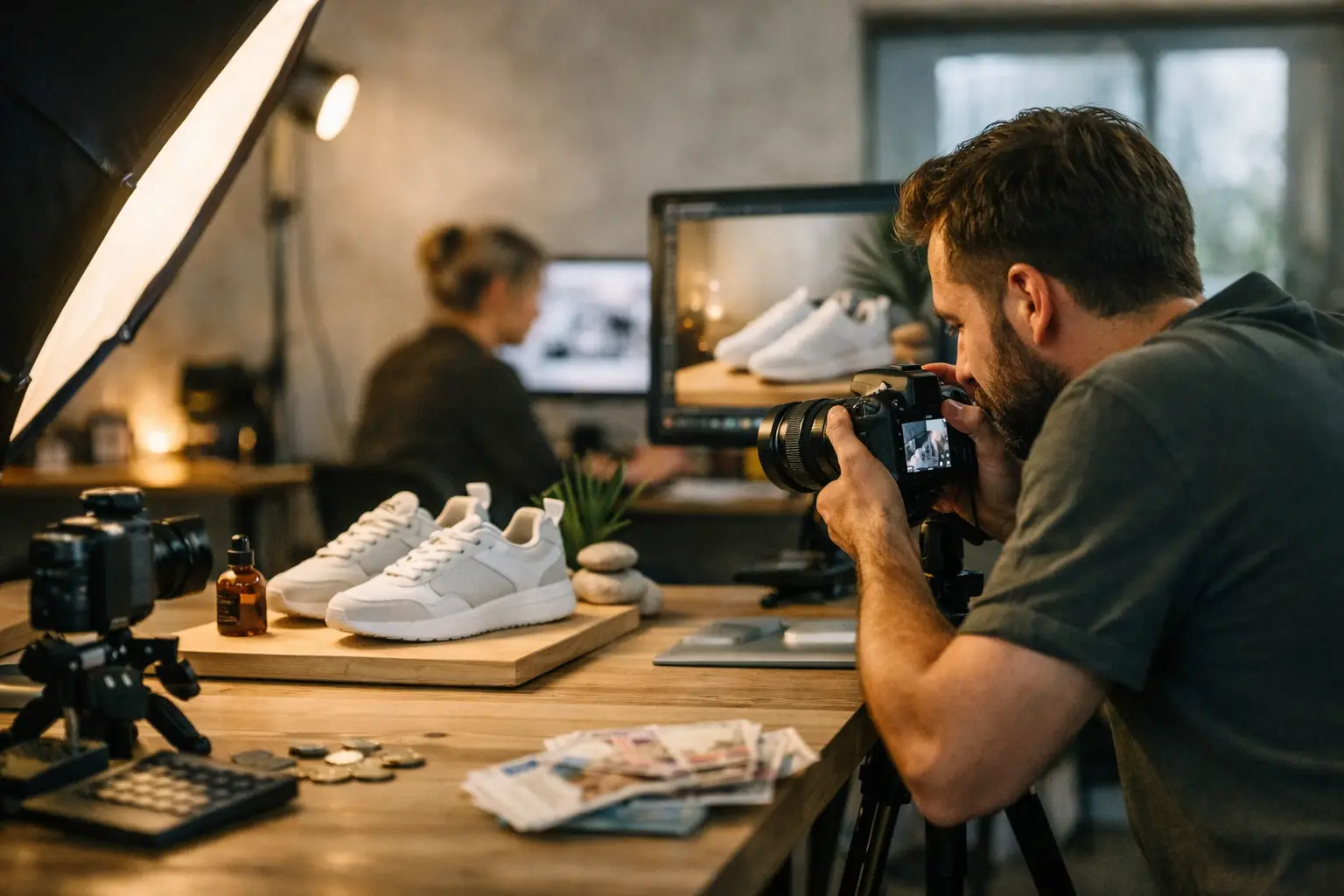
If you've ever asked for a quote and got one price at £250 and another at £2,500, you're not imagining things. How much does product photography cost depends on what you're actually asking for - and that goes well beyond someone turning up with a camera.
For some brands, it is a straightforward packshot job on a white background. For others, it is a styled shoot with props, art direction, lighting setups, retouching and multiple versions for ecommerce, Amazon, print and social. Same broad service, very different workload. That is why product photography pricing can feel a bit all over the place from the outside.
How much does product photography cost in the UK?
As a rough guide, UK product photography can start at around £15 to £40 per simple image for high-volume ecommerce work, or a few hundred pounds for a small half-day shoot. At the other end, a commercial product shoot with creative direction, set styling and detailed retouching can run into the low thousands quite quickly.
Most projects sit somewhere in the middle. A small independent brand might spend £300 to £800 for a tidy set of clean product images. A more established ecommerce business might budget £800 to £2,000 for a shoot with several products, a mix of angles and some post-production. Once you add models, props, specialist stylists or campaign-level creative, the budget climbs.
That range is wide because there are a few different ways photographers price the work. Some charge per image. Some charge by the half day or full day. Some quote for the whole project based on the brief. None of those methods is wrong. They just suit different types of job.
What actually affects the cost?
The biggest factor is complexity. A plain bottle shot on white is much faster to produce than a reflective watch, a skincare range in styled sets, or a food product that has to look fresh for the camera. Different products need different lighting, different handling and different retouching.
Volume matters too. If you need 100 products shot in the same consistent way, the cost per image usually comes down. Once the lighting and camera setup are locked in, the process becomes more efficient. If you only need six images, but every one is different, the cost per image is often higher. This is where shooting tethered earns its keep on a range — colour gets checked at frame one rather than after eighty products.
Then there is the question of usage. If the images are just for your website product pages, that is one thing. If they are going on printed point-of-sale, national adverts, packaging or a wider campaign, the value of the images is higher. Some photographers build usage into the fee. Others keep it simple and quote a flat project rate.
Retouching is another part clients often underestimate. Basic editing usually covers colour correction, exposure, cropping and cleaning up small marks. More detailed retouching takes longer. Think label straightening, dust removal, reflection control, cut-outs, shadow work and making sure products look polished but still believable. That is skilled time, not an afterthought.
Common pricing models for product photography
Per-image pricing is common for straightforward ecommerce jobs. It works well when the brief is consistent and the output is clear. If you need front, back and detail shots of a product range on white, this model is easy to budget for.
Day rates are more common when the brief has moving parts. If we are shooting a mix of products, creating a few setups and adapting as we go, a half-day or full-day rate often makes more sense. It gives enough room to do the job properly without counting every frame. Our own product photography is priced this way: half days from £450, full days £750, editing included.
Project pricing is often the most practical option for branded content. That is where the quote wraps in pre-production, shoot time, editing and final delivery. For clients, it is usually the least confusing because you can see the total cost against the final result you need.
Simple packshots vs creative product photography
This is where the budget can swing sharply.
Simple packshots are the clean, consistent images most people associate with ecommerce. Usually shot on white or a plain background, they are designed to show the product clearly and accurately. They still need good lighting and proper colour handling, but the styling is minimal and the workflow is efficient. Our packshot guide goes into what makes them work.
Creative product photography is a different job. It might involve building a set, sourcing props, working with coloured backgrounds, gels, textured surfaces or liquids, and shaping light to create mood. It often takes longer to prep than to shoot. If the image needs to feel premium, dramatic or campaign-ready, you are paying for concept and control as much as the photography itself.
Neither is better. It depends what the images need to do. If you sell online, you may need both - clean packshots for product pages and more atmospheric images for ads, social and launches.
Hidden costs clients should ask about
A good quote should be clear, but it is still worth checking what is and is not included. Styling, props, model fees, hair and make-up, location hire, specialist backgrounds and advanced retouching can all sit outside the base photography fee.
Turnaround can affect price as well. If you need images urgently, that may mean reshuffling studio time and editing schedules. Fast delivery is possible, but it is fair to expect a premium if the deadline is tight.
There is also prep. If your products arrive unassembled, creased, dusty, labelled badly or missing parts, the shoot slows down. We always say the smoother the prep, the better value the shoot becomes. Sending products in ready-to-photograph condition saves time and avoids paying for avoidable fixes.
Why one quote can be much higher than another
This is often down to experience, process and consistency.
A cheaper quote may suit a simple brief perfectly well. But if colour accuracy matters, if you need reliable file delivery, if you want a photographer who can troubleshoot reflective packaging, or if the images are tied to a product launch, the lowest price is not always the best value.
More experienced commercial photographers are usually charging for fewer surprises. They know how to light tricky materials, how to keep a whole range visually consistent, and how to spot problems before they become expensive. That matters when the images are helping you sell.
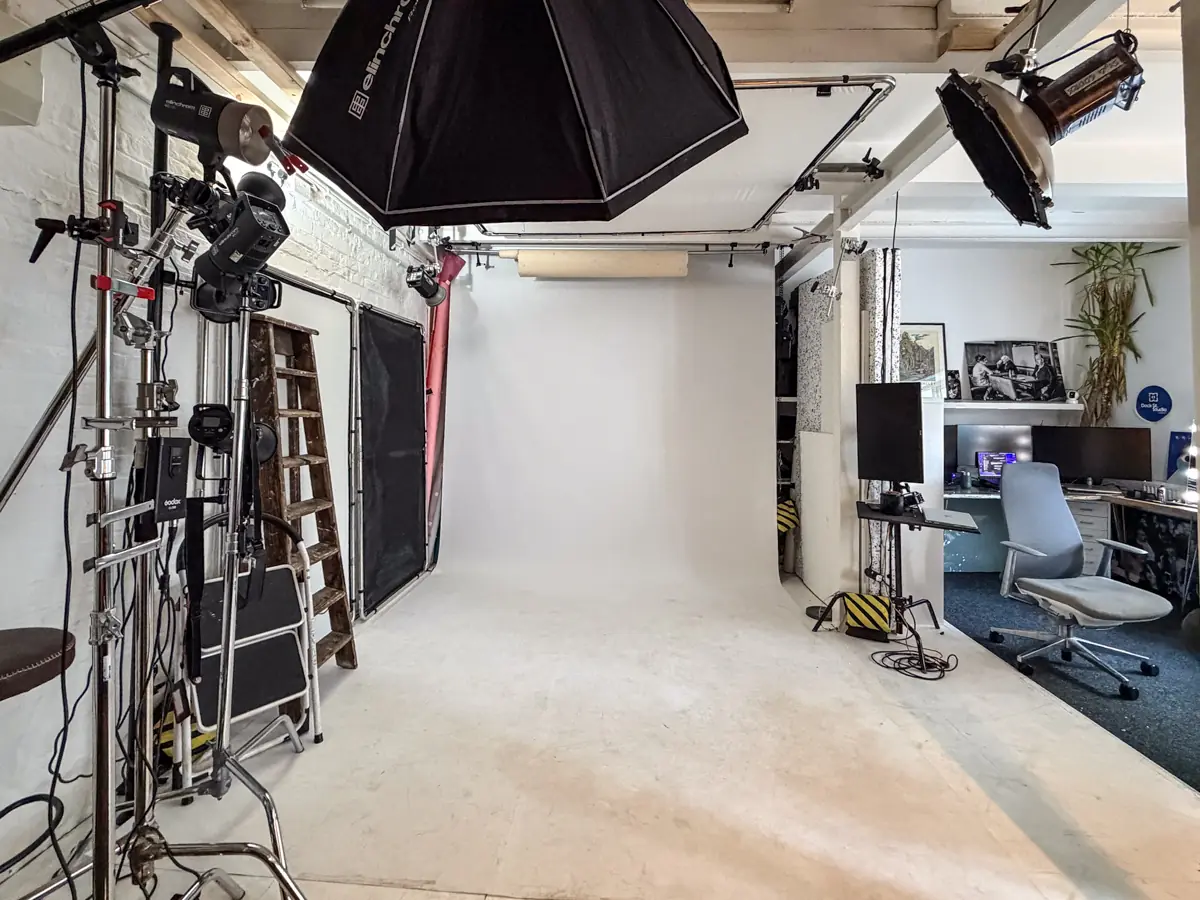
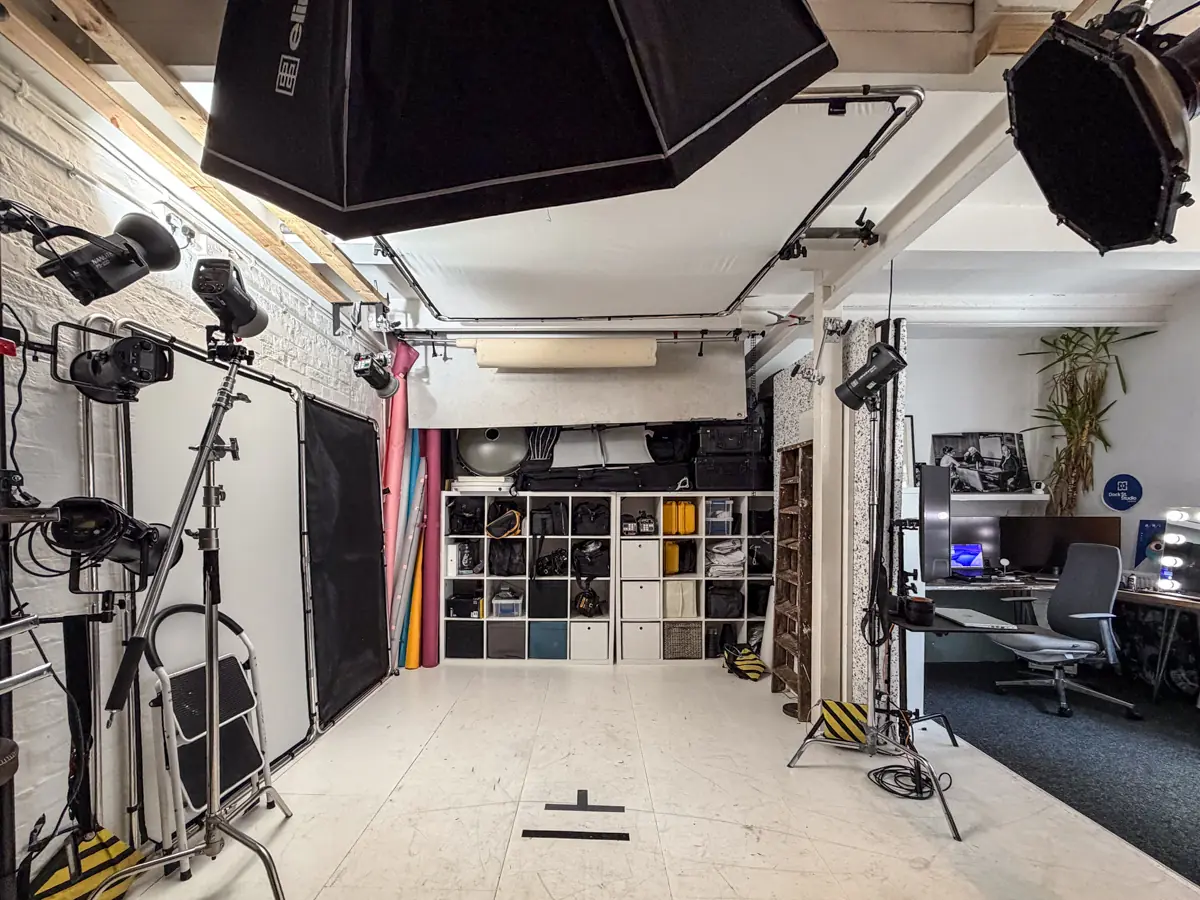
Studio setup is part of it too. A properly equipped studio gives you more control over light, colour and workflow than a makeshift setup. That does not mean every job needs a big production. It does mean quality tends to be more repeatable when the environment is right. If you'd rather shoot your own range, the studio is available to hire from £125 for two hours with lighting and backdrops included.
How to budget properly for product photography
Start with the end use. Are these images for an online shop, a new launch, a brochure, an ad campaign, or all of the above? Once that is clear, it becomes much easier to work out what level of shoot you actually need.
Next, think about quantity and consistency. Ten products with one angle each is a different brief from ten products with five angles, close-ups and styled hero shots. Be honest about what will genuinely help the business. Plenty of brands overspend on images they never use, while others under-budget and end up with photos that do not do the product justice.
It helps to tell the photographer your budget range upfront. That is not about playing games. It gives room to shape a realistic shoot. Sometimes we can suggest a simpler setup, reduce the number of scenes, or split the work into phases so you still get strong results without trying to do everything at once.
What is a fair price for a small business?
For a small business, a fair price is one that gives you images you can actually use confidently across your sales channels without needing to reshoot in six months.
If you are just starting out, you may not need an elaborate creative campaign. A clean, well-lit set of product images can be enough to make your website look more credible and improve conversions. That kind of shoot can often be done sensibly without a huge budget.
If your product has premium positioning, tricky materials or strong competition, spending a bit more can be worthwhile. Customers make quick judgements from imagery. If the product photos look flat, inconsistent or homemade, that affects trust whether the product is excellent or not.
In places like Leeds and across Yorkshire, plenty of brands are balancing ambition with real-world budgets. The best results usually come when the brief is focused, the expectations are clear and the shoot is planned properly from the start.
A decent product photographer should be able to explain where the cost comes from, what level of finish you can expect, and where it makes sense to save or spend. If the quote is vague, ask questions. Good photography is not just about the camera. It is the planning, lighting, handling and editing that make the difference - and those are the bits that turn a product image into something that helps sell.
If you are comparing quotes, do not just ask how much. Ask what you are getting, how the shoot will run, and whether the final images will do the job you need them to do.
Frequently Asked Questions
How much does product photography cost per image in the UK?
Roughly £15 to £40 per simple image for high-volume ecommerce work on white. Styled or creative images cost considerably more because the prep, set-building and retouching take longer than the shooting.
Is it cheaper to pay per image or per day?
Per image suits a consistent brief with a known output — front, back and detail of a range on white. A day rate suits anything with moving parts, because it gives room to adapt without counting frames. At Dock Street a half day is £450 and a full day £750, editing included.
What should I send before the shoot?
Clean, finished samples including packaging and every colour variant, a spare of anything fragile, and a list of where each image will be used. Products that arrive ready to photograph make the shoot faster and cheaper.
Can I hire the studio and shoot my own products?
Yes. Studio hire is £125 for two hours, £175 for a half day and £300 for a full day, with lighting, the white cove and backdrops included. Bring your camera and run your own session.
How long until I get the images?
Retouched files are typically delivered within 48 hours of final selection, organised by product code so your web team can find what they need.
Where is the studio and how do I book?
Dock Street Studio, Unit 9, 30–38 Dock Street, Leeds LS10 1JF — central Leeds near Leeds Dock, a short walk from the train station, with parking on site. Book online or call to talk the brief through first.
Get a product photography quote in Leeds
Send us your product list, where the images will be used and a rough budget, and we will tell you honestly what level of shoot the job needs. Book online, email hello@dockstreetstudioleeds.co.uk, or call 0113 4400102.
Written by Mark Wheelwright
Commercial photographer & studio owner, Leeds | ISO Photographic Ltd
Dock Street Studio, Unit 9, 30–38 Dock Street, Leeds LS10 1JF
18+ years' experience | 900+ projects | 300+ five-star reviews | 1M+ shutter count
dockstreetstudioleeds.co.uk
Shot, written and built by the Dock Street team
Every guide on this blog comes from the team at Dock Street Studio — Mark behind the camera with 18+ years' experience, Nicole on styling and lighting, Beya on video and bookings and Austin keeping the site fast and findable. If you'd rather have us do it than read about it, book a session or explore our photography services in Leeds.